
자료
세계시민교육에 대한 이해를 넓히고 연구, 옹호 활동, 교수, 학습 등을 향상시킬 수 있는 다양하고 유용한 자료를 찾아보세요.
232 건의 결과가 검색되었습니다
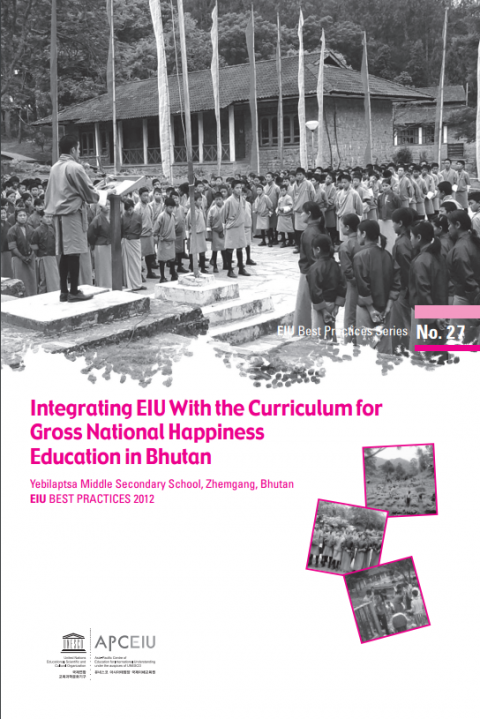 EIU Best Practices Series No. 27: Integrating EIU with the Curriculum for Gross National Happiness Education in Bhutan 발행 연도: 2012 저자: Udhim Subba 단체 저자: APCEIU This monograph is one of APCEIU's EIU Best Practices Series, which aims to encourage educators, scholars, and activists to implement and share local initiatives on EIU. The Series No.27 introduces Bhutan’s Yebilaptsa Middle Secondary School, in its effort to promote values of EIU as a complementary component of the Gross National Happiness Education efforts. Activities such as UNESCO club community activities, environmental learning, EIU cultural night, international exchange altogether exemplify effective ways to integrate EIU practices in the curriculum and extracurricular programs of schools.
 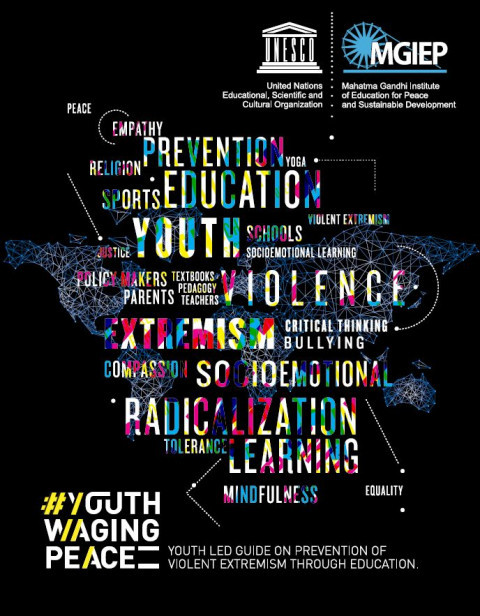 Youth Led Guide on Prevention of Violent Extremism through Education 발행 연도: 2017 저자: Carolyn Nash | Yulia Nesterova | Kenneth Primrose | Wing Yu Alice Chan | Rios, Paul A. Chan | María José Velásquez Flores | Aniqah Zowmi 단체 저자: Mahatma Gandhi Institute of Education for Peace and Sustainable Development (MGIEP) In September 2016, the education sector from the UNESCO headquarters and the UNESCO category 1 research Institute, the UNESCO Mahatma Gandhi Institute of Education for Peace and Sustainable Development(MGIEP) organised the first International Conference on Prevention of Violent Extremism through Education: Taking Action, in New Delhi, India. The usual plethora of reports and guides produced by experts on the subject, roundtables and expert panels were organised.But something different also happened. UNESCO MGIEP brought 50 youth from across the world rigorously selected through six week online discussion on the subject to participate in a first of its kind, “Talking Across Generations on Education (TAGe)” event. This event organised as a plenary session—not a side or lunch event—brought together these youth in a non-hierarchical “flat” dialogue with about 12 senior policymakers on the challenges and opportunities the youth see in preventing violent extremism through education.The conference culminated with the presentation of a “Youth Action Plan” containing three clear tangible action points. One action point was the development of a youth-led guide on Prevention of Violent Extremism through Education. This Guide is the result of that call to action.The Institute circulated a global call to youth who were willing to take up the challenge of producing the Guide. After a rigorous search based on a well-defined set of criteria, two coordinating lead authors were identified. These authors were then tasked to find the remaining authors who they saw fit to contribute to the Guide and this team then reached out to the wider group of youth to solicit their experiences and guidance in producing the Guide. The youth have done their part. They have reached out to more than 2,000 young people from more than 50 countries, collated their ideas and experiences and finally featured more than 150 unique voices into this document.
  EIU Best Practices Series No. 19: Culture-Based Education Programme for Indigenous Children & Youth in the Philippines 발행 연도: 2010 저자: Benjamin David Abadiano 단체 저자: APCEIU This monograph is one of APCEIU's EIU Best Practices Series, which aims to encourage educators, scholars, and activists to implement and share local initiatives on EIU. The Series No.19 introduces the Pumulaan program, a successful culture-based education programme for indigenous children and youth in the Philippines. The program is similar to that of Tugdaan, a widely recognized education program that promote learning for the Indigenous people. The Pumulaan program focuses on providing culturally sensitive, appropriate, and relevant education to students in Mangyan Tribe in Mindoro and the Matigsalog Tribe in Mindanao, incorporating values of peace, harmony, and diversity within the education programs.
 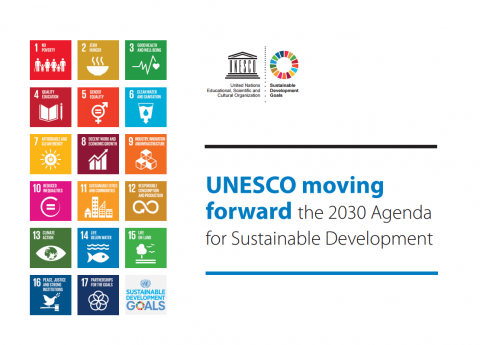 UNESCO moving forward the 2030 Agenda for Sustainable Development 발행 연도: 2017 단체 저자: UNESCO The United Nations 2030 Agenda for Sustainable Development, with its 17 Sustainable Development Goals, sets forth a bold new framework for development cooperation over the next 15 years. This agenda aspires to ensure prosperity and well-being for all women and men, while protecting our planet and strengthening the foundations for peace. La UNESCO avanza la Agenda 2030 para el Desarrollo Sostenible 발행 연도: 2017 단체 저자: UNESCO The United Nations 2030 Agenda for Sustainable Development, with its 17 Sustainable Development Goals, sets forth a bold new framework for development cooperation over the next 15 years. This agenda aspires to ensure prosperity and well-being for all women and men, while protecting our planet and strengthening the foundations for peace. L'UNESCO fait avancer le Programme de développement durable à l'horizon 2030 발행 연도: 2017 단체 저자: UNESCO The United Nations 2030 Agenda for Sustainable Development, with its 17 Sustainable Development Goals, sets forth a bold new framework for development cooperation over the next 15 years. This agenda aspires to ensure prosperity and well-being for all women and men, while protecting our planet and strengthening the foundations for peace. ЮНЕСКО: работа по осуществлению Повестки дня в области устойчивого развития на период до 2030 г. 발행 연도: 2017 단체 저자: UNESCO The United Nations 2030 Agenda for Sustainable Development, with its 17 Sustainable Development Goals, sets forth a bold new framework for development cooperation over the next 15 years. This agenda aspires to ensure prosperity and well-being for all women and men, while protecting our planet and strengthening the foundations for peace. 教科文组织助力 《2030年可持续发展议程》 발행 연도: 2017 단체 저자: UNESCO The United Nations 2030 Agenda for Sustainable Development, with its 17 Sustainable Development Goals, sets forth a bold new framework for development cooperation over the next 15 years. This agenda aspires to ensure prosperity and well-being for all women and men, while protecting our planet and strengthening the foundations for peace.
 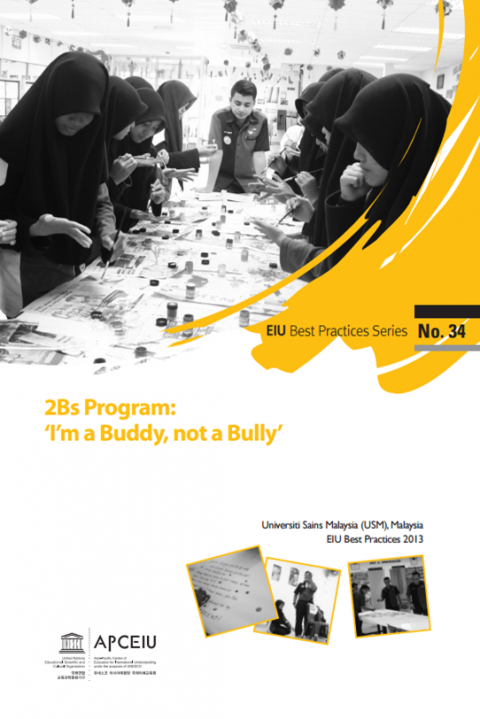 EIU Best Practices Series No.34: 2Bs Program: 'I'm a Buddy, not a Bully' 발행 연도: 2013 단체 저자: APCEIU This issue is one of APCEIU's EIU Best Practices Series, which aims to encourage educators, scholars, and activists to implement and share local initiatives on EIU. The Series No.34 introduces the 2Bs Program implemented in boarding schools in Malaysia, highlighting the importance of education in preventing bullying behavior. The program involves three phases, such as employing creative and fun pedagogy approaches, rehabilitation, and student potential development to effectively raise awareness surrounding the issue and encourage behavior change. Such initiative is exemplary in combatting challenges that arise from cultural differences, and in fostering understanding.
  Address by Irina Bokova, Director-General of UNESCO, on the occasion of the Conference: Victims of ethnic and religious violence in the Middle East, Protecting and promoting plurality and diversity; Madrid, 24 May 2017 발행 연도: 2017 단체 저자: UNESCO. Director-General, 2009-2017 (Bokova, I.G.) This address was presented by Irina Bokova, Director-General of UNESCO, on the occasion of the Victims of Ethnic and Religious Violence conference in the Middle East for protecting and promoting plurality and diversity