
자료
세계시민교육에 대한 이해를 넓히고 연구, 옹호 활동, 교수, 학습 등을 향상시킬 수 있는 다양하고 유용한 자료를 찾아보세요.
96 건의 결과가 검색되었습니다
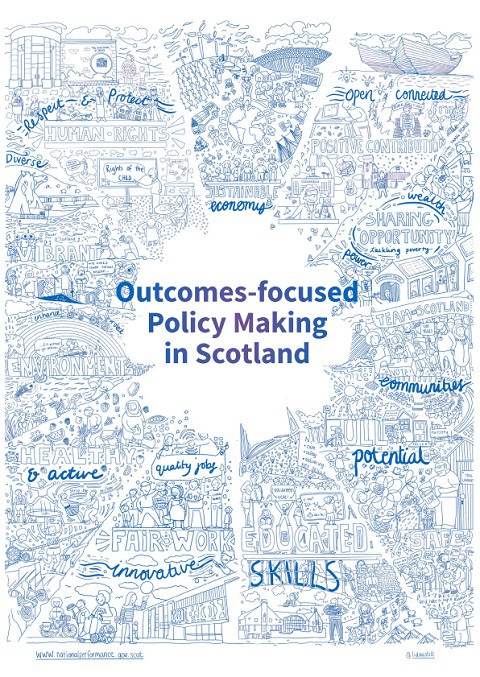 Outcomes-Focused Policy Making in Scotland 발행 연도: 2021 단체 저자: Government of Scotland | Scotland's International Development Alliance | SDG Network Scotland | Oxfam Scotland | International Development Education Association Scotland (IDEAS) | Bridge 47 Scotland’s International Development Alliance has co-created a new Scottish policy making guide focused on the Sustainable Development Goals (SDGs) and the National Performance Framework (NPF). The guide supports holistic policy making that reflects our interconnected world & addresses the need to better navigate its complexities.The resource is the result of a partnership between the Scottish Government’s National Performance Framework team, the International Development Education Association of Scotland (IDEAS) Network, Scotland’s International Development Alliance, the SDG Network Scotland and Oxfam Scotland. The partnership was initiated, supported and funded by the Bridge 47 – Building Global Citizenship project and special thanks go to Northern Star Associates for their work developing the content.What is the resource?The National Performance Framework (NPF) is Scotland’s way of localising the Sustainable Development Goals (SDGs). The 17 different goals and 11 NPF National Outcomes are key measures of how Scotland can move towards a more just and sustainable future. The resource has two main parts. The first half features a general overview of the United Nations Sustainable Development Goals (SDGs), Scotland’s National Performance Framework (NPF) and how the two are interlinked. The second half provides practical, interactive activities to explore how to apply the NPF and SDGs in the policy making process.Why is this resource important?Policy is a mechanism for creating change. Ensuring that the policy produced in Scotland is inclusive and takes a holistic view of systemic problems will have a positive impact for both people and planet.This resource comes at a critical juncture. The Covid-19 pandemic has emphasised local-global interconnections and the difficulties posed by complex global problems. They require us to be holistic in our policy making and understand we are part of a bigger system, where the decisions we make and the actions we take have an impact on others locally and globally, now and in the future.How was the resource created?The guide was co-created by a partnership between the NPF team at the Scottish Government and civil society stakeholders including the SDG Network Scotland, Scotland’s International Development Alliance and the EU project, Bridge 47. The development of the resource was funded through the Bridge 47 – Building Global Citizenship project, which is based at the International Development Education Association of Scotland (IDEAS) network. As a project, Bridge 47 supports building partnerships across different sectors with the aim of raising awareness of the SDGs and the transformative power of education as outlined in SDG Target 4.7.
  Tablero de control para el ODS 4: informe sobre el progreso hacia los puntos de referencia nacionales; foco en docentes 발행 연도: 2024 단체 저자: Global Education Monitoring Report Team | UNESCO Institute for Statistics (UIS) Esta es la segunda evaluación del progreso de los países hacia los puntos de referencia, o metas nacionales, que los países han establecido para ocho indicadores del ODS 4 para marcar su contribución a las metas globales. La evaluación cubre el período desde 2015 y revisa la probabilidad de que cada país alcance su punto de referencia para 2025 o, cuando no se haya establecido dicho punto de referencia, el valor que habría alcanzado si hubiera progresado al ritmo histórico (2000–15) del 25 % de los países que mejoran más rápidamente.El Tablero de Control para el ODS 4 de 2024 revela que el progreso hacia las metas nacionales está desviado en la mayoría de los indicadores. En dos casos – la brecha de género a expensas de los niños que terminan la educación secundaria alta y el gasto público en educación como proporción del gasto público total – los países incluso están retrocediendo.Por el contrario, el progreso es más rápido en el octavo indicador de referencia, la conectividad a Internet en las escuelas, que se añadió tras la prioridad otorgada a la transformación digital en la Cumbre sobre la Transformación de la Educación en 2022. Un tercio de los países estableció objetivos nacionales en 2023 y el progreso en el indicador está siendo revisado por primera vez en esta edición.El progreso también es relativamente rápido en el porcentaje de docentes con las calificaciones mínimas requeridas, que también es el indicador central de esta edición. Se presenta nueva evidencia sobre políticas nacionales en cuanto a los niveles mínimos de calificación requeridos para ingresar a la profesión docente, políticas de desarrollo profesional continuo obligatorio y políticas de formación docente sobre tecnología en educación.
  UNESCO-UNEVOC Medium-Term Strategy for 2021-2023: Strengthening TVET Capacities and Cooperation in the Member States 발행 연도: 2020 단체 저자: UNESCO International Centre for Technical and Vocational Education and Training (UNEVOC) The Medium-Term Strategy for 2021-2023 (MTS-III) sets out how UNESCO-UNEVOC will support TVET institutions to meet the demands of dynamic labour markets and provide quality skills training for a sustainable future of work. MTS-III focuses on developing the capacities of TVET leaders, supporting TVET institutions in implementing change programmes, and facilitating knowledge sharing and peer learning within the UNEVOC Network.
 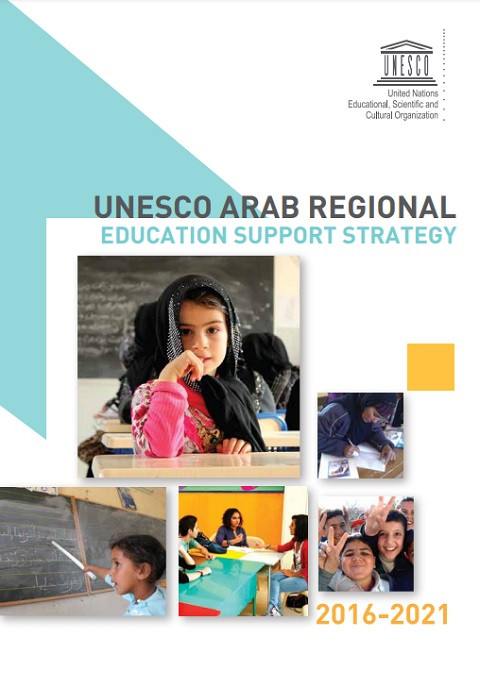 UNESCO Arab Regional Education Support Strategy: 2016-2021 발행 연도: 2016 단체 저자: UNESCO Beirut Covering the period of 2016-2021, this strategy document aims to provide tangible support for each Member State in the Arab Region, taking into account national needs and priorities and thus employing nationally relevant approaches based on the Agenda 2030 for Sustainable Development.
  Issue to Action: Mathematics; Teaching Toolkit for a Fairer World 발행 연도: 2021 저자: Corinne Angier 단체 저자: Scotdec These resources offer maths teams an opportunity to take an applications approach within the BGE phase. You might want to make connections to the UN Sustainable Development Goals and you can find some introductory activities to the goals here.The materials explore 3 broad themes – climate change, gender equality and migration – with 2 sets of activities for each theme supported with a PowerPoint presentation.The lessons and worksheets in the booklet and accompanying PowerPoints are all free to download below. All activities are mapped to ‘Experiences and Outcomes’, benchmarks and core maths skills are highlighter.
  Raising Citizens' Awareness Through Development Education: Success Stories Collection 발행 연도: 2020 저자: Lur Fernandez Salinas 단체 저자: PLATFORMA Development Education and Awareness Raising (DEAR) are natural lines of action for local and regional governments active in development cooperation and tie in perfectly with their territorial strategies.Awareness-raising among citizens, through the action of municipalities and regions, remains a core component of the co-responsibility, solidarity, mutual knowledge and mutual understanding needed to mobilise and unite communities.Discover this Success Stories Collection which aims to showcase concrete, impactful and transformative experiences of local and regional governments and their associations actively engaged in DEAR projects and decentralised cooperation strategies. Sensibiliser les citoyens par l’éducation au développement : Exemples de réussites 발행 연도: 2020 저자: Lur Fernandez Salinas 단체 저자: PLATFORMA Le programme DEAR constitue une ligne d’action tout à fait naturelle pour les collectivités territoriales actives dans la coopération au développement et s’inscrit parfaitement dans leurs stratégies territoriales.La sensibilisation des citoyens, par l’action des municipalités et régions, reste une composante essentielle de la coresponsabilité, de la solidarité, de la connaissance et de la compréhension mutuelles nécessaires pour mobiliser et fédérer les communautés.Le présent recueil d’histoires de réussite vise à montrer les expériences concrètes, percutantes et transformatrices des collectivités territoriales et de leurs associations activement engagées dans des projets DEAR et des stratégies de coopération décentralisé
  Asia and the Pacific: SDG Progress Report 2021 발행 연도: 2021 단체 저자: UN. Economic and Social Commission for Asia and the Pacific (UN. ESCAP) This report analyses progress towards the Sustainable Development Goals (SDGs) in Asia and the Pacific and its five subregions as well as the availability of data. It assesses gaps which must be closed to achieve the goals by 2030. This assessment is designed to ensure the region’s actions remain on target and shortcomings are addressed as they arise. It is a resource for all stakeholders involved in prioritization, planning, implementation and follow-up of the 2030 Agenda for Sustainable Development in Asia and the Pacific.
  Localizing the 2030 Agenda and Global Citizenship Education: An Essential Dialogue 발행 연도: 2020 단체 저자: Diputació de Barcelona Diputació de Barcelona has produced a document that offers guidelines to strengthen the links between Global Citizenship Education (GCE) actions and localizing SDGs initiatives, in order to drive real changes in local policies.What we call Global Citizenship Education (GCE) brings together key elements of different educational trends, such as development education, peace education or education for sustainability, among others. Each of them has decades of experience in promoting changes in citizen’s knowledge, attitudes and behaviours through formal or informal channels. This experience can help to reinforce the 2030 Agenda’s capacity to generate real change towards a more sustainable future for the planet, connecting local and global realities and highlighting interdependencies and co-responsibility. The document points out what can be done at the local level to improve this dialogue between SDG and GCE with practical proposals such as introducing GCE perspective in the SDGs training activities or implementing joint initiatives between development cooperation departments and other areas to reach new audiences.
  South-South and Triangular Cooperation in Action 발행 연도: 2018 단체 저자: UNESCO | UN. Office for South-South Cooperation (UNOSSC) This publication is UNESCO’s first dedicated report on South-South cooperation and triangular cooperation. It presents an overall picture of the progress achieved to support technical cooperation, capacity building and knowledge sharing through South-South and triangular cooperation in UNESCO’s areas of competence with highlights of specific examples. It paves the way for deepening future cooperation in this area.