
자료
세계시민교육에 대한 이해를 넓히고 연구, 옹호 활동, 교수, 학습 등을 향상시킬 수 있는 다양하고 유용한 자료를 찾아보세요.
13 건의 결과가 검색되었습니다
 Diriger et agir pour l’équité, l’inclusion et la justice sociale : boîte à outils pour les directions d’établissement d’enseignement 발행 연도: 2020 저자: Julie Larochelle-Audet | Marie-Odile Magnan | Emmanuelle Doré | Maryse Potvin | Lise-Anne St-Vincent | Andréanne Gélinas-Proulx | Anastasie Amboulé Abath 단체 저자: Observatoire sur la formation à la diversité et l’équité (OFDE) L’objectif principal de ce document est d’outiller les directions d’établissement, en exercice ou en formation, pour qu’ils puissent contribuer à la mise en œuvre d’une éducation permettant à tous et toutes d’avoir des opportunités équivalentes d’accéder aux services, aux ressourceset aux biens collectifs de la société québécoise et d’y participer en toute égalité et dignité. The main objective of this document is to equip school principals and those in training with the tools they need to contribute to the implementation of an education system that gives everyone equal opportunities to access the services, resources and public goods of Quebec society and to participate in them with full equality and dignity.
 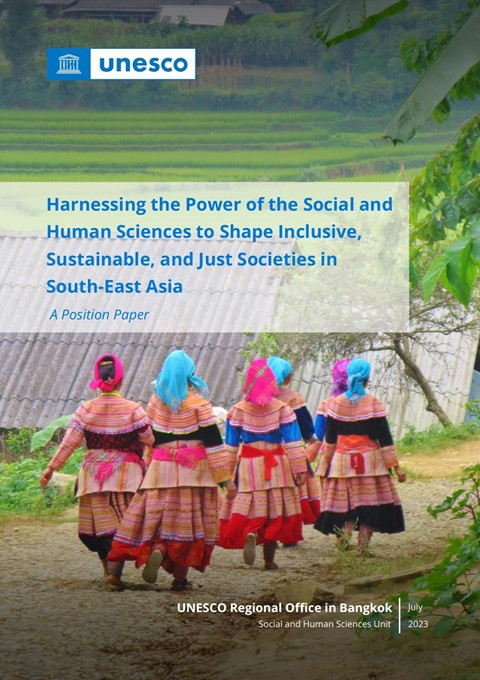 Harnessing the Power of the Social and Human Sciences to Shape Inclusive, Sustainable, and Just Societies in South-East Asia: A Position Paper 발행 연도: 2023 저자: Phinith Chanthalangsy 단체 저자: UNESCO Bangkok This paper provides an overview of the Social and HumanSciences (SHS) Unit, UNESCO Regional Office in Bangkok holisticapproach to building a more just and fair society for all in theSouth-East Asian region toward 2030 and beyond. The paperprovides two sections focused on thechallengesidentified in theregion and some potentialpathways for the future, from thepoint of view of UNESCO’s Social and Human Sciences Sector. The content of this paper has been discussed with aregionalexpert consultative group that gathered in Bangkok during aMOST regional Conference on 22–23 June 2023. The paper offersgrounds forstrategic orientations and partnershipsin keydomains where UNESCO's expertise in the social and humansciences can make a difference in South-East Asia
  We Need to Talk: Measuring Intercultural Dialogue for Peace and Inclusion 발행 연도: 2022 단체 저자: UNESCO | Institute for Economics and Peace An analysis into the power of intercultural dialogue and the new UNESCO Framework for Enabling Intercultural Dialogue, We Need to Talk presents the first evidence of the link between intercultural dialogue and peace, conflict prevention and non-fragility, and human rights. Using data covering over 160 countries in all regions, the report presents a framework of the structures, processes and values needed to support intercultural dialogue, examining the dynamics and interlinkages between them to reveal substantial policy opportunities with broad spanning benefits. Providing policy support and guidance, the report also includes information on regional trends as well as deep diving case studies.The data, case studies, and think pieces contained in this report highlight key policy and intervention opportunities for intercultural dialogue as an instrument for inclusion, peace and wider societal benefits. Policy makers, development workers, peace and security actors, academics and more are invited to leverage the analysis in this report and findings of the Framework to strengthen intercultural dialogue around the world. Parlons-en : mesurer le dialogue interculturel pour la paix et l’inclusion 발행 연도: 2022 단체 저자: Organisation des Nations Unies pour l'éducation, la science et la culture (UNESCO) | Institute for Economics and Peace Parlons-en ! Alors que le monde devient de plus en plus interconnecté, l’amélioration des capacités à engager et à mener un dialogue efficace est nécessaire afin de relever les défis mondiaux. Actuellement, 1,5 milliard de personnes vivent dans des pays où le dialogue interculturel est faible et où les enjeux mondiaux tels que la pauvreté absolue, le terrorisme et les déplacements forcés de population sont plus répandus. Pour forger une coopération efficace et maintenir la paix, le renforcement du dialogue interculturel doit être une priorité.Pour la première fois, Parlons-en présente des preuves empiriques du lien entre le dialogue interculturel et la paix, la prévention de conflits, la non-fragilité, ainsi que les droits de l'Homme. En s'appuyant sur les données innovantes du nouveau Cadre de l'UNESCO pour favoriser le dialogue interculturel, ce rapport met en évidence les principales politiques et opportunités d'intervention pour le dialogue interculturel en tant qu'instrument d'inclusion et de paix.À l'aide de données couvrant plus de 160 pays dans toutes les régions, le rapport présente un cadre des structures, des processus et des valeurs nécessaires pour soutenir le dialogue interculturel, en examinant les dynamiques et les liens entre eux pour révéler des opportunités politiques substantielles aux avantages étendus.Les décideurs politiques, les agents de développement, les acteurs de la paix et de la sécurité, les universitaires et bien d'autres sont invités à tirer parti de l'analyse de ce rapport et des conclusions du Cadre pour renforcer le dialogue interculturel à travers le monde.Ensemble, parlons-en !
  Dialogue for Prevention 발행 연도: 2025 단체 저자: UNESCO In an era where geopolitical power struggles disrupt traditional peacebuilding, where identity and misinformation fuel divisions, and where trust in institutions is eroding, UNESCO’s Intercultural Dialogue for Conflict Transformation briefs series presents an adaptable, culturally grounded, and people-centred approach to peacebuilding. With 1.5 billion people living in contexts with low intercultural dialogue where global challenges such as absolute poverty, terrorism and forced displacement are more prevalent, this four-part series draws on firsthand experience, country case studies, and expert analysis to demonstrate the transformative potential of dialogue in fragile and conflict-sensitive settings. The Dialogue for Prevention brief, developed with the Auschwitz Institute for the Prevention of Genocide and Mass Atrocities, explores the powerful role intercultural dialogue can play in preventing large-scale identity-based violence, particularly in the upstream and downstream phases of conflict. Grounded in the idea that dialogue can bridge divides and foster mutual understanding, the brief argues that enabling environments for intercultural dialogue—marked by stability, inclusive governance, freedom of expression, horizontal equality, and social cohesion—also mitigate key risk factors for atrocity violence. Drawing on diverse examples from Cambodia, Colombia, Italy, and Kenya, it showcases creative, context specific applications of dialogue. Through practical guidance, the brief equips policymakers, practitioners and civil society seeking to embed dialogue into prevention strategies.
  Dialogue for Social Cohesion 발행 연도: 2025 저자: Isaure Vicarini | Euan Mackway-Jones 단체 저자: UNESCO In an era where geopolitical power struggles disrupt traditional peacebuilding, where identity and misinformation fuel divisions, and where trust in institutions is eroding, UNESCO’s Intercultural Dialogue for Conflict Transformation briefs series presents an adaptable, culturally grounded, and people-centred approach to peacebuilding. With 89% of conflicts worldwide occurring in countries with limited capacity for intercultural dialogue, this four-part series draws on firsthand experience, country case studies, and expert analysis to demonstrate the transformative potential of dialogue in fragile and conflict-sensitive settings. The Dialogue for Social Cohesion brief—developed in collaboration with the Berghof Foundation and Search for Common Ground—bridges theory and practice to explore the horizontal (community-to-community) and vertical (citizen-to-state) dimensions of social cohesion and highlights how inclusive dialogue can support both. Case studies from Afghanistan, Germany, Somalia, and South Sudan illustrate how dialogue—whether through theatre, education, local governance, or environmental peacebuilding—can cultivate mutual understanding and trust, bridge identity-based divides, and restore, step by step, the social fabric in fractured societies. Through actionable recommendations, this brief equips practitioners, policymakers, and civil society with the essential guidance needed to tailor and embed dialogue in their respective contexts, helping to ensure that peace processes are inclusive, locally driven, and enduring.
  Gender Bias, Citizen Participation, and AI (Policy Research Working Papers; Planet; RRR; 11046) 발행 연도: 2025 저자: Jose Antonio Cuesta Leiva | Natalia Gisel Pecorari 단체 저자: World Bank This paper investigates the role of gender bias in artificial intelligence–driven analyses of citizen participation, using data from the 2023 Latinobarómetro Survey. The paper proposes that gender bias—whether societal, data driven, or algorithmic—significantly affects civic engagement. Using machine learning, particularly decision trees, the analysis explores how self-reported societal bias (machismo norms) interacts with personal characteristics and circumstances to shape civic participation. The findings show that individuals with reportedly low levels of gender bias, who express political interest, have high levels of education, and align with left-wing views, are more likely to participate. The paper also explores different strategies to mitigate gender bias in both the data and the algorithms, demonstrating that gender bias remains a persistent factor even after applying corrective measures. Notably, lower machismo thresholds are required for participation in more egalitarian societies, with men needing to exhibit especially low machismo levels. Ultimately, the findings emphasize the importance of integrated strategies to tackle gender bias and increase participation, offering a framework for future studies to expand on nonlinear and complex social dynamics.
 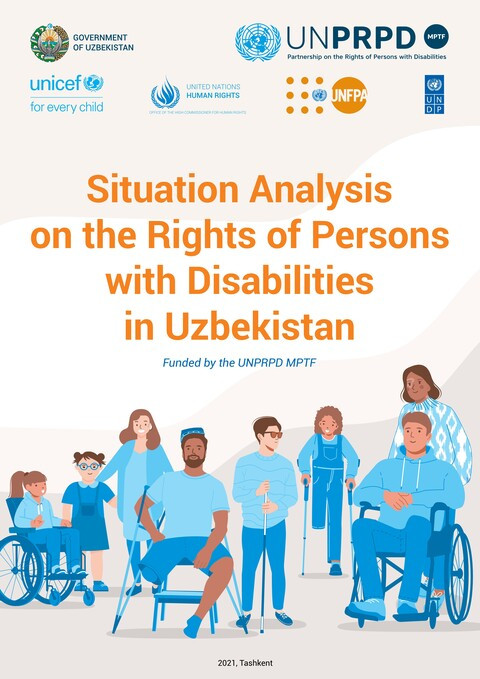 Situation Analysis on the Rights of Persons with Disabilities in Uzbekistan 발행 연도: 2021 단체 저자: UNICEF Uzbekistan | United Nations Population Fund (UNFPA) | United Nations Development Programme (UNDP) | UN. Office of the United Nations High Commissioner for Human Rights (UN. OHCHR) This study is based on the results of a situation analysis of children and adults with disabilities conducted in 2019. The ambition of this Situation Analysis is not merely to point at problems but to lay ground for solutions by identifying the opportunities and catalytic forces emerging today. The report looks at the necessary preconditions for realisation of human rights of persons with disabilities, particularly women, girls, and boys with disabilities, such as a robust equality and non-discrimination framework, availability of inclusive and accessible services in the community, disability inclusive financial and coordination mechanisms, transparent monitoring and accountability systems and meaningful participation of persons with disabilities. Анализ ситуации по обеспечению прав лиц с инвалидностью в Узбекистане 발행 연도: 2021 단체 저자: UNICEF Uzbekistan | United Nations Population Fund (UNFPA) | United Nations Development Programme (UNDP) | UN. Office of the United Nations High Commissioner for Human Rights (UN. OHCHR) Данное исследование основывается на результатах ситуационного анализа детей и взрослых с инвалидностью, проведенного в 2019 г. Цель данного анализа – не в том, чтобы указать на проблемы, а в том, чтобы заложить основу для их решения путем выявления возможностей и сил содействия, возникающих сегодня. В отчете рассматриваются необходимые предпосылки для реализации прав человека людей с инвалидностью, особенно женщин, девочек и мальчиков с инвалидностью, такие как надежная система обеспечения равенства и недискриминации, наличие инклюзивных и доступных услуг в сообществе, финансовые и координационные механизмы, учитывающие интересы людей с инвалидностью, прозрачные системы мониторинга и отчетности, а также значимое участие людей с инвалидностью.
 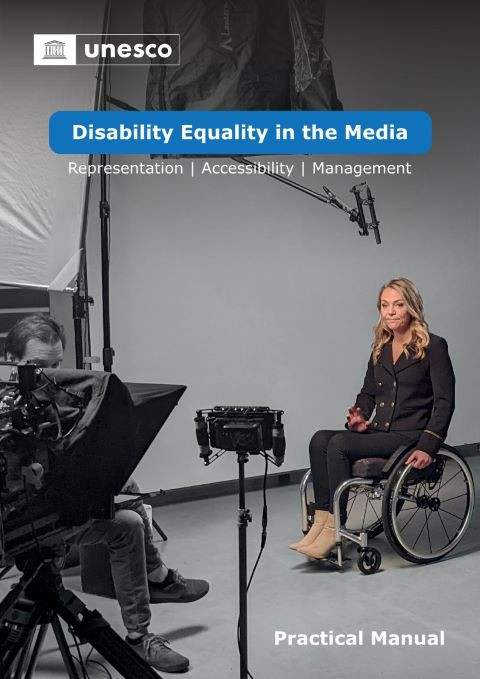 L’égalité des personnes handicapées dans les médias : représentation, accessibilité, gestion; manuel pratique 발행 연도: 2025 단체 저자: Organisation des Nations Unies pour l'éducation, la science et la culture (UNESCO) Promouvoir l’égalité des personnes handicapées dans les médias Malgré tous les changements positifs qui se produisent dans les salles de rédaction et les postes de direction, la diversité dans les médias reste un défi. Lorsque certains groupes sont laissés de côté, les médias ne présentent pas tous les aspects d'une histoire, manquent de perspectives diverses et d'idées novatrices. Par conséquent, le public ne reçoit pas une image complète, et les promesses de représentation juste et précise ne sont souvent pas tenues, ce qui affecte la perception que nous avons les uns des autres dans la société. C'est le cas des personnes handicapées, qui représentent 16 % de la population mondiale mais demeurent l'un des groupes les plus marginalisés. La couverture médiatique les néglige souvent, et lorsque leurs histoires sont racontées, elles sont souvent encadrées par des stéréotypes. Cela crée non seulement des obstacles, mais les prive également de leurs droits. Pour remédier à cette situation, les organisations médiatiques devraient renforcer les politiques éditoriales et la représentation, améliorer les conditions d'emploi et favoriser un environnement plus inclusif pour les professionnels handicapés.Le manuel pratique et la master classe fournissent des conseils concrets aux équipes éditoriales sur la manière d’assurer un traitement équitable et impartial du handicap. Pour les producteurs de contenus, ils décrivent comment rendre les contenus et les services médiatiques accessibles. Pour les responsables et les décideurs, ils incitent au changement, en démontrant comment l’égalité des personnes handicapées peut contribuer à la croissance du secteur des médias et créer de nouvelles sources de revenus.Le présent travail contribue à la mise en œuvre de la Convention des Nations Unies relative aux droits des personnes handicapées (2006) et promeut la liberté d’expression, le développement des médias et l’accès à l’information pour une participation véritable des personnes handicapées au débat public.