
자료
세계시민교육에 대한 이해를 넓히고 연구, 옹호 활동, 교수, 학습 등을 향상시킬 수 있는 다양하고 유용한 자료를 찾아보세요.
139 건의 결과가 검색되었습니다
 Сеть ассоциированных школ ЮНЕСКО: Руководство для национальных координаторов 발행 연도: 2018 단체 저자: UNESCO В данной работе подробно описывается история Сети ассоциированных школ ЮНЕСКО (Сеть ПАШ), ее миссия, цели, управление, членство и др. информация. Она является руководством для национальных координаторов, которые осуществляют взаимосвязь между школами своей страны, ее национальной комиссией по делам ЮНЕСКО и другими национальными властями18, а также международным координатором в Штаб-квартире ЮНЕСКО.
  Learning Cities and the SDGs: A Guide to Action 발행 연도: 2017 단체 저자: UNESCO Institute for Lifelong Learning (UIL) This document is a Guide to Action for mainstreaming lifelong learning as a key driver to achieve the 17 Sustainable Development Goals (SDGs). The document seeks to facilitate the process of transforming global goals into local actions by showing concrete steps, which members of the UNESCO Global Network of Learning Cities (GNLC) have taken to promote green and healthy environments, equity and inclusion as well as decent work and entrepreneurship. This Guide to Action is closely linked to the Cork Call to Action for Learning Cities, adopted by the participants of the third International Conference on Learning Cities, which took place from 18–20 September 2017 in Cork, Ireland.
  2030 SDGs GAME 발행 연도: 2016 단체 저자: Imacocollabo The 2030 SDGs Game is a multiplayer, in-person, card-based game that simulates taking the “real world” into the year 2030. Designed in Japan in 2016, this experience has become a powerful and impactful social phenomenon in Japan, earning extensive media coverage and reaching over 12,000 participants last year. 2030 SDGs Game events are held in corporate, governmental, educational, and community settings, and now has over 100 trained facilitators in a rapidly growing community within Japan. Now, due to a growing demand to bring the game to the rest of the world, we have created an English edition and are beginning to introduce it to a wider audience overseas. The game is designed to be played with anywhere from 5 to 50 players. (That number can be expanded to a maximum of around 200 with multiple parallel ‘worlds’ operating at the same time.) Play time is approximately 1 hour; with the necessary explanation and reflection afterward, it requires a minimum of 90 minutes, and generally works best in a 2 ½ hour time frame.
  Concept note for the 2020 Global education monitoring report on inclusion 발행 연도: 2018 In line with its mandate, the 2020 GEM Report will assess progress towards Sustainable Development Goal 4 (SDG 4) on education and its ten targets, as well as other related education targets in the SDG agenda.Echoing the overall orientation in the SDGs to “leave no one behind”, this year's Report will also take an in-depth look at inclusion and education. Inclusion is central in the formulation of SDG 4 but is also taken up in other targets in the goal, notably targets 4.5 on gender equality and 4.a on learning environments. Responding to this emphasis, the 2020 GEM Report will analyse policies the world over and present evidence on the different elements of education systems that can support inclusion, such as laws and policies, governance and finance, curricular and learning materials, teachers, school infrastructure, school selection and parental and community views.The Report will focus on the barriers faced by all learners, especially those with overlapping characteristics that make them particularly vulnerable to exclusion. It will also take an in-depth look at people with disabilities, a group whose particular challenges gave rise to the inclusion debate. The Report will look at a range of indicators measuring inclusion in education using both quantitative and qualitative data. The analysis will be based on geographically balanced evidence, and will pay special attention to contexts where disadvantaged children might be particularly at risk of exclusion from education, such as in situations of conflict.
 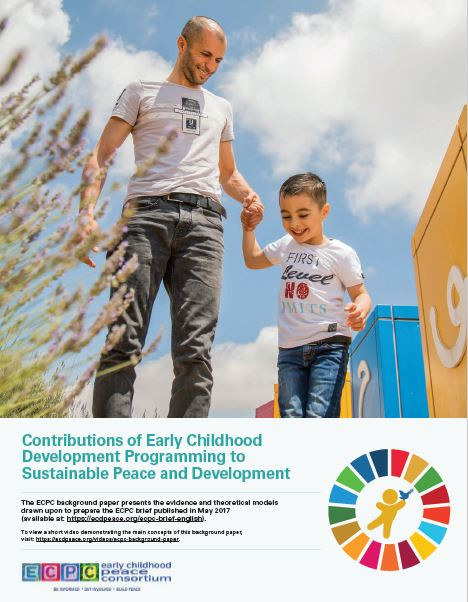 Contributions of Early Childhood Development Programming to Sustainable Peace and Development 발행 연도: 2018 저자: Chelsea K. Donaldson | Friedrich W. Affolter | Liliana Angelica Ponguta | Rima Salah | Pia R. Britto | James Leckman | Paul Connolly | Siobhan Fitzpatrick | Pauline Walmsley By intervening early and engaging with children’s families, ECD services offer a unique opportunity to make a cost-effective and sustainable impact on interrupting cycles of poverty and violence. Given that efforts towards sustainable peace must encompass all sectors and address all societal levels, there is a crucial need for implementing “multi-level ECD services” that center on the whole child and engage his or her surrounding ecological context. These comprehensive ECD services can not only improve child development outcomes, but also strengthen competencies in caregivers, address stressors and conflict drivers in the community and build institutional capacities to reduce structural violence. The purpose of this background paper is to merge insights from both micro and macro-level perspectives to demonstrate how ECD services can be leveraged to sustainable peace and development. While peacebuilding experts have traditionally focused on macro-level strategies such as government reform or economic rehabilitation interventions, ECD practitioners have focused primarily on micro-level interventions of individual children and families without much exploration of how ECD services can be leveraged to mitigate risks of conflict and transform relationships across communities and regions.
 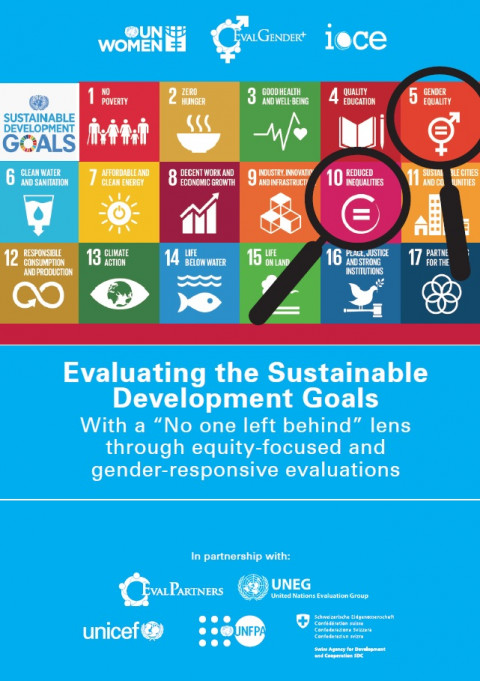 Evaluating the Sustainable Development Goals with a “No one left behind” lens through equity-focused and gender-responsive evaluation 발행 연도: 2016 저자: Michael Bamberger | Marco Segone | Florencia Tateossian The purpose of this publication is to provide guidance on how to integrate an equity-focused and gender-responsive (EFGR) approach to national evaluation systems that should inform national Sustainable Development Goal (SDG) reviews. This guidance is intended to support national evaluation systems on how to integrate EFGR evaluations to inform the national reviews of SDGs. The guidance is expected to primarily serve national evaluation systems, the UN system, multilateral and bilateral development agencies, academic institutions, including specialized research centres and think tanks, private foundations, the private sector, and voluntary organizations of professional evaluators. Оценка Целей Устойчивого Развития на основе принципа «Развитие для всех без исключения» через призму гендерного равенства и социальной справедливости 발행 연도: 2016 저자: Michael Bamberger | Marco Segone | Florencia Tateossian Цель данной публикации – предоставить рекомендации относительно возможных путей интеграции принципов социальной справедливости и гендерного равенства в национальные системы оценки, которые должны будут передавать информацию для страновых обзоров Целей в области устойчивого развития (ЦУР). Статистический анализ с учетом гендера и дезагрегированных показателей, хотя и имеет важное значение, должен дополняться оценками, проводимыми на основе принципов социальной справедливости и гендерного равенства, для того, чтобы развитие охватывало всех без исключения. Руководство в первую очередь предназначено для лиц, вовлеченных в национальные системы оценки; системы Организации Объединенных Наций; многосторонних и двусторонних агентств развития; академических институтов, в том числе специализированных исследовательских и аналитических центров; частных фондов; организаций частного сектора и добровольных объединений в области профессиональной оценки. 학습도시와 지속가능발전목표: 실행을 위한 가이드 발행 연도: 2017 단체 저자: UNESCO Institute for Lifelong Learning (UIL) 학습도시의 핵심 특징(Key Features of Learning Cities)에 맞추어 이 실행 가이드는 환경 친화적이며 건강한 학습도시(환경적 지속가능발전), 평등하고 포용적인 학습도시(개인 권한 부여, 상호문화적 대화, 사회적 통합), 학습도시 내에서의 고용 및 기업가정신(경제 발전 및 문화적 번영)이라는 세 가지 주제영역으로 구성되어 있다. 지속가능발전의 이 세 가지 영역은 근본적으로 서로 연계되어 있으며, 도시에서의 평생학습 활동이 언제나 여기에 영향을 미칠 것임을 인식하는 것은 중요하다. 지속가능발전목표의 다른 영역과 마찬가지로 중요한 네 번째 영역은 문화(문화적 표현, 유산, 그리고 다양성) 영역이며, 이는 다음 장에서 공통 주제로 포함시켰다. Обучающиеся города и ЦУР: Руководство к действию 발행 연도: 2017 단체 저자: UNESCO Institute for Lifelong Learning (UIL) Документ «Обучающиеся города и ЦУР» является руководством к повсеместному внедрению обучения на протяжении всей жизни в качестве одного из основных факторов достижения 17 целей в области устойчивого развития (ЦУР). Данный документ призван содействовать преобразованию этих глобальных целей в практические действия на местном уровне путем демонстрации конкретных мер, принятых членами Глобальной сети обучающихся городов ЮНЕСКО (ГСОГ) для поддержки формирования «зеленой» и здоровой среды, обеспечения равноправия и социальной интеграции, а также создания возможностей для получения достойной работы и предпринимательской деятельности. Данное руководство к действию тесно связано с Коркским призывом к действиям в интересах создания обучающихся городов, принятым участниками третьей Международной конференции по обучающимся городам, которая прошла 18-20 сентября 2017 года в Корке (Ирландия).
 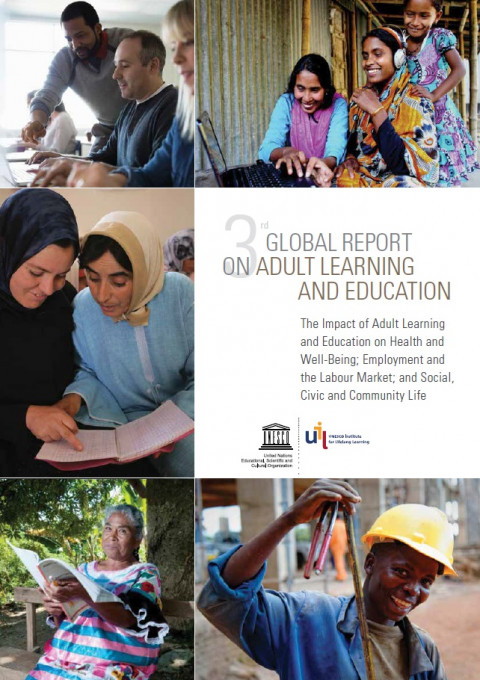 Third Global Report on Adult Learning and Education: The Impact of Adult Learning and Education on Health and Well-Being; Employment and the Labour Market; and Social, Civic and Community Life 발행 연도: 2016 단체 저자: UNESCO Institute for Lifelong Learning (UIL) This Report on Adult Learning and Education (GRALE III) comes out as the international community works towards the 2030 Agenda for Sustainable Development. It is also reference and advocacy documents, providing information for analysts and policymakers, and reminding Member States of their commitment. Here policymakers will find high-quality evidence to support policies, strategies and budgets. Stakeholders will find compelling arguments for how adult learning and education promotes sustainable development, healthier societies, better jobs and more active citizenship. Researchers will find entry points and ideas for future research.