
자료
세계시민교육에 대한 이해를 넓히고 연구, 옹호 활동, 교수, 학습 등을 향상시킬 수 있는 다양하고 유용한 자료를 찾아보세요.
3 건의 결과가 검색되었습니다
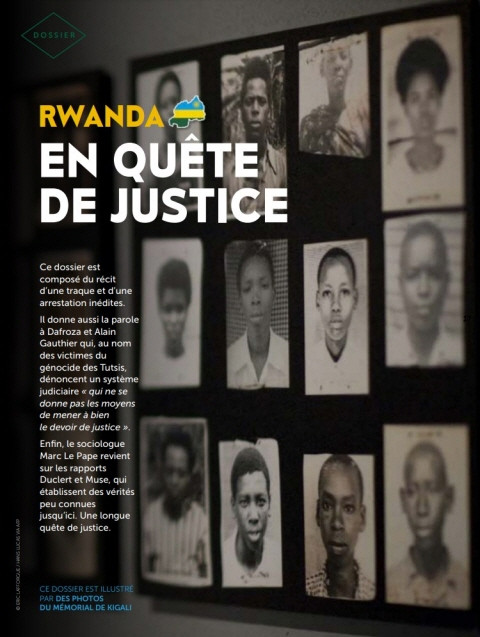 Rwanda: In Search of Justice(Humains; no.30) 발행 연도: 2024 단체 저자: Action by Christians for the Abolition of Torture (ACAT France) On the thirtieth anniversary of the genocide of the Tutsis in Rwanda, ACAT-France looks back at this tragic event for human rights. Discover the dossier in the magazine Humains #32 devoted to this subject. Rwanda: En quête de justice (Humains; n° 30) 발행 연도: 2024 단체 저자: Action by Christians for the Abolition of Torture (ACAT France) À l’occasion du trentième anniversaire du génocide des Tutsis au Rwanda, l’ACAT-France revient sur cet événement tragique pour les droits de l’Homme. Découvrez le dossier de la revue Humains #32 consacré à ce sujet.
  Enseigner Témoigner 발행 연도: 2024 단체 저자: Ligue de l'enseignement, Fédération de Paris & Ibuka France En 1994, environ 1 million de Tutsi ont été tués au Rwanda. Le génocide perpétré contre les Tutsi au Rwanda constitue l’une des principales tueries du XXème siècle. Elle a été rendue possible par l’action d’extrémistes qui ont, pendant des années, attisé la haine anti-tutsi au sein de la population rwandaise à coup de préjugés, de fausses informations, d’accusations en miroir, de stratégie de manipulation et de conditionnement des esprits à la peur, à la haine et à la violence meurtrière.Avec l’inscription récente de son enseignement dans les programmes scolaires, de plus en plus d’enseignants travaillent avec leurs élèves sur cet événement majeur de l’histoire du XXème siècle. Parallèlement, des rescapés ressentent le besoin de témoigner pour partager leur histoire avec la jeune génération et prévenir ainsi les mécanismes qui ont rendu ce drame possible. Dans ce contexte, l’association Ibuka France et la Ligue de l’enseignement engagent une action commune pour proposer un accompagnement dans l’organisation et la gestion pédagogique d’une rencontre avec un témoin-rescapé en classe. Cet accompagnement vise à créer un cadre à la fois utile et sécurisant pour l’ensemble des acteurs engagés et impactés par le témoignage en classe. In 1994, around 1 million Tutsis were killed in Rwanda. The genocide perpetrated against the Tutsis in Rwanda is one of the major killings of the twentieth century. It was made possible by the actions of extremists who, for years, stirred up anti-Tutsi hatred among the Rwandan population by means of prejudice, false informations, mirror-image accusations, a strategy of manipulation and the conditioning of minds to fear, hatred and murderous violence.With the recent inclusion of the subject in school curricula, more and more teachers are working with their pupils on this major event in the history of the 20th century. At the same time, survivors are feeling the need to share their stories with the younger generation and prevent the mechanisms that made this tragedy possible. Against this backdrop, Ibuka France and the Ligue de l'enseignement have joined forces to offer support in organising and managing a meeting with a survivor-witness in the classroom. The aim of this support is to create a framework that is both useful and reassuring for all those involved and affected by the testimonial in the classroom.