
자료
세계시민교육에 대한 이해를 넓히고 연구, 옹호 활동, 교수, 학습 등을 향상시킬 수 있는 다양하고 유용한 자료를 찾아보세요.
16 건의 결과가 검색되었습니다
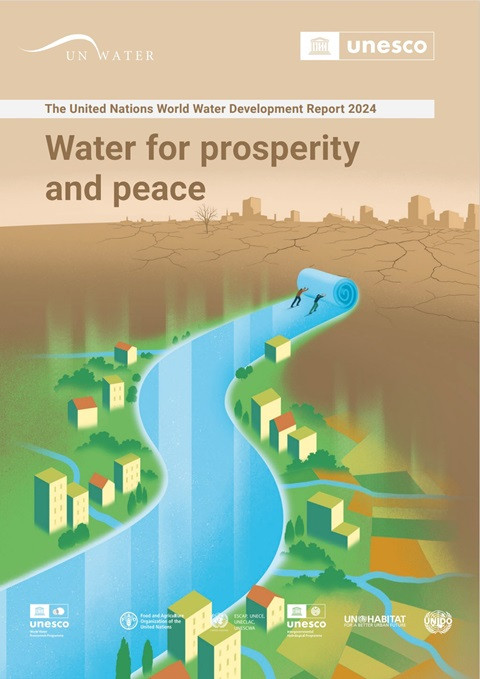 The United Nations World Water Development Report 2024: Water for Prosperity and Peace 발행 연도: 2024 단체 저자: UNESCO World Water Assessment Programme (WWAP) Developing and maintaining a secure and equitable water future underpins prosperity and peace for all. The relationship also works in the opposite direction, as poverty and inequality, social tensions, and conflict can amplify water insecurity. The 2024 edition of the United Nations World Water Development Report (UN WWDR) calls attention to the complex and interlinked relationships between water, prosperity and peace, describing how progress in one dimension can have positive, often essential, repercussions on the others.
  [Executive Summary] The United Nations World Water Development Report 2024: Water for Prosperity and Peace 발행 연도: 2024 저자: Richard Connor 단체 저자: UNESCO World Water Assessment Programme (WWAP) This is the executive summary of the 2024 edition of the United Nations World Water Development Report (UN WWDR). [요약보고서] 2024년 유엔 세계물개발보고서: 번영과 평화를 위한 물 발행 연도: 2024 저자: Richard Connor 단체 저자: UNESCO World Water Assessment Programme (WWAP) 누구나 안전하고 공평하게 물을 이용할 수 있도록 개발하고 관리하는 것은, 번영과 평화를 위한 초석이다. 그러나 빈곤과 불평등, 사회적 긴장과 갈등으로 인해 물 안보가 저해됨에 따라 번영과 평화가 약화되는 부작용이 초래되기도 한다. 본 보고서는 지속가능한 물 관리와 번영, 평화 간의 복잡한 상호관계에 주목하여, 어느 한 부문에서의 진보과정이 다른 부문들에게 어떻게 긍정적이고, 때로는 필수적인 영향을 미치는지에 대해 설명하고자 한다.
 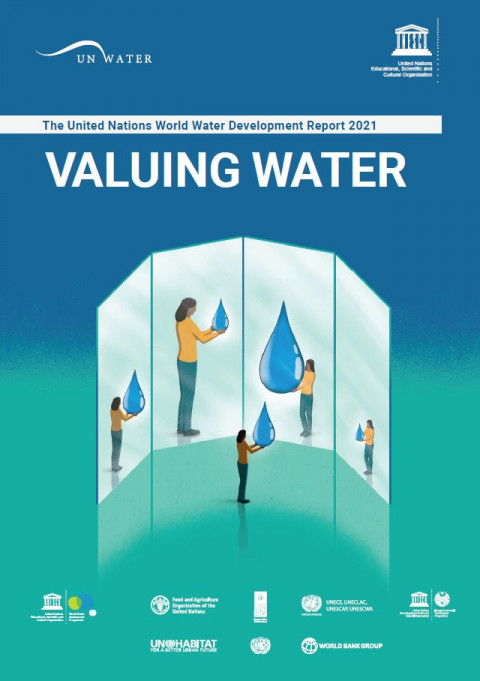 The United Nations World Water Development Report 2021: Valuing Water 발행 연도: 2021 단체 저자: UNESCO World Water Assessment Programme (WWAP) The 2021 edition of the United Nations World Water Development Report focuses on valuing water. There is enough water for all provided we use and manage it efficiently. But we don’t. We invest too little, and ineffectively. We use too much water, creating scarcities. Quality is suffering and so is the environment.The value we place on water varies, depending upon who is using it, and why. Value can be a guide to what our goals should be, what actions are needed, and where we should invest. Many of our problems arise because we don’t value water highly enough; all too often water is not valued at all.This report explains various approaches to valuing water for environmental considerations, water-related infrastructure, drinking water, sanitation and hygiene. It looks at valuation issues in food and agriculture, business, industry, energy and financing. And it highlights the perspectives of different value systems and cultures, and associated social and gender-based considerations.
  The Water, Energy, and Food Security Nexus in Asia and the Pacific: The Pacific 발행 연도: 2024 단체 저자: UNESCO | UNESCO Bangkok | UNESCO Jakarta Global climate targets and the call to action from the Pacific must be heeded while major environmental, societal and economical progress is needed in the region. Leadership from Pacific Island Countries and Territories needs to be supported with action and resourcing to meet both global net zero goals and regional SDGs. This volume applies the water, energy, and food security nexus approach solely in a Pacific context for the first time, bringing together the region’s 17 countries and 7 Territories. This approach improves the security of each sector and supports regional climate and environmental priorities. Effective intersectoral solutions exist with connectivity between the water-food and water-energy sectors of particular benefit. Traditional knowledge and crop production have historically and will continue to play a major role in food security and water resources management in the region. Increased energy demand needs to be met with increased renewables installation as well as new technologies that encompass storage and transport considerations.
  Hydro Resilience: Citizen and Open Science for Climate Adaptation 발행 연도: 2024 단체 저자: UNESCO Human-induced climate change is affecting weather and climate extremes worldwide and causing changes in the atmosphere, ocean, cryosphere and biosphere leading to widespread adverse impacts on people and nature. These conditions have exposed people to reduced water security and negatively affected food security and ecosystem services. Despite advances in climate and water sciences, there is still a significant gap between information availability and its uptake by stakeholders. Although there is abundant data and information available on the potential impacts of climate change, there is a lack of expert knowledge on the user side, which limits the development and implementation of effective adaptation strategies at the local level. There is also an opportunity to bring communities more on board to manage their climate risk through citizen engagement and to ensure that vulnerable communities can benefit from climate science foresight. To address these challenges, a new project was developed called ‘Hydro Resilience: Citizen and Open Science for Climate Adaptation’ to pilot citizen and open science applications for climate risk management and to support water management under climate change uncertainty.