
자료
세계시민교육에 대한 이해를 넓히고 연구, 옹호 활동, 교수, 학습 등을 향상시킬 수 있는 다양하고 유용한 자료를 찾아보세요.
71 건의 결과가 검색되었습니다
 Les pratiques innovantes de la participation des jeunes dans les médias: une étude de recherche sur les douze initiatives du monde en développement et régions sous-développées du monde 발행 연도: 2006 저자: Sanjay Asthana 단체 저자: UNESCO Ce livre sera utile en tant que guide de recherche et de référence aux centres communautaires multimédias, les professionnels des médias de l'éducation, les organisations non-gouvernementales, les décideurs, les planificateurs, les professionnels des médias, des activistes sociaux, des chercheurs, etc. Une contribution directe du livre sont les quelques exemples qui peuvent être adaptés et / ou reproduits par diverses initiatives qui se lancent dans la création de programmes de médias de la jeunesse dans le monde entier. An intercultural program from a Balkan perspective 발행 연도: 2003 저자: Emilia Ilieva The author focuses on the particular case of the Bosporus International Network as an intercultural program. Bosporus International Network is a network of five independent and registered NGOs in Germany, Bulgaria, Romania, Greece and Turkey and four local groups in Albania, Macedonia/FYROM, Slovenia and Hungary that share the same name, goals and aims. The goal of the network can best be described as “building bridges" between cultures. Fórum Panafricano: fundamentos e recursos para uma cultura de paz 발행 연도: 2013 단체 저자: African Union The Pan-African Forum “ Sources and resources for a culture of peace” was held in Luanda, Angola, from 26 to 28 March 2013, and was jointly organized by UNESCO, the African Union and the Government of Angola, under the High Patronage of H. E. Mr José Eduardo dos Santos, President of the Republic of Angola. This forum was the result of a close cooperation between UNESCO and the African Union, one of their main objectives being building peace in Africa, through the promotion of a culture of peace based on the intrinsic values of African societies. The Republic of Angola Government, through its President of the Republic H. E. Mr José Eduardo dos Santos, resolutely engaged in this process with major financial and technical support for the organization of the Forum in the Angolan capital city. As indicated in the Action Plan adopted by the participants in plenary (Annex I), recommendations made during the Forum are directed at all components of African society : political leaders, national and regional institutions, civil society, community associations, youth movements and women’s organizations, religious and traditional leaders, entrepreneurs and leaders from the private sector, etc. The implementation of the Action Plan will be continuously monitored by the two institutions that jointly organized the Luanda Forum, the African Union and UNESCO. Representatives from the 55 African countries participating in the Forum will both contribute to the proposal for action by bringing their national experience and take the lead in the follow‐up of the recommendations made at country level. In order to ensure this follow‐up it will be important to link together the participants by the creation of an African Network for the Promotion of a Culture of Peace and Non‐violence. The representatives of African countries will play the role of focal points of the awareness campaign at the national level. Finally, the agenda of the Forum includes a plan to hold a roundtable on the establishment of a multi-stakeholder partnership for action. Organized with the participation of regional institutions, public and private economic actors as well as representatives of Governments and Civil Society, this session will be the occasion to launch a continental and lasting Movement for the promotion of a culture of peace. For this round table and for the Campaign, the stakeholders can now witness the action as their Foundation / Company / Institution / Organization leads to help in building the defence of peace in the minds of men and women and ensure that peace is a reality: "Make Peace Happen".
 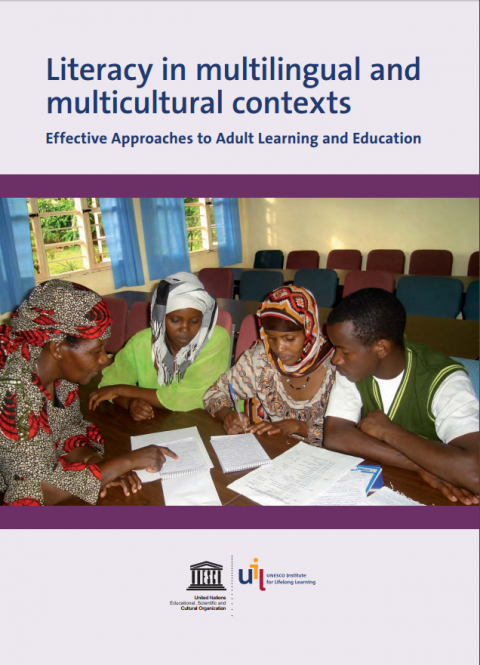 Literacy in multilingual and multicultural contexts: effective approaches to adult learning and education 발행 연도: 2016 저자: Ulrike Hanemann, Cassandra Scarpino All of the literacy programmes featured in this publication offer valuable experiences and lessons on how the challenges posed by linguistic and cultural diversity can be productively addressed by harnessing the potential of language and culture as enriching resources in the process of literacy teaching and learning. A major lesson that has emerged over the years is that the use of local languages as the medium of instruction enhances the effectiveness and efficiency of the learning process in developing literacy, numeracy and (second or more) language skills. However, mother tongue-based literacy not only facilitates the learning process, but is also an important symbol of identity, unity and self-determination. It is closely intertwined with culture and local values, wisdom, worldviews and tradition. A number of the featured programmes demonstrate that language and culture in education are highly political. Respect for all languages and cultures, and their equal treatment, can play a critical role in fostering national cohesion. In some cases, this is contributing to rebuilding peace in post-conflict communities. Literacy programmes that contribute to the preservation of linguistic and cultural diversity should, also, be viewed as integral to sustainable development. Pan-African forum: sources and resources for a culture of peace 발행 연도: 2013 단체 저자: African Union The Pan-African Forum “ Sources and resources for a culture of peace” was held in Luanda, Angola, from 26 to 28 March 2013, and was jointly organized by UNESCO, the African Union and the Government of Angola, under the High Patronage of H. E. Mr José Eduardo dos Santos, President of the Republic of Angola. This forum was the result of a close cooperation between UNESCO and the African Union, one of their main objectives being building peace in Africa, through the promotion of a culture of peace based on the intrinsic values of African societies. The Republic of Angola Government, through its President of the Republic H. E. Mr José Eduardo dos Santos, resolutely engaged in this process with major financial and technical support for the organization of the Forum in the Angolan capital city. As indicated in the Action Plan adopted by the participants in plenary (Annex I), recommendations made during the Forum are directed at all components of African society : political leaders, national and regional institutions, civil society, community associations, youth movements and women’s organizations, religious and traditional leaders, entrepreneurs and leaders from the private sector, etc. The implementation of the Action Plan will be continuously monitored by the two institutions that jointly organized the Luanda Forum, the African Union and UNESCO. Representatives from the 55 African countries participating in the Forum will both contribute to the proposal for action by bringing their national experience and take the lead in the follow‐up of the recommendations made at country level. In order to ensure this follow‐up it will be important to link together the participants by the creation of an African Network for the Promotion of a Culture of Peace and Non‐violence. The representatives of African countries will play the role of focal points of the awareness campaign at the national level. Finally, the agenda of the Forum includes a plan to hold a roundtable on the establishment of a multi-stakeholder partnership for action. Organized with the participation of regional institutions, public and private economic actors as well as representatives of Governments and Civil Society, this session will be the occasion to launch a continental and lasting Movement for the promotion of a culture of peace. For this round table and for the Campaign, the stakeholders can now witness the action as their Foundation / Company / Institution / Organization leads to help in building the defence of peace in the minds of men and women and ensure that peace is a reality: "Make Peace Happen". Forum panafricain: sources et ressources pour une culture de paix 발행 연도: 2013 단체 저자: African Union Le Forum «Sources et ressources pour une culture de paix » panafricaines a eu lieu à Luanda, en Angola, du 26 au 28 Mars 2013, et a été organisée conjointement par l'UNESCO, l'Union africaine et le Gouvernement de l'Angola, sous le Haut Patronage de SEM José Eduardo dos Santos, Président de la République d'Angola. Ce forum a été le résultat d'une étroite collaboration entre l'UNESCO et l'Union africaine, l'un de leurs principaux objectifs étant consolidation de la paix en Afrique, à travers la promotion d'une culture de la paix fondée sur les valeurs intrinsèques des sociétés africaines. Le gouvernement de la République d'Angola, à travers son Président de la République H. E. M. José Eduardo dos Santos, résolument engagé dans ce processus avec le soutien financier et technique majeur pour l'organisation du Forum dans la capitale angolaise. Comme indiqué dans le Plan d'action adopté par les participants en séance plénière (annexe I), les recommandations formulées lors du Forum visent à toutes les composantes de la société africaine: les dirigeants politiques, les institutions nationales et régionales, la société civile, les associations communautaires, les mouvements de jeunesse et les organisations de femmes , les chefs religieux et traditionnels, les entrepreneurs et les dirigeants du secteur privé, etc. la mise en œuvre du plan d'action seront surveillés en permanence par les deux institutions qui ont organisé conjointement le Forum Luanda, l'Union africaine et l'UNESCO. Les représentants des 55 pays africains participant au Forum seront tous deux contribuer à la proposition d'action en apportant leur expérience nationale et prendre les devants dans le suivi des recommandations formulées au niveau des pays. Afin d'assurer ce suivi, il sera important de relier entre eux les participants par la création d'un Réseau africain pour la promotion d'une culture de la paix et de la non-violence. Les représentants des pays africains vont jouer le rôle des points focaux de la campagne de sensibilisation au niveau national. Enfin, l'ordre du jour du Forum comprend un plan pour tenir une table ronde sur la mise en place d'un partenariat multipartite pour l'action. Organisé avec la participation des institutions régionales, publiques et acteurs économiques privés ainsi que des représentants des gouvernements et de la société civile, cette session sera l'occasion de lancer un mouvement continental et durable pour la promotion d'une culture de la paix. Pour cette table ronde et de la campagne, les parties prenantes peuvent maintenant témoigner de l'action que leur / Société / Institution / Organisation Fondation mène pour aider à la construction de la défense de la paix dans l'esprit des hommes et des femmes et de veiller à ce que la paix est une réalité: « Agissons pour la paix ». Forum panafricain: sources et ressources pour une culture de la Paix 발행 연도: 2013 단체 저자: African Union The Pan-African Forum “ Sources and resources for a culture of peace” was held in Luanda, Angola, from 26 to 28 March 2013, and was jointly organized by UNESCO, the African Union and the Government of Angola, under the High Patronage of H. E. Mr José Eduardo dos Santos, President of the Republic of Angola. This forum was the result of a close cooperation between UNESCO and the African Union, one of their main objectives being building peace in Africa, through the promotion of a culture of peace based on the intrinsic values of African societies. The Republic of Angola Government, through its President of the Republic H. E. Mr José Eduardo dos Santos, resolutely engaged in this process with major financial and technical support for the organization of the Forum in the Angolan capital city. As indicated in the Action Plan adopted by the participants in plenary (Annex I), recommendations made during the Forum are directed at all components of African society : political leaders, national and regional institutions, civil society, community associations, youth movements and women’s organizations, religious and traditional leaders, entrepreneurs and leaders from the private sector, etc. The implementation of the Action Plan will be continuously monitored by the two institutions that jointly organized the Luanda Forum, the African Union and UNESCO. Representatives from the 55 African countries participating in the Forum will both contribute to the proposal for action by bringing their national experience and take the lead in the follow‐up of the recommendations made at country level. In order to ensure this follow‐up it will be important to link together the participants by the creation of an African Network for the Promotion of a Culture of Peace and Non‐violence. The representatives of African countries will play the role of focal points of the awareness campaign at the national level. Finally, the agenda of the Forum includes a plan to hold a roundtable on the establishment of a multi-stakeholder partnership for action. Organized with the participation of regional institutions, public and private economic actors as well as representatives of Governments and Civil Society, this session will be the occasion to launch a continental and lasting Movement for the promotion of a culture of peace. For this round table and for the Campaign, the stakeholders can now witness the action as their Foundation / Company / Institution / Organization leads to help in building the defence of peace in the minds of men and women and ensure that peace is a reality: "Make Peace Happen". Bilder, Gefühle, Erwartungen : Über die emotionale Dimension von Gedenkstätten und den Umgang von Jugendlichen mit dem Holocaust What role do emotions play in the way in which young people confront the history of the Holocaust? This article examines memorial sites and video interviews of survivors as interfaces of the representation and appropriation of the past. These contact zones satisfy the need for emotional participation and for information. Videos uploaded by youngsters on the internet following their visit to memorial sites, and short films extracted by pupils from survivor's video interviews, were used as examples in order to examine emotional strategies. These products of involvement point to stored images and ideas mediated by mass media. This repertoire of cultural knowledge and feelings can serve as a template for understanding how young people process the Holocaust emotionally. (By the author) Experiential learning of history through youth journeys to Poland Keren (1985), who examined the centrality of the Holocaust in five different periods in the history of the state of Israel, claims that the turning point for the educational system was an outcome not only of increased public awareness, but of the events 'receding' into history, which allowed an objective, and more balanced and detached, perspective. The study revealed that children whose parents were born in Europe or in Western countries were more eager to learn about the Holocaust than those of non-European origin, indicating a relationship between origin and desire to know about the Holocaust period. The journey experience had not yet matured and shaped into a deeper understanding that could be attributed to the personal identity of the participant and to examining it after the journey using accepted research tools. (By the author)
 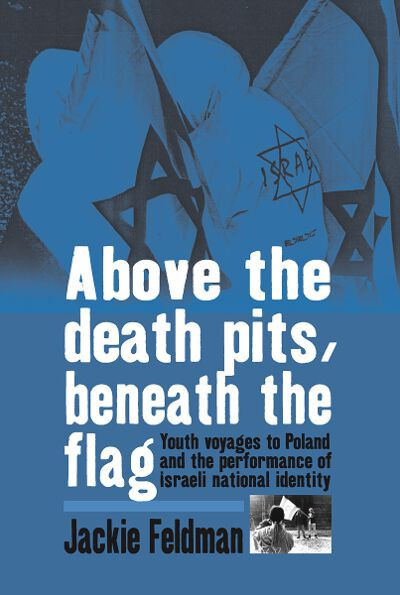 Above the Death Pits, Beneath the Flag - Youth Voyages to Poland and the Performance of Israeli National Identity Israeli youth voyages to Poland are one of the most popular and influential forms of transmission of Holocaust memory in Israeli society. Through intensive participant observation, group discussions, student diaries, and questionnaires, the author demonstrates how the State shapes Poland into a living deathscape of Diaspora Jewry. In the course of the voyage, students undergo a rite of passage, in which they are transformed into victims, victorious survivors, and finally witnesses of the witnesses. By viewing, touching and smelling Holocaust-period ruins and remains, by accompanying the survivors on the sites of their suffering and survival, crying together and performing commemorative ceremonies at the death sites, students from a wide variety of family backgrounds become carriers of Shoah memory. They come to see the State and its defense as the romanticized answer to the Shoah. These voyages are a bureaucratic response to uncertainty and fluidity of identity in an increasingly globalized and fragmented society. This study adds a measured and compassionate ethical voice to ideological debates surrounding educational and cultural forms of encountering the past in contemporary Israel, and raises further questions about the representation of the Holocaust after the demise of the last living witnesses. (By the author)