
자료
세계시민교육에 대한 이해를 넓히고 연구, 옹호 활동, 교수, 학습 등을 향상시킬 수 있는 다양하고 유용한 자료를 찾아보세요.
1,329 건의 결과가 검색되었습니다
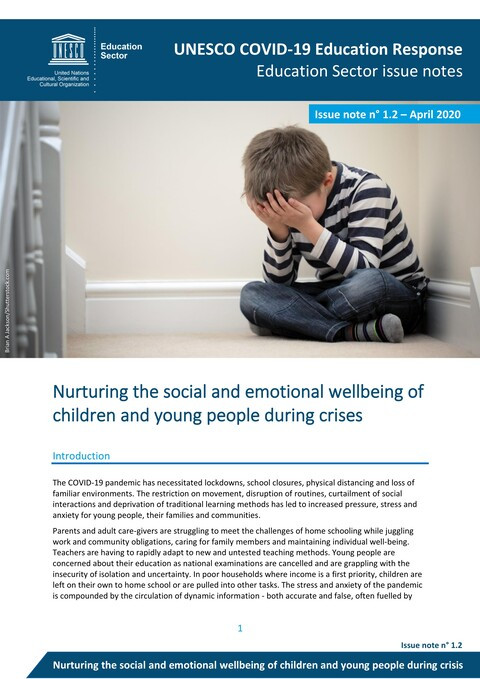 Favoriser le bien-être social et émotionnel des enfants et des jeunes en période de crise(Réponse éducative de l’UNESCO face au Covid-19: Notes du Secteur de l’éducation; No.1.2, 2020) 발행 연도: 2020 단체 저자: UNESCO La pandémie de COVID-19 a nécessité le confinement, la fermeture des écoles, la distanciation physique et la perte d’environnements familiers. Les restrictions de déplacement, le bouleversement des routines, la diminution des interactions sociales et la privation des méthodes d’apprentissage traditionnelles ont eu pour effet d’augmenter la pression, le stress et l’anxiété chez les jeunes, leurs familles et leurs communautés Les parents et les adultes aidants déploient des efforts considérables pour gérer l’école à la maison, tout en jonglant avec leurs obligations professionnelles et communautaires, s’occupant des membres de la famille et préservant le bien-être de chacun. Les enseignants doivent s’adapter rapidement à de nouvelles méthodes d’enseignement non éprouvées. Les jeunes s’inquiètent pour leurs études à cause de l’annulation des examens et sont aux prises avec un sentiment d’insécurité dû à l’isolement et à l’incertitude. Dans les foyers pauvres, où le revenu est la priorité absolue, les enfants sont livrés à euxmêmes pour leur travail scolaire ou en sont détournés pour effectuer d’autres tâches. Le stress et ’anxiété suscités par la pandémie sont aggravés par la circulation d’informations, exactes ou fausses, souvent exacerbées par les articles à sensation des médias. Non seulement le sentiment d’insécurité en est accru, mais cela crée un terrain propice à la propagation de l’intolérance, du racisme, de la xénophobie et des crimes de haine. Pour combattre et contrer l’anxiété sociale, les troubles émotionnels ainsi que le sentiment d’insécurité et de peur générés par le COVID-19, il est urgent et nécessaire que les familles et les communautés acquièrent des capacités d’adaptation et une résilience émotionnelle vitales. Les compétences sociales et émotionnelles sont des pratiques bien établies, fondées sur des données, qui peuvent être adaptées pour équiper les enfants, les jeunes, les parents et les enseignants des connaissances, compétences, attitudes et comportements nécessaires pour rester en bonne santé et positifs, gérer ses émotions, s’engager en toute conscience, adopter un comportement social positif et faire face aux difficultés quotidiennes. 培育儿童和青少年在危机期间的社会情感健康 (联合国教科文组织针对新冠疫情的教育对策教育部门议题说明; No.1.2, 2020) 발행 연도: 2020 단체 저자: UNESCO 新型冠状病毒大流行迫使人们采取隔离措施,保持社交距离并关闭学校,导致人们失去熟悉的环境,行动受限,日常生活被打乱,社交活动减少,传统的学习方式遭遇终结,因此带给年轻人及其家庭和社区成员前所未有的压力和焦虑感。 父母和成人照顾者不仅要兼顾工作和社区义务、照顾家庭成员并保持个人健康,同时,还要努力应对孩子在家上学所带来的挑战。教师需要快速适应未经测试的新教学方法。全国考试取消令年轻人对自身的教育前景备感担忧,社交距离和不确定性带给他们不安全感。对一些贫困家庭而言,维持收入是第一要务,因此他们不得不将孩子独自留在家中学习,或者吩咐他们去做其它工作。实时更新的疫情信息,加剧了人们的压力和焦虑感。这些消息真假参半,时不时蹦出一些耸人听闻的新闻报导,不仅增加人们的不安全感,也为狭隘心理、种族主义、排外情绪以及仇视性犯罪行为提供了生长的土壤。 为了应对新型冠状病毒引起的社交焦虑、情绪波动和令人恐惧的不安全感,家庭和社区迫切需要培养必要的应对技能和情绪复原能力。经实践证明,社会情感技能可以赋予儿童、青年、父母和教师必要的知识、技能、态度和行为,有助于其保持健康和积极的状态,有效管理情绪,采取正念的做法,展现亲社会行为并应对日常挑战。
 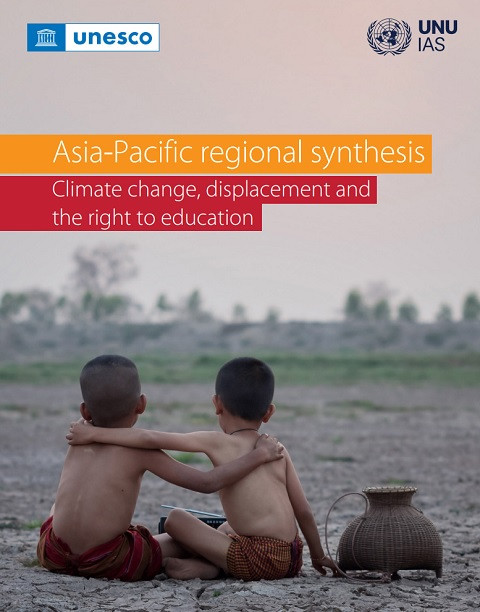 Asia-Pacific Regional Synthesis: Climate Change, Displacement and the Right to Education 발행 연도: 2023 단체 저자: UNESCO | United Nations University Institute for the Advanced Study of Sustainability (UNU-IAS) | UNESCO Bangkok In 2020, 30.7 million people were displaced by natural disasters – disasters which the scientific community acknowledges are more frequent and more intense as a result of climate change. In Asia and the Pacific alone, 21.3 million people were displaced, making it the region the most impacted by national disasters and climate change in the world. Therefore, country case studies were carried out in Bangladesh, India, Indonesia, Tuvalu, and Viet Nam to examine not only specific vulnerabilities to climate change and related mobility, but also the impacts of climate change on the right to education in Asia and the Pacific. These case studies show that climate change directly threatens education – through the destruction of schools and property – but also indirectly puts education in peril by forcing people to cross borders, ensuring neither legal residency nor the right to education. This regional synthesis report aims to guide policy-makers through providing operational policy recommendations on how to ensure education is protected in Asia and the Pacific in the face of climate change and displacement from a human rights-based approach. The report is one of four being developed and will contribute to the global initiative on climate change and displacement and the right to education – launched by UNESCO in 2020 – by informing the development of a Global Report with global policyrecommendations.How climate change impacts the right to education in Asia and the Pacific21.3million displacementstook place in Asia and the Pacific
  Good Practices in South-South and Triangular Cooperation: Transforming Education and Delivering on SDG 4 발행 연도: 2023 단체 저자: UNESCO | United Nations Children's Fund (UNICEF) | UN. Office for South-South Cooperation (UNOSSC) Quality Education: South-South cooperation as a lever for action. This publication showcases 40 innovative solutions on how South-South and Triangular Cooperation can transform education.South-South and triangular cooperation is at the heart of SDG4 implementation on Quality Education. As demonstrated in the last few years, this kind of cooperation can mobilize action, ambition, solidarity and solutions to transform education in a rapidly changing world. From the inclusive approach to digital learning in Lao People’s Democratic Republic to distance learning and teacher training strategies in Caribbean SIDS, South-South cooperation is a key modality of cooperation for transforming education and supporting internationally agreed development goals, including the 2030 Agenda. This publication showcases 40 innovative solutions on how South-South and Triangular Cooperation can transform education.This publication presents forty innovative solutions from around the world which showcase how South-South and triangular cooperation can support the development of more efficient, equitable and resilient education systems that are adapted to the challenges of the 21st century. Countries of the South, with the support of partners, must enhance South-South and triangular cooperation to exchange resources, technology, skills and knowledge to realize the promise of making inclusive, quality education available to all.
 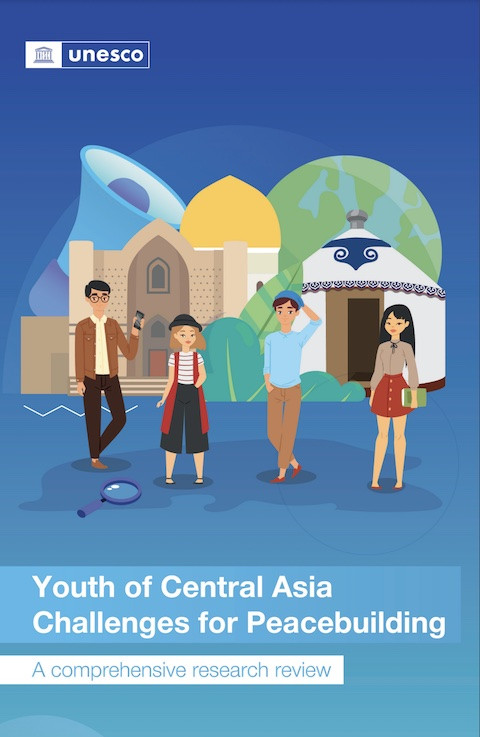 Youth of Central Asia, Challenges for Peacebuilding: A Comprehensive Research Review 발행 연도: 2021 저자: Laura Yerekesheva 단체 저자: UNESCO The estimations are that by 2030, the world will be home to 1.3 billion young people. This speaks about the importance of the youth for development in various parts of the globe, particularly in developing countries which constitute 90% of the global youth population. From comprehensive holistic perspective peace, peacebuilding and dialogue embrace all aspects and dimensions of life – inter-generational, social, economic, political, ethnic, religious, civic, ideological, cultural, and natural. The youth related issues are directly linked with the SDGs agenda. Central Asian states are also on the list of developing countries, with an increasing demographic share of the youth in the general population, meaning that the countries of the region are “young.” As of 2020, the total population of the four countries of Central Asia (Kazakhstan, Kyrgyzstan, Tajikistan and Uzbekistan) was 68.46 million, of which youth comprised 16.55 million or 24,1%. What Challenges for Peacebuilding the Youth of Central Asia Face? This highlights the urgency required for elaborating and implementing special policies on youth development. For Central Asia, the peace and peacebuilding agenda is the development agenda, and vice versa, as neither is possible without the other, and these in turn are intrinsically linked with youth-related issues. This report provides a detailed overview of the existing challenges to the youth of the 4 countries of the region – Kazakhstan, Kyrgyzstan Tajikistan, Uzbekistan – structured around three main themes of peacebuilding: (1) an education and learning environment; (2) economic and social participation; and (3) civic engagement. Governments, international organizations, professionals and policymakers in the youth, peacebuilding and development sectors, academia and NGOs are invited to join forces to accelerate the achievement of youth development for a more just, sustainable and peaceful future. Молодежь Центральной Азии, Вызовы миростроительству : Комплексный исследовательский обзор 발행 연도: 2021 저자: Laura Yerekesheva 단체 저자: Организация Объединенных Наций по вопросам образования, науки и культуры (UNESCO) По оценкам, к 2030 году в мире будут проживать 1,3 миллиарда молодых людей. Это говорит о важной роли, которую будет играть молодежь, особенно в развивающихся странах, в которых проживает 90% общего мирового населения молодежи. В рамках всеобъемлющего системного подхода, мир, миростроительство и диалог подразумевают все аспекты и измерения жизни - межпоколенческие, социальные, экономические, политические, этнические, религиозные, гражданские, идеологические, культурные и природные. Вопросы, связанные с молодежью, напрямую связаны с повесткой в области достижения Целей устойчивого развития (ЦУР). Государства Центральной Азии относятся к развивающимся странам с высокой долей молодежи в общем составе населения, что делает эти страны «молодыми». По состоянию на 2020 год общая численность населения четырех стран Централь ной Азии (Казахстана, Кыргызстана, Таджикистана и Узбекистана) - 68,46 миллиона человек, из которых молодежь составляла 16,55 миллиона человек или 24,1%.Это свидетельствует о важности разработки и реализации специальных стратегий и мер по развитию молодежи. Для Центральной Азии повестка дня в области мира и миростроительства – это, прежде всего, повестка дня в области развития, и наоборот, поскольку обе они взаимосвязаны между собой, а также с проблемами молодежи.В данном отчете представлен подробный обзор существующих вызовов, с которыми сталкивается молодежь четырех стран региона - Казахстана, Кыргызстана, Таджикистана, Узбекистана. Данные вызовы структурированы вокруг трех основных тем миростроительства: (1) образование и обучающая среда; (2) экономическое и социальное участие; и (3) гражданское участие.Правительствам, международным организациям, специалистам и политикам, работающим в сферах молодежи, миростроительства и развития, академическим кругам и неправительственным организациям предлагается объединить усилия для ускорения достижения целей развития молодежи для более справедливого, устойчивого и мирного будущего.
  “I Don’t Have a Gender, Consciousness, or Emotions. I’m Just a Machine Learning Model” 발행 연도: 2023 단체 저자: UNESCO | International Research Centre on Artificial Intelligence (IRCAI) An introduction to a forthcoming Gender bias in Artificial Intelligence report coming out on March 8, 2024. As we stand on the precipice of a technological revolution driven by Artificial Intelligence (AI), it is imperative to ensure that this future is shaped equitably, representing all genders. With this essay we are excited to announce our forthcoming in-depth report on Gender and Artificial Intelligence in a partnership between IRCAI and UNESCO, set for release on March 8, 2024. As we prepare for this milestone event, we extend an invitation to experts, scholars, and all interested stakeholders to join us in our research.
  Missing Links in AI Governance 발행 연도: 2023 단체 저자: UNESCO | Mila – Quebec Artificial Intelligence Institute Over the next decade, Artificial Intelligence (“AI”) will continue to significantly impact societies. While these scientific and technological advances take place at an extraordinary pace, it is necessary that we simultaneously stimulate a global and inclusive conversation around their development and governance. It is in this context that Mila and UNESCO join forces to steer a collective work to identify and understand missing links in AI governance. This publication is a compilation of 18 selected submissions from a global open call for proposals launched in 2021. The works featured cross disciplinary and geographical boundaries, and include the perspectives of academics, civil society representatives, and innovators to help shift the conversation on AI from what we do know and foresee to what we do not, the missing links. The topics covered are wide ranging, including AI and Indigenous rights, Deepfakes, Third-Party Audits of AI Systems, AI alignment with SDGs, and the centralization of decision-making power AI allows. Policymakers and civil society members will benefit from the insightful perspectives brought forward to face the immense task they are presented with – which is to ensure the development of AI in a human-centred, responsible and ethical way, in accordance with human rights. Angles morts de la gouvernance de l’IA 발행 연도: 2023 단체 저자: Organisation des Nations Unies pour l'éducation, la science et la culture (UNESCO) | Mila – Quebec Artificial Intelligence Institute Au cours de la prochaine décennie, l’intelligence artificielle (IA) continuera d’avoir une influence et un effet considérables sur nos sociétés. Alors que ces avancées scientifiques et technologiques se succèdent à un rythme soutenu, il est essentiel de poursuivre et accélérer la conversation mondiale et inclusive sur leur développement et leur gouvernance.C’est dans ce contexte que Mila et l’UNESCO unissent leurs forces pour mener un travail collectif pour cerner des questions importantes et novatrices quant à la gouvernance de l’IA. La présente publication est une compilation de 18 chapitres sélectionnés à la suite d’un appel à contributions lancé mondiale-ment en 2021. Les articles présentés traversent les frontières disciplinaires et géographiques en plus d’inclure différentes perspectives, incluant celles d’universitaires, de membres de la société civile et d’innovateurs et innovatrices. Cette publication vise à influencer la conversation sur l’IA pour que celle-ci porte moins sur ce que nous savons déjà que sur ce qui échappe à notre regard : les angles morts de l’IA. Les sujets abordés sont donc variés et incluent notamment la perspective du droit international et des droits des peuples autochtones, les audits des systèmes d’IA, l’alignement de ces technologies avec les objectifs de développement durable des Nations Unies et la centralisation du pouvoir décisionnel que permet cette technologie de rupture.Les membres des milieux politiques, de la recherche et de la société civile engagés dans cette conversation mondiale sur l’IA bénéficieront des perspectives présentées pour faire face à l’immense tâche qui leur incombe : assurer un développement de l’IA qui soit éthique, inclusif et conforme aux droits humains.« Les guerres prenant naissance dans l’esprit des hommes et des femmes, c’est dans l’esprit des hommes et des femmes que doivent être élevées les défenses de la paix »18 propositions sélectionnées offrant une approche pluraliste, informée et critique de la gouvernance de l’IA.
 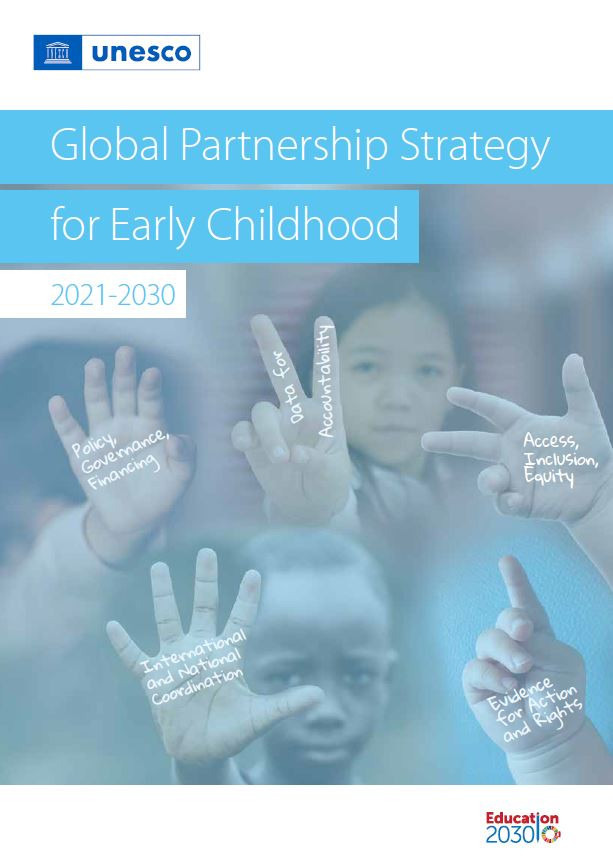 Global Partnership Strategy for Early Childhood, 2021-2030 발행 연도: 2022 단체 저자: UNESCO The Global Partnership Strategy for early childhood is the result of inter-agency efforts to counter the negative trend in education and to overcome the reduction and closure of services for health, nutrition, sanitation, and child protection in all regions of the world during the COVID-19 pandemic. Well-designed and implemented policies and services for early childhood care, education and development enable all countries to protect and guarantee child rights, achieve high rates of return on their investments in child and family development and widen avenues for transforming societies and lives.