
자료
세계시민교육에 대한 이해를 넓히고 연구, 옹호 활동, 교수, 학습 등을 향상시킬 수 있는 다양하고 유용한 자료를 찾아보세요.
1,329 건의 결과가 검색되었습니다
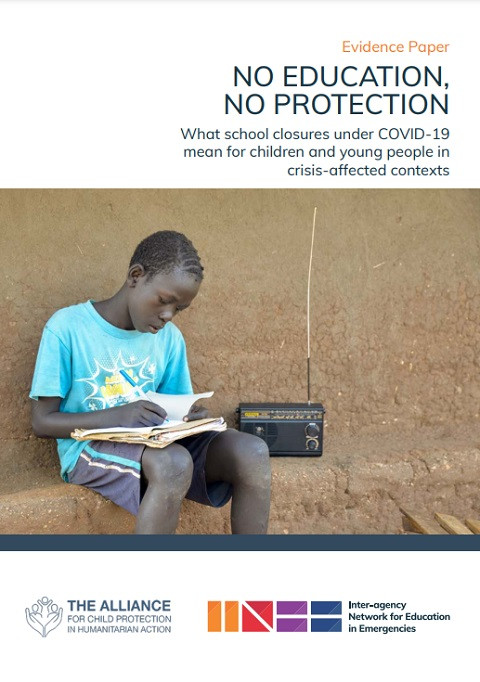 No Education, No Protection: What School Closures Under COVID-19 Mean for Children and Young People in Crisis-Affected Contexts 발행 연도: 2021 단체 저자: Inter-agency Network for Education in Emergencies (INEE) | Alliance for Child Protection in Humanitarian Drawing from research and experience on previous infectious disease outbreaks and an emergent body of work from the current COVID-19 pandemic, this report highlights the primarily negative effects resulting from the combination of sudden school closures and restricted access to and availability of services, social networks, and other protective facilities for children and young people living in crisis-affected contexts. The consequences of school closures on education and child protection can be categorized into three principal areas:1. Loss of learning and impediments to providing inclusive, equitable, quality education2. Negative impact on child well-being and healthy development3. Amplified child protection risks and harms experienced by children and young people
 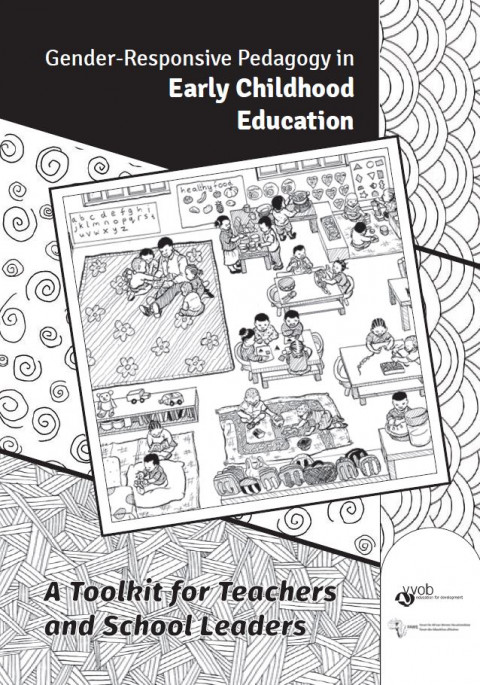 Gender-responsive Pedagogy for Early Childhood Education: A Toolkit for Teachers and School Leaders 발행 연도: 2019 단체 저자: VVOB | Forum for African Women Educationalists (FAWE) The Gender-Reponsive Pedagogy for Early Childhood Education Toolkit targets early childhood education teachers and all other practitioners who deal with younger children. It is a practical guide that can be adapted to any context and the related needs as well as a source of ideas and resources that individual teachers and school leaders can put to immediate use in their classrooms and schools. The toolkit is also a useful resource for researchers, school-parent committees and governing bodies, civil society organisations, community leaders and education policy makers.
 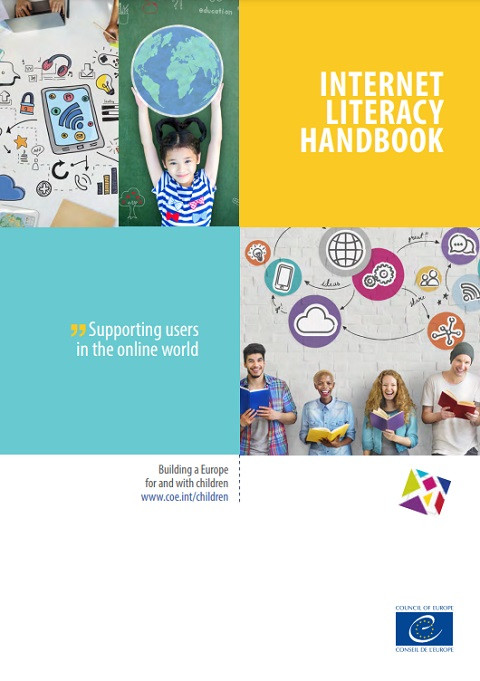 Internet Literacy Handbook: Supporting Users in the Online World 발행 연도: 2017 저자: Janice Richardson | Elizabeth Milovidov | Martin Schmalzried 단체 저자: Council of Europe Since the first edition of the Internet Literacy Handbook was issued in 2003 the world of the Internet has changed tremendously. The number of Internet users has risen; users are increasingly younger, trends in how people use the Internet and what they are looking for evolve, and new pitfalls in, for example, personal security arise seemingly overnight.This new edition takes into account the myriad changes, although the object of the Handbook still remains, namely to offer families, educators and policy-makers sufficient technical know-how to allow them to navigate, with young people, through communication technology. The new edition also expands the scope of the Fact sheets anchoring previously “new” concepts of digital citizenship and digital parenting. This edition includes 26 Fact sheets arranged under 6 thematic headings including a heading specifically dedicated to “Looking Forward” towards the future of the Internet. The Handbook is designed to be easy to use and helpful, as illustrated by the Fact sheet entitled “Finding quality information on the Web”. It is also available online, where it can be downloaded either in its full format or per individual factsheet. Manuel de maîtrise de l'internet: Accompagner les utilisateurs dans le monde en ligne 발행 연도: 2017 저자: Janice Richardson | Elizabeth Milovidov | Martin Schmalzried 단체 저자: Conseil de l'Europe Depuis la publication de la première édition du Manuel de maîtrise d’Internet en 2003, le monde en ligne a beaucoup changé. Les Internautes sont de plus en plus jeunes, leur nombre a augmenté, leurs usages d’Internet et l’objet de leurs recherches évoluent et de nouveaux dangers, par exemple en matière de sécurité individuelle, apparaissent chaque jour. Cette nouvelle édition tient compte de ces nombreux changements mais conserve son objectif, qui est de donner aux familles, aux enseignants et aux décideurs politiques des connaissances techniques suffisantes pour pouvoir naviguer, avec les jeunes, dans le monde des technologies de la communication. La nouvelle édition étend également le contenu des Fiches d’information aux concepts qui étaient alors «nouveaux» de citoyenneté numérique et de parentalité numérique, ce qui porte le nombre de fiches à 26, organisées en six thématiques dont l’une est spécialement consacrée à l’avenir d’Internet. Le manuel se veut convivial et pratique, comme l’illustre la fiche intitulée « Trouver de l’information de qualité sur le web ». Il est également accessible en ligne où il peut être téléchargé dans son intégralité ou fiche par fiche.
 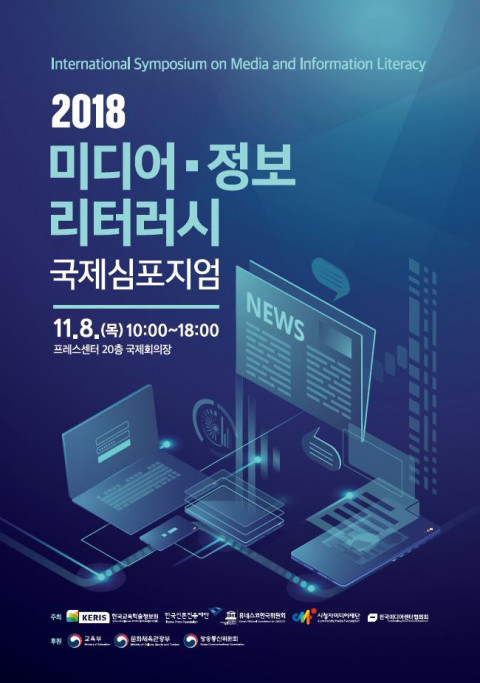 2018 International Symposium on Media and Information Literacy 발행 연도: 2018 단체 저자: Korean National Commission for UNESCO | Community Media Foundation | National Association of Community Mediacenters | Korea Education and Research Information Service (KERIS) | Korea Press Foundation (KPF) This book is a conference report of 2018 International Symposium on Media and Information Literacy. The Symposium on MIL is hosted by the Korea Press Foundation (KPF), the Korea Education and Research Information Service (KERIS), and the Korean National Commission for UNESCO (KNCU), in cooperation with the Community Media Foundation, the National Association of Community Mediacenters. 2018 미디어·정보리터러시: 국제심포지엄 자료집 발행 연도: 2018 단체 저자: 유네스코한국위원회 | Community Media Foundation | National Association of Community Mediacenters | 한국교육학술정보원 | 한국언론진흥재단 이 책은 유네스코한국위원회, 한국언론진흥재단, 한국교육학술정보원, 시청자미디어재단, 전국미디어센터협의회가 공동주최하고 교육부, 문화체육관광부, 방송통신위원회가 후원한 「2018 미디어·정보리터러시: 국제심포지엄」의 자료집으로 기조연설 및 주제별 발표내용을 담고 있다.
 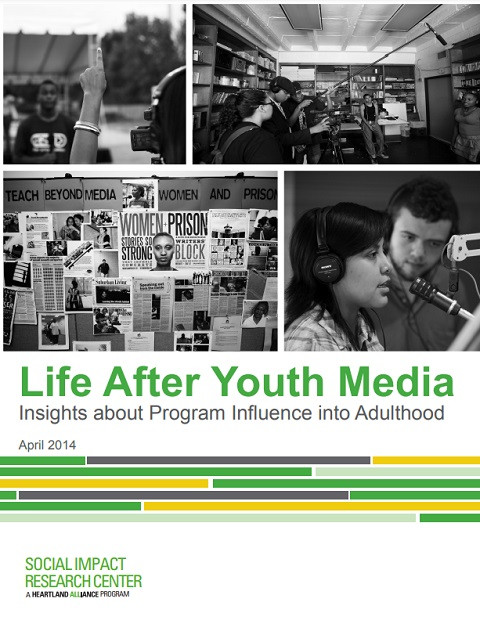 Life After Youth Media: Insights About Program Influence Into Adulthood 발행 연도: 2014 저자: Suniya Farooqui | Amy Terpstra 단체 저자: Social IMPACT Research Center * Do the skills, attitudes, and behaviors imparted in youth programs "stick" into adulthood? * If they do, how do they manifest in career, education, and life decisions? * How do the skills, attitudes, and behaviors that youth programs try to impart differ based on program intensity or levels of engagement? * Do these elements look different for people who went through youth media programs versus people who went through other types of youth programs? These are common questions that youth program providers, funders, public officials, and other leading thinkers regularly wrestle with. This report tells the story of a group in Chicago committed to providing quality youth media programming in the city and how, through a collective evaluation, they were able to begin to answer these critical questions.
  Media-Wise: A Smart Guide for Youths 발행 연도: 2015 단체 저자: Media Literacy Council (MLC) Even as a digital native, you might need some help figuring out the safest and kindest route through the digital world - this guide will give you the tips and advice you need to make that journey.
  Localizing the 2030 Agenda and Global Citizenship Education: An Essential Dialogue 발행 연도: 2020 단체 저자: Diputació de Barcelona Diputació de Barcelona has produced a document that offers guidelines to strengthen the links between Global Citizenship Education (GCE) actions and localizing SDGs initiatives, in order to drive real changes in local policies.What we call Global Citizenship Education (GCE) brings together key elements of different educational trends, such as development education, peace education or education for sustainability, among others. Each of them has decades of experience in promoting changes in citizen’s knowledge, attitudes and behaviours through formal or informal channels. This experience can help to reinforce the 2030 Agenda’s capacity to generate real change towards a more sustainable future for the planet, connecting local and global realities and highlighting interdependencies and co-responsibility. The document points out what can be done at the local level to improve this dialogue between SDG and GCE with practical proposals such as introducing GCE perspective in the SDGs training activities or implementing joint initiatives between development cooperation departments and other areas to reach new audiences. Localización de la agenda 2030 y la educación para la ciudadanía global: Un diálogo imprescindible 발행 연도: 2020 단체 저자: Diputació de Barcelona Este documento pretende contribuir al diálogo entre los procesos de localización de la Agenda 2030 y la ECG, así como ofrecer orientaciones concretas para la acción local.