
자료
세계시민교육에 대한 이해를 넓히고 연구, 옹호 활동, 교수, 학습 등을 향상시킬 수 있는 다양하고 유용한 자료를 찾아보세요.
1,329 건의 결과가 검색되었습니다
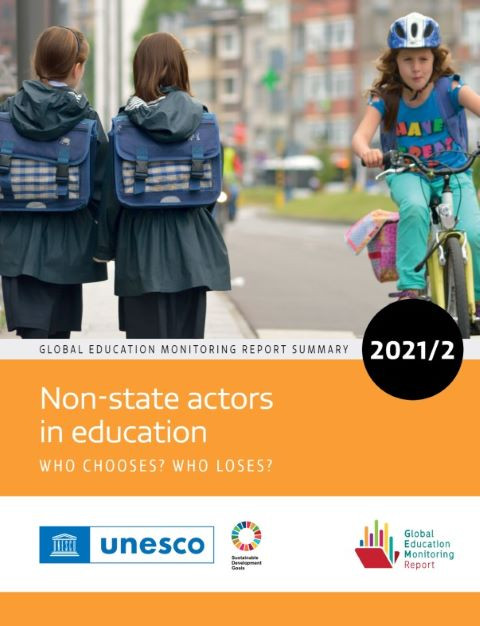 [Summary] Global Education Monitoring Report 2021/2: Non-state Actors in Education; Who Chooses? Who Loses? 발행 연도: 2022 단체 저자: UNESCO يمتد دور الجهات الفاعلة غير الحكومية إلى ما هو أبعد من توفير التعليم ليشمل التدخلات على مستويات التعليم المختلفة ومجالات التأثير. إلى جانب استعراضه للتقدم المحرز نحو الهدف 4 من أهداف التنمية المستدامة ، بما في ذلك الأدلة الناشئة على تأثير جائحة COVID-19 ، يحث التقرير العالمي لرصد التعليم 2021/2 الحكومات على رؤية جميع المؤسسات والطلاب والمعلمين كجزء من نظام واحد. يجب أن تساعد المعايير والمعلومات والحوافز والمساءلة الحكومات على حماية واحترام وإعمال الحق في التعليم للجميع ، دون إبعاد أعينهم عن الامتيازات أو الاستغلال. لا يلزم توفير التعليم الممول من القطاع العام بشكل عام ولكن يجب معالجة التفاوت في عمليات التعليم ونتائج الطلاب وظروف عمل المعلم. الكفاءة والابتكار ، بدلا من أن يكونا أسرارا تجارية ، ينبغي نشرها وممارستها من قبل الجميع. وتحقيقا لهذه الغاية ، يجب الحفاظ على الشفافية والنزاهة في عملية سياسة التعليم العام لمنع المصالح المكتسبة. نداء التقرير - من يختار؟ من يخسر؟ - يدعو صانعي السياسات إلى التشكيك في العلاقات مع الجهات الفاعلة غير الحكومية من حيث الخيارات الأساسية: بين الإنصاف وحرية الاختيار ؛ بين تشجيع المبادرة ووضع المعايير ؛ بين مجموعات مختلفة من الوسائل والاحتياجات ؛ بين الالتزامات الفورية بموجب الهدف 4 من أهداف التنمية المستدامة وتلك التي يتعين تحقيقها تدريجياً (مثل التعليم ما بعد الثانوي) ؛ وبين التعليم والقطاعات الاجتماعية الأخرى.
 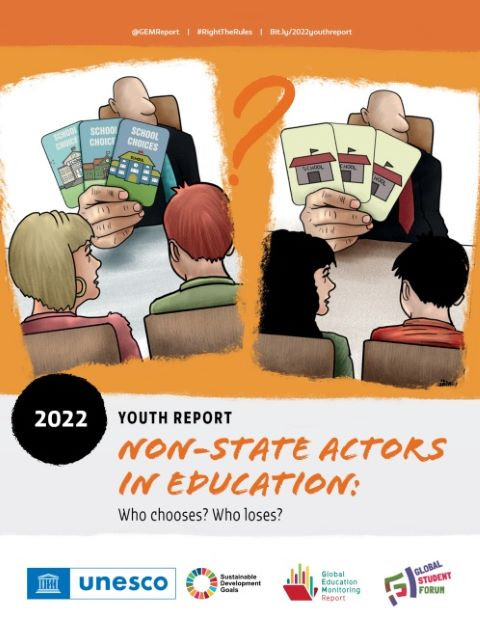 Youth Report 2022: Non-state Actors in Education; Who Chooses? Who Loses? 발행 연도: 2022 단체 저자: UNESCO This report is written in partnership with the Global Student Forum to help you learn about the youth perspective on the different roles and impact of non-state actors in education. For many, a discussion on the role of non-state actors in education quickly boils down to a debate about whether private schools support or undermine good-quality education.But the role of non-state actors impacts many more corners of the education sector, from the textbooks you use, the food in your canteens, any additional tutorial support you get, the skills you might learn at work and much more.The report invites youth to join a call for governments to #RightTheRules which will ensure that non-state actor involvement does not compromise the promise of providing 1 year of pre-primary and 12 years of primary and secondary education free for all. Informe sobre la juventud 2022: Los actores no estatales en la educación; ¿quién elige? ¿quién pierde? 발행 연도: 2022 단체 저자: UNESCO Este informe fue redactado en colaboración con el Foro Mundial de Estudiantes (Global Student Forum) para ayudarte a conocer el punto de vista de las y los jóvenes sobre las diferentes funciones y el impacto de los actores no estatales en la educación. Para muchos, una discusión sobre el papel de los actores no estatales en la educación se reduce rápidamente a un debate sobre si las escuelas privadas apoyan o socavan la educación de buena calidad. Pero el papel de los actores no estatales repercute en muchos más aspectos del sector educativo, desde los libros de texto que utilizas, la comida de tus comedores, el apoyo tutorial adicional que recibes, las habilidades que puedes aprender en el trabajo y de muchas otras maneras. El informe invita a las y los jóvenes a unirse a un llamamiento a los gobiernos para #RedefinirLasReglas de tal manera que se garantice que la participación de los actores no estatales no comprometa la promesa de proporcionar 1 año de educación preescolar y 12 años de educación primaria y secundaria gratuita para todos. Rapport des jeunes 2022: Les acteurs non étatiques dans l’éducation; Qui décide? qui est perdant? 발행 연도: 2022 단체 저자: Organisation des Nations Unies pour l'éducation, la science et la culture (UNESCO) Ce Rapport a été produit en partenariat avec le Forum mondial des étudiants pour vous donner un aperçu du point de vue des jeunes sur les différents rôles et l'impact des acteurs non étatiques de l'éducation. Pour beaucoup, débattre du rôle des acteurs non étatiques de l'éducation se résume rapidement à se demander si les écoles privées sont un atout ou un obstacle à une éducation de qualité. Mais le rôle des acteurs non étatiques a un impact sur bien d'autres aspects du secteur de l'éducation, qu'il s'agisse des manuels scolaires que vous utilisez, de la nourriture dans vos cantines, du soutien scolaire complémentaire que vous recevez, des compétences que vous pouvez acquérir au travail et bien plus encore. Le Rapport invite les jeunes à se joindre à l'appel à #RedéfinirLesRègles lancé aux gouvernements, appel qui garantira que l'implication des acteurs non étatiques ne compromette pas la promesse de fournir un an d'enseignement pré-primaire et douze ans d'enseignement primaire et secondaire gratuit pour tous. [Summary] Global Education Monitoring Report 2021/2: Non-state Actors in Education: Who Chooses? Who Loses? 발행 연도: 2022 단체 저자: UNESCO Non-state actors’ role extends beyond provision of schooling to interventions at various education levels and influence spheres. Alongside its review of progress towards SDG 4, including emerging evidence on the COVID-19 pandemic’s impact, the 2021/2 Global Education Monitoring Report urges governments to see all institutions, students and teachers as part of a single system. Standards, information, incentives and accountability should help governments protect, respect and fulfill the right to education of all, without turning their eyes away from privilege or exploitation. Publicly funded education does not have to be publicly provided but disparity in education processes, student outcomes and teacher working conditions must be addressed. Efficiency and innovation, rather than being commercial secrets, should be diffused and practiced by all. To that end, transparency and integrity in the public education policy process need to be maintained to block vested interests. The report’s rallying call – Who chooses? Who loses? – invites policymakers to question relationships with non-state actors in terms of fundamental choices: between equity and freedom of choice; between encouraging initiative and setting standards; between groups of varying means and needs; between immediate commitments under SDG 4 and those to be progressively realized (e.g. post-secondary education); and between education and other social sectors.
  Revised Recommendation Concerning Education for International Understanding, Co-operation and Peace and Education Relating to Human Rights and Fundamental Freedoms ('1974 Recommendation') 발행 연도: 2022 단체 저자: UNESCO The revision of the 1974 Recommendation provides the international community with the opportunity to strengthen the instrument so that it can support the design and implementation of effective educational policies and programmes, which can put the world on a pathway to lasting peace and sustainable development for all, in line with the requirements of the 2030 Agenda and the body of international legal norms adopted since 1974. Recommandation révisée sur l’éducation pour la compréhension, la coopération et la paix internationales et l’éducation relative aux droits de l’homme et aux libertés fondamentales (« Recommandation de 1974 ») 발행 연도: 2022 단체 저자: UNESCO La révision de la Recommandation de 1974 offre à la communauté internationale l'occasion de renforcer l'instrument afin qu'il puisse soutenir la conception et la mise en œuvre de politiques et de programmes éducatifs efficaces, susceptibles de mettre le monde sur la voie d'une paix durable et du développement durable pour tous, conformément aux exigences de l'Agenda 2030 et à l'ensemble des normes juridiques internationales adoptées depuis 1974.
  Culture in Times of COVID-19: Resilience, Recovery and Revival 발행 연도: 2022 단체 저자: UNESCO | United Arab Emirates. Department of Culture and Tourism Culture in Times of COVID-19: Resilience, Recovery and Revival offers key insights on trends and structural transformations that can boost the culture sector as a cornerstone of an economy built on sustainability and well-being.A set of strategic development considerations are put forward for governments and their partners, in both the public and private sectors, to promote the value of culture as a public good, encourage cross-sector collaboration and holistically address the essential needs of the sector, while supporting cultural professionals in adapting to a changing world and providing equal access and opportunities across the culturalvalue chain.
 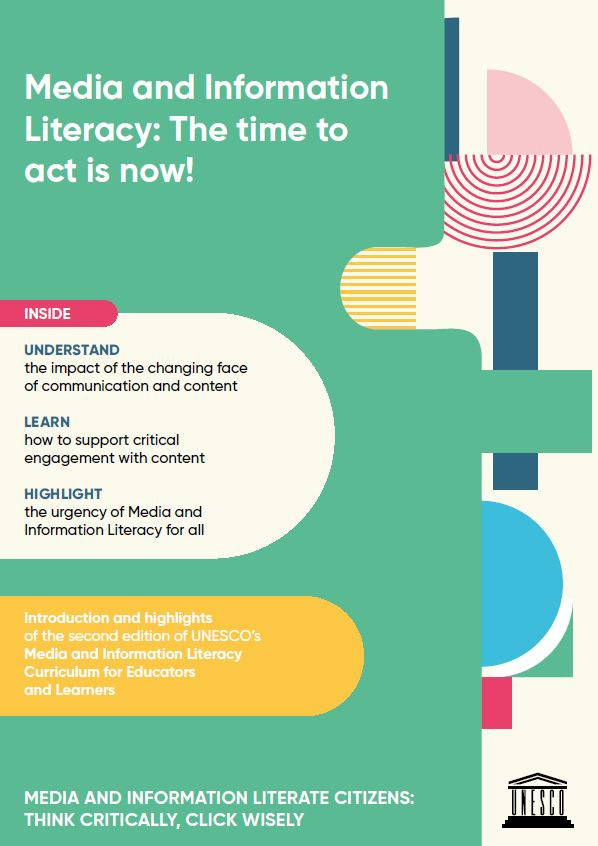 [Summary] Media and Information Literacy: The Time to Act is Now! 발행 연도: 2021 단체 저자: UNESCO UNESCO has developed a comprehensive Curriculum which provides a framework for training teachers. But it is also a foundation that will also be of help to others: to learners, to content providers like internet companies and news media outlets, and to citizens of all ages as they consume, create and use content, including information.The second edition of the learning resource has been significantly expanded since the first publication in 2011. The MIL Curriculum reflects the changing nature of the information landscape. It now includes insight from a broader range of content providers than before, including libraries, archives, museums, media, and digital communications companies.The Curriculum is designed to empower educators and learners in general – from schoolteachers to those involved in training, the media and libraries, governments, and NGOs – to train people to spot misrepresentations and disinformation, and most importantly develop critical thinking competencies.
 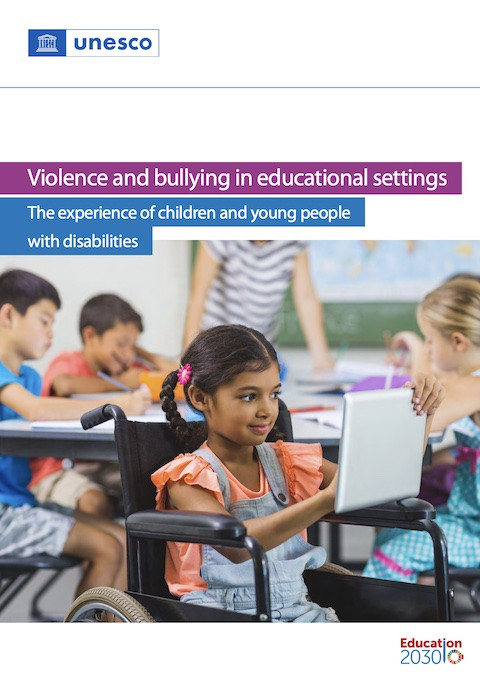 Violence and Bullying in Educational Settings: The Experience of Children and Young People With Disabilities 발행 연도: 2021 단체 저자: UNESCO Learners with disabilities are disproportionately affected by school violence and bullying at all ages and in all learning settings. This has significant adverse impacts on their education, health and well-being. This document aims to raise awareness of the problem and encourage action to ensure that children and young people with disabilities have access to a safe learning environment.