
자료
세계시민교육에 대한 이해를 넓히고 연구, 옹호 활동, 교수, 학습 등을 향상시킬 수 있는 다양하고 유용한 자료를 찾아보세요.
1,329 건의 결과가 검색되었습니다
 Respecter les engagements: les pays sont-ils en bonne voie d'atteindre l'ODD 4? 발행 연도: 2019 단체 저자: Global Education Monitoring Report Team | UNESCO Institute for Statistics (UIS) Le monde a parcouru un tiers du chemin vers l’échéance de l’Agenda de développement durable 2030, qui inclut le quatrième Objectif de développement durable (ODD 4), mais il est en retard sur la réalisation de ses engagements. Cette publication conjointe de l’Institut de statistique de l’UNESCO et du Rapport mondial de suivi sur l’éducation pour le Forum politique de haut niveau sur le développement durable 2019 expose de manière concise le retard dans la réalisation des cibles de l’éducation. Cette année est celle où la génération d’élèves qui terminera l’enseignement secondaire d’ici 2030 doit commencer l’école pour la toute première fois. Pourtant, dans les pays à revenu faible, seuls 60 % des enfants achèvent l’enseignement primaire, tandis que dans certaines régions, le pourcentage d’élèves qui possèdent les compétences minimales en lecture est même en baisse. On ne peut nier le fait que le monde est en retard. Il est temps de cesser ce laxisme. La communauté internationale dépend des données pour établir les rapports sur le cadre de suivi de l’ODD 4 afin d’évaluer les progrès accomplis. Des améliorations ont clairement été accomplies en matière de collecte de données mais les déficits de données demeurent une préoccupation majeure. Cette publication exhorte les pays et leurs partenaires internationaux du développement à coordonner et à financer la collecte de données pour suivre et réaliser l’ODD 4. Cumplir los compromisos: ¿van los países por el buen camino para alcanzar el ODS 4? 발행 연도: 2019 단체 저자: Global Education Monitoring Report Team | UNESCO Institute for Statistics (UIS) El mundo ya ha recorrido un tercio del camino hacia la fecha límite para el cumplimiento de la Agenda 2030 para el Desarrollo Sostenible, que incluye el Objetivo de Desarrollo Sostenible 4, relativo a la educación, pero aún está muy atrasado en el cumplimiento de sus compromisos. Esta publicación conjunta del Instituto de Estadística de la UNESCO y el Informe de Seguimiento de la Educación en el Mundo para el Foro Político de Alto Nivel sobre el Desarrollo Sostenible de 2019 refleja de manera concisa lo lejos que está el mundo de alcanzar sus objetivos en materia de educación. Este es el año en que la generación de estudiantes que debería finalizar la educación secundaria en 2030 tendría que ingresar a la escuela. Sinembargo, en los países de ingresos bajos, solo el 60% de los niños terminan la educación primaria, mientras que en algunas regiones el porcentaje de estudiantes que alcanzan un nivel mínimo de competencia en lectura está incluso en disminución. No se puede negar que el mundo no está bien encaminado. Ya es hora de que cese la apatía. La comunidad internacional se apoya en los datos para informar al marco de seguimiento del ODS 4 con el fin de evaluar los progresos realizados. Si bien se han realizado claras mejoras en la producción de datos, los faltantes de información siguen siendo motivo de gran preocupación. En esta publicación se hace un llamado a los países y a sus asociados internacionales para que coordinen y financien la producción de datos para el seguimiento y a la consecución del ODS 4.
  Let's work together: education has a key role in helping achieve the Sustainable Development Goals 발행 연도: 2019 단체 저자: Global Education Monitoring Report Team This publication has been produced on the occasion of the 2019 High-level Political Forum by the Global Eduation Monitoring Report. It draws upon findings from reports produced since 2015, showing the importance of education for the other goals in the 2030 agenda for sustainable development and calling for sectors to work together to achieve their aims.
  Youth Report 2020: Inclusion and Education; All Means All 발행 연도: 2020 단체 저자: UNESCO | Global Education Monitoring Report Team This Youth Report is designed to help you learn about the social, economic and cultural factors that cause vulnerable children, youth and adults to be discriminated against and marginalized in education. It tells the stories of the people who fight to ensure that everyone is included in education, and of those who fought to uphold their own right to education. It brings to life the recommendations of the 2020 Global Education Monitoring Report: Inclusion and education: All means all and calls on youth and teachers to share and discuss the stories and messages, to use them in campaigns and as a teaching tool in class. An open letter to education ministers is included calling, for education systems to be built back more inclusive after the school closures during Covid-19.
 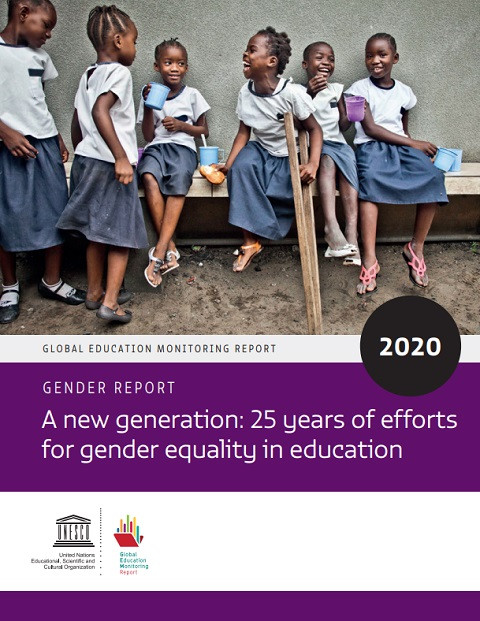 Gender Report 2020: A New Generation; 25 Years of Efforts for Gender Equality in Education (Global Education Monitoring Report) 발행 연도: 2020 단체 저자: UNESCO | Global Education Monitoring Report Team Building on the 2020 Global Education Monitoring Report, this report investigates how inclusion in education can advance gender equality in and through education, which is critical to make progress towards gender equality in society. The goal of gender equality is, of course, not new. It was enshrined in the 1979 Convention on the Elimination of All Forms of Discrimination Against Women and was at the core of the 1995 Beijing Declaration and Platform for Action, whose 25th anniversary is marked in 2020.
  Early Childhood Development and Early Learning for Children in Crisis and Conflict 발행 연도: 2018 저자: Kolleen Bouchane 단체 저자: Global Education Monitoring Report Team There is an urgent need for a comprehensive response, including early learning and family support programs, to the rapidly growing population of young children worldwide living in crisis and conflict. Substantial evidence from neuroscience to economics indicates that the early years of a child’s life lay the foundation for long-term health, learning and behavior. The first months and years are not only a critical period in an individual child’s lifelong capacity for learning, but weak learning foundations of children can compromise the long-term development of nations. Yet a review of Refugee and Humanitarian Response Plans conducted for this paper revealed that only 9 percent of plans included the essential elements of early learning. Relative to health and nutrition programming, early education and parenting interventions were more likely to be omitted from the Response Plans.The rationale for focusing new attention on the educational needs of young children living in fragile conditions is strong: there is a broad body of scientific evidence; the international legal framework of the United Nations Convention of the Rights of the Child asserts that all children have the right to health, education, legal registration, and protection from violence and separation from parents, beginning at birth; and the Sustainable Development Goals for all will be not reached without a focus on the earliest years of life in crisis and conflict situations. This background paper presents the case for increased attention and investment in early childhood in conflict and crisis contexts, with focused attention on early learning and family support. The scale of the problem, current science and evidence, current global standards and principles, and case studies are all discussed and priority recommendations are offered.
  Rapport mondial de suivi de l'éducation 2019: rapport sur l'égalité des genres: Bâtir des ponts pour promouvoir l'égalité des genres 발행 연도: 2019 단체 저자: Global Education Monitoring Report Team La réalisation de l’égalité des genres dans la participation à l’éducation, les processus d’enseignement et d’apprentissage et l’accès aux possibilités sociales et économiques offertes par l’éducation est une ambition majeure portée par deux des Objectifs du Programme de développement durable à l’horizon 2030: l’ODD 4 relatif à l’éducation et l’ODD 5 relatif à l’égalité des sexes. Cette ambition occupe également une place centrale dans le Cadre d’action Éducation 2030, qui appelle les pays à ne pas se limiter à l’accès à l’éducation pour tous dans les stratégies qu’ils adoptent mais à aborder également les questions de fonds relatives à l’égalité des genres: «nous prenons l’engagement de soutenir les politiques, la planification et les environnements d’apprentissage attentifs au genre, d’intégrer les questions de genre dans la formation des enseignants et dans les programmes d’enseignement, ainsi que d’éliminer les discriminations et la violence fondées sur le genre à l’école». Le Rapport 2019 sur l’égalité des genres s’appuie sur le cadre de mesure qui a été utilisé pour la première fois dans l’édition 2016 du Rapport mondial de suivi sur l’éducation.Tout en examinant en priorité la parité entre les genres dans la participation à l’éducation et les résultats et les acquis scolaires, le cadre analyse des données sociales et économiques (normes et institutions liées au genre) ainsi que les principales caractéristiques des systèmes éducatifs (lois et politiques, pratiques d’enseignement et d’apprentissage, environnements d’apprentissage et ressources). Le cadre s’intéresse en outre aux rapports entre l’éducation et certains résultats sociaux et économiques précis. Ainsi, une plus grande parité au niveau des résultats scolaires peut accroître le taux de participation des femmes au marché du travail tandis qu’une faible participation féminine au marché du travail renforce les normes existantes et freine le développement des possibilités d’éducation des femmes. التقرير العالمي لرصد التعليم 2019: التقرير عن المسائل الجنسانية; بناء الجسور لتحقيقالمساواة بين الجنسين 발행 연도: 2019 단체 저자: Global Education Monitoring Report Team يمثل تحقيق المساواة بين الجنسين من حيث الالتحاق بالمدرسة والمشاركة في عمليات التعليم والتعلم والاستفادة من الفرص الاقتصادية والاجتماعية التي يمكن أن يتيحها التعليم طموحات أساسية مترابطة لهدفين من أهداف التنمية المستدامة المحددة في خطة التنمية المستدامة لعام 2030 ، هما: هدف التنمية المستدامة 4 الخاص بالتعليم وهدف التنمية المستدامة 5 الخاص بالمساواة بين الجنسين. وهذان الهدفان ضروريان أيضاً لتحقيق برنامج "التعليم حتى عام 2030 إطار العمل لتحقيق الهدف الرابع من أهداف التنمية المستدامة" الذي يدعو البلدان إلى اعتماد استراتيجيات لا تتطرق فقط إلى انتفاع الجميع بالتعليم بل تتناول أيضاً قضايا جوهرية تتعلق بالمساواة بين الجنسين منها: "دعم السياسات والخطط وبيئات التعلّم المراعية لقضايا الجنسين، وبتعميم مراعاة قضايا الجنسين في إعداد المعلمين وفي المناهج الدراسية، وبالقضاء على التمييز والعنف القائمين على نوع الجنس في المدارس".ويستند التقرير عن المسائل الجنسانية لعام 2019 إلى إطار رصد اعتُمد أول مرة في التقرير العالمي لرصد التعليم لعام 2016 . وهذا الإطار، فضلاً عن تركيزه على التكافؤ بين الجنسين في المشاركة في التعليم والتحصيل الدراسي والنتائج الدراسية، يدرس الظروف الاقتصادية والاجتماعية العامة )المعايير الجنسانية والمؤسسات( وسمات نظام التعليم الرئيسية )القوانين والسياسات وممارسات التعليم والتعلم وبيئات التعلم والموارد(. ويبحث الإطار أيضاً العلاقة القائمة بين التعليم ومجموعة مختارة من النتائج الاقتصادية والاجتماعية. فالتحرك باتجاه تحقيق التكافؤ بين الجنسين على مستوى التحصيل الدراسي، على سبيل المثال، يؤدي إلى ارتفاع معدلات مشاركة المرأة في القوة العاملة، غير أن مشاركتها هذه، إذا كانت منخفضة المستوى، تعزز المعايير السائدة وتحول دون زيادة فرص التعليم التي يمكن أن تتاح لها.
  Tableau de bord pour l’ODD 4, rapport d’étape sur les points de référence nationaux: focus sur les enseignants 발행 연도: 2024 단체 저자: Global Education Monitoring Report Team | UNESCO Institute for Statistics (UIS) Il s'agit de la deuxième évaluation des progrès des pays vers les points de référence, ou objectifs nationaux, que les pays ont fixés pour huit indicateurs de l'ODD 4 afin de marquer leur contribution aux objectifs mondiaux. L’évaluation couvre la période depuis 2015 et examine la probabilité que chaque pays atteigne son point de référence pour 2025 ou – lorsqu’un tel objectif n’a pas été fixé – la valeur qu’il aurait atteinte s’il avait progressé au rythme historique (2000–15) des 25 % des pays qui s’améliorent le plus rapidement.Le tableau de bord de l’ODD 4 2024 révèle que les progrès vers les objectifs nationaux sont en retard pour la plupart des indicateurs. Dans deux cas – l’écart entre les genres au détriment des garçons dans l’achèvement du deuxième cycle du secondaire et les dépenses publiques d’éducation en proportion des dépenses publiques totales – les pays reculent même.En revanche, les progrès sont plus rapides pour le huitième indicateur de référence, la connectivité Internet dans les écoles, qui a été ajouté suite à la priorité accordée à la transformation numérique lors du Sommet sur la transformation de l’éducation en 2022. Un tiers des pays ont fixé des objectifs nationaux en 2023 et les progrès sur l’indicateur sont examinés pour la première fois dans cette édition.Les progrès sont également relativement rapides en ce qui concerne le pourcentage d'enseignants possédant les qualifications minimales requises, qui est également l'indicateur central de cette édition. De nouvelles données sont présentées sur les politiques nationales concernant les niveaux de qualification minimaux requis pour accéder à la profession enseignante, les politiques de développement professionnel continu obligatoire et les politiques de formation des enseignants sur la tec
  SDG 4 Scorecard: Progress Report on National Benchmarks; Focus on Teachers 발행 연도: 2024 단체 저자: Global Education Monitoring Report Team | UNESCO Institute for Statistics (UIS) This is the second assessment of country progress towards the benchmarks, or national targets, that countries have set for eight SDG 4 indicators to mark their contribution to the global targets. The assessment covers the period since 2015 and reviews the probability that each country will achieve its 2025 benchmark or – where such a benchmark was not set – the value they would have achieved if they had progressed at the historic (2000–15) rate of the fastest improving 25% of countries.The 2024 SDG 4 Scorecard finds that progress towards national targets is off track for most indicators. In two cases – the gender gap at the expense of boys in upper secondary education completion and public education expenditure as share of total public expenditure – countries are even moving backwards.In contrast, progress is faster in the eighth benchmark indicator, school internet connectivity, which was added following the priority given to digital transformation at the Transforming Education Summit in 2022. One third of countries set national targets in 2023 and progress on the indicator is being reviewed for the first time in this edition.Progress is also relatively fast in the percentage of teachers with minimum required qualifications, which is also the focus indicator of this edition. New evidence is presented on national policies for minimum required qualification levels to enter the teaching profession, compulsory continuous professional development policies, and teacher training policies on technology in education.