
자료
세계시민교육에 대한 이해를 넓히고 연구, 옹호 활동, 교수, 학습 등을 향상시킬 수 있는 다양하고 유용한 자료를 찾아보세요.
3,158 건의 결과가 검색되었습니다
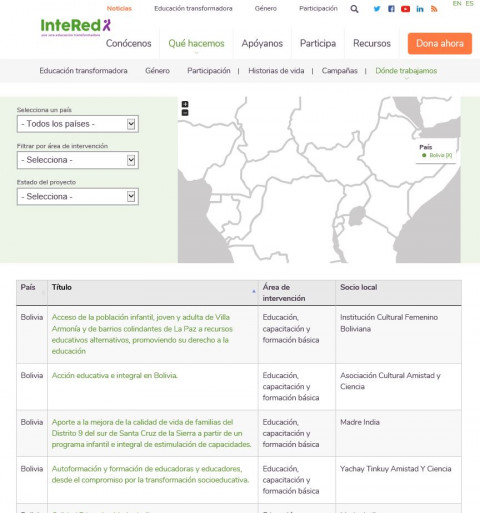 InteRed. Educational Projects in Bolivia 발행 연도: 2019 단체 저자: InteRed InteRed carries out educational projects to solve specific social problems around the planet. The projects tackle things such as poverty, health, access to education, Human Rights, access to food, among other things. InteRed. Proyectos educativos en Bolivia 발행 연도: 2019 단체 저자: InteRed InteRed lleva a cabo projectos educacionales intentando resolver problemas específicos en el planeta. Los proyectos abordan cuestiones como pobreza, salud, acceso a la educación, Derechos Humanos, acceso a alimentos, entre otras cosas.
 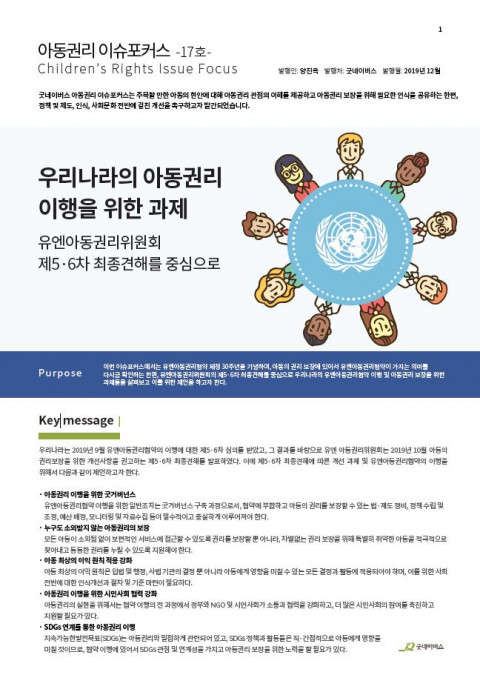 우리나라의 아동권리 이행을 위한 과제: 유엔아동권리위원회 제5·6차 최종견해를 중심으로 (아동권리 이슈포커스 17호) 발행 연도: 2019 단체 저자: 굿네이버스 우리나라는 2019년 9월 유엔아동권리협약의 이행에 대한 제5·6차 심의를 받았고, 그 결과를 바탕으로 유엔 아동권리위원회는 2019년 10월 아동의 권리보장을 위한 개선사항을 권고하는 제5·6차 최종견해를 발표하였다.본 원고에서는 유엔아동권리협약 채택 30주년을 맞이하여, 유엔아동권리협약이 아동권리 보장에 있어서 가지는 의미가 무엇인지 확인하고 1991년 유엔아동권리협약 비준 이후 현재 우리나라의 아동권리 보장 수준은 어떠한지, 그리고 아동권리 보장을 위한 이행 과제와 고려점이 무엇인지 유엔아동권리위원회의 대한민국 제5·6차 최종견해를 중심으로 살펴보고자 한다.
  Éducation à la citoyenneté mondiale (ÉCM): Définitions, critiques et postures 발행 연도: 2017 저자: Carine Nassif-Gouin | Philippe Tousignant 단체 저자: Association québécoise des organismes de coopération internationale (AQOCI) La plupart des organismes de coopération internationale (OCI) se sont engagés dans un long processus d’information, de sensibilisation, d’engagement et d’éducation du public. Ce document cherche à soutenir la réflexion quant à l’approche émergente de l’éducation à la citoyenneté mondiale (ÉCM) et la question suivante : en quoi l’ÉCM est-elle nouvelle ou différent de l’engagement du public ou, par exemple, de l’éducation aux droits humains ? Les OCI mettent à la disposition des apprenants (stagiaires, coopérants, bénévoles, salariés, jeunes en milieu scolaire ou communautaire, entreprises, etc.) de l’information, des formations, des ateliers, des documents voire des trousses, et bien plus encore, qui favorisent l’autonomisation et la responsabilisation des individus. Ces activités sont souvent de nature pédagogique, mais elles peuvent également être d’une toute autre nature. Les OCI ont des pratiques riches et variées en éducation, formation, mobilisation, sensibilisation, etc. Certaines pratiques ont fait leurs preuves et nous encouragent à nous en inspirer ou encore à les adopter. Parmi les facteurs contribuant à la réussite de l’ÉCM, le choix de la définition, la qualité, la précision d’un cadre de références commun jouent un rôle crucial. Ainsi, ce guide tente d’offrir un certain nombre d’informations essentielles à la réalisation et la réussite de l’ÉCM. Du fait qu’il y ait très peu de littérature consacrée à l’éducation à la citoyenneté mondiale au Québec, nous nous sommes beaucoup tourné vers celle qui est issue d’autres pays et contextes. Ce document est conçu à l’intention de toutes les personnes qui souhaitent comprendre ce qu’est l’ÉCM pour en développer des activités et s’approprier ses définitions et contenus. Il faut reconnaître d’emblée que chaque organisme, chaque programme présente des spécificités et qu’il n’est pas souhaitable ou même possible d’uniformiser les guides ou de les rendre conformes à un modèle particulier. Il faut surtout garder à l’esprit que nous tenons à offrir à chacun des acteurs une information de qualité et préparer avec tout le soin nécessaire un guide clair et nourrissant. Ce guide est composé de six (6) parties et d’une note de synthèse. Ainsi, chacun pourra y puiser les informations et ressources ou encore les outils de références souhaités.
  Raising Awareness and Promoting Global Citizenship to Realize the 2030 Agenda 발행 연도: 2019 저자: Laurel Wayne-Nixon | Tanya Wragg-Morris | Anjali Mishra | Dawson Markle | Shannon Kindornay 단체 저자: British Columbia Council for International Cooperation (BCCIC) | Conseil canadien pour la coopération internationale (CCCI) Socializing the 2030 Agenda for Sustainable Development among citizens, parliamentarians, government institutions, civil society, academia, the private sector, trade unions and others provides a basis for stakeholders to identify their priorities and contribute to sustainable development as global citizens. Based on a review of good practices emerging from around the world, this policy brief offers recommendations on how governments can raise awareness of the 2030 Agenda and support global citizenship. Sensibilisation et promotion de la citoyenneté mondiale pour réaliser le Programme 2030 au Canada 발행 연도: 2019 저자: Laurel Wayne-Nixon | Tanya Wragg-Morris | Anjali Mishra | Dawson Markle | Shannon Kindornay 단체 저자: British Columbia Council for International Cooperation (BCCIC) | Conseil canadien pour la coopération internationale (CCCI) Faire connaître le Programme de développement durable à l’horizon 2030 aux citoyens, aux parlementaires, aux institutions gouvernementales, à la société civile, au milieu universitaire, au secteur privé, aux syndicats et à d’autres acteurs constitue une base pour les parties prenantes afin de déterminer leurs priorités et contribuer au développement durable en tant que citoyens du monde. Fondée sur un examen des bonnes pratiques émergentes du monde entier, la présente note d’information contient une série de recommandations sur les façons dont les gouvernements peuvent accroître la sensibilisation au Programme 2030 et soutenir la citoyenneté mondiale.
 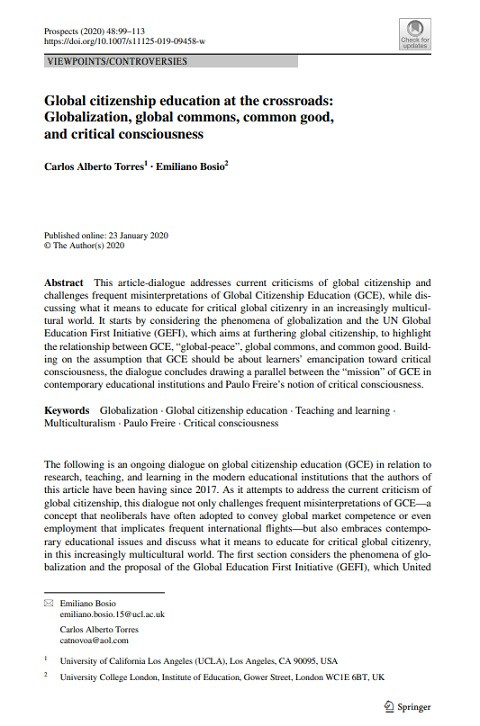 Global Citizenship Education at the Crossroads: Globalization, Global Commons, Common Good, and Critical Consciousness (Prospects; Vol.48) 발행 연도: 2020 저자: Carlos Alberto Torres | Emiliano Bosio 단체 저자: Springer Nature This article-dialogue addresses current criticisms of global citizenship and challenges frequent misinterpretations of Global Citizenship Education (GCE), while discussing what it means to educate for critical global citizenry in an increasingly multicultural world. It starts by considering the phenomena of globalization and the UN Global Education First Initiative (GEFI), which aims at furthering global citizenship, to highlight the relationship between GCE, “global-peace”, global commons, and common good. Building on the assumption that GCE should be about learners’ emancipation toward critical consciousness, the dialogue concludes drawing a parallel between the “mission” of GCE in contemporary educational institutions and Paulo Freire’s notion of critical consciousness.
 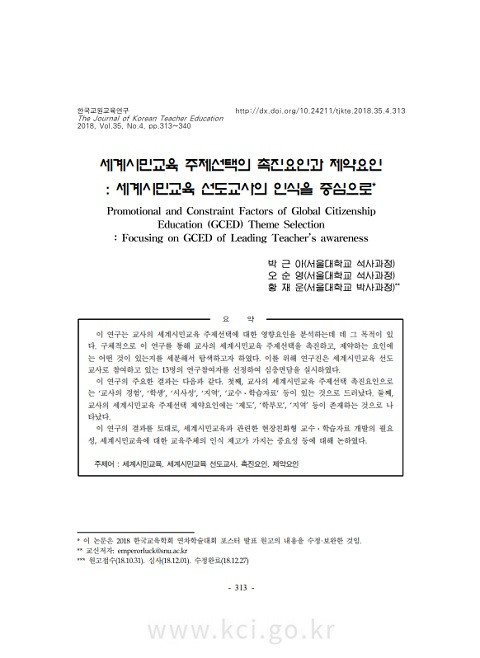 Promotional and Constraint Factors of Global Citizenship Education (GCED) Theme Selection: Focusing on GCED of Leading Teacher’s awareness (The Journal of Korean Teacher Education; Vol.35, No.4) 발행 연도: 2018 저자: Keunah Park | Soonyoung Oh | Jaewoon Hwang 단체 저자: The Korean Society for the Study of Teacher Education The purpose of this study is to analyze the factors that affect the selection of the themes of Global Citizenship Education (GCED). Specifically, it tried to help teachers to select the themes of GCED and explored specific factors that restrict the selection. For the goal of this study, it interviewed 13 researchers who participated in GCED as leading teachers. It collected data, performed coding of extracting core phrases and analyzed the transcribed interviews. The main analysis results are as follows. First, the factors that promote teachers to choose the themes of GCED were the experience of teachers, students, social issues, areas and teaching and learning materials. Second, the factors that restrict teachers to choose the themes of GCED were institution, parents of students and areas. Based on the result of the study, it described the necessity of developing field-friendly teaching and learning materials in relation to GCED and the importance of raising awareness among the educational players on GCED. 세계시민교육 주제선택의 촉진요인과 제약요인: 세계시민교육 선도교사의 인식을 중심으로 (한국교원교육연구; Vol.35, No.4) 발행 연도: 2018 저자: 박근아 | 오순영 | 황재운 단체 저자: 한국교원교육학회 이 연구는 교사의 세계시민교육 주제선택에 대한 영향요인을 분석하는데 데 그 목적이 있 다. 구체적으로 이 연구를 통해 교사의 세계시민교육 주제선택을 촉진하고, 제약하는 요인에 는 어떤 것이 있는지를 세분해서 탐색하고자 하였다. 이를 위해 연구진은 세계시민교육 선도 교사로 참여하고 있는 13명의 연구참여자를 선정하여 심층면담을 실시하였다. 이 연구의 주요한 결과는 다음과 같다. 첫째, 교사의 세계시민교육 주제선택 촉진요인으로 는 ‘교사의 경험’, ‘학생’, ‘시사성’, ‘지역’, ‘교수ㆍ학습자료’ 등이 있는 것으로 드러났다. 둘째, 교사의 세계시민교육 주제선택 제약요인에는 ‘제도’, ‘학부모’, ‘지역’ 등이 존재하는 것으로 나 타났다. 이 연구의 결과를 토대로, 세계시민교육과 관련한 현장친화형 교수ㆍ학습자료 개발의 필요성, 세계시민교육에 대한 교육주체의 인식 제고가 가지는 중요성 등에 대해 논하였다.
  Peace Education and the Pandemic: Global Perspectives 발행 연도: 2020 단체 저자: International Institute on Peace Education (IIPE) This April 13 webinar, co-organized by the International Institute on Peace Education and Global Campaign for Peace Education, is an opportunity to learn, hear, and share with and from peace educators from around the world about how they are responding, adapting, and rethinking urgent agendas for peace education revealed by the global coronavirus pandemic.