
자료
세계시민교육에 대한 이해를 넓히고 연구, 옹호 활동, 교수, 학습 등을 향상시킬 수 있는 다양하고 유용한 자료를 찾아보세요.
3,128 건의 결과가 검색되었습니다
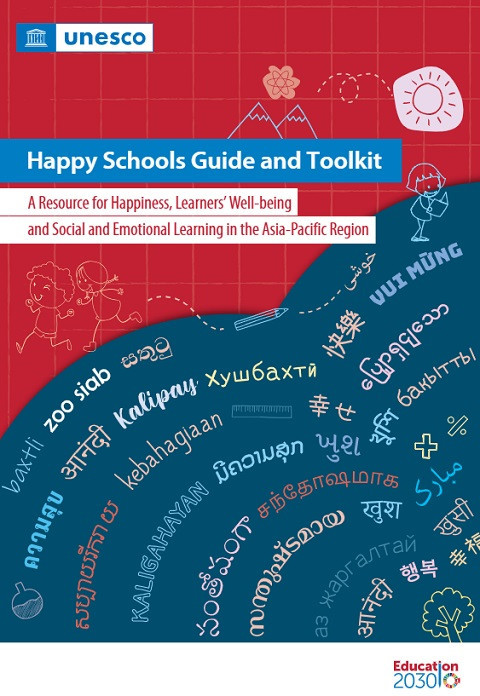 دليل ومجموعة أدوات المدارس السعيدة رافد ومصدر للسعادة ورفاه المتعلم والتعلم الاجتماعي والعاطفي في منطقة آسيا والمحيط الهادئ 발행 연도: 2021 단체 저자: UNESCO | UNESCO Bangkok تم إعداد هذا الدليل بــهدف دعم المعــلمين والقــادة فــي مجالــي التعــليم األساســي والثــانوي فــي جميــع مناطــق آسيــا والمحيط الهــادئ فــي التــفكير فــي كيفيــة إنشــاء مدرســة ســعيدة، وهو بذلك يستند علــى عدة ركائز إلطــار عمل المدارس الســعيدة. وفــي حين أن دليل المدارس الســعيدة يستــهدف قــادة المدارس والمعــلمين فيمــا يتعلــق بــالمستوى اإلداري وتطوير عــلوم التربيــة، فــإن مجموعــة أدوات المدرســة الســعيدة قد صممت للمعــلمين علــى مستوى الصف الدراســي. Happy Schools Guide and Toolkit: A Resource for Happiness, Learners’ Well-Being and Social and Emotional Learning 발행 연도: 2021 단체 저자: UNESCO | UNESCO Bangkok The Happy Schools Guide and Toolkit is designed to support teachers and school leaders in primary and secondary schools across the Asia-Pacific region, in thinking about how they can create their own Happy School. It has therefore drawn from aspects of the Happy Schools Framework, which can be most readily addressed at the school level. While the Happy Schools Guide is targeted towards school leaders and teachers at the school level of administration and pedagogy development, the Happy Schools Toolkit is conceived for teachers at the classroom level.
  ارشادات استخدام الذكاء الاصطناعي التوليدي في التعليم والبحث 발행 연도: 2023 저자: Fengchun Miao | Wayne Holmes 단체 저자: UNESCO تهدف هذه الإرشادات إلى دعم تخطيط اللوائح والسياسات وبرامج تنمية القدرات البشرية المناسبة ً لضمان أن يصبح الذكاء الاصطناعي التوليدي أداة تفيد المعلمين والمتعلمين والباحثين وتمكنهم حقا. وهو يشرح تقنيات الذكاء الاصطناعي التي يستخدمها الذكاء الاصطناعي التوليدي ويرسم قائمة بنماذج ً المحولات التوليدية المدربة مسبقا المتاحة للجمهور، خاصة تلك التي تخضع لترخيص مفتوح المصدر. كما ً ً حول ظهور نماذج المحولات التوليدية التعليمية المدربة مسبقا - التي يتم تدريبها باستخدام يفتح نقاشا بيانات محددة لخدمة الأغراض التعليمية. علاوة على ذلك، فهو يلخص بعض الخلافات الرئيسية حول ً الذكاء الاصطناعي التوليدي، بدءا من تفاقم الفقر الرقمي إلى تجانس ً الآراء، ومن التزييف العميق إلى قضايا حقوق الطبع والنشر. واستنادا إلى رؤية إنسانية، تقترح الإرشادات خطوات أساسية لتنظيم أدوات الذكاء الاصطناعي التوليدي، بما في ذلك فرض حماية خصوصية البيانات ووضع حد عمري للمحادثات المستقلة مع منصات الذكاء الاصطناعي التوليدي. ً لتوجيه الاستخدام السليم للأدوات في التعليم والبحث، تقترح هذه الإرشادات نهج ً ا مناسبا للعامل البشري والعمر للتحقق من الصحة الأخلاقية وعمليات التصميم التربوي. Guidance for Generative AI in Education and Research 발행 연도: 2023 저자: Fengchun Miao | Wayne Holmes 단체 저자: UNESCO This Guidance aims to support the planning of appropriate regulations, policies and human capacity development programmes to ensure that generative artificial intelligence (GenAI) becomes a tool that genuinely benefits and empowers teachers, learners and researchers. It explains the Al techniques used by GenAI and maps out a list of GPT models that are made publicly available, especially those under open-source licences. It also opens a discussion on the emergence of EdGPT - GenAI models that are trained with specific data to serve educational purposes. Furthermore, it summarizes some of the key controversies around GenAI, from worsening digital poverty to the homogenization of opinions, and from deeper deepfakes to issues of copyright. Based on a humanistic vision, the Guidance proposes key steps for the regulation of GenAI tools, including mandating the protection of data privacy and setting an age limit for independent conversations with GenAI platforms. To guide the proper use of the tools in education and research, this Guidance proposes a human-agent and age-appropriate approach to the ethical validation and pedagogical design processes.
 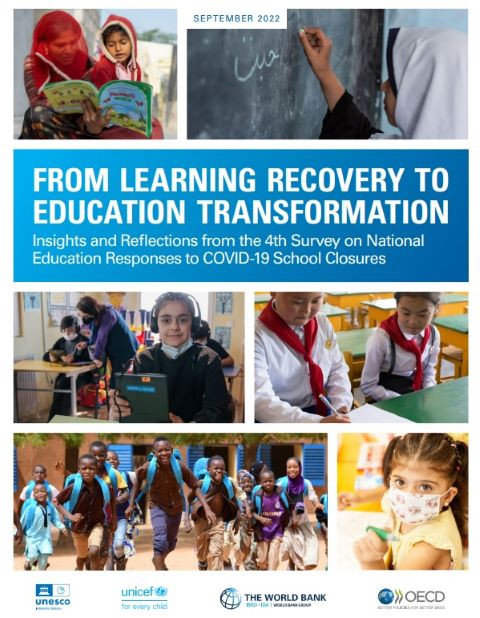 From Learning Recovery to Education Transformation: Insights and Reflections from the 4th Survey on National Education Responses to COVID-19 School Closures 발행 연도: 2022 단체 저자: UNESCO | UNESCO Institute for Statistics (UIS) | United Nations Children's Fund (UNICEF) | World Bank | Organisation for Economic Co-operation and Development (OECD) From Learning Recovery to Education Transformation, a new joint report by UNESCO, UNESCO Institute for Statistics (UIS), UNICEF, The World Bank and The OECD, presents findings from the fourth round of the Survey on National Education Responses to COVID-19 School Closures, administered between April–July 2022 with responses from Ministries of Education in 93 countries. It explores how countries are progressing in the RAPID actions to recover learning: Reach every child and keep them in school; Assess learning levels regularly; Prioritize teaching the fundamentals; Increase the efficiency of instruction; and Develop psychosocial health and wellbeing.
 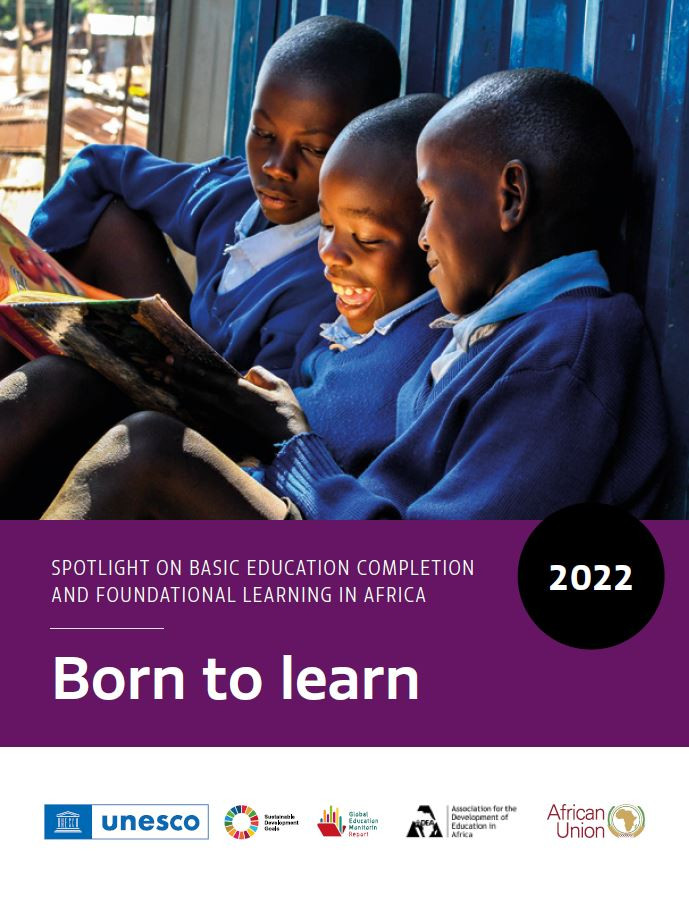 Spotlight on Basic Education Completion and Foundational Learning in Africa, 2022: Born to Learn 발행 연도: 2022 단체 저자: UNESCO | Association for the Development of Education in Africa (ADEA) | African Union This publication is the first in a three-part Spotlight series. It is produced by a partnership between the Global Education Monitoring Report, the Association for the Development of Education in Africa and the African Union.The report focuses on why learning levels in the region are low. All children are born to learn yet only one in five children in Africa who reach the end of primary school achieve the minimum proficiency level required to continue their education and fulfil their potential. Combining completion and learning statistics, the report shows that children in Africa are at least five times less likely than children in the rest of the world to be prepared for the future.Given the historically low levels of learning on the continent, fresh thinking is needed to translate the CESA and SDG 4 commitments into focused, coordinated, well-informed and appropriately funded actions. The report contains eight policy-oriented recommendations for driving change.
  5th UNESCO Forum on Transformative Education for Sustainable Development, Global Citizenship, Health and Well-Being: Recommendations for Action Towards Transformative Education 발행 연도: 2022 단체 저자: UNESCO In light of contemporary and emerging challenges such as climate change, violent and hateful ideologies, conflicts and risks of global pandemics, education must teach young people the knowledge, skills, values and attitudes to live cooperatively, be flexible, think critically, respect diversity, care for the environment, and be actively involved in finding solutions, both locally and globally. Transformative education – as enshrined in Target 4.7 of Sustainable Development Goal 4 – is critical in supporting individuals to develop these competencies. Transformative education involves teaching and learning that motivates and empowers learners to make informed decisions and actions at the individual, community and global levels. With a focus on sustainability, global citizenship, health and well-being for all, transformative education implies ensuring that curriculum, pedagogy, learning materials, schools and learning environments are meaningful for the social, political, economic, cultural and environmental contexts. To better understand concrete progress in transformative education, UNESCO and the Asia Pacific Centre of Education for International Understanding (APCEIU) co-organized the 5th UNESCO Forum on Transformative Education for Sustainable Development, Global Citizenship, Health and Well-being (29 November – 1 December 2021).The conference enabled a productive dialogue among a diverse range of actors from the fields of education for sustainable development (ESD), global citizenship education (GCED), education for health and wellbeing under the broader “banner” of transformative education. 5ème Forum de l’UNESCO sur l’éducation transformatrice pour le développement durable, la citoyenneté mondiale, la santé et le bien-être: Recommandations pour l’action en vue d’une éducation transformatrice 발행 연도: 2022 단체 저자: UNESCO À la lumière des défis contemporains et émergents tels que le changement climatique, les idéologies violentes et haineuses, les conflits et les risques de pandémies mondiales, l'éducation doit enseigner aux jeunes les connaissances, les compétences, les valeurs et les attitudes nécessaires pour vivre en coopération, être flexibles, penser de manière critique, respecter la diversité, prendre soin de l'environnement et participer activement à la recherche de solutions, tant au niveau local que mondial.L'éducation transformatrice - telle qu'énoncée dans la cible 4.7 de l'objectif de développement durable 4 - est essentielle pour aider les individus à développer ces compétences. L'éducation transformatrice implique un enseignement et un apprentissage qui motivent et habilitent les apprenants à prendre des décisions et des actions éclairées aux niveaux individuel, communautaire et mondial. En mettant l'accent sur la durabilité, la citoyenneté mondiale, la santé et le bien-être pour tous, l'éducation transformatrice implique de veiller à ce que les programmes, la pédagogie, le matériel d'apprentissage, les écoles et les environnements d'apprentissage soient significatifs pour les contextes social, politique, économique, culturel et environnemental.Pour mieux comprendre les progrès concrets de l'éducation transformatrice, l'UNESCO et le Centre Asie-Pacifique d'éducation pour la compréhension internationale (APCEIU) ont co-organisé le 5e Forum de l'UNESCO sur l'éducation transformatrice pour le développement durable, la citoyenneté mondiale, la santé et le bien-être (29 novembre - 1er décembre 2021).La conférence a permis un dialogue productif entre un large éventail d'acteurs des domaines de l'éducation au développement durable (EDD), de l'éducation à la citoyenneté mondiale (ECM), de l'éducation pour la santé et le bien-être sous la « bannière » plus large de l'éducation transformatrice.
  Progress of SDG4 in the Arab Region: A Summary Review 발행 연도: 2022 단체 저자: UNESCO This report is a snapshot review of the progress of SDG 4 in the Arab region, based upon the national reports of the countries of the region and the valuable inputs from the regional education institutes of the region. In this review, SDG 4 is looked at as an essential part of an interconnected whole of all SDGs. However, it focuses on selected targets and indicators of SDG 4 because of difficulties of accessing consistent data pertaining to the region covering the period from 2010 to 2020. Therefore, internationally comparable data from various sources have been taken into consideration, highlighting at the same time the overall pictures as revealed by the country reports and flagging their selected best practices.
 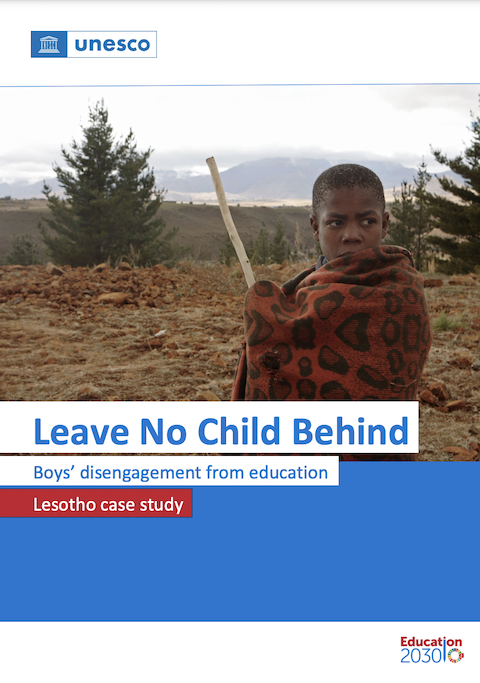 Leave No Child Behind: Boys’ Disengagement From Education; Lesotho Case Study 발행 연도: 2022 저자: Paseka A. Mosia 단체 저자: 유네스코 In the framework of its work gender equality in and through education better understand boys’ disengagement from education, UNESCO commissioned five country case studies to inform the publication “Leave no child behind: Global report on boys’ disengagement from education”. National research teams examined the situation in five countries – Fiji, Kuwait, Lesotho, Peru and the United Arab Emirates.This case study presents the results from Lesotho.