
자료
세계시민교육에 대한 이해를 넓히고 연구, 옹호 활동, 교수, 학습 등을 향상시킬 수 있는 다양하고 유용한 자료를 찾아보세요.
3,530 건의 결과가 검색되었습니다
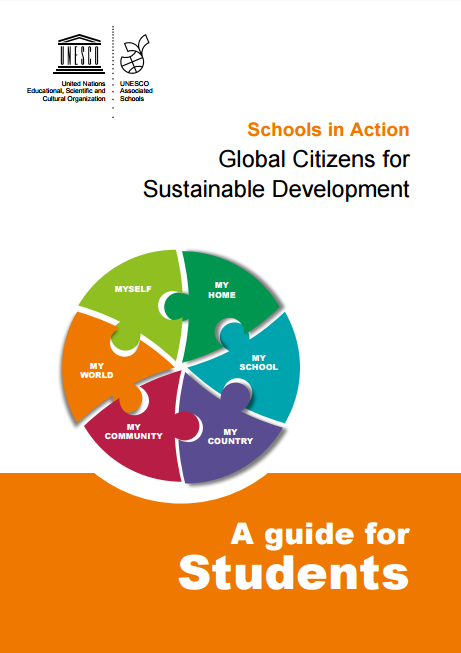 Escuelas en acción Ciudadanos del mundo para el desarrollo sostenible: guía para el alumnado 발행 연도: 2016 단체 저자: Organización de las Naciones Unidas para la Educación, la Ciencia y la Cultura (UNESCO) The UNESCO Associated Schools Project Network (ASPnet) in Action: Global Citizens for Sustainable Development student guide aims to introduce secondary school students to Global Citizenship Education (GCED) and Education for Sustainable Development (ESD) and provide them with ideas and activities to contribute proactively to a more peaceful and sustainable world. The guide draws on the discussions and activities of almost 1,100 participants from 104 countries, including ASPnet National Coordinators, school principals, teachers, students and experts who contributed to the ASPnet Online Collaborative Platform: Global Citizens Connected for Sustainable Development in 2014 and 2015 [http://en.unesco.org/aspnet/globalcitizens]. You will find in this student guide: An overview of what it means to be a global citizen and of how you can contribute to sustainable development. Ideas for getting active yourself, as part of your home, school, community, country and globally. Selected activities on GCED and ESD from ASPnet schools around the world.
 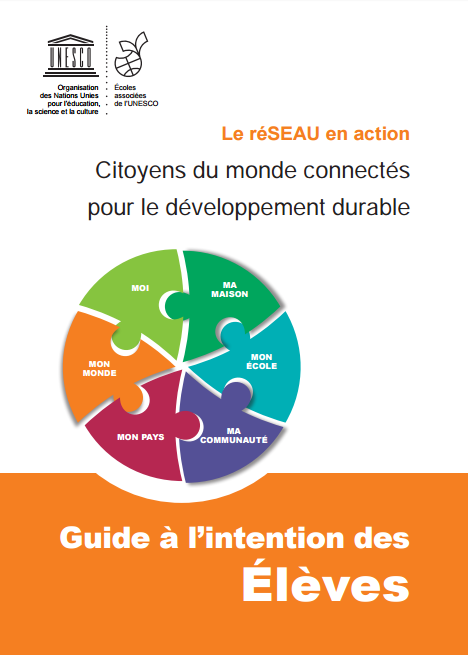 Le réSEAU en action: citoyens du monde connectés pour le développement durable: guide à l'intention des élèves 발행 연도: 2017 단체 저자: UNESCO Le guide « Le réSEAU en action : Citoyens du monde connectés pour le développement durable » à l’intention des élèves a pour but d’initier les élèves du secondaire à l’éducation à la citoyenneté mondiale (ECM) et à l’éducation en vue du développement durable (EDD), et de leur proposer des idées et des activités pour qu’ils contribuent activement à la construction d’un monde plus pacifique et durable. Le guide s’appuie sur les discussions et les activités de près de 1 100 participants originaires de 104 pays, notamment des coordinnateurs nationaux du réSEAU, des chefs d’établissement, des enseignants, des élèves et des experts qui ont contribué à la plateforme collaborative en ligne « Le réSEAU en action : Citoyens du monde connectés pour le développement durable » en 2014 et 2015 [http://fr.unesco.org/aspnet/globalcitizens/]. Le guide à l’intention des élèves : donne une idée de ce que signifie « être un citoyen du monde » ainsi que des suggestions pour contribuer au développement durable ; propose des idées pour agir vous-mêmes dans votre foyer, dans votre école, dans votre communauté, dans votre pays et dans le monde ; présente une sélection d’activités sur l’ECM et l’EDD mises en œuvre par des écoles du réSEAU du monde entier.
 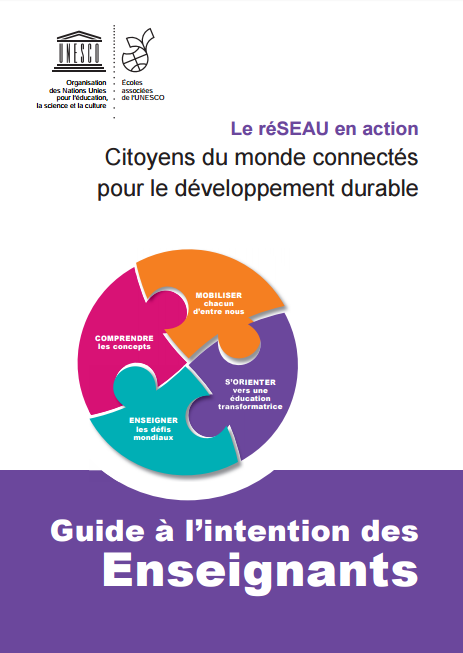 Le réSEAU en action: Citoyens du monde connectés pour le développement durable: guide à l'intention des enseignants 발행 연도: 2017 단체 저자: UNESCO Le guide à l’intention des enseignants : donne aux élèves une idée de ce que signifie pour eux « devenir des citoyens du monde » ainsi que des suggestions pour contribuer au développement durable ; propose des idées d’activités en classe pour aider les élèves du secondaire à développer des connaissances, des compétences, des valeurs, des attitudes et des comportements en faveur de l’ECM et de l’EDD ; présente une sélection d’activités sur l’ECM et l’EDD mises en œuvre par les écoles du réSEAU du monde entier.
 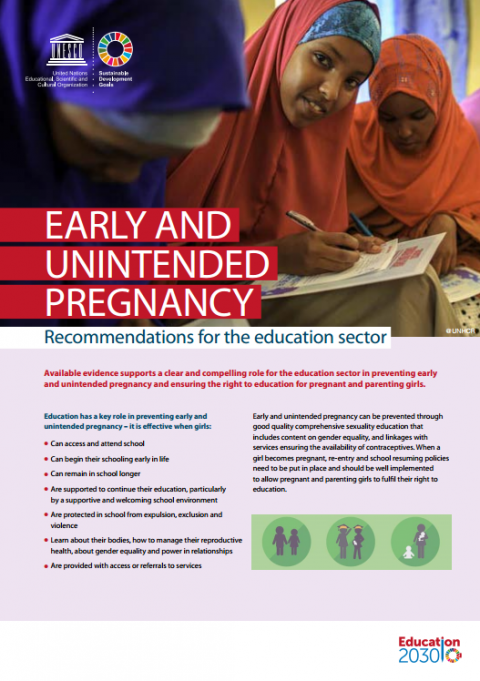 Early and unintended pregnancy: recommendations for the education sector 발행 연도: 2017 단체 저자: Organización de las Naciones Unidas para la Educación, la Ciencia y la Cultura (UNESCO) Early and unintended pregnancy (EUP) is a major concern in many countries. It has a major impact on the lives of adolescents – especially girls – in terms of their health, social, economic and education outcomes. This brief contains the summary of recommendations from an evidence review to support the education sector to prevent and respond to EUP.
 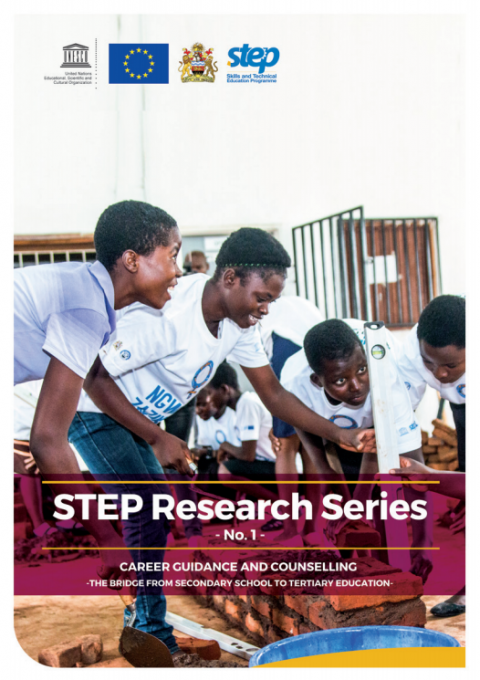 Career guidance and counselling: the bridge from secondary school to tertiary education; a review of current guidance and counselling programmes and practices in Malawi and their support in promoting technical and vocational training for girls 발행 연도: 2017 단체 저자: UNESCO The objective of this report is to identify and review existing career G&C programmes and practices in secondary schools in Malawi. The review assesses to what extent such programmes and practices create an awareness of the importance of technical careers and how graduates from the secondary schools can access TEVET. Additionally, it assesses whether any affirmative action measures or approaches are used to increase girls’ interest in and applications to enter technical colleges.
 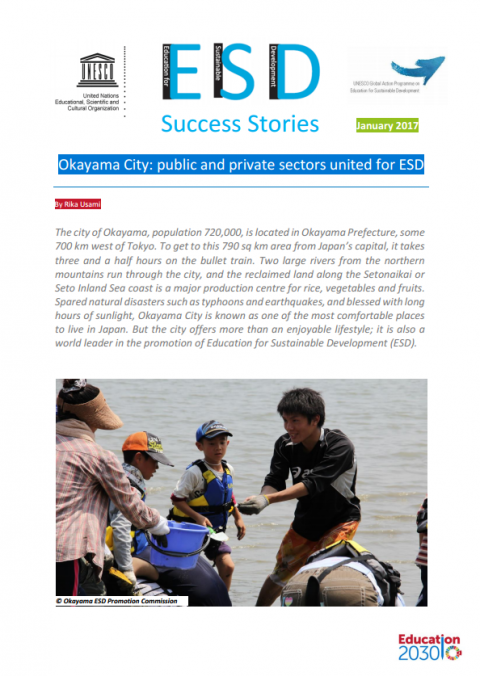 Okayama City: public and private sectors united for ESD 발행 연도: 2017 저자: Rika Usami 단체 저자: UNESCO ESD Success Stories are showcasing compelling stories with a personal/human dimension from all five UNESCO regions (Africa, Arab States, Asia and Pacific, Europe & North America and Latin America & the Caribbean). The stories illustrate the wide diversity of ESD approaches and initiatives taking place in different parts of the world. They show how involvement with ESD has changed the lives of specific individual persons and how they have become more active in their community. Each story centers on one individual or a group of individuals.Okayama City is known as one of the most comfortable places to live in Japan.The city offers more than an enjoyable lifestyle; it is also a world leader in the promotion of Education for Sustainable Development (ESD). Okayama: les secteurs public et privé unis pour l'EDD 발행 연도: 2017 저자: Rika Usami 단체 저자: Organisation des Nations Unies pour l'éducation, la science et la culture (UNESCO)
 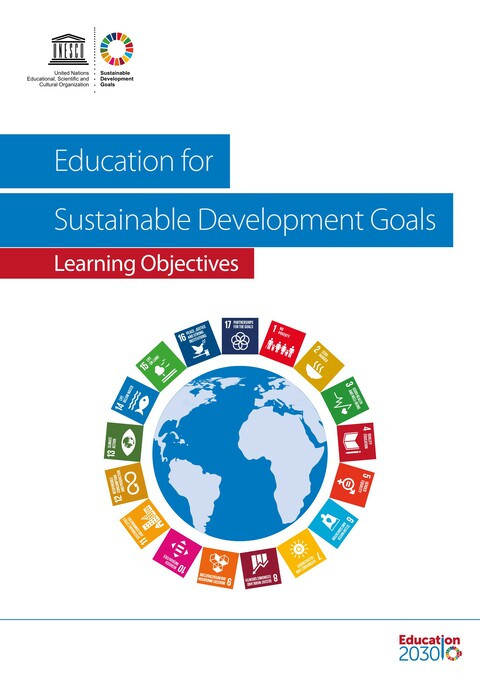 التعليم من أجل تحقيق أهداف التنمية المستدامة: أهداف التعلم 발행 연도: 2017 단체 저자: منظمة الأمم المتحدة للتربية والعلم والثقافة (UNESCO) تروج اليونسكو التعليم من أجل التنمية المستدامة منذ عام .١٩٩٢ وتولت اليونسكو قيادة عقد الأمم المتحدة للتعليم من أجل التنمية المستدامة بين عامي ٢٠٠٥ و٠١٤٢ وتقود حاليا الجهود الرامية إلى متابعة هذا العقد من خلال برنامج العمل العالمي للتعليم من أجل التنمية المستدامة. وثمة زخم لم يسبق له مثيل في مجال التعليم من أجل التنمية المستدامة. إن معالجة القضايا العالمية، كتغير المناخ مثلا، تتطلب تغيير أنماط عيشنا على نحو عاجل وإحداث تغيير جذري في طريقة تفكيرنا وتصرفنا. ولإحداث هذا التغيير، لا بد من توافر مهارات وقيم ومواقف جديدة تفضي إلى مجتمعات تنعم بقدر أكبر من الاستدامة. ويتعين على نظم التعليم تلبية هذه المتطلبات الملحة من خلال تحديد أهداف تعلم ومضامين تعليمية مجدية. وتطبيق أساليب تربوية هدفها تمكين الدارسين، وحث المؤسسات التعليمية على إدراج مبادئ الاستدامة في هياكلها الإدارية. وتتجلى هذه الرؤية التي تبرز أهمية اعتماد الحلول التعليمية المناسبة في جدول الأعمال الجديد للتنمية المستدامة لعام ٢٠٢٠ الذي يخصص للتعليم هدفا صريحا ومنفصلا يتمثل في الهدف ٤ من أهداف التنمية المستدامة، كما يتضمن العديد من الغايات والمؤشرات المتصلة بالتعليم التي تندرج في إطار أهداف التنمية المستدامة الأخرى. ويمثل التعليم هدفا في حد ذاته ووسيلة لبلوغ سائر أهداف التنمية المستدامة الأخرى. ولا يشكل التعليم جزءا لا يتجزأ من عملية التنمية المستدامة فحسب، بل هو أيضا عامل رئيسي يساعد على تحقيق التنمية المستدامة. وعليه، يمثل التعليم استراتيجية بالغة الأهمية لتحقيق سائر أهداف التنمية المستدامة. ويرمي هذا المنشور إلى توفير دليل يسترشد به المهنيون العاملون في حقل التعليم بشأن الاستعانة بالتعليم من أجل التنمية المستدامة لبلوغ مستويات التعلم الضرورية لتحقيق أهداف التنمية المستدامة، أي أنه يسعى للإسهام في بلوغ هذه الأهداف. ويحدد هذا الدليل عددا من أهداف التعلم الإرشادية ويقترح عددا من الموضوعات وأنشطة التعلم الخاصة بكل واحد من أهداف التنمية المستدامة، كما يعرض طائفة من أساليب التنفيذ على شتى المستويات، بدءأ بتصميم المساقات الدراسية ووصولا إلى رسم الاستراتيجيات الوطنية. ولا يسعى هذا الدليل لأن يكون ملزما بأي شكل كان، وإنما يرمي إلى توفير التوجيهات والاقتراحات التي يمكن للمربين الانتقاء منها وتكييفها لتلائم سياقات التعلم الفعلية السائدة لديهم. 教育促进实现可持续发展目标: 学习目标 발행 연도: 2017 단체 저자: 联合国教科文组织 (UNESCO) 自1992年起,教科文组织一直致力于促进可持续发展教育(ESD)。教科文组织引领了联合国可持续发展教育十年(2005‒2014年),目前本组织正大力倡导其后续工作“全球可持续发展教育行动计划”(GAP)。 可持续发展教育的势头从未如此强劲。气候变化等全球问题迫切要求我们转变生活、思维和行动的方式。要实现这种改变,我们需要新的技术、价值观和态度,增加社会的可持续性。 面对这种迫切的需求,教育系统必须厘清相关的学习目标和学习内容,引进能增强学习者能力的教学法,敦促各教育机构在其管理结构中纳入可持续性原则。 新的《2030年可持续发展议程》清楚体现对适当教育重要性的认识。教育被单独作为一个明确的目标——可持续发展目标4。其他可持续发展目标(SDG)中也涵盖了多个与教育有关的具体目标和指标。 教育不仅本身是我们孜孜以求的目标,还是实现所有其他可持续发展目标的手段。它既是可持续发展的内在组成部分,也是推动实现可持续发展的关键因素。因此,教育是实现可持续发展目标的一项关键战略。 本出版物旨在为教育专家们提供一部指南,以便他们在学习过程中利用可持续发展教育促进实现可持续发展目标,从而为实现可持续发展目标作出贡献。对于每项可持续发展目标,这部指南都标明了指示性学习目标,并提出了拟议的专题和学习活动。指南中还介绍了从课程设计到国家战略等不同层级的实施方法。 这部指南不是为了作出任何硬性规定,而是要提供指导和建议,以便教育者根据具体的学习环境作出选择和调整。
  Accountability in Education: Meeting Our Commitments: Global Education Monitoring Report, 2017/8 발행 연도: 2017 단체 저자: UNESCO The second edition of the Global Education Monitoring Report (GEM Report) presents the latest evidence on global progress towards the education targets of the UN Sustainable Development Goals.With hundreds of millions of people still not going to school, and many not achieving minimum skills at school, it is clear education systems are off track to achieve global goals. The marginalized currently bear the most consequences but also stand to benefit the most if policy-makers pay sufficient attention to their needs. Faced with these challenges, along with tight budgets and increased emphasis on results-oriented value for money, countries are searching for solutions. Increased accountability often tops the list.The 2017/8 GEM Report shows the entire array of approaches to accountability in education. It ranges from countries unused to the concept, where violations of the right to education go unchallenged, to countries where accountability has become an end in itself instead of a means to inclusive, equitable and high-quality education and lifelong learning for all.The report emphasizes that education is a shared responsibility. While governments have primary responsibility, all actors – schools, teachers, parents, students, international organizations, private sector providers, civil society and the media – have a role in improving education systems.The report emphasizes the importance of transparency and availability of information but urges caution in how data are used. It makes the case for avoiding accountability systems with a disproportionate focus on narrowly defined results and punitive sanctions. In an era of multiple accountability tools, the report provides clear evidence on those that are working and those that are not.