
자료
세계시민교육에 대한 이해를 넓히고 연구, 옹호 활동, 교수, 학습 등을 향상시킬 수 있는 다양하고 유용한 자료를 찾아보세요.
3,530 건의 결과가 검색되었습니다
 Education in Africa: placing equity at the heart of policy; executive summary 발행 연도: 2023 단체 저자: UNESCO Dakar | Union Africaine This report follows the request made by the Member States of the African Union during the 2018 Pan-African High-Level Conference on Education. It aims to support the efforts undertaken by African countries to accelerate the achievement of the targets and strategic objectives set out in the 2030 Agenda and the Continental Education Strategy for Africa (CESA). This first report highlights the need to place equity at the heart of efforts to improve access to and the quality of education, without which efforts to improve access to and the quality of education could inadvertently widen existing inequalities. L’éducation en Afrique: Placer l’équité au cœur des politiques 발행 연도: 2023 단체 저자: UNESCO Dakar | Union Africaine Ce rapport fait suite à la demande formulée par les États membres de l'Union Africaine au cours de la Conférence panafricaine de haut niveau sur l’éducation de 2018. Il vise à soutenir les efforts entrepris par les pays africains afin d’accélérer la réalisation des cibles et des objectifs stratégiques fixés dans le Programme 2030 et la Stratégie continentale de l’éducation pour l’Afrique (CESA). Ce premier rapport met en lumière la nécessité d’accorder une place centrale à l’équité, sans laquelle les efforts d’amélioration de l’accès à l’éducation et de sa qualité pourraient involontairement creuser les inégalités existantes. This report follows the request made by the Member States of the African Union during the 2018 Pan-African High-Level Conference on Education. It aims to support the efforts undertaken by African countries to accelerate the achievement of the targets and strategic objectives set out in the 2030 Agenda and the Continental Education Strategy for Africa (CESA). This first report highlights the need to place equity at the heart of efforts to improve access to and the quality of education, without which efforts to improve access to and the quality of education could inadvertently widen existing inequalities. A Educação na África: colocar a igualdade no cerne da política; sumário executivo 발행 연도: 2023 단체 저자: UNESCO Dakar | Union Africaine Ce rapport fait suite à la demande formulée par les États membres de l'Union Africaine au cours de la Conférence panafricaine de haut niveau sur l’éducation de 2018. Il vise à soutenir les efforts entrepris par les pays africains afin d’accélérer la réalisation des cibles et des objectifs stratégiques fixés dans le Programme 2030 et la Stratégie continentale de l’éducation pour l’Afrique (CESA). Ce premier rapport met en lumière la nécessité d’accorder une place centrale à l’équité, sans laquelle les efforts d’amélioration de l’accès à l’éducation et de sa qualité pourraient involontairement creuser les inégalités existantes. This report follows the request made by the Member States of the African Union during the 2018 Pan-African High-Level Conference on Education. It aims to support the efforts undertaken by African countries to accelerate the achievement of the targets and strategic objectives set out in the 2030 Agenda and the Continental Education Strategy for Africa (CESA). This first report highlights the need to place equity at the heart of efforts to improve access to and the quality of education, without which efforts to improve access to and the quality of education could inadvertently widen existing inequalities. التعليم في أفريقيا: إدماج الإنصاف في صميم السياسات التعليمية; ملخص تنفيذي 발행 연도: 2023 단체 저자: UNESCO Dakar | Union Africaine Ce rapport fait suite à la demande formulée par les États membres de l'Union Africaine au cours de la Conférence panafricaine de haut niveau sur l’éducation de 2018. Il vise à soutenir les efforts entrepris par les pays africains afin d’accélérer la réalisation des cibles et des objectifs stratégiques fixés dans le Programme 2030 et la Stratégie continentale de l’éducation pour l’Afrique (CESA). Ce premier rapport met en lumière la nécessité d’accorder une place centrale à l’équité, sans laquelle les efforts d’amélioration de l’accès à l’éducation et de sa qualité pourraient involontairement creuser les inégalités existantes. This report follows the request made by the Member States of the African Union during the 2018 Pan-African High-Level Conference on Education. It aims to support the efforts undertaken by African countries to accelerate the achievement of the targets and strategic objectives set out in the 2030 Agenda and the Continental Education Strategy for Africa (CESA). This first report highlights the need to place equity at the heart of efforts to improve access to and the quality of education, without which efforts to improve access to and the quality of education could inadvertently widen existing inequalities.
 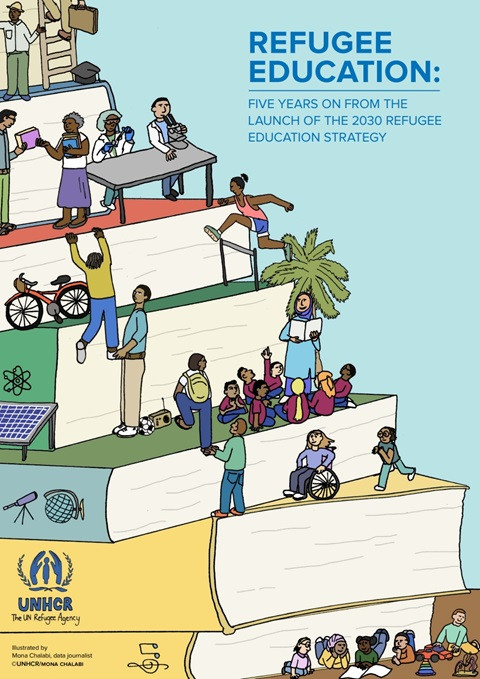 Refugee Education; Five Years on from the Launch of the 2030 Refugee Education Strategy 발행 연도: 2024 저자: Cirenia Chavez Villegas | Kate Bond 단체 저자: UN. Office of the United Nations High Commissioner for Refugees (UNHCR) The 2024 UNHCR Refugee Education Report draws on data from more than 65 countries worldwide to provide the most detailed picture yet of the state of refugee education and enrolment. The report reflects on the 2030 Refugee Education Strategy (launched in 2019) and where notable progress has been made as well as areas where greater investment and enhanced collaboration are needed to meet the strategic objectives of the Strategy.
  Educational Route: Lessons Learned 발행 연도: 2024 단체 저자: Save the Children This report, prepared by Save the Children in partnership with HIAS and funded by ECHO, sets out the main lessons learned from the Educational Route project, which has had areas of intervention in Mexico, Panama, Costa Rica, Guatemala, Honduras and El Salvador. The objective of the project has been to contribute to reducing barriers to access to education for children, adolescents and families on the move along the Central American migratory routes. Within the framework of the project, a methodological package has been created containing an evaluation tool “HALDO on the move” (Holistic Assessment of Learning and Development Outcomes) that allows different humanitarian actors to quickly assess the educational level of children and adolescents and record their data on a platform in order to offer an emergency education response adapted to real learning needs, as well as achieve greater coordination to promote educational continuity along the route. Ruta educativa: Lecciones aprendidas 발행 연도: 2024 단체 저자: Save the Children El presente informe, elaborado por Save the Children en alianza con HIAS y financiado por ECHO, expone las principales lecciones aprendidas del proyecto Ruta Educativa, que ha tenido como zonas de intervención México, Panamá, Costa Rica, Guatemala, Honduras y El Salvador. El objetivo del proyecto ha sido contribuir a reducir las barreras de acceso a la educación de niños, niñas, adolescentes y familias en movimiento en las rutas migratorias centroamericanas, y en el marco del mismo se ha creado un paquete metodológico que contiene una herramienta de evaluación “HALDO on the move” (Holistic Assessment of Learning and Development Outcomes) que permite a los diferentes actores humanitarios evaluar rápidamente el nivel educativo de los niños, niñas y adolescentes y registrar sus datos en una plataforma con el fin de ofrecer una respuesta de educación en emergencias adaptada a las necesidades de aprendizaje reales, así como lograr una mayor coordinación para promover la continuidad educativa a lo largo de la ruta.
  Safe Schools Declaration 발행 연도: 2015 단체 저자: Global Coalition to Protect Education from Attack (GCPEA) The Safe Schools Declaration is an intergovernmental political commitment that was developed at an international conference held in Oslo, Norway, on 28-29 May 2015. The Declaration allows countries the opportunity to express their political support for the protection of students, teachers and schools during times of armed conflict; the importance of the continuation of education during armed conflict; and the implementation of the Guidelines for Protecting Schools and Universities from Military Use during Armed Conflict. Declaración sobre escuelas seguras 발행 연도: 2015 단체 저자: Global Coalition to Protect Education from Attack (GCPEA) La Declaración sobre Escuelas Seguras es un compromiso político intergubernamental que se construyó en el marco de una conferencia internacional celebrada en Oslo, Noruega, el 28-29 de mayo de 2015.La Declaración permite a los países la oportunidad de expresar su apoyo político para la protección de los estudiantes, maestros y escuelas durante tiempos de conflicto armado; la importancia de la continuación de la educación durante los conflictos armados y la aplicación de las Directrices para Proteger Escuelas y Universidades de Uso Militar durante Conflicto Armado.
 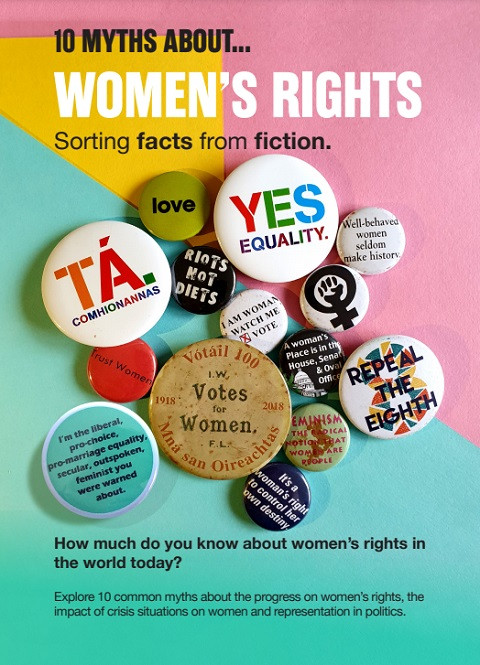 10 Myths About Women’s Rights: Sorting Facts From Fiction 발행 연도: 2020 저자: Toni Pyke | Colm Regan 단체 저자: DevelopmentEducation.ie Gender-based inequality is one of the most enduring and deep-seated discriminations. It affects all regions, classes and sectors. In most countries, it is maintained and defended in most of the same ways. One key component of that maintenance is a set of myths that are repeated time and time again.This pocket-size booklet includes:Why thinking about women’s rights matters10 short myths about progress on equality, who benefits from feminism, the realities of women’s health and the impact of COVID-19.Links to the Sustainable Development GoalsReferences per each myth following a fact or fiction approach and an explainerThe 10 Myths About…. series looks to sort facts from fiction on key global development, human rights and justice issues.Download 10 Myths About Women’s Rights PDFTest your knowledge and take the 10 Myths About Women’s Rights quiz or share with your group / class / friends For the latest fact checks and factsheets more on the fact checking project and development ideas, issues and debates, visit our What The Fact? project.