
자료
세계시민교육에 대한 이해를 넓히고 연구, 옹호 활동, 교수, 학습 등을 향상시킬 수 있는 다양하고 유용한 자료를 찾아보세요.
3,530 건의 결과가 검색되었습니다
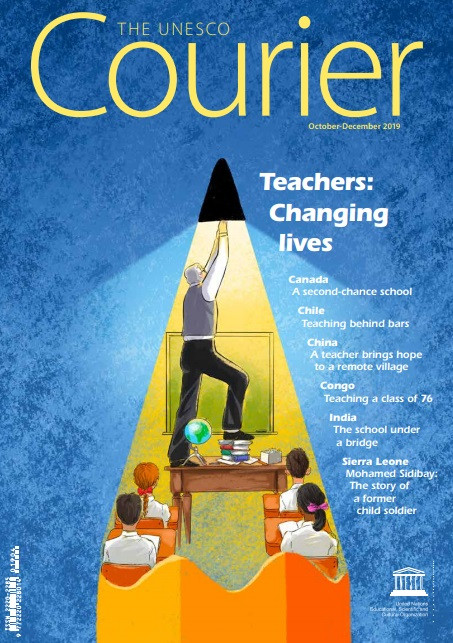 Teachers: changing lives (The UNESCO Courier no. 4, October-December 2019) 발행 연도: 2019 단체 저자: UNESCO Certainly, everyone recognizes the key role teachers play. On a personal level, we can all name at least one teacher who made a difference – sometimes to such an extent that it redirected our whole lives. At the international level, the United Nations Sustainable Development Goals (SDGs), Goal 4 in particular, recognize the importance of teachers in the implementation of the Sustainable Development Agenda by 2030. Yet, the profession is being undermined. The development of cognitive neuroscience and the many applications of new technologies in the field of education are forcing the profession to adapt and reinvent itself. Ces profs qui changent le monde (Le Courrier de l'UNESCO 4, octobre-décembre 2019) 발행 연도: 2019 단체 저자: Organisation des Nations Unies pour l'éducation, la science et la culture (UNESCO) Certes, tout le monde reconnaît le rôle clé que jouent les enseignants. À titre personnel, chacun peut citer le nom d’au moins un professeur qui a compté, parfois au point de réorienter une vie entière. Sur le plan international, les Objectifs de développement durable (ODD) des Nations Unies, en particulier l’Objectif no 4, reconnaissent l’importance des enseignants dans la mise en œuvre du Programme de développement durable à l’horizon 2030. Pourtant, la profession est mise à mal. Le développement des neurosciences cognitives, les multiples applications des nouvelles technologies dans le domaine de l’éducation obligent la profession à s’adapter, se réinventer. Docentes que cambian el mundo (El Correo de la UNESCO 4, Octubre-Diciembre 2019) 발행 연도: 2019 단체 저자: Organización de las Naciones Unidas para la Educación, la Ciencia y la Cultura (UNESCO) Sin duda, todo el mundo reconoce la función esencial que desempeñan los docentes. A título individual, cada uno de nosotros puede mencionar el nombre de al menos un maestro que le influyó decisivamente, a veces hasta el punto de reorientar toda su vida. En el ámbito internacional, los Objetivos de Desarrollo Sostenible (ODS) de las Naciones Unidas, en particular el ODS 4, destacan la importancia del profesorado en la consecución de la Agenda 2030 de desarrollo sostenible.Y, sin embargo, la profesión docente está en crisis. El desarrollo de la neurociencia cognitiva y las múltiples aplicaciones de las nuevas tecnologías en el sector educativo imponen al magisterio la necesidad de adaptarse, de reinventarse.
 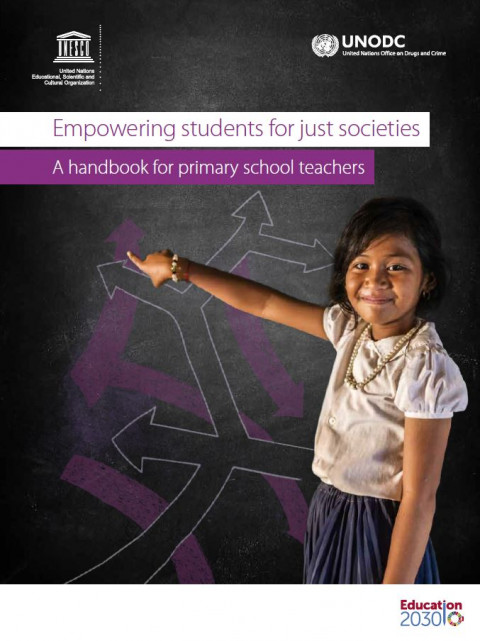 为学生赋能,建设公正社会: 小学教师手册 발행 연도: 2019 단체 저자: 联合国教科文组织 (UNESCO) | UN. Office on Drugs and Crime (UNODC) 该文件为小学阶段的教师提供一个公民教育指导手册,包含众多易于获取的教育资源,用于进行青少年公民教育。
 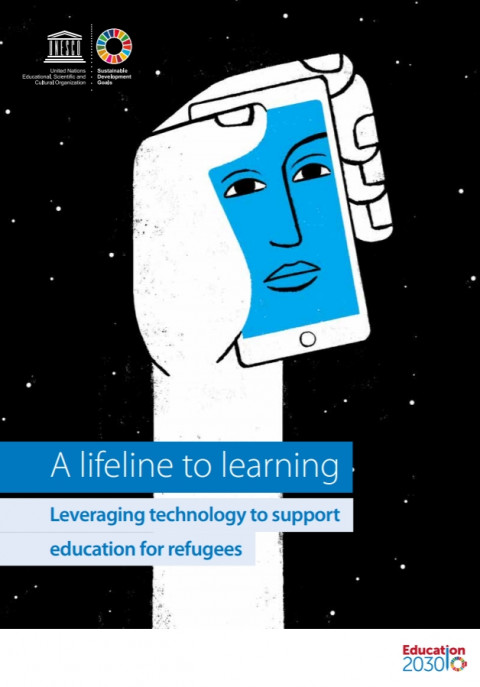 A Lifeline to Learning: Leveraging Mobile Technology to Support Education for Refugees 발행 연도: 2018 단체 저자: UNESCO This publication examines the evidence base for key assumptions on using mobile technology to address individual refugees’ learning challenges, broader education system challenges, and challenges to providing refugees with specific levels and types of education. The report presents findings from a review of 117 relevant papers and reports, and lessons drawn from the implementation of 52 projects that use mobile learning for refugees and the actual use of 35 digital apps or platforms. While acknowledging a limited reach, the report identifies effective mobile solutions and organizational strategies that should be scaled up.
  Inclusive Education for Persons with Disabilities - Are We Making Progress? 발행 연도: 2019 단체 저자: UNESCO | Leonard Cheshire (UK) The paper ‘Inclusive education for persons with disabilities – Are we making progress?’ has been developed as a background paper for the UNESCO International Forum on inclusion and equity in education – Every learner matters, being held in Cali, Colombia from 11-13 September 2019. The Forum is being organised in commemoration of the 25th anniversary of the passing of the Salamanca Statement and Framework for Action. The paper will explore the global progress towards inclusive education, the successes achieved and learnings observed specifically in countries of the global South. In these countries the concerns of universal access to and retention in education is still a concern for many governments, but large-scale exclusion of children with disabilities (an estimated 32 million or 1 out of 3 are out of school) remains the order of the day and is not always high on government agendas. Educación inclusiva para personas con discapacidades - ¿estamos logrando avances? 발행 연도: 2019 단체 저자: Organización de las Naciones Unidas para la Educación, la Ciencia y la Cultura (UNESCO) | Leonard Cheshire (UK) El informe «Educación inclusiva para personas con discapacidades: ¿estamos logrando avances?» ha sido elaborado como documento de referencia para el Foro Internacional sobre Inclusión y Equidad en la Educación UNESCO «Todas y todos los estudiantes cuentan», que se celebrará en Cali (Colombia) del 11 al 13 de septiembre de 2019. El Foro ha sido organizado para conmemorar el 25 aniversario de la aprobación de la Declaración de Salamanca y Marco de Acción sobre Necesidades Educativas Especiales. En este informe se explora el avance mundial hacia la educación inclusiva, los éxitos logrados y las conclusiones observadas específicamente en países del hemisferio sur, donde los problemas en torno al acceso universal a la educación y la continuidad en ella siguen siendo motivo de preocupación para numerosos gobiernos y donde la exclusión a gran escala de niños con discapacidad (se estima que unos 32 millones de niños no están escolarizados, lo que supone 1 de cada 3) sigue estando a la orden del día y no siempre es una prioridad en los programas gubernamentales.
  UNESCO, Climate Change Education and COP22 발행 연도: 2016 단체 저자: UNESCO Education is a key vector to prepare societies for global changes. It plays a critical role in achieving sustainable development goals and putting into practice a global agreement on climate change. Education plays a paramount role in raising awareness and promoting behavioural change for climate change mitigation and adaption. It helps increase the climate change mitigation and adaptation capacity of communities by enabling individuals to make informed decisions. L'UNESCO, l'éducation au changement climatique et la COP22 발행 연도: 2016 단체 저자: Organisation des Nations Unies pour l'éducation, la science et la culture (UNESCO) L’éducation est un vecteur clé pour préparer les sociétés à faire face aux changements globaux. Elle joue un rôle essentiel dans la réalisation des objectifs de développement durable et de mettre en pratique un accord mondial sur le changement climatique.L’éducation joue un rôle primordial dans la promotion de la sensibilisation et le changement de comportement concernant l’atténuation et l’adaptation en matière de changement climatique.Elle aide à accroitre l’atténuation du changement climatique et la capacité d’adaptation des collectivités en permettant aux individus de prendre des décisions informées.
  The CapED Programme: annual report 2018 발행 연도: 2019 단체 저자: UNESCO UNESCO is the United Nation’s specialized agency for education and is mandated to lead and coordinate progress towards Sustainable Development Goal 4 – “Ensure inclusive and equitable quality education and promote lifelong learning opportunities for all”. The CapED Programme is central to delivering on this mandate through capacity development. It mobilizes UNESCO’s worldwide network of specialized Institutes and offices and works with partners to assist countries as they develop and implement national plans to deliver on SDG4 commitments. The Annual Report 2018 provides information on achievements and progress made in the 25 countries where CapED is operational.