
자료
세계시민교육에 대한 이해를 넓히고 연구, 옹호 활동, 교수, 학습 등을 향상시킬 수 있는 다양하고 유용한 자료를 찾아보세요.
2,813 건의 결과가 검색되었습니다
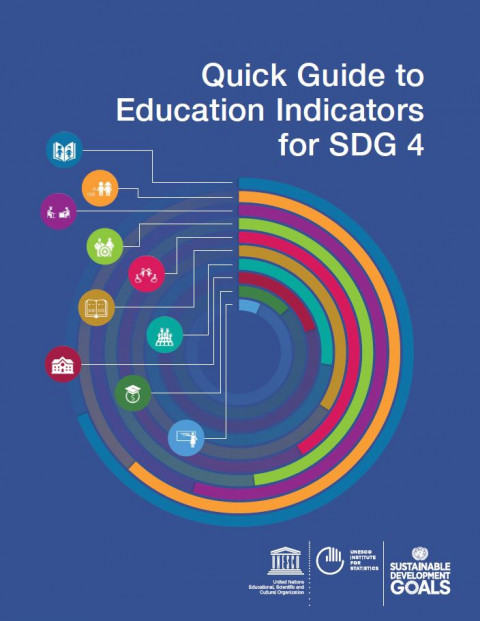 Quick Guide to Education Indicators for SDG 4 발행 연도: 2018 단체 저자: UNESCO Institute for Statistics (UIS) This guide serves as a quick reference on how to monitor progress towards Sustainable Development Goal 4 (SDG 4) on quality education. It provides basic explanations of SDG 4 targets, their indicators, how they are created and where to find the information needed for these indicators.
  Transferring findings from genocide education research into strategies for teaching and learning about genocide in schools In recent years interest in schools outreach and academic enrichment has increased dramatically, reflecting a greater social conscience and awareness of the impact that universities can have on the wider community. The transferable skills that academics bring to schools need to be honed for this new learning environment, as delivery methods and success benchmarks are radically different in a schools context. This collection addresses the numerous issues raised when arts and humanities academics become involved with schools, bringing together practitioners from a broad range of fields within the arts and humanities to share experiences and insights. (By the author)
 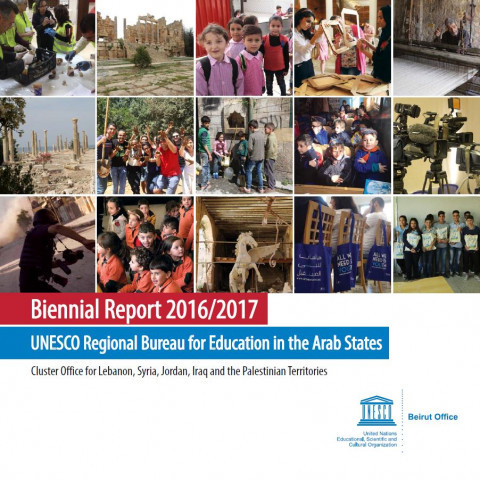 Biennial Report 2016/2017: UNESCO Regional Bureau for Education in the Arab States 발행 연도: 2018 단체 저자: UNESCO Beirut As Regional Bureau for Education, UNESCO Beirut is the lead coordinator for SDG 4 in the Arab Region. We strive to provide tangible support for each Member State in the region, taking into account national needs and priorities, thereby employing nationally relevant approaches. More specifically, our work aims to address both the humanitarian and development aspects brought about by the protracted crisis in Syria through bridging the learning gaps for the youth, both for Syrian refugees and vulnerable youth in host communities. Our response also targets teachers, mentors and facilitators as well as Ministries’ technical officials. The crisis in Syria has created a need for specific support in education in emergencies and quality education to which we actively engage from both, upstream analytical and capacity building and downstream operational levels. UNESCO Beirut has also strengthened its leadership to respond to the deliberate destruction of cultural heritage, illicit trafficking, and attacks against individuals on religious or cultural grounds. We raise the alarm to protect heritage in danger, assessing damages to World Heritage sites in conflict. We also raise awareness among the public about the values of cultural heritage and the need to protect it for future generations. In today’s diverse societies, the Organization’s fundamental humanist mission guides us to support people, especially the youth, in understanding each other and working together to build lasting peace and enables people to create and use knowledge for just and inclusive societies. We continue to advocate free, independent and pluralistic media in print, broadcast and online to enhance freedom of expression as a contributor to peace, sustainability, poverty eradication and human rights. This biennial report summarizes the work and achievements accomplished between 2016 and 2017 by our office.
 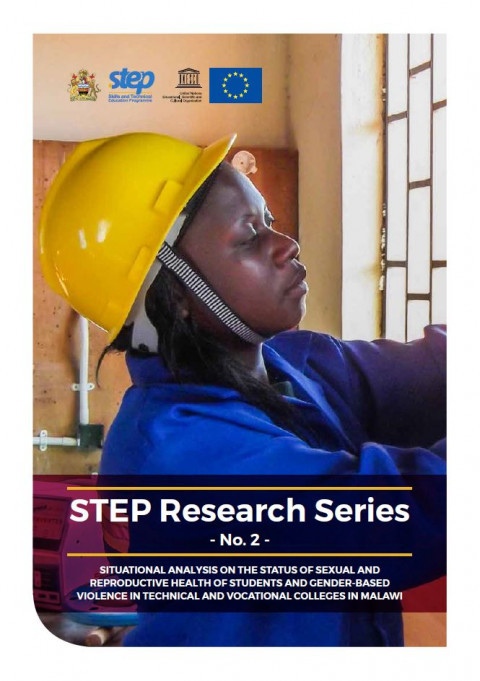 Situational Analysis on the Status of Sexual and Reproductive Health of Students and Gender-based Violence in Technical and Vocational Colleges in Malawi (STEP Research Series No. 2) 발행 연도: 2017 단체 저자: Skills and Technical Education Programme (STEP) Funded by the EU and implemented by UNESCO in collaboration with the Government of Malawi, the Skills and Technical Education Programme (STEP) is dedicated to reinforcing Technical, Entrepreneurial and Vocational Education and Training (TEVET) in Malawi.The programme will run from 2016-2020 and aims to improve TEVET at post-secondary level with a focus on equal access to enrolment, with particular emphasis on female learners; improving quality in the sector; and the establishment of clear governance structures. The STEP Research Series presents the highlights of the research undertaken by the programme.The situational analysis on the status of sexual and reproductive health of students and gender-based violence in technical and vocational colleges in Malawi is the second report in the STEP Research Series.
  Enseigner l'histoire et la prévention des génocides - Peut on prévenir les crimes contre l'humanité ? The question of barbarism dominates remembrance issues. The study of the prevention of crimes against humanity constitutes another major challenge. But these sensitive and complex debates are problematic. All fields are concerned : history, memory, law, philosophy, politics. How can schools tackle them ? Two solutions : opting for a comparative study of genocides, particularly the Holocaust and the Tutsis in Rwanda; and using the "universal/particular" dialectic, institutions and individuals. Recollections of the past and edification of the future, this book gives meaning to education and presents a sensitive reflection of the challenges of history and the contemporary world. (By the author - Translation) Enseigner l'histoire et la prévention des génocides - Peut on prévenir les crimes contre l'humanité ? La question de la barbarie domine les questions commémoratives. L'étude de la prévention des crimes contre l'humanité constitue un autre défi majeur. Mais ces débats délicats et complexes sont problématiques. Tous les champs sont concernés: l'histoire, la mémoire, le droit, la philosophie, la politique. Comment les écoles peuvent les aborder? Deux solutions: opter pour une étude comparative des génocides, en particulier l'Holocauste et les Tutsis au Rwanda; et en utilisant les « particuliers/universels» dialectiques, les institutions et les individus. Recollections du passé et de l'édification de l'avenir, ce livre donne un sens à l'éducation et présente une réflexion sensible des défis de l'histoire et le monde contemporain. (Par l'auteur - traduction)
 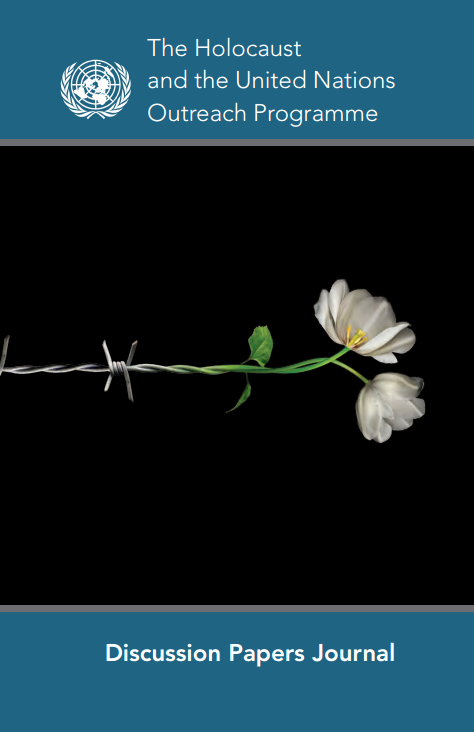 Discussion Papers Journal (Vol 1) In Volume I, students are introduced to the subject of the Holocaust and its implications through the writings of experts in this field of study and testimonies from survivors. German Professor Monika Richarz provides the reader with historical context and insight into Jewish culture before the war and French-born Holocaust survivor Simone Veil gives a first-hand account of experiencing the Holocaust as a Jew. Hungarian writer László Teleki talks about the Roma experience and how this group was similarly targeted by the Nazis. Historian and Professor Yehuda Bauer (Israel) explains how the Holocaust evolved from a utopian ideology that involved hatred of Jews, while Nobel Laureate and Holocaust survivor Elie Wiesel (USA) challenges the reader with the question “Why hate?” Other contributors include Professor Xu Xin (China), Professor Ben Kiernan (Australia), Professor Edward Kissi (South Africa), and Francis Deng (former Special Adviser to the United Nations Secretary-General on the Prevention of Genocide and today Permanent Representative of South Sudan to the United Nations). (By the publisher) Discussion Papers Journal (Vol 1) Dans le volume I, les élèves sont initiés au sujet de l'Holocauste et de ses implications à travers les écrits d'experts dans ce domaine d'étude et des témoignages de survivants. Professeur allemand Monika Richarz fournit au lecteur le contexte historique et un aperçu de la culture juive avant la guerre et survivant de l'Holocauste d'origine française Simone Veil donne un compte rendu de première main de l'expérience de l'Holocauste en tant que Juif. L’ écrivain hongrois László Teleki parle de l'expérience des Roms et la façon dont ce groupe a été ciblé de façon similaire par les nazis. Professeur Yehuda Bauer (Israël), historien, explique comment l'Holocauste a évolué à partir d'une idéologie utopiste qui a impliqué la haine des Juifs, alors que le prix Nobel et survivant de l'Holocauste Elie Wiesel (USA) défie le lecteur avec la question «Pourquoi la haine? » Parmi les autres contributeurs Professeur Xu Xin (Chine), le professeur Ben Kiernan (Australie), le professeur Edward Kissi (Afrique du Sud), et Francis Deng (ancien Conseiller spécial du Secrétaire général des Nations Unies sur la prévention du génocide et aujourd'hui Représentant permanent du Soudan du Sud auprès des Nations Unies ). (Par l'éditeur)
 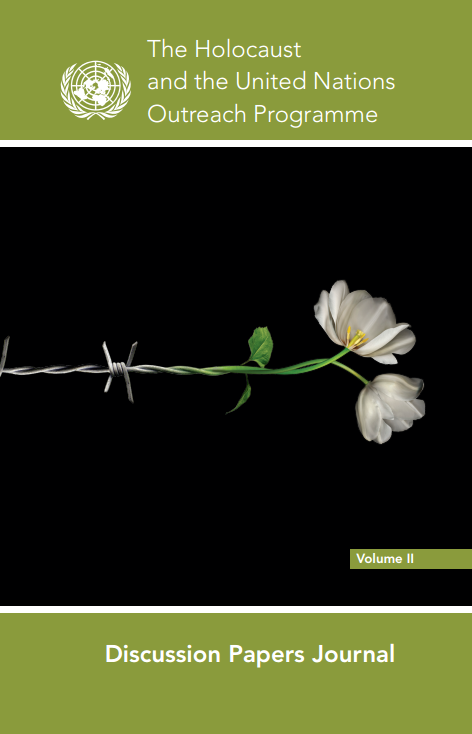 Discussion Papers Journal (Vol 2) In Volume II, Chinese author Pan Guang delivers a gripping account of how Jews made their way to Shanghai during the Second World War while Polish writer Andrzej Mirga details the Nazi persecution of Roma and Sinti during the same period. Argentine professor Juan E. Méndez bring us to the 21st century with a discussion of the 2011 arrest and pending trial of accused Serbian war criminal Ratko Mladic. And the timeless value of Holocaust education is explored as South African Tali Nates shows how education is helping to heal the divisions wrought by apartheid in South Africa and Russian scholar Ilya Altman lays out Holocaust remembrance and education in contemporary Russia. Other contributors are Edward Mortimer and Kaja Shonick Glahn (UK / Germany), David Matas (Canada), Lenore Weitzman (USA), and Robert Krell (Canada). (By the publisher) Discussion Papers Journal (Vol 2) Dans le volume II, auteur chinois Pan Guang offre un compte de préhension de la façon dont les Juifs ont fait leur chemin à Shanghai au cours de la Seconde Guerre mondiale alors que l'écrivain polonais Andrzej Mirga détails la persécution nazie des Roms et des Sintis au cours de la même période. professeur argentin Juan E. Méndez nous amener au 21e siècle avec une discussion sur l'arrestation de 2011 et dans l'attente du procès des accusés de crimes de guerre serbe Ratko Mladic. Et la valeur intemporelle de l'Holocauste est explorée comme l'Afrique du Sud Tali Nates montre comment l'éducation contribue à guérir les divisions opérées par l'apartheid en Afrique du Sud et savant russe Ilya Altman expose la mémoire et l'éducation de l'Holocauste dans la Russie contemporaine. D'autres contributeurs sont Edward Mortimer et Kaja Shonick Glahn (UK / Allemagne), David Matas (Canada), Lenore Weitzman (USA), et Robert Krell (Canada). (Par l'éditeur)