
자료
세계시민교육에 대한 이해를 넓히고 연구, 옹호 활동, 교수, 학습 등을 향상시킬 수 있는 다양하고 유용한 자료를 찾아보세요.
2,839 건의 결과가 검색되었습니다
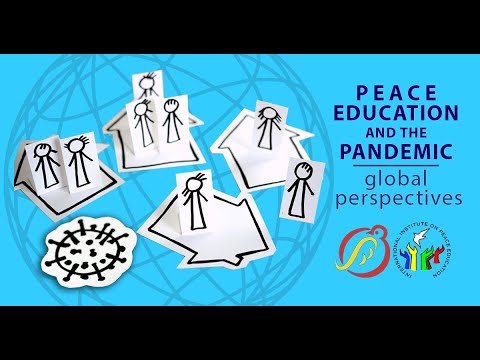 Peace Education and the Pandemic: Global Perspectives 발행 연도: 2020 단체 저자: International Institute on Peace Education (IIPE) This April 13 webinar, co-organized by the International Institute on Peace Education and Global Campaign for Peace Education, is an opportunity to learn, hear, and share with and from peace educators from around the world about how they are responding, adapting, and rethinking urgent agendas for peace education revealed by the global coronavirus pandemic.
 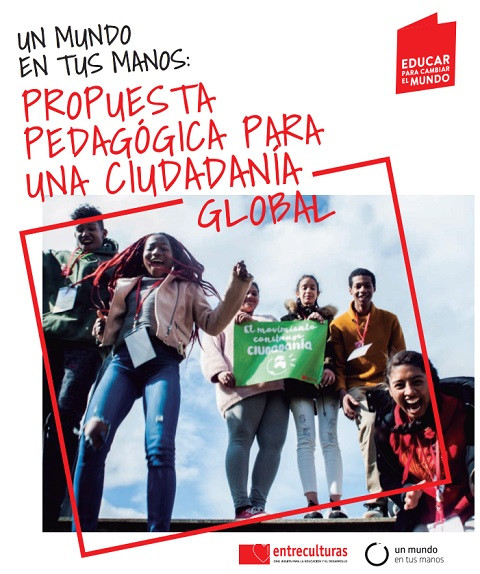 Un Mundo en tus Manos: Propuesta Pedagógica para una Ciudadanía Global 발행 연도: 2019 저자: Jessica García Fernández | Irene Ortega Guerrero | Davinia de Ramón Felguera | Encarna Duran Costell | Alberto Medina Bravo | Clara Maeztu Gomar | Yénifer López Ramos 단체 저자: Fundación Entreculturas Este documento es una propuesta pedagógica de Entreculturas para educar en Ciudadanía Global. Cubre la metodología, recursos y ejemplos de cómo Entreculturas viene trabajado con adolescentes, jóvenes y educadores y educadoras durante los últimos años.
  A Study on the Support Methods of Education for Sustainable Development in Connection with Global Citizenship Education (Journal of Education & Culture; Vol.24, No.4) 발행 연도: 2018 저자: Youngsoon Kim | Hyunhee Yoon 단체 저자: Inha University. Education Research Institute The purpose of this study is to explore supportive measures for revitalizing education for sustainable development linked to global citizenship education and to discuss the practical ways of activation in educational field. The researchers interviewed nine experts on global citizenship education and education for sustainable development for the project. It also collected opinions on how to promote sustainable development education linked to global citizenship education. As a result of the research, experts have presented three tasks as a support measure for promoting sustainable development programs associated with global citizenship education. It was to provide classroom support, enhance teacher skills, and establish a network of related institutions. To improve the quality of the classes, practical operational materials are required, such as textbooks, supplementary materials, and the development of class models and programs. In addition, systematic and continuous training is required to enhance the capabilities of teachers. Lastly, it is necessary to share roles of education-related organizations, such as the Education Ministry, education office, civic groups, local governments and schools, and to establish a network system. Based on the above research results, the Commission discussed future tasks required to support the promotion of sustainable development programs related to international citizens ' education. 세계시민교육 연계 지속가능발전교육활성화를 위한 지원방안 탐색 (교육문화연구; Vol.24, No.4) 발행 연도: 2018 저자: 김영순 | 윤현희 단체 저자: 인하대학교 교육연구소 이 연구의 목적은 세계시민교육 연계 지속가능발전교육 활성화를 위한 지원방안을 탐색하여 교육 현장에서의실제적인 활성화 방안을 논의하고자 하는데 있다. 연구 수행을 위해 환경, 사회・문화, 경제, 시민교육 등의 영역별로구성된 9명의 전문가 인터뷰를 실시하였다. 이를 통해 세계시민교육과 지속가능발전교육 활성화를 위한 지원 방안에대한 의견을 수렴하였고, 매트릭스 분석법을 활용하여 코딩 및 해석을 실시하였다.연구 결과, 전문가들은 세계시민교육 연계 지속가능발전교육 활성화를 위한 지원방안으로 수업 지원, 교사 역량강화, 관련 기관 네트워크 구축의 3가지 과제를 제시하였다. 세계시민교육 연계 지속가능발전교육을 위한 수업의질을 높이기 위해서는 관련 교과서나 보충교재, 수업모델 및 프로그램 개발을 통해 실제적인 운영 자료가 제공될필요가 있다. 또한, 수업을 운영하는 교사의 역량을 강화할 수 있는 교사 연수가 체계적이고 지속적으로 이루어져야한다. 마지막으로 교육부, 교육청, 시민단체, 지방자치단체, 학교 등 교육 관련 기관들의 역할 분담과 네트워크 체제구축이 필요함을 강조하였다. 이상의 연구결과를 바탕으로, 세계시민교육 연계 지속가능발전교육 활성화 지원을위해 앞으로 요구되는 추후 과제에 대해 논의하였다.
  한반도의 평화를 말하다: 여섯 가지 주제로 살펴본 한반도 평화의 의미와 이해 발행 연도: 2019 저자: 김병곤 | 서보혁 | 이동선 | 정재관 | 정성윤 | 정욱식 단체 저자: 통일교육원 평화'라는 주제로 통일교육원에서 발간하는 첫 번째 평화 교재이다. 6명의 학자 및 평화활동가가 평화의 이해에서부터 시민사회의 평화운동에 이르기까지 살펴본 한반도의 평화 이야기이다.
  Focus on Global Common Good: The New International Research Trend on World Citizenship Education (Modern Education Management; No. 2) 발행 연도: 2018 저자: Song Qiang | Rao Congman 단체 저자: Liaoning Institute of Education Globalization has posed challenges for national-states to develop traditional citizenship education. To develop the citizenship education in the world needs to regard education and knowledge as global common good, surpass short-term benefit, and promote learners to be world citizens by 2030. Start with the dialectical logic on global benefit and national benefit, the researches of world citizenship education focus on “human rights protection and joint development”, “from national identity to world identity”, “ from global governance to world government”, and “ western universal mind vs. multi-civilizations intergrowth”. Chinese citizenship education needs to reinforce the national identity in socialism national citizenship education; cultivateing socialism world citizenship and promoteing international discourse power; seek human common good and build community of common destiny for all mankind. 着眼全球共同利益:‘世界公民’教育的国际研究新趋势” (现代教育管理; No. 2) 발행 연도: 2018 저자: Song Qiang | Rao Congman 단체 저자: Liaoning Institute of Education 全球化对民族国家开展的传统公民教育提出了挑战。全球公民教育发展需要将教育和知识视 为全球共同利益,超越短期利益,推进学习者成为2030年的“世界公民”。当前“世界公民”教育研究本着全 球利益与国家利益的辩证逻辑,聚焦在“人权保护与共同发展”“国家认同到世界认同”“全球治理到世界政 府”“西方式普适思想与多元文明共生”四个方面。为此,我国公民教育要加强社会主义“国家公民”教育中 的国家认同;培养社会主义“世界公民”,提升国际话语权;寻求人类共同利益,构建“人类命运共同体”。
  Australian Citizenship Program and Its Experience (Contemporary Education and Culture; Vol. 11, No. 3) 발행 연도: 2019 저자: Sun Hongkai | Sun Yuhua 단체 저자: Northwest Normal University In Western countries, the reform of Civics and Citizenship Education is an important way to cultivate responsible citizens. The Australian Citizenship Education Program provides students with a variety of activities, and follows the principle of change, engagement and resolution of specific issues. It is committed to raising students’ awareness of engagement and has achieved outstanding results in cultivating responsible citizens. Australian Citizenship Education program is both thainee- and prantice- oriented, which sets a good example for cultivating students’ awareness and ability of engagement in China. At the same time, critical learning is a must. 澳大利亚公民教育课程及其经验 (当代教育与文化; Vol. 11, No. 3) 발행 연도: 2019 저자: Sun Hongkai | Sun Yuhua 단체 저자: Northwest Normal University 在西方国家,公民教育课程改革是培养积极公民的重要途径。澳大利亚公民教育课程为学生提供多种活动 选择,力行改变、参与、解决具体问题的原则,致力于提高学生的参与意 识,在培养积极公民上取得了突出的效果。澳大利亚公民教育课程紧扣培养目标、实践取向、学生主导的课程开展经验为我国培育学生参与意识和参与能力提供 了借鉴价值,同时应该批判地选择其经验中的可取之处。
  Regional Consultations of the National Human Rights Institutions of Central Asia: Conference Proceedings 발행 연도: 2016 단체 저자: UN. Office of the United Nations High Commissioner for Human Rights (UN. OHCHR) | United Nations Development Programme (UNDP) For the first time, the conference became a platform for consultations of national human rights institutions (NHRIs) of Central Asia to help strengthen partnerships and provide opportunities for mutual support and exchange of expertise. Special attention the role of NHRIs in their interaction with the government and other partners in the country, as well as the role of NHRIs in terms of achieving the Sustainable Development Goals (SDGs).