
자료
세계시민교육에 대한 이해를 넓히고 연구, 옹호 활동, 교수, 학습 등을 향상시킬 수 있는 다양하고 유용한 자료를 찾아보세요.
1,983 건의 결과가 검색되었습니다
 How to Understand Misinformation, Disinformation and Malinformation 발행 연도: 2020 단체 저자: Shout Out UK | U.S. Embassy London | Association for Citizenship Teaching (ACT) We live in a world where information is very easy to fabricate. Now more than ever, media literacy (the ability to critically analyse information) is critical for us as citizens and for our democracy to function. This video explains the difference between Misinformation, Disinformation and Malinformation and presents you with some examples! This video is part of a resource pack created and designed by Shout Out UK, supported by the US Embassy in London and in collaboration with the Association For Citizenship Teaching.For more info: https://www.shoutoutuk.org/media-literacy/
 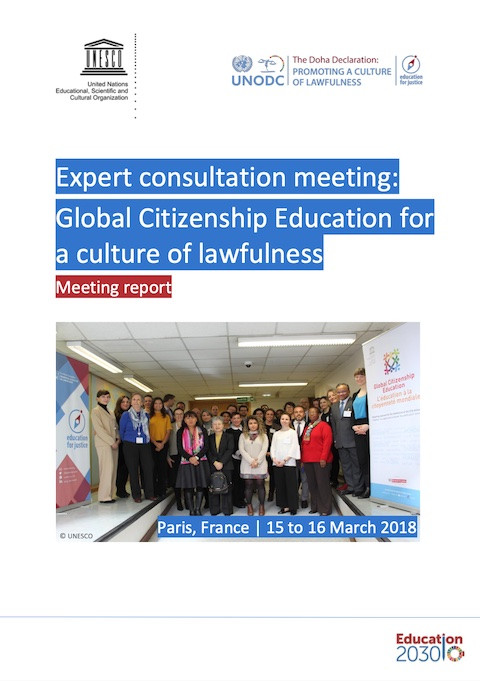 Expert Consultation Meeting: Global Citizenship Education for a Culture of Lawfulness, Paris, France, 15 to 16 March 2018; Meeting Report 발행 연도: 2018 단체 저자: UNESCO | UN. Office on Drugs and Crime (UNODC) In the context of a UNESCO/UNODC partnership on “Global Citizenship Education for a Culture of Lawfulness”, an expert consultation meeting was held in Paris on March 15 and 16 of 2018. The purpose of the partnership is to strengthen the capacities of educational systems to promote the rule of law. To this end, the partnership aims to empower and equip learners to act and engage in society as constructive and ethically responsible agents of change, supporting peace, justice, and strong institutions. This notably contributes to the achievement of the 2030 Agenda for Sustainable Development, and in particular Sustainable Development Goals 4 and 16. Additionally, the partnership intends to enable learners to be both motivated and capable to respond resiliently to crime and violence. The meeting had three broad objectives:To help clarify the conceptual foundation of the partnership;to identify the measures that can be taken in the education sector to promote a culture of lawfulness;and to identify effective educational approaches. Thus, the meeting is meant to elucidate core concepts and identify promising educational approaches in the promotion of a culture of lawfulness by asking fundamental questions, including: What constitutes the rule of law and a culture of lawfulness? How do we create demand for the rule of law? How do we ensure learners apply these principles? How do we ensure they survive in a context where there is no rule of law?
 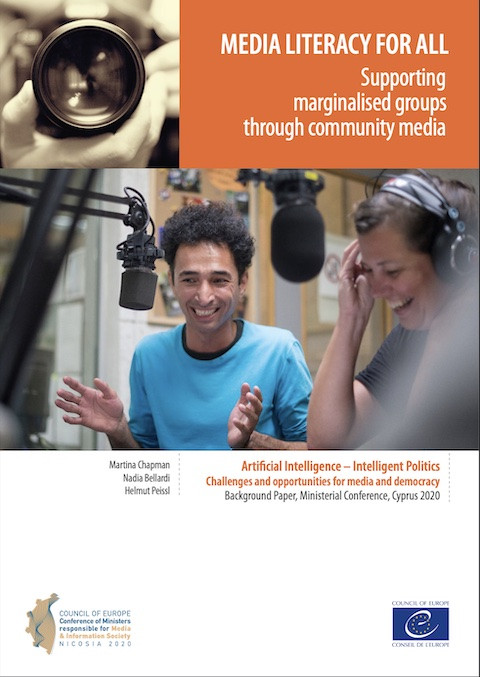 Media Literacy for All: Supporting Marginalised Groups Through Community Media 발행 연도: 2020 저자: Martina Chapman | Nadia Bellardi | Helmut Peiss 단체 저자: Council of Europe Being media literate means being able to critically understand and evaluate media content and to responsibly and safely use digital media services. Media literacy helps us engage with others in the public sphere, using the creative and participatory potential that new technologies and services can offer. Nowadays, it also includes understanding how data is used and how algorithms and AI can influence media production and choices.The importance of community media in supporting the formation of an ‘informed citizenry’ is well recognised by the Council of Europe. Community media have the ability to empower community groups with the neces- sary access and skills to create their own communica- tion channels and to foster their participation in the public sphere in a structured and professional man- ner. However, in many European countries community media still lack formal, legal recognition, fair access to distribution platforms and sustainable funding.This background paper explores how the community media sector promotes media literacy and how this work can strengthen marginalised communities’ partic- ipation in the media environment and public discourse. Comparing five models of community media from Cyprus, Ireland, Luxembourg, Spain and the United Kingdom, it seeks to inform and inspire practitioners and policy-makers, highlighting a number of findings and policy responses that can help member States fully realise the potential of community media.
 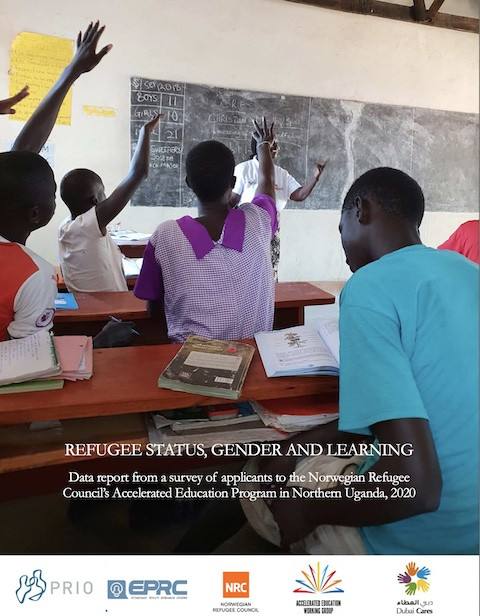 Refugee Status, Gender and Learning: Data Report From a Survey of Applicants to the Norwegian Refugee Council’s Accelerated Education Program in Northern Uganda, 2020 발행 연도: 2020 저자: Kendra Dupuy | Martin Flatø | Haakon Gjerløw | Andreas Kotsadam | Mette Løvgren | Francis Mwesigye | Siri Aas Rustad | Gudrun Østby 단체 저자: Economic Policy Research Center (EPRC) | Peace Research Institute Oslo (PRIO) This data report provides details from a survey of applicants to the Norwegian Refugee Council’s Accelerated Education Program in Northern Uganda, 2020. The surveys covered a range of topics, such as demographic and socioeconomic background, school attendance, academic skills, social control, feelings and perceptions on various topics, and future aspirations.
  Social Contract Pedagogy: A Dialogical and Deliberative Model for Global Citizenship Education; Background Paper for the Futures of Education Initiatives 발행 연도: 2020 저자: Richard Desjardins | Carlos Alberto Torres | Susan Wiksten 단체 저자: UNESCO We propose that together Social Contract Pedagogy (SCP) and Global Citizenship Education (GCE) offer a comprehensive vision including key principles and core elements that are important for rethinking education and shaping the future of the world. We introduce the novel concept of Social Contract Pedagogy (SCP) as a means to adapt the social contract in liberal democracies which has been (conceptually) located at the level of the state, to the level of the classroom and other pedagogically relevant contexts. A key feature of this pedagogy is the negotiation of values and norms in ways that maintain cohesion and inclusion and avoids too much power in the hands of sectarian extremes (of any kind) which tend to impose their views on others, oppress and exclude. This includes using fake news, denying scientific debates and/or any extremely politicized interpretations of evidence and facts to obfuscate or deny consequences of individual and group choices and behavior, but also ‘othering’ of any kind whether from the political right or the political left. In our view, this is an essential premise for the education of democratic citizens. Citizenship education of this kind is seen as essential for the survival and growth of liberal democracies in the future.
  Political Leadership for Sustainable Development: Why Do the Global Goals Matter to Local Councillors, and Why Do Local Councillors Matter for the Global Goals?; Training Manual 발행 연도: 2021 저자: Maeve Bateman | Jihyun Kim 단체 저자: Irish Development Education Association (IDEA) | Bridge 47 Our Bridge 47 Consortium Member, IDEA, partnered with Women for Election, a not-for-profit, non-partisan organisation which trains and supports women in Ireland to run for politics.In 2019 and 2020 this partnership developed and delivered training programmes for women Councillors on ‘Political Leadership for Sustainable Development: Why Do the Global Goals Matter to Local Councillors, and Why Do Local Councillors Matter for the Global Goals?’This training manual is to provide guidelines for any civil society organisations that would like to engage with local politicians on how to inspire, support and equip them as leaders for sustainable development who are ready to participate in and implement the localisation of the Sustainable Development Goals.
  Adult Media Literacy in Australia: Attitudes, Experiences and Needs 발행 연도: 2021 저자: Tanya Notley | Simon Chambers | Sora Park | Michael Dezuanni 단체 저자: Western Sydney University | Queensland University of Technology | University of Canberra In 2020 we implemented Australia’s first nationally representative survey on media literacy. The survey was designed with input from diverse voices in the media literacy field including researchers, media producers, policymakers, government agencies, educators and public cultural institutions. We launched the survey report at events in Sydney, Melbourne, Canberra and online on April 13 2021.The survey findings will also be used to inform a national media literacy strategy co-design process. As part of this process we will host online and face-to-face events to engage organisations who are supporting media literacy across the country. These events will take place in May-July 2021.
  Language Rights of Linguistic Minorities: A Practical Guide for Implementation 발행 연도: 2017 단체 저자: UN. Office of the United Nations High Commissioner for Human Rights (UN. OHCHR) The purpose of this Guide is to further assist policy makers and rights holders in understanding and implementing the linguistic human rights of linguistic minorities. This touches upon the necessary balance between a state’s official language (or languages) and its obligations to use or respect the language preferences of linguistic minorities. These language rights can also contribute towards preserving the world’s linguistic diversity. The Guide aims to:● clarify what are the various human rights of linguistic minorities relevant to language use and preferences;● clarify the obligations of state authorities towards linguistic minorities;● support the development and continuous improvement of effective and cost-efficient approaches and practices for these linguistic human rights; and● promote consistent approaches to the participation and inclusion of minorities and implementation of their language rights.
  语言少数群体的语言权利:使用落实指南 발행 연도: 2017 단체 저자: UN. Office of the United Nations High Commissioner for Human Rights (UN. OHCHR) 本指南的目的在于进一步协助政策制定者及权利人全面理解语言少数群体的语言权利,便于其实施与落实。本指南希望协助在国家官方语言之间实现所需的平衡,履行使用或尊重语言少数民族语言偏好的义务,保护并推动语言权利也有助于保护世界语言多样性。本指南旨在: 阐明与语言使用及偏好相关的若干语言少数群体权利; 阐明国家当局对语言少数群体的义务; 支持通过有效方法和做法(包括经济有效的)发展和持续改进以实现语言少数群体的这些权利;以及 推动运用一贯的方法帮助少数群体参与并融入公共生活、落实其语言权利。
 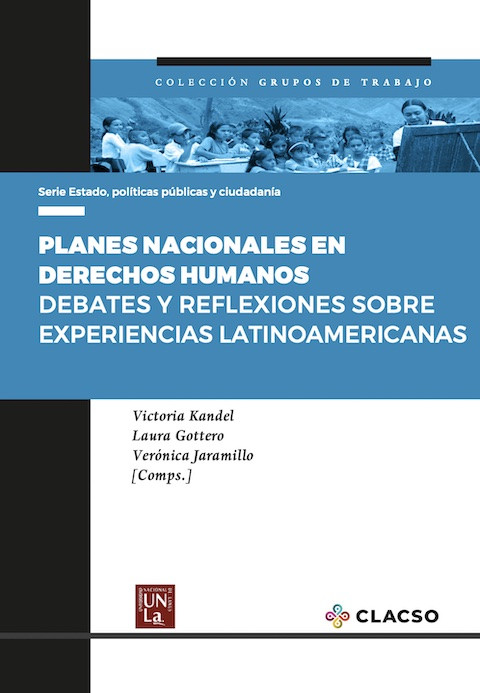 National Plans on Human Rights: Debates and Reflections on Latin American Experiences 발행 연도: 2021 저자: Laura Pautassi | Mariela Alejandra Acevedo | Felicitas Acosta | Myriam Feldfeber | Pablo Imen | María Mercedes Palumbo | Fernanda Saforcada | Soledad Vercellino 단체 저자: Consejo Latinoamericano de Ciencias Sociales (CLACSO) The texts gathered in this book reflect the tensions and challenges involved in creating inclusive human rights public policies that respond to effective and impactful citizen participation. They also highlight the tension—once again—between the short and long term: the temporalities of governments and states. Furthermore, these writings incorporate an analysis of contexts and policies from a human rights perspective, revealing that, very often, plans of this nature—as tools provided by international protection bodies—are not fully implemented at the national or subnational level. Instead, they are frequently constructed as ways to appease international agendas rather than as means of engaging and engaging communities in collective initiatives for transformation. Therefore, we try to build interpretive proposals that allow us to critically analyze—and also strengthen—human rights plans in these ambiguous paths of formulation, implementation, and evaluation, because we believe that these comprehensive and cross-cutting policies are, or can be, instruments for building more just and inclusive societies, but they require long-term work and commitment.