
자료
세계시민교육에 대한 이해를 넓히고 연구, 옹호 활동, 교수, 학습 등을 향상시킬 수 있는 다양하고 유용한 자료를 찾아보세요.
1,951 건의 결과가 검색되었습니다
 Banque de fiches de tâches numériques 단체 저자: Conseil de l'Europe Une quarantaine de fiches de tâches ancrées dans la vie réelle et de tâches réflexives sont disponibles. Les tâches proposées mettent en œuvre le cadre didactique qui promeut une approche socio-interactionnelle et étend la typologie habituelle des tâches avec des tâches ancrées dans la vie réelle.Ces tâches, réalisées sur des sites participatifs en ligne, permettent aux personnes qui les réalisent de faire l'expérience, à la fois, d'(inter)actions authentiques et de la citoyenneté numérique.A côté de ces tâches, des tâches réflexives invitent les apprenant·es à réfléchir sur les pratiques en ligne et notamment sur leurs propres usages du numérique. Elles sont à adapter en fonction des contextes d'utilisation et permettent de donner des exemples de mise en œuvre de l'approche définie dans le Cadre didactique.
 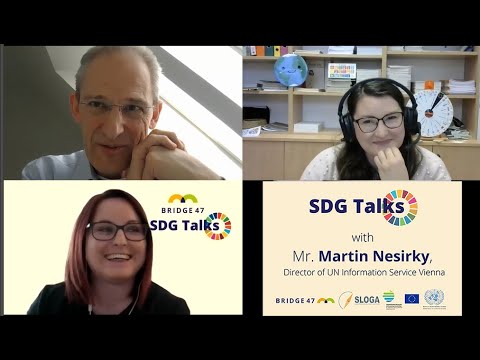 SDG Talk: Mr. Martin Nesirky 발행 연도: 2021 저자: Martin Nesirky 단체 저자: Sloga Platforma | Bridge 47 SDG Talk with Martin Nesirky, director of UN Information Service Vienna about Sustainable Development Goals, implication od COVID-19 pandemic on education, Global Citizenship Education and more.SDG Talks was prepared in cooperation with the UN Association for Slovenia, as part of the Bridge 47 - Building Global Citizenship project. The project is funded by the European Commission and the Ministry of Foreign Affairs of the Republic of Slovenia, and is implemented by the SLOGA Platform.Content does not reflect positions of the EU or Slovene MFA.
  Measuring Intercultural Dialogue: A Conceptual and Technical Framework 발행 연도: 2020 저자: Ciara Aucoin | Euan Mackway-Jones | Marcel Smits 단체 저자: UNESCO | Institute for Economics and Peace The challenges of addressing growing diversity have amply demonstrated that this vision is needed now more than ever. We all have much to gain from more open and connected societies yet misunderstanding, exclusion and discrimination continue to push identity and culture-based grievances towards conflict and violence, challenging the very foundations of sustainable and inclusive development.This report represents a first step in the UNESCO-IEP joint initiative to strengthen the evidence-base on dialogue for peace and development. Through mobilizing better data on effective dialogue, it is our sincere hope that policymakers and practitioners can better support meaningful and transformative dialogue, holistically supporting the aspirations of the 2030 Agenda. Through this, we hope to elevate dialogue as a connecting enabler of all pillars of UN action, accelerating progress towards the Sustainable Development Goals and making good on the promise of ‘leaving no one behind’. Mesurer le dialogue interculturel: cadre conceptuel et technique 발행 연도: 2020 저자: Ciara Aucoin | Euan Mackway-Jones | Marcel Smits 단체 저자: UNESCO | Institute for Economics and Peace Les défis rencontrés pour tenir compte de la diversité croissante ont amplement démontré que cette vision était plus que jamais nécessaire. Nous avons tous beaucoup à gagner de sociétés plus ouvertes et plus connectées, mais l’incompréhension, l’exclusion et la discrimination continuent de nourrir les griefs identitaires et culturels conduisant au conflit et à la violence, en remettant en question les fondements mêmes du développement durable et inclusif.Ce rapport représente une première étape dans l’initiative conjointe UNESCO-IEP visant à renforcer la base de données factuelles sur le dialogue pour la paix et le développement. En favorisant la collecte de données de meilleure qualité sur un dialogue efficace, nous espérons sincèrement que les décideurs politiques et les spécialistes pourront mieux soutenir un dialogue constructif et transformateur, afin d’appuyer de manière globale les objectifs du Programme 2030. Ainsi, nous espérons faire du dialogue un élément essentiel commun à tous les piliers de l’action des Nations Unies, afin d’accélérer les progrès vers la réalisation des objectifs de développement durable et de la promesse de « ne laisser personne de côté ».
  Dialogue for Prevention 발행 연도: 2025 단체 저자: UNESCO In an era where geopolitical power struggles disrupt traditional peacebuilding, where identity and misinformation fuel divisions, and where trust in institutions is eroding, UNESCO’s Intercultural Dialogue for Conflict Transformation briefs series presents an adaptable, culturally grounded, and people-centred approach to peacebuilding. With 1.5 billion people living in contexts with low intercultural dialogue where global challenges such as absolute poverty, terrorism and forced displacement are more prevalent, this four-part series draws on firsthand experience, country case studies, and expert analysis to demonstrate the transformative potential of dialogue in fragile and conflict-sensitive settings. The Dialogue for Prevention brief, developed with the Auschwitz Institute for the Prevention of Genocide and Mass Atrocities, explores the powerful role intercultural dialogue can play in preventing large-scale identity-based violence, particularly in the upstream and downstream phases of conflict. Grounded in the idea that dialogue can bridge divides and foster mutual understanding, the brief argues that enabling environments for intercultural dialogue—marked by stability, inclusive governance, freedom of expression, horizontal equality, and social cohesion—also mitigate key risk factors for atrocity violence. Drawing on diverse examples from Cambodia, Colombia, Italy, and Kenya, it showcases creative, context specific applications of dialogue. Through practical guidance, the brief equips policymakers, practitioners and civil society seeking to embed dialogue into prevention strategies.
  Dialogue for Social Cohesion 발행 연도: 2025 저자: Isaure Vicarini | Euan Mackway-Jones 단체 저자: UNESCO In an era where geopolitical power struggles disrupt traditional peacebuilding, where identity and misinformation fuel divisions, and where trust in institutions is eroding, UNESCO’s Intercultural Dialogue for Conflict Transformation briefs series presents an adaptable, culturally grounded, and people-centred approach to peacebuilding. With 89% of conflicts worldwide occurring in countries with limited capacity for intercultural dialogue, this four-part series draws on firsthand experience, country case studies, and expert analysis to demonstrate the transformative potential of dialogue in fragile and conflict-sensitive settings. The Dialogue for Social Cohesion brief—developed in collaboration with the Berghof Foundation and Search for Common Ground—bridges theory and practice to explore the horizontal (community-to-community) and vertical (citizen-to-state) dimensions of social cohesion and highlights how inclusive dialogue can support both. Case studies from Afghanistan, Germany, Somalia, and South Sudan illustrate how dialogue—whether through theatre, education, local governance, or environmental peacebuilding—can cultivate mutual understanding and trust, bridge identity-based divides, and restore, step by step, the social fabric in fractured societies. Through actionable recommendations, this brief equips practitioners, policymakers, and civil society with the essential guidance needed to tailor and embed dialogue in their respective contexts, helping to ensure that peace processes are inclusive, locally driven, and enduring.
  Media Literacy at Your Library: Learning and Prototyping Report 발행 연도: 2018 단체 저자: American Library Association (ALA) Media Literacy at Your Library was a project of the American Library Association (ALA) in collaboration with the Center for News Literacy at Stony Brook University (CNL), supported by the John S. and James L. Knight Foundation, the Democracy Fund, and the Rita Allen Foundation as part of the Knight Prototype Fund.Through this project, ALA sought to address a critical need in the field for adult media literacy education, with a focus on news literacy. The goal of the prototype project was to develop media literacy training and complementary resources designed to prepare public library professionals to educate their adult patrons to be informed media consumers.Following a one-day training led by CNL, teams from five public libraries took on the challenges of creating innovative media literacy programs serving their distinct communities. With the goal of making the CNL news literacy curriculum more broadly accessible to the library field, the teams also offered feedback on a series of online trainings based on the in-person training they attended. These five library teams guided and informed ALA and CNL’s understanding and development of prototype resources over the course of the project.
  Forecast the Adult Learning Education in Kuwait Through 2024 (Journal of Educational and Psychological Sciences; vol.4, no.33) 발행 연도: 2020 저자: Rasha Mhdi Al-Ajmi | Sheikha Ibrahim Al-Tuwaijri | Fatima Mutlaq Al-Otaibi | Ghazi Al-Rashidi 단체 저자: Arab Institute of Science and Research Publishing (AISRP) This study aimed to identify the predictive values of the secular trend for the next five years of the time series to the most important educational factors in Literacy and Adult Learning Education in Kuwait. Also, it aimed to compare between growth rate on the secular trend of the time series towards the most important educational factors at Literacy and Adult Learning Education at the different phases. Time series was used to analyze Literacy and Adult Learning Education’s statistics; which were taken from Ministry of Education in Kuwait, from 2014 to 2019. The study showed several results such as most of the educational factors’ growth rates were low. In addition, it appeared that most of the predictive values from 2020 to 2024 were degreased. The growth rate for the total centers for adult learning was- 2.7%; whereas, it was- 3.7% for classes. Also, the growth rate for the total of students was- 1.9%. The last but not the least, the growth rate for the total of teachers was the lowest which was- 6.0%. Several recommendations and suggestions were given based on the results of this study. استشراف مستقبل نظام تعليم الكبار في دولة الكويت بحلول عام 2024 (مجلة العلوم التربوية و النفسية ;no.33, vol.4) 발행 연도: 2020 저자: Rasha Mhdi Al-Ajmi | Sheikha Ibrahim Al-Tuwaijri | Fatima Mutlaq Al-Otaibi | Ghazi Al-Rashidi 단체 저자: Arab Institute of Science and Research Publishing (AISRP) هدفت هذه الدراسة إلى التعرف على القيم التنبؤية للاتجاه العام خلال السنوات الخمس القادمة للسلاسل الزمنية لأهم عناصر التعليم لنظام محو الأمية وتعليم الكبار في دولة الكويت، المقارنة بين معدلات النمو في الاتجاه العام للسلاسل الزمنية لأهم عناصر التعليم لنظام محو الأمية وتعليم الكبار في المراحل التعليمية المختلفة؛ حيث تم استخدام أسلوب السلاسل الزمنية لتحليل إحصائيات مراكز محو الأمية وتعليم الكبار من عام 2014 إلى عام 2019 من وزارة التربية في دولة الكويت. وأظهرت الدراسة مجموعة من النتائج، كان أبرزها: وجود تناقص في أغلب معدلات النمو لعناصر التعليم العام، كذلك نتج عن ذلك أن معظم القيم التنبؤية لتلك العناصر لعام 2020 إلى عام 2024 كانت في انحدار، فقد بلغ معدل النمو لمجمل المراكز الخاصة بنظام تعليم الكبار- 2.7%، أما الفصول الدراسية فقد بلغ- 3.7%، في حين كان المعدل لجملة الطلبة والطالبات- 1.9%، وحظي المعلمون والمعلمات بأقل معدل نمو ألا وهو- 6.0%، وفي ضوء نتائج الدراسة تم تقديم عدة توصيات ومقترحات لتطوير أداء مراكز محو الأمية وتعليم الكبار وتحقيق أهدافها.
  UNESCO Women for Ethical AI: Outlook Study on Artificial Intelligence and Gender 발행 연도: 2024 단체 저자: UNESCO The gender chapter of the UNESCO Recommendation on the Ethics of AI is a concrete commitment by 194 Member States to advance gender equality in the AI ecosystem. To track progress in the implementation of the gender provisions of UNESCO’s Recommendation, and to assess the impacts of AI on gender equality, the UNESCO Women for Ethical AI (W4EAI) Platform has been established. This report advances the workstream through evidence-based insights in three critical areas: women’s participation in AI development and deployment, the inclusion of gender equality concerns in AI governance and the impact of AI on gender equality. It highlights the significant underrepresentation of women in AI, the lack of gender-disaggregated data, and the compounded challenges women face in the field. The report also addresses the neglect of gender dimensions in AI policy, the risks posed by AI systems to women, and the need for responsible and ethical AI governance to promote gender equality. Finally, it outlines actionable recommendations to enhance gender equality through and in AI, emphasizing the importance of comprehensive data collection, targeted interventions, and inclusive policy-making.