
자료
세계시민교육에 대한 이해를 넓히고 연구, 옹호 활동, 교수, 학습 등을 향상시킬 수 있는 다양하고 유용한 자료를 찾아보세요.
1,983 건의 결과가 검색되었습니다
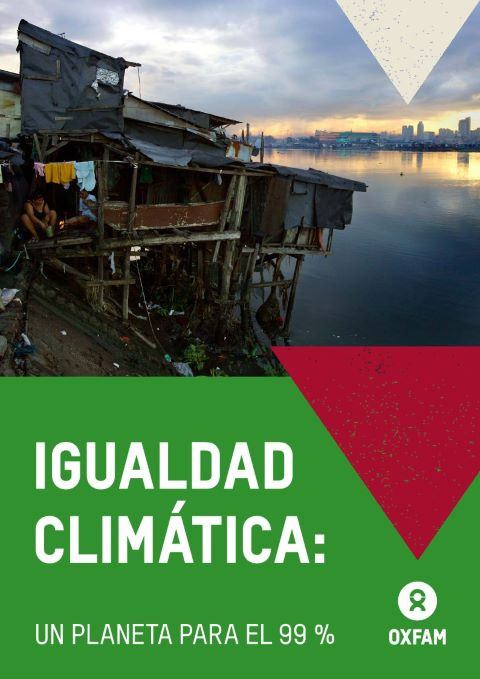 Climate Equality: 기후 평등: 99%를 위한 지구; 요약본 발행 연도: 2023 저자: Ashfaq Khalfan | Astrid Nilsson Lewis | Carlos Aguilar | Max Lawson | Safa Jayoussi | Jacqueline Persson | Nafkote Dabi | Sunil Acharya 단체 저자: Oxfam International 세계는 기후 붕괴와 불평등이라는 두 개의 위기를 직면하고 있다최상위 부유층과 기업, 부유국은 막대한 양의 탄소를 배출하며 세계를 파괴하는 주범이 되고 있다. 그러나 가장 크게 타격을 받는 이들은 빈곤층, 소외계층, 그리고 남반구 국가이다. 특히 여성과 소녀, 선주민, 빈곤과 차별을 겪는 이들이 겪는 피해 규모는 훨씬 더 크다. 전 세계 대부분이 기후 붕괴의 결과를 체감하고 있으나, 최상위 부유층과 부유국만이 스스로를 보호하기 위한 부와 권력, 그리고 영향력을 보유하고 있다. 그러한 힘에는 막대한 책임감이 따라야 한다. 아무런 조치도 취하지 않는다면 1.5°C 이하라는 안전한 지구 온난화 한도를 유지하면서 배출가능한 남은 탄소량을 부유층이 전부 소진하고, 빈곤 퇴치와 평등 확보를 위한 길은 끊어질 것이다. 지금 세계는 평등한 변혁을 필요로 한다. 불평등 대폭 축소, 기후 관련 대대적 조치, 그리고 공동의 사회로서 경제적 목표를 근본적으로 탈바꿈 할 수 있는 행동만이 모두를 위한 복지를 보장하면서도 지구를 구할 수 있는 유일한 방법이다.
  A Gender-Responsive Communication Guide; Rethinking Communication 발행 연도: 2021 저자: Gökçe Bayrakçeken Tüzel | İdil Safiye Soyseçkin Ceylan | Deniz Şilliler Tapan | Kıvanç Özvardar 단체 저자: United Nations Development Programme (UNDP) Language is a mechanism, a tool, that influences thoughts, shapes gender roles and therefore carries a great potential for establishing gender equality in societies. It shows how we perceive life and also determines it. Language plays an important role in the formation of our thoughts and behaviors, hence the construction of our reality about gender. As UNDP Turkey, we ground on gender equality and women’s empowerment principles in all of our programs and interventions, within the institution and in all forms of communication with our partners. The reason we prepared this guide is to determine the ways to have a gender responsive approach when communicating both in the office and with the institutions, organizations, and individuals we work with.The language we use begins to take shape from the moment we are born. It is kneaded within the norms, thoughts, and actions of the society we live in and becomes a set of rules that we unconsciously internalize. Therefore, we often use a sexist language even without realizing and thus reproduce it at every turn.Based on the idea that transformation begins with awareness, this guide offers a stimulating path to the limits of our language, demonstrates how it reproduces gender inequality, and offers ways for changing this.We believe that gender responsive communication is a sign of commitment to gender equality for any country, community or institution. Therefore, we invite you to become the transformation itself by following this sign.We would like to thank you in advance for your interest and dedication to using a gender responsive language and hope that this guide will help us on the way to become a gender-equal society.
  La situation des droits humains dans le monde: Avril 2024 발행 연도: 2024 단체 저자: Amnesty International Le Rapport d’Amnesty International décrit la situation des droits humains dans le monde en 2023 dans 155 pays différents. Les équipes de journalistes et d’enquêteurs de l'ONG peignent un portrait plutôt sombre, avec notamment un recul du droit des femmes, les conséquences dramatiques du réchauffement climatique sur les populations les plus vulnérables, le recul du droit de manifester, ou encore la prolifération de la haine en ligne dans le monde. La multiplication des conflits armés et le choc du 7 octobre ont également eu des conséquences dramatiques. Cependant, quelques bonnes nouvelles sont aussi à noter, avec des avancées pour les droits des personnes LGBTI par exemple. Amnesty International Report describes the human rights situation worldwide in 2023 in 155 different countries. TheNGO's teams of journalists and investigators paint a rather gloomy picture, with, in particular, a decline in women's rights, the dramatic consequences of global warming on the most vulnerable populations, a decline in the right to protest, and the proliferation of online hate around the world. The multiplication of armed conflicts and the shock of October 7 have also had dramatic consequences. However, there is some good news too, with advances in LGBTI rights for example. La situación de los derechos humanos en el mundo: abril de 2024 발행 연도: 2024 단체 저자: Amnesty International Le Rapport d’Amnesty International décrit la situation des droits humains dans le monde en 2023 dans 155 pays différents. Les équipes de journalistes et d’enquêteurs de l'ONG peignent un portrait plutôt sombre, avec notamment un recul du droit des femmes, les conséquences dramatiques du réchauffement climatique sur les populations les plus vulnérables, le recul du droit de manifester, ou encore la prolifération de la haine en ligne dans le monde. La multiplication des conflits armés et le choc du 7 octobre ont également eu des conséquences dramatiques. Cependant, quelques bonnes nouvelles sont aussi à noter, avec des avancées pour les droits des personnes LGBTI par exemple. Amnesty International Report describes the human rights situation worldwide in 2023 in 155 different countries. TheNGO's teams of journalists and investigators paint a rather gloomy picture, with, in particular, a decline in women's rights, the dramatic consequences of global warming on the most vulnerable populations, a decline in the right to protest, and the proliferation of online hate around the world. The multiplication of armed conflicts and the shock of October 7 have also had dramatic consequences. However, there is some good news too, with advances in LGBTI rights for example.
 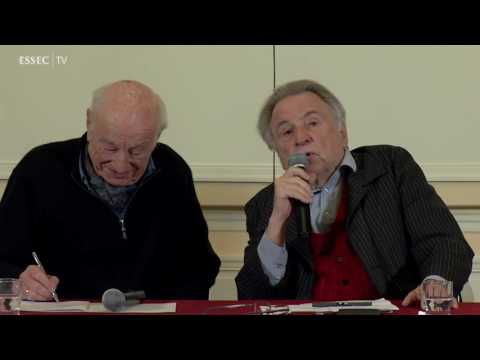 SANS TABOU, Debate Between Edgar Morin and Régis Debray on "Citizenship" 발행 연도: 2016 단체 저자: ESSEC Business School Debate "Without Taboo" between Edgar Morin and Régis Debray on the theme of "Citizenship", moderated by Jean-Michel Blanquer, Managing Director of Essec at the Maison de d'Amérique Latine on November 17, 2016 and organized by the chair Edgar Morin on the complexity of Essec directed by Professor Laurent Bibard. SANS TABOU, débat entre Edgar Morin et Régis Debray sur "La Citoyenneté" 발행 연도: 2016 단체 저자: ESSEC Business School Débat "Sans Tabou" entre Edgar Morin et Régis Debray sur le thème de "La Citoyenneté", animé par Jean-Michel Blanquer, Directeur Général de l'Essec à la Maison de l'Amérique Latine le 17 novembre 2016 et organisé par la chaire Edgar Morin de la complexité de l'Essec dirigée par le professeur Laurent Bibard.
 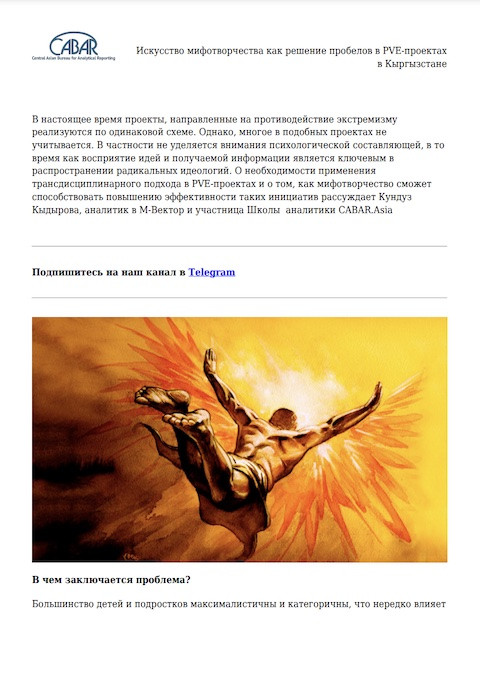 The Art of Mythmaking as a Solution to Gaps in PVE Projects in Kyrgyzstan 발행 연도: 2020 저자: Kunduz Kydyrova 단체 저자: Central Asian Bureau for Analytical Reporting (CABAR) | Institute for War and Peace Reporting (IWPR) Currently, projects aimed at countering extremism are being implemented according to the same scheme. However, much is not considered in such projects. In particular, no attention is paid to the psychological component, while the perception of ideas and information received is key in the spread of radical ideologies. Kunduz Kydyrova, an analyst at M-Vector and a member of the CABAR.asia School of Analytics, discusses the need to apply a transdisciplinary approach in PVE projects and how mythmaking can help increase the effectiveness of such initiatives. Искусство мифотворчества как решение пробелов в PVE-проектах в Кыргызстане 발행 연도: 2020 저자: Kunduz Kydyrova 단체 저자: Central Asian Bureau for Analytical Reporting (CABAR) | Institute for War and Peace Reporting (IWPR) В настоящее время проекты, направленные на противодействие экстремизму реализуются по одинаковой схеме. Однако, многое в подобных проектах не учитывается. В частности не уделяется внимания психологической составляющей, в то время как восприятие идей и получаемой информации является ключевым в распространении радикальных идеологий. О необходимости применения трансдисциплинарного подхода в PVE-проектах и о том, как мифотворчество сможет способствовать повышению эффективности таких инициатив рассуждает Кундуз Кыдырова, аналитик в М-Вектор и участница Школы аналитики CABAR.Asia.
  Discourses and Strategies for Solving Environmental Issues in Central Asia 발행 연도: 2020 저자: Muslimbek Buriev 단체 저자: Central Asian Bureau for Analytical Reporting (CABAR) | Institute for War and Peace Reporting (IWPR) The representative office of the Institute for War and Peace Reporting (IWPR) in Central Asia and CABAR.asia present an analytical note entitled “Discourses and Strategies for Solving Environmental Issues in Central Asia”. This work is an effort to outline the most significant environmental issues in the region and to analyze measures to solve them. In addition, it attempts to highlight cases of successful practice as well as to identify existing programs with significant shortcomings.The work is meant for young experts and consultants, researchers, decision-makers, as well as a wide range of readers interested in environmental issues and governance in Central Asia. Дискурсы и стратегии решения экологических проблем: В Центральной Азии 발행 연도: 2020 저자: Muslimbek Buriev 단체 저자: Central Asian Bureau for Analytical Reporting (CABAR) | Institute for War and Peace Reporting (IWPR) IWPR и CABAR.asia представляют аналитическую записку “Дискурсы и стратегии решения экологических проблем в Центральной Азии”. В работе предпринята попытка раскрыть основные экологические вызовы, проанализировать меры по решению экологических проблем, а также выявить успешные кейсы и определить основные недочёты проводимых программ в регионе.Публикация предназначена для молодых экспертов и консультантов, исследователей, лиц, принимающих управленческие решения, а также широкого круга читателей, интересующихся экологическими вопросами в Центральной Азии.