
자료
세계시민교육에 대한 이해를 넓히고 연구, 옹호 활동, 교수, 학습 등을 향상시킬 수 있는 다양하고 유용한 자료를 찾아보세요.
1,983 건의 결과가 검색되었습니다
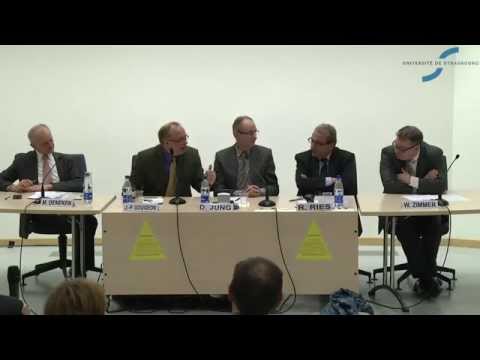 Conférence-débat: La citoyenneté peut-elle être enseignée? 발행 연도: 2015 단체 저자: University of Strasbourg À l'initiative de la Faculté de droit, de sciences politiques et de gestion, cette conférence/débat réunit : Roland Ries, maire de Strasbourg ; Jacques-Pierre Gougeon, recteur de l'académie de Strasbourg, chancelier des universités ; Michel Deneken, 1er vice-président de l'Université de Strasbourg ; Willy Zimmer, professeur de droit public ; Dominique Jung, rédacteur en chef des Dernières nouvelles d’Alsace (modérateur).
 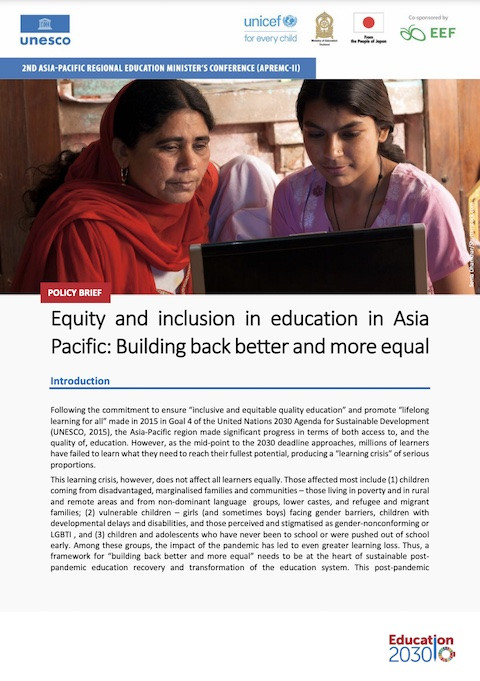 Equity and Inclusion in Education in Asia Pacific: Building Back Better and More Equal; Policy Brief 발행 연도: 2022 단체 저자: UNESCO Bangkok Following the commitment to ensure “inclusive and equitable quality education” and promote “lifelong learning for all” made in 2015 in Goal 4 of the United Nations 2030 Agenda for Sustainable Development (UNESCO, 2015), the Asia-Pacific region made significant progress in terms of both access to, and the quality of, education. However, as the mid-point to the 2030 deadline approaches, millions of learners have failed to learn what they need to reach their fullest potential, producing a “learning crisis” of serious proportions. This learning crisis, however, does not affect all learners equally. Those affected most include (1) children coming from disadvantaged, marginalised families and communities – those living in poverty and in rural and remote areas and from non-dominant language groups, lower castes, and refugee and migrant families; (2) vulnerable children – girls (and sometimes boys) facing gender barriers, children with developmental delays and disabilities, and those perceived and stigmatised as gender-nonconforming or LGBTI , and (3) children and adolescents who have never been to school or were pushed out of school early. Among these groups, the impact of the pandemic has led to even greater learning loss. Thus, a framework for “building back better and more equal” needs to be at the heart of sustainable postpandemic education recovery and transformation of the education system. This post-pandemic framework calls for decisive action to protect the right to education of good quality and for measures – as spelled out below – to improve learning outcomes, especially for marginalized children made more vulnerable because of the pandemic.
 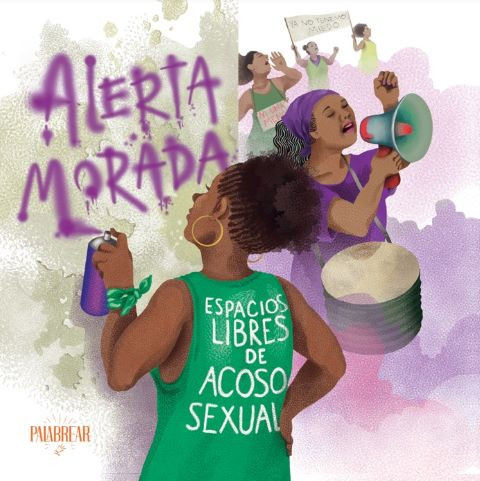 Purple Alert: Spaces Free of Sexual Harassment 발행 연도: 2021 저자: Yohandra Iriarte | Yuliet Lopez Moreno | Adriana Moreno | Danish Market | Maria Fernanda Mace Caraballo | Natalia Torres Lopez | Veronica Fernandez | Wendy Nunez | Monica Manotas Dager | Juliet Nieto Flowers | Yarimar Melendez | Leidy Laura Diaz Rooms | Joyce Trivino | Olga Batista | Roslin Puello | Yacira Branch | Dawn Arias | Stephanny Galeano Urzola | Carmen Yepez | Judith Medina | Denis Deulufeut Flour | Ladies Guard | Johassandy Ortega Susa | Schild Julius White | Adriana of La Ossa | Leidy Laura Perneth Couple 단체 저자: Center for Research and Popular Education / Program for Peace (CINEP/PPP) This document shares the experience of a meeting between a group of women from popular sectors of the city of Cartagena, to reflect on their right to a life free of violence. These meetings took place from the Circle of the Word of Women, developed by the Center for Research and Popular Education/Program for Peace (Cinep/Ppp) in the south of La Guajira, Sierra Nevada de Santa Marta and Cartagena, in within the framework of the project Intercultural Education for the Defense of the Rights of Ethnic Groups. Alerta morada: Espacios libres de acoso sexual 발행 연도: 2021 저자: Yohandra Iriarte | Yuliet Lopez Moreno | Adriana Moreno | Danish Market | Maria Fernanda Mace Caraballo | Natalia Torres Lopez | Veronica Fernandez | Wendy Nunez | Monica Manotas Dager | Juliet Nieto Flowers | Yarimar Melendez | Leidy Laura Diaz Rooms | Joyce Trivino | Olga Batista | Roslin Puello | Yacira Branch | Dawn Arias | Stephanny Galeano Urzola | Carmen Yepez | Judith Medina | Denis Deulufeut Flour | Ladies Guard | Johassandy Ortega Susa | Schild Julius White | Adriana of La Ossa | Leidy Laura Perneth Couple 단체 저자: Center for Research and Popular Education / Program for Peace (CINEP/PPP) En este documento se comparte la experiencia de juntanza entre un grupo de mujeres de sectores populares de la ciudad de Cartagena, para reflexionar sobre su derecho a una vida libre de violencias. Estos encuentros tuvieron lugar a partir del Círculo de la Palabra de las Mujeres, desarrollado por el Centro de Investigación y Educación Popular/Programa por la Paz (Cinep/Ppp) en el sur de La Guajira, Sierra Nevada de Santa Marta y Cartagena, en el marco del proyecto Educación Intercultural por la Defensa de los Derechos de los Grupos Étnicos.
 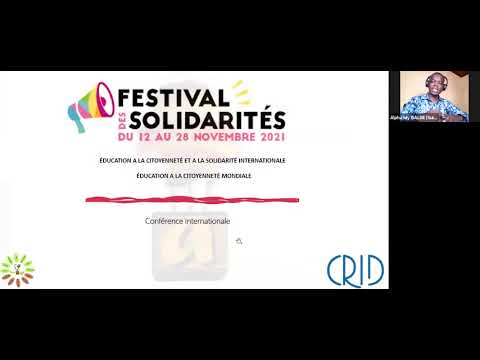 International Conference on Global Citizenship Education and International Solidarity 발행 연도: 2022 단체 저자: Quebec Association of International Cooperation Organizations (AQOCI) This material aims to share practices and reflections on education for global and solidarity citizenship. The conference was initiated by the international committee of the Festival des Solidarités (Festisol) and led by AQOCI (Quebec Association of International Cooperation Organizations). Conférence internationale sur l'Éducation à la citoyenneté mondiale et la solidarité internationale 발행 연도: 2022 단체 저자: Association québécoise des organismes de coopération internationale (AQOCI) Cette vidéo est pour traiter des diverses dimensions de la pauvreté ainsi que de ce qui peut être fait pour s'attaquer aux causes de la pauvreté. Partage de pratiques et de réflexions sur l'éducation à la citoyenneté mondiale et solidaire. Conférence initiée par le comité international du Festival des Solidarités (Festisol) et animée par l'AQOCI (Association québécoise des organismes de coopération internationale).
  Libraries and Sustainable Development: A Growing Relationship (Documentation et bibliothèques; vol. 63, no. 3) 발행 연도: 2017 저자: Pascale Guertin | Valérie Poirier-Rouillard 단체 저자: Association pour l'avancement des sciences et des techniques de la documentation (ASTED) Green roofs, geothermal systems, sustainable materials, recycling and reuse are words that spontaneously come to mind when it comes to sustainable development.But what does this concept really mean? How does it manifest itself, concretely, in our environment, in our life habits? The library ecosystem is increasingly giving way to the precepts of sustainable development, by its civic nature and its mission to share knowledge, but also by its inspirational nature and with new ideas.In Québec and internationally, various green library projects that are focused on the needs and development of the communities they serve are plentiful and distinctive, giving rise to a new discourse that harmoniously interweaves existing considerations and imperatives without compromising the needs of future generations.The following article summarises the principal components of a project undertaken during a summer course taught by Réjean Savard, namely SCI6372 – Aspects internationaux et comparés de l’information. It is the result of a field trip organised by the École de bibliothéconomie et des sciences de l’information (EBSI) in Germany, Prague and Strasbourg during the summer of 2016. It provides an overview of the initiatives of some libraries around the world, and invites us to reflect on the role of the green library. Les bibliothèques et le développement durable: Un lien de plus en plus fort (Documentation et bibliothèques; vol. 63, no. 3) 발행 연도: 2017 저자: Pascale Guertin | Valérie Poirier-Rouillard 단체 저자: Association pour l'avancement des sciences et des techniques de la documentation (ASTED) Toits verts, systèmes géothermiques, matériaux durables, recyclage et réutilisation sont des termes qui viennent spontanément à l’esprit lorsqu’il est question de développement durable.Mais que signifie véritablement ce concept ? Comment se manifeste-t-il, concrètement, dans notre environnement, dans nos habitudes de vie ? L’écosystème qu’est la bibliothèque laisse de plus en plus de place aux préceptes du développement durable, par sa nature citoyenne et sa mission de partage du savoir, mais aussi d’inspiration et d’idées nouvelles.Autant au Québec qu’à l’international, divers projets de bibliothèques vertes, axées sur les besoins et le développement de leur communauté, abondent et se démarquent, laissant place à un discours nouveau, où s’entremêlent harmonieusement les considérations et impératifs actuels, sans compromis quant aux besoins des générations futures.Le présent texte reprend des éléments du travail réalisé dans le cadre du cours SCI6372 – Aspects internationaux et comparés de l’information donné à l’été 2016 par Réjean Savard (qui a fait suite au voyage d’études organisé par l’EBSI en Allemagne, à Prague et à Strasbourg à l’été 2016) et propose un survol des initiatives de quelques bibliothèques dans le monde et invite à réfléchir au rôle de la bibliothèque verte.
  Cultural Mediation for the Safeguarding and Enhancement of Tunisian Heritage: Citizen Initiatives (Ethnologies; vol. 38, no. 1-2) 발행 연도: 2016 저자: Selma Zaiane-Ghalia 단체 저자: Folklore Studies Association of Canada | Laval University Since its independence, Tunisia has invested major efforts to include the valuation of the cultural heritage in a prospect of economic development betting on the tourism sector. The diverse governmental institutions concerned by the protection and the valuation of the patrimonial heritage, such as the Ministry of Culture and the Ministry of Tourism, set up several initiatives of cultural mediation for that purpose. Numerous reports and publications mention these data, but little is written on the important contribution of citizens and community organizations in the field of cultural mediation. Yet, the associative movement was always strong in Tunisia and has been strengthened increasingly since the revolution of 2010.From visits and from personal meetings held on the ground and completed by recent data gathered on the Web, on blogs, social media pages or also on professional Websites, we propose to examine the place of citizen participation in cultural mediation in Tunisia. We shall take, for that purpose, examples of concrete projects. Médiation culturelle pour la sauvegarde et la valorisation du patrimoine tunisien: Des initiatives citoyennes (Ethnologies; vol. 38, no. 1-2) 발행 연도: 2016 저자: Selma Zaiane-Ghalia 단체 저자: Association canadienne d’ethnologie et de folklore | Laval University Depuis son indépendance, la Tunisie a consacré des efforts importants à la valorisation du patrimoine culturel dans un objectif de développement économique misant sur le secteur touristique. Les diverses institutions gouvernementales concernées par la sauvegarde et la valorisation des richesses patrimoniales, telles que le ministère de la Culture et le ministère du Tourisme, ont mis en place plusieurs actions de médiation culturelle à cet effet. De nombreux rapports et publications mentionnent ces données mais l’on a peu écrit sur l’apport important des citoyens et des organisations communautaires à ce domaine de la médiation culturelle. Or le mouvement associatif a toujours été fort en Tunisie et il s’est renforcé depuis la révolution de 2010. À partir de visites et de rencontres personnelles effectuées sur le terrain et complétées par des données récentes colligées sur Internet – sur des blogues, des pages sociales ou des sites plus professionnels –, nous nous proposons d’examiner la place de la participation citoyenne dans la médiation culturelle en Tunisie. Nous prendrons à cet effet des exemples de projets concrets.