
자료
세계시민교육에 대한 이해를 넓히고 연구, 옹호 활동, 교수, 학습 등을 향상시킬 수 있는 다양하고 유용한 자료를 찾아보세요.
948 건의 결과가 검색되었습니다
 Sub-Education Policy Review Report: Inclusive Education 발행 연도: 2021 단체 저자: UNESCO Inclusion highlights opportunities for an equal involvement of individuals with disabilities (physical, social, and emotional) when possible into typical education, but leaves accessible the probability of individual selections and possibilities for special aid and accommodations for persons who need it. This review was initiated by UNESCO to inform the ongoing discourse about inclusive education within Malaysia, Indonesia, Brunei, Philippine and Timur-Leste. Sustainable Development Goal 4 (SDG 4) reinforces the importance of inclusive education which adheres nations to adopt the framework of action in providing inclusion and equity through education of children with perceived differences. The review contributes to the body of literature on inclusive education by synthesizing policy recommendations and evaluations and identifying contradictions and overlaps in those policies. This review draws upon UNESCO reports pertaining to inclusive education policies and initiatives. In addition, a systematic review of empirical studies on inclusive education policy (2010-2020) identified from related and major databases (Eric) is conducted. Both the UNSECO reports and empirical studies are analyzed based on the SDG4 and its targets pertaining to inclusion policy.
  Evaluation of UNESCO’s Action to Revitalize and Promote Indigenous Languages: Within the Framework of the International Year of Indigenous Languages 발행 연도: 2021 저자: Claire Thomas | Lydia van de Fliert | Oliver Loode | Silvia Quattrini | Mihaela Cojocaru 단체 저자: UNESCO To draw attention to the critical loss of indigenous languages and the urgent need to preserve, revitalize and promote them and to take further urgent steps at the national and international levels, in 2016 the United Nations General Assembly in its resolution 71/178 proclaimed the year beginning on 1 January 2019 the International Year of Indigenous Languages (hereafter the IYIL2019). UNESCO was invited to serve as the lead agency for the Year and the coordination role was internally assigned to the Communication and Information Sector. UNESCO requested an evaluation of its action within the IYIL2019 with a view to learning from its experience during 2019 and further strengthening its coordination and implementation role during the upcoming Decade of Indigenous Languages (2022-2032).As the lead agency for the IYIL2019, UNESCO played a key role raising awareness of not only the critical loss of indigenous languages, but also the positive value and meanings that indigenous languages provide to Indigenous Peoples and humanity at large. The evaluation found that UNESCO led the development of an ambitious and relevant Action Plan for the Year. It also succeeded in setting up an 18-member Steering Committee composed of representatives of Member States, Indigenous Peoples and the UN three-party indigenous mechanisms. UNESCO staff implemented more than 80 activities around the world, with three-quarters of these at the global level and the majority of national events in Latin America and the Caribbean region. It also maintained an interactive website, which registered more than 880 events around the world.Leading and coordinating the IYIL2019 was not without its challenges, particularly as UNESCO was asked to lead this effort within existing resources and relying on a very small core team. Its programme sectors found creative solutions for indigenous language programming, but without a budget for intersectoral activities, collaboration between sectors was limited to information sharing and activities in Africa and the Arab States were few. The evaluation also found that the Action Plan lacked a meaningful results framework and thereby did not facilitate the monitoring of the IYIL2019. Partnerships with UNESCO networks and the wider UN system were underutilized and many opportunities for future collaboration have been highlighted for the upcoming Decade.
 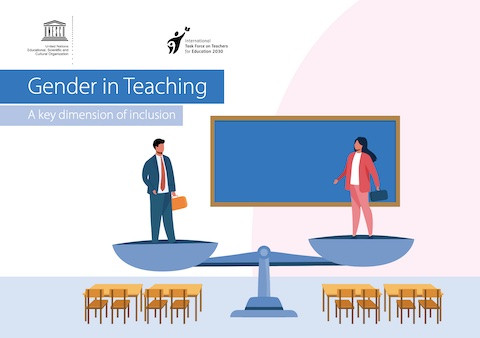 Gender in Teaching: A Key Dimension of Inclusion 발행 연도: 2020 단체 저자: UNESCO | International Task Force on Teachers for Education 2030 Without teachers, Sustainable Development Goal 4 to ensure inclusive and equitable, quality education for all by 2030 will not be achieved.Since teachers act as role models for students, inclusion in education means that the teaching workforce mirror the diversity of the classroom. As countries look to recruit more teachers to meet SDGs, one significant factor important to creating inclusive classrooms is gender.This document has been prepared for the 2020 World Teachers’ Day celebrated by UNESCO and the Teacher Task Force with the theme Teachers: Leading in crisis, reimagining the future. Le genre dans l’enseignement: Un élément essentiel de l’inclusion 발행 연도: 2020 단체 저자: Organisation des Nations Unies pour l'éducation, la science et la culture (UNESCO) | International Task Force on Teachers for Education 2030 Sans enseignant(e)s, il sera impossible d’atteindre l’objectif de développement durable 4 qui vise à assurer l’accès de tous à une éducation inclusive de qualité, sur un pied d’égalité, d’ici à 2030.Les enseignant(e)s sont des exemples pour les élèves ; à ce titre, l’inclusion dans l’éducation signifie que la composition ducorps enseignant doit refléter la diversité des élèves. À l’heure où les pays cherchent à recruter davantage d’enseignant(e)s pour atteindre les ODD, le genre constitue l’un des facteurs les plus importants pour créer des classes inclusives.Le présent document a été préparé en vue de la Journée mondiale des enseignant(e)s 2020, célébrée par l’UNESCO et l’Équipe spéciale sur les enseignants autour du thème Enseignants : leaders en temps de crise et façonneurs d’avenir.
  Communication and Information Programme 발행 연도: 2021 단체 저자: UNESCO UNESCO is the UN specialized agency building peace in the minds of people through education, the sciences, culture, communication and information. Our mission is to foster intercultural dialogue and sustainable development, by promoting the free flow of ideas.By adopting a multi-disciplinary and inclusive approach, UNESCO works with both duty-bearers and rights-holders across the world to develop and implement targeted actions that are born out of local needs, which ensures a holistic and results-based approach for sustainable change.In the field of communication and information, UNESCO defends and promotes freedom of expression, media independence and pluralism, and the building of inclusive knowledge societies underpinned by universal access to information and the innovative use of digital technologies.Through capacity-building, policy advice, international cooperation, monitoring and foresight in the fields of freedom of expression, access to information, and digital transformation, UNESCO will continue to empower key actors with a view to ensuring that fundamental freedoms are guaranteed online and offline, in line with international standards.This is all the more relevant to ensure the ethical development and use of emerging technologies, which have a growing impact on all aspects of the world’s societies. Citizens will also be empowered to enjoy these fundamental freedoms through the development of 21st century skills and the fostering of enabling environments for media pluralism and diversity.
 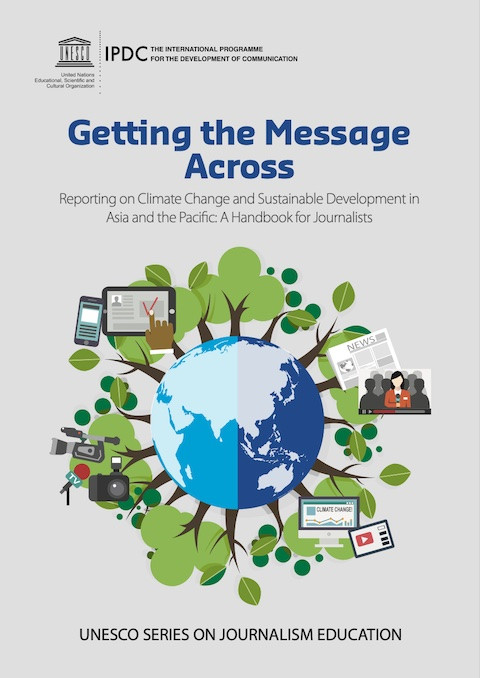 Getting the Message Across: Reporting on Climate Change and Sustainable Development in Asia and the Pacific; A Handbook for Journalists 발행 연도: 2018 단체 저자: UNESCO Getting the Message Across, Reporting on Climate Change and Sustainable Development in Asia and the Pacific: A Handbook for Journalists has been customized for journalists to tell the climate change story specific to the region. It explores the essential aspects of climate change, including its injustices to vulnerable communities, especially women and girls and least developed countries, and provides examples of best practices and stories of hope unique to the region. It can be used as a resource for journalists to understand the science of climate change, as well as helping journalists to improve their reporting of the environmental, social, economic ̧ political, technological and other angles of the story. Донесение сути темы Освещение темы: об изменении климата и устойчивом развитии в Азиатско-Тихоокеанском регионе; Пособие для журналистов 발행 연도: 2018 단체 저자: Организация Объединенных Наций по вопросам образования, науки и культуры (UNESCO) Пособие для журналистов "Донесение сути темы Освещение темы об изменении климата и устойчивом развитии в Азиатско-Тихоокеанском регионе" было разработано для журналистов, так чтобы рассказать историю изменения климата, характерную для региона. В нем рассматриваются основные аспекты изменения климата, в том числе его несправедливость по отношению к уязвимым общинам, особенно женщинам и девочкам и наименее развитым странам, и приводятся примеры передовой практики и истории надежды, уникальные для региона. Он может быть использован в качестве ресурса для журналистов, чтобы понять науку об изменении климата, а также помочь журналистам улучшить свои репортажи об экологических, социальных, экономических, политических, технологических и других аспектах истории.
 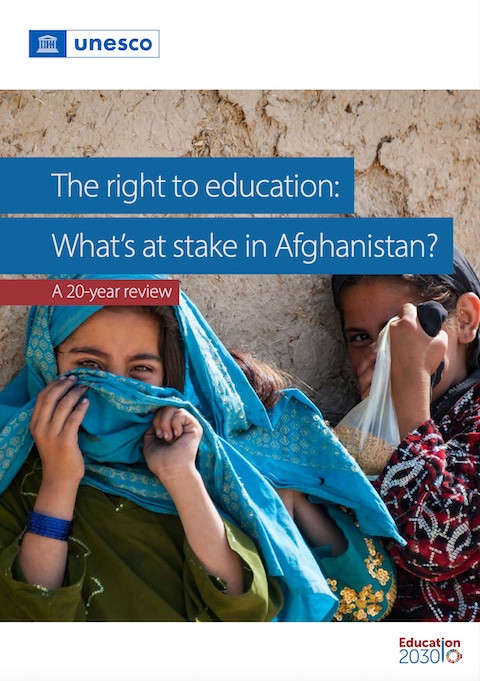 The Right to Education: What’s at Stake in Afghanistan?; A 20-Year Review 발행 연도: 2021 단체 저자: UNESCO This report takes stock of the achievements in education made by Afghanistan over the past 20 years and sets out immediate action to safeguard the right to education for all learners following deep political change in the country in 2021.Although Afghanistan lags far behind countries across South and West Asia on most development indicators, it has made impressive progress in education over two decades. Enrolment has increased ten-fold, with substantial gains for girls and female literacy. Female teachers have been hired. Steady efforts have been made to expand the school network across the country.The country has ratified key international normative instruments relating to the right to education; enshrined this right in the Constitution and adopted a wide range of policy measures to increase access, improve education quality and reduce gender, socio- economic and rural/urban disparities.But the challenges remain colossal, with half the primary school-aged children not enrolled in school and very low learning outcomes. The country is highly dependent on external aid to sustain its education system. It needs to uphold state obligations on the right to education without any discrimination and continue removing barriers that impede progress towards the Sustainable Development Goal on education to build the country’s future.
 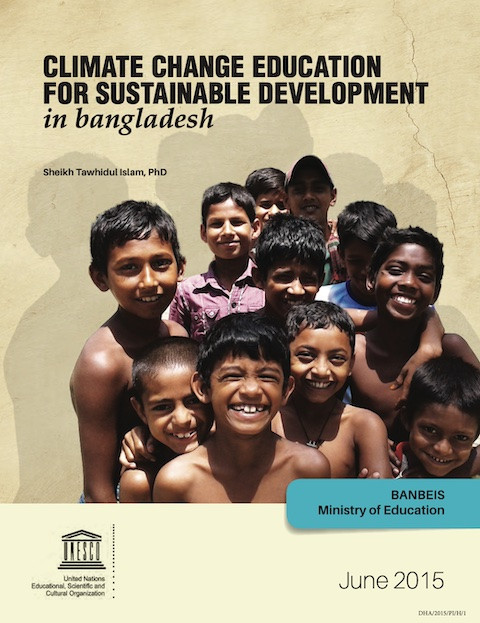 Climate Change Education for Sustainable Development in Bangladesh 발행 연도: 2015 저자: Sheikh Tawhidul Islam 단체 저자: UNESCO The CCESD pilot study contributes in developing a national baseline scenario regarding disaster and climate change impacts on education sector for the first time in Bangladesh. The information may help education planners and disaster and climate change professionals to act in line with national and international policy directives towards developing a strong and disaster and climate change impact resilient education system in Bangladesh.
 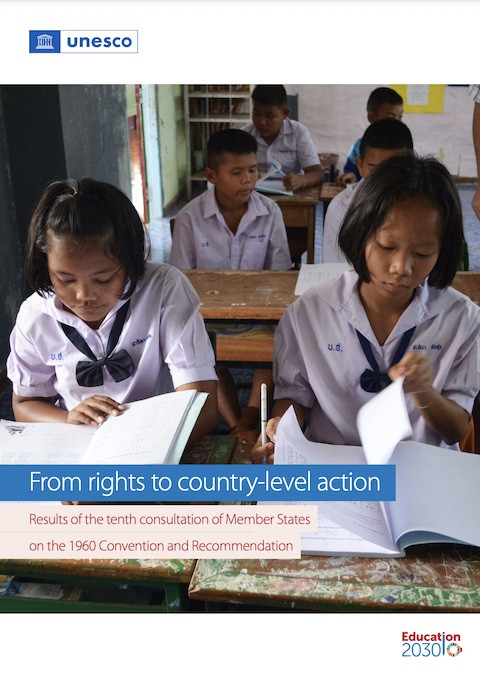 From Rights to Country-Level Action: Results of the Tenth Consultation of Member States on the 1960 Convention and Recommendation 발행 연도: 2022 저자: Rolla Moumné | Sharlene Bianchi 단체 저자: UNESCO The year 2020 marked a turning point for education worldwide. The impact of the COVID-19 pandemic not only amplified the difficulties and revealed existing weaknesses, but also brought the unpreparedness and lack of resilience of national education systems to the fore.The tenth consultation on the 1960 Convention against Discrimination in Education was conducted in precisely this context.Providing a valuable opportunity for States to take stock of the progress made in implementing Convention and sharing interesting national practices, the Consultation revealed continuous and new challenges the education sector faces. The unique timing of the consultation also created an opportunity to report on actions taken to faceadverse effects of the pandemic. This report analyzes and presents the Consultation findings, draws trends, and provides guidance for action. It shows how, by implementing the provisions of the Consultation, States can accelerate progress towards achieving Sustainable Development Goal 4, while invites a reflection on possibly reviewing the framework of the right to education to further respond to new challenges and put an end to increased inequalities worldwide.