
자료
세계시민교육에 대한 이해를 넓히고 연구, 옹호 활동, 교수, 학습 등을 향상시킬 수 있는 다양하고 유용한 자료를 찾아보세요.
2,297 건의 결과가 검색되었습니다
 The role of the Public Prosecution in combating child labor 발행 연도: 2022 저자: Qasim Ahmed | Ohaibia Abdullah The phenomenon of child labor refers to the exploitation of children in any form of work that deprives children of their childhood, impedes their ability to go to school, and has a harmful effect mentally, physically, socially or morally, and given the seriousness of work on the health of children, and in line with the agreements concluded by the state In this regard, the Algerian legislator has put in place mechanisms to combat this phenomenon, including the public prosecution by the Republic Prosecutor against every employee who employs children under the legal age.
  أسباب و أبعاد عمالة الأطفال 발행 연도: 2020 저자: Fatima Kharshuf انتشرت ظاهرة تشغيل الأطفال عبر دول العالم بشكل كبير ،حيث يوجد العديد من العوامل التي تدفع الأطفال للعمل من بينها ،العامل الاجتماعي المتمثل في الفقر و تدني مستوى المعيشة ، العامل التعليمي و يظهر من خلال انتشار الأمية و جهل الأسر بأهمية التعليم لهم و لأبنائهم ،أما العامل الاقتصادي فيتجلى في تدني مستوى التنمية و انتشار البطالة ، و عامل عدم الاستقرار أين نلاحظ تأثير الحروب على الأطفال حيث تتسبب الحروب و الأزمات الاقتصادية في التشرد و الهجرة التي تجبر الأطفال على العمل ، وهناك العامل القانوني الذي يبين ضعف الدول في القيام بمسؤوليتها في فرض قوانين تمنع تشغيل الأطفال و تعاقب مخالفيه .تؤثر عمالة الأطفال على الطفل أين تعيق نموه النفسي والعاطفي و الجسدي ،كما تؤثر على الدول من خلال تأثيرها على المجتمع أين ينتج عنها مجتمع غير متوازن في تكوينه ،واهم أثر تتسبب فيه الظاهرة هو البعد الاقتصادي حيث لا يساهم الادماج المبكر للطفل في سوق العمل في تحقيق نتائج ايجابية بل هو استثمار خاسر على كل الأصعدة. Causes And Dimensions Of Child Labor 발행 연도: 2020 저자: Fatima Kharshuf The phenomenon of child labor has spread throughout the countries of the world greatly, where there are many factors that push children to work, among them the social factor represented in poverty and the low standard of living, the educational factor, and it appears through the spread of illiteracy and families' ignorance of the importance of education for them and their children. The economic is reflected in the deterioration of the level of development, the spread of unemployment, and the factor of instability Where do we observe the effect of wars on children, where wars and economic crises cause displacement and migration that forces children to work, and there is the legal factor that shows the weakness of states in carrying out their responsibility to impose laws that prevent child labor And the punishment of those who violate it. Child labor affects the child wherever it hinders his psychological, emotional and physical development, as well as affects countries through their influence on society where an unbalanced society results in its formation, and the most important effect of the phenomenon is the economic dimension where the early integration of the child does not contribute to The labor market is to achieve positive results, but it is a losing investment on all levels.
  Comprendre les enjeux du numérique en éducation - Apports de la recherche 발행 연도: 2022 단체 저자: France. Ministère de l'Éducation Nationale et de la Jeunesse Panorama de quelques apports de la recherche sur les enjeux du numérique en éducation (contexte socio-économique et culturel, parentalité et vie familiale, pratiques des jeunes, enseignement et apprentissages, intelligence artificielle, impact de la crise sanitaire) : infographie bilingue et livret.L’étude du numérique en éducation prend en compte le numérique comme « fait social total» et va des interfaces aux interactions, des pratiques aux représentations. C’est un champ de recherche qui recouvre une grande diversité d’objets : dispositifs technologiques utilisés (équipements, services, environnements de travail, ressources), évolution des pratiques professionnelles, pluralité des écosystèmes et des interactions entre acteurs (institutions, communauté éducative, collectivités, monde associatif, industriels…), etc. – et d’approches, disciplinaires ou pluridisciplinaires : psychologie, neurosciences, informatique et sciences du numérique, sciences de l’information et de la communication, sciences de l’éducation, sociologie, didactique, anthropologie, sociolinguistique, ingénierie des connaissances, etc. Dans un contexte international où l’éducation au numérique correspond à une demande sociale, celle-ci tend à une évolution des compétences portée par des référentiels communs mais avec des traductions dans les programmes officiels variables selon les pays. Overview of some research contributions on the challenges of digital education (socio-economic and cultural context, parenthood and family life, youth practices, teaching and learning, artificial intelligence, impact of the health crisis): bilingual infographic and booklet.The study of digital technology in education takes into account digital technology as a "total social fact", from interfaces to interactions, from practices to representations. This field of research covers a wide range of subjects: technological devices used (equipment, services, work environments, resources), changes in professional practices, the plurality of ecosystems and interactions between players (institutions, the educational community, local authorities, associations, industry, etc.), etc., as well as disciplinary and multidisciplinary approaches: psychology, neuroscience, social sciences, etc. - and disciplinary or multidisciplinary approaches: psychology, neuroscience, computer and digital sciences, information and communication sciences, educational sciences, sociology, didactics, anthropology, sociolinguistics, knowledge engineering, etc. In an international context where digital education corresponds to a social demand, the trend is towards an evolution of skills supported by common reference frameworks, but with translations into official programs that vary from country to country.
  Towards Indigenization: Inspirational Educational Practices the Era of Reconciliation 발행 연도: 2021 저자: Constance Lavoie | Natasha Blanchet-Cohen | Marco Bacon 단체 저자: Education and Francophonie Today, Aboriginal people are re-establishing their knowledge, know-how, and know-how to be in the educational space. The present historical period is filled with hopes and educational initiatives to preserve, revitalize and transmit cultures, Indigenous worldviews, and knowledge in education. This thematic issue towards indigenization aims to highlight such often-overlooked educational advances in order to promote the path to be traveled for reconciliation. Vers l’autochtonisation: Pratiques éducatives inspirantes à l’ère de la réconciliation 발행 연도: 2021 저자: Constance Lavoie | Natasha Blanchet-Cohen | Marco Bacon 단체 저자: Education and Francophonie Aujourd’hui, les Autochtones re-mettent en place leurs savoirs, savoir-faire et savoir-être dans l’espace éducatif. La période historique actuelle est remplie d’espoirs et d’initiatives éducatives permettant de préserver, revitaliser et transmettre les cultures, les visions du monde et les savoirs autochtones en éducation. Ce numéro thématique vers l’autochtonisation : pratiques éducatives inspirantes à l’ère de la réconciliation vise à mettre en lumière de telles avancées éducatives souvent méconnues afin de favoriser le chemin à parcourir pour la réconciliation.
  La Securite Alimentaire Et De La Nutrition Dans Le Monde 발행 연도: 2022 단체 저자: Food and Agriculture Organization of the United Nations (FAO) Le présent rapport met en lumière de manière récurrente l’intensification des principaux facteurs d’insécurité alimentaire et de malnutrition: les conflits, les phénomènes climatiques extrêmes et les chocs économiques, dont les effets se conjuguent à ceux de l’accroissementdes inégalités. L’enjeu n’est pas de savoir si d’autres épreuves sont à venir ou non; il s'agit plutôt de prendre les choses en main avec plus de courage et de renforcer la résilience face aux chocs futurs.
 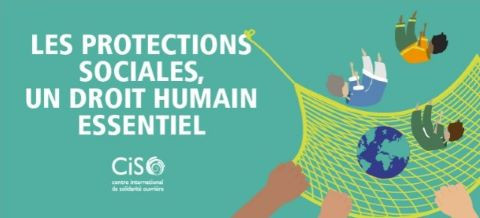 Campaign "Social Protections, an Essential Human Right!" 발행 연도: 2021 단체 저자: International Labour Solidarity Centre Around the world, the COVID-19 pandemic has highlighted the inequalities in the individual and collective protection measures that societies had access to face the crisis. Unsurprisingly, we found that not everyone was equal in the face of the pandemic, quite the contrary. Countries with higher rates of social coverage and labor formalization have seen their populations much better prepared and equipped to deal with the aftermath. In contrast, places, where a large number of workers worked in precarious situations, suffered from an increase in the unemployment rate and a much higher rate of contagion.It is therefore with the current pandemic context in mind that the CISO has decided to set up the annual campaign under the theme of social protection for all, to raise awareness among the Quebec public about the precariousness of work. in the South and the North and the importance of social protection floors to protect the most vulnerable workers. Through this campaign, we want to present social protections not as a privilege but as an essential human right for all. Campagne « Les protections sociales, un droit humain essentiel! » 발행 연도: 2021 단체 저자: International Labour Solidarity Centre Partout dans le monde, la pandémie de COVID-19 a mis en lumière les inégalités dans les mesures de protections individuelles et collectives auxquelles les sociétés avaient accès pour faire face à la crise. Sans surprise, nous avons constaté que toutes et tous n’étaient pas égales et égaux face à la pandémie, bien au contraire. Les pays avec de plus hauts taux de couverture sociale et de formalisation du travail ont vu leur population beaucoup mieux préparée et outillée à faire face aux contrecoups. Par opposition, les endroits où un grand nombre de travailleuses et travailleurs oeuvraient dans des situations de précarité ont souffert d’une augmentation du taux de chômage et d’un taux de contagion beaucoup plus élevé.C’est donc en gardant en tête le contexte pandémique actuel que le CISO a décidé de mettre en place la campagne annuelle sous le thème des protections sociales pour toutes et tous, et ce dans le but de sensibiliser le public québécois à la précarisation du travail au Sud et au Nord et à l’importance des socles de protection sociale pour protéger les travailleuses et travailleurs les plus vulnérables. Par cette campagne, nous souhaitons présenter les protections sociales non comme un privilège mais bien comme un droit humain essentiel pour toutes et tous.
  2018-2019: NO to Modern Slavery: Forced Labor, a Struggle to End 발행 연도: 2019 단체 저자: International Labour Solidarity Centre The CISO has embarked with its partners on a three-year campaign against forced labour. In 2017-2018, he called for the ratification of ILO Convention 189 on the rights of domestic workers and publicized the violations of their rights here and elsewhere in the world. This year, it is tackling the task of making known the existence of forced labor in the agri-food and electronics sector in order to promote greater and effective mobilization against this scourge which offends the conscience and the rights of all workers in the world.