
자료
세계시민교육에 대한 이해를 넓히고 연구, 옹호 활동, 교수, 학습 등을 향상시킬 수 있는 다양하고 유용한 자료를 찾아보세요.
1,851 건의 결과가 검색되었습니다
 Основные направления воздействия изменения климата в Центральной Азии (Oriental Renaissance; № 4(2) 발행 연도: 2024 저자: Нарзуллаев Комилжон Собиржонович В настоящей статье анализируется глобальная проблема - изменения климата в Центрально-Азиатском регионе. В перспективе данная глобальная проблема найдет свое отражение в повышении температуры, экстремальных погодных явлениях, опустынивании, оползнях и нехватке водных ресурсов. Наряду с этим, в статье указываются основные направления воздействия изменения климата в регионе в целом.
  Prepare to Act!: Practical Tips for Climate Advocacy and Action; Climate Glossary for Young People 발행 연도: 2024 단체 저자: UNICEF Uzbekistan The Toolkit for Young Climate Activists in Uzbekistan was created by young people who, like you, are concerned about our planet's situation and who, as activists, have faced many challenges when advocating and taking action. Main goal is to share clear, concise, easily understandable information that describes the course of global, regional and national climate action, in order to prepare you for full and informed participation. Приготовьтесь действовать!: Практические советы по защите окружающей среды и борьбе с изменением климата; Климатический глоссарий для молодёжи 발행 연도: 2024 단체 저자: UNICEF Uzbekistan Инструментарий для молодых активистов в области изменения климата в регионе Латинской Америки и Карибского бассейна был создан молодыми людьми, обеспокоены ситуацией, сложившейся на нашей планете и которые, будучи активистами, столкнулись со многими проблемами при отстаивании интересов и принятии мер по борьбе с изменением климата. Цель - поделиться четкой, краткой и понятной информацией, описывающей ход глобальных, региональных и национальных действий в области изменения климата с тем, чтобы подготовить вас к активному и осознанному участию в них.
 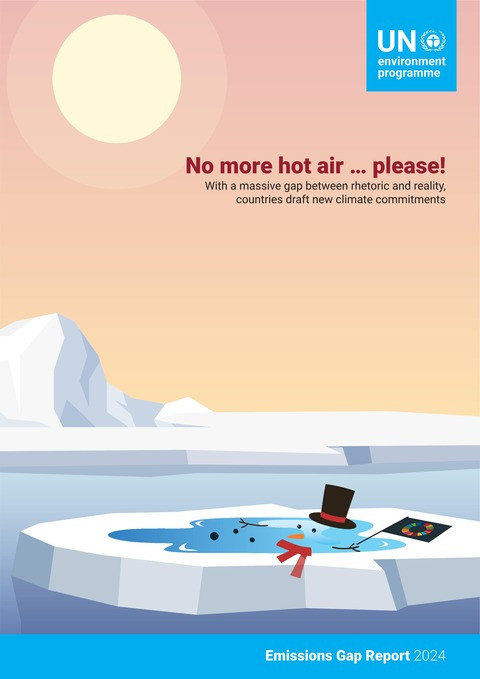 Emissions Gap Report 2024: No More Hot Air … Please! With a Massive Gap Between Rhetoric and Reality, Countries Draft New Climate Commitments 발행 연도: 2024 저자: Anne Olhoft | John Christensen | William F. Lamb | Minal Pathak | Takeshi Kuramochi | Taryn Fransen | Joeri Rogelj | Michel den Elzen | Joana Portugal-Pereira | Neil rant | Jiang Kejun | Stephanie Roe | Chris Bataille | Kornelis Blok | Kelly Levin | Eleonore Soubeyran | Costanza Strinati 단체 저자: United Nations Environment Programme (UNEP) As climate impacts intensify globally, the Emissions Gap Report 2024: No more hot air … please! finds that nations must deliver dramatically stronger ambition and action in the next round of Nationally Determined Contributions or the Paris Agreement’s 1.5°C goal will be gone within a few years. The report is the 15th edition in a series that brings together many of the world’s top climate scientists to look at future trends in greenhouse gas emissions and provide potential solutions to the challenge of global warming.
 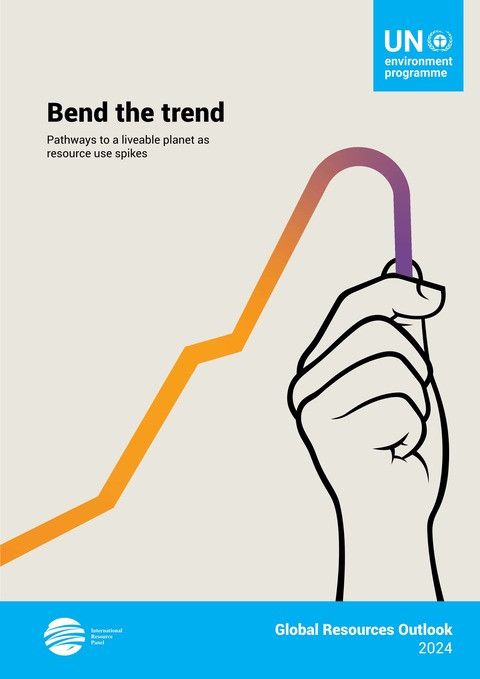 Global Resources Outlook: 2024 Bend the Trend; Pathways to a Liveable Planet as Resource Use Spikes 발행 연도: 2024 저자: Hans Bruyninckx, Steve Hatfield-Dodds, Stefanie Hellweg, Heinz Schandl 단체 저자: United Nations Environment Programme (UNEP) | International Resource Panel (IRP) The world is in the midst of a triple planetary crisis of climate change, biodiversity loss and pollution and waste. The global economy is consuming ever more natural resources, while the world is not on track to meet the Sustainable Development Goals. The scientific community has never before been more aligned or more resolute on the need for urgent global transformation towards the sustainable use of resources. This 2024 edition of the Global Resources Outlook sheds light on how resources are essential to the effective implementation of the Agenda 2030 and multilateral environmental agreements to tackle the triple planetary crisis. The report brings together the best available data, modelling and assessments to analyse trends, impacts and distributional effects of resource use. It builds on more than 15 years of work by the International Resource Panel, including scientific assessments and inputs from countries, a vast network of stakeholders in the field and regional experts. The report illustrates how, since the 2019 edition of this report, rising trends in global resource use have continued or accelerated. The report also shows how demand for resources is expected to continue increasing in the coming decades. This means that, without urgent and concerted action, by 2060 resource extraction could rise by 60% from 2020 levels – driving increasing damage and risks. However, this fate is not sealed. The report also describes the potential to turn negative trends around and put humanity on a trajectory towards sustainability. For that, bold policy action is critical to phase out unsustainable activities, speed up responsible and innovative ways of meeting human needs and create conditions conducive to social acceptance and equity within the necessary transitions. This includes urgent action to embed resources in the delivery of multilateral environmental agreements, define sustainable resource use paths and roll out appropriate financial, trade and economic incentives. The pathway towards sustainability is increasingly steep and narrow, and the window of opportunity is closing. The science is clear: The key question is no longer whether a transformation towards global sustainable resource consumption and production is necessary, but how to make it happen now. Addressing this reality, based on evolving concepts of a just transition, is an essential part of any credible and justifiable way forward.
  Guidelines for Contributing to the United Nations Sustainable Development Goals 발행 연도: 2024 단체 저자: International Organization for Standardization (ISO) | United Nations Development Programme (UNDP) The International Organization for Standardization (ISO) and United Nations Development Programme (UNDP) Guidelines for contributing to the Sustainable Development Goals (SDGs) offer a practical guidance on how organizations and businesses can manage and enhance their contributions to the SDGs. The guidelines draw on global expertise and best practices, complementing existing sustainability standards for aligning organizational strategies and operations with the SDGs as a whole. While other standards may address specific aspects of sustainable development, these guidelines emphasize a holistic approach and provide practical tools to enhance business performance, while at the same time optimizing the impact of all organizational activities on both people and the planet.
  Progress on the Sustainable Development Goals: The Gender Snapshot 2024 발행 연도: 2024 저자: Papa Alioune Seck | Antra Bhatt | Farrah Frick | Yongyi Min | Heather Page | Natalia Tosi | Sokunpanha You | Guillem Fortuny Fillo 단체 저자: United Nations Entity for Gender Equality and the Empowerment of Women (UN Women) | UN. Department of Economic and Social Affairs (UN. DESA) This publication highlights new data and evidence on gender equality trends. It finds the world falling short on its commitments to women and girls. Despite declining poverty and narrowing gender gaps in education, not a single indicator under the global gender equality Goal has been achieved. The report stresses the high cost of not investing in women's rights and champions radical action to accelerate the pace of change.
  Annual SDG Review 2023: The Private Sector and The SDGs in The Arab Region 발행 연도: 2023 저자: Mario Jales | Jana El Baba | Hania Sabbidin Dimassi 단체 저자: UN. Economic and Social Commission for Western Asia (UN. ESCWA) The ESCWA Annual SDG Review 2023, the second in the series, explores the contributions of the private sector to the realization of the 2030 Agenda and the SDGs in the Arab region. Building on limited available data on the subject, the report offers an indicative reading of existing trends and gaps in the region. The analysis is guided not only by the Agenda’s goals and targets, but also by the whole-of-society and rights-based approaches and the principles of universality, leaving no one behind, combating inequality and promoting gender equality and the empowerment of women.The Review examines the contributions of the private sector to sustainable development in the Arab region from three lenses: delivering the SDGs through business action, mobilizing private finance for the SDGs, and engaging the private sector in SDG planning and coordination. Each chapter assesses evidence for private sector engagement in the delivery of the SDGs in the region and provides guidance on actions needed to address current gaps. الاستعراض السنوي لأهداف التنمية المستدامة 2023: القطاع الخاص وأهداف التنمية المستدامة في المنطقة العربية 발행 연도: 2023 저자: Mario Jales | Jana El Baba | Hania Sabbidin Dimassi 단체 저자: UN. Economic and Social Commission for Western Asia (UN. ESCWA) يستكشف الاستعراض السنوي لأهداف التنمية المستدامة لعام 2023 الصادر عن الإسكوا، وهو الثاني ضمن سلسلة الاستعراضات هذه، مساهمات القطاع الخاص في تحقيق خطة عام 2030 وأهداف التنمية المستدامة في المنطقة العربية. يستند هذا الاستعراض إلى البيانات المتاحة في هذا الشأن، رغم محدوديتها، ليقدّم قراءة إرشادية لما تشهده المنطقة من اتجاهات وما يعوقها من ثغرات. ولا يسترشد التقرير في تحليله بأهداف وغايات خطة عام 2030 وحدها، بل يسترشد كذلك بمبادئ الخطة ولا سيما نَهج المجتمع بأسره وحقوق الإنسان والشمول، وعدم إهمال أحد، والتصدي لعدم المساواة، وتعميم منظور المساواة بين الجنسين، وتمكين المرأة.ويستعرض التقرير مساهمات القطاع الخاص في التنمية المستدامة في المنطقة العربية من حيث ثلاثة اعتبارات: تحقيق أهداف التنمية المستدامة من خلال أنشطة الأعمال التجارية؛ تعبئة التمويل الخاص خدمة لأهداف التنمية المستدامة؛ إشراك القطاع الخاص في التخطيط لأهداف التنمية المستدامة وتنسيق العمل عليها. يقيِّم كل فصل الأدلة على مشاركة القطاع الخاص في تحقيق أهداف التنمية المستدامة في المنطقة، ويقدم إرشادات بشأن الإجراءات اللازمة لتدارك الفجوات القائمة.
  Global Priority Africa Flagships 2023: An Update from UNESCO Regional Office for Southern Africa 발행 연도: 2024 단체 저자: UNESCO Harare Two years into the implementation of the Operational Strategy for Priority Africa 2022-2029 (OSPA), a new biennium has commenced through the Programme and Budget for 2024-2025. With a goal of achieving the Sustainable Development Goals (SDGs) of the United Nations’ Agenda 2030 and the African Union’s Agenda 2063 “The Africa We Want”, the OSPA remains pivotal in accelerating the achievement of SDGs amidst a growing threat of regression and stagnation on some of the SDG targets. The relentless climatic changes have resulted in droughts and cyclones whose incessant rains have caused food insecurity, waterborne diseases and loss of biodiversity. Geopolitical crisis and the remnants of the impacts of COVID-19 continue to waylay the aspirations of the continent. Gender inequality, youth unemployment, education and HIV and AIDS continue to be areas for concern. Despite this plethora of challenges, Member States remain committed to Agenda 2030 and 2063 and the strong partnership existing with UNESCO and the rest of the UN system. While the OSPA is driven to address challenges in the areas of demography and sustainable development, education and knowledge, climate change, cultural renaissance, and peace and democracy these all have far-reaching consequences beyond their focus hence addressing these contributes widely to other thematic areas. Priority Africa reinforces UNESCO’s partnerships with African governing bodies such as the African Union (AU), Regional Economic Communities (RECs), Member States as well as other UN agencies. Being also aligned with the Southern African Development Community (SADC) and UNESCO’s Joint Programme of Action (JPA) 2022-2025, the OSPA continues to demonstrate its relevance to the region.