
자료
세계시민교육에 대한 이해를 넓히고 연구, 옹호 활동, 교수, 학습 등을 향상시킬 수 있는 다양하고 유용한 자료를 찾아보세요.
1,828 건의 결과가 검색되었습니다
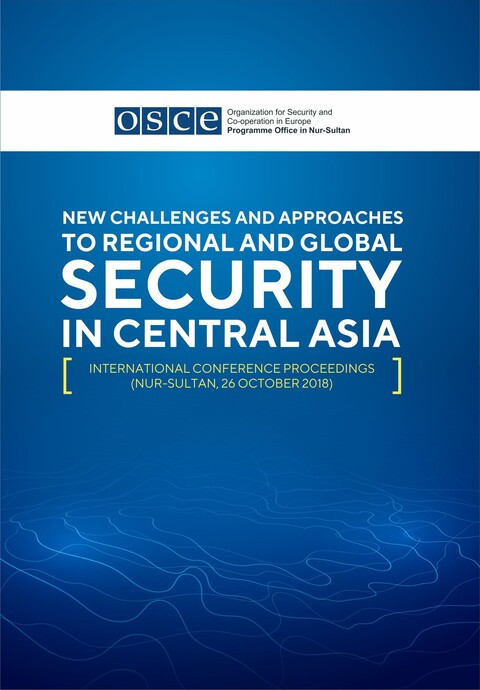 Новые вызовы и подходы по регионально и глобальной безопасности в Центральной Азии 발행 연도: 2020 단체 저자: Organization for Security and Co-operation in Europe (OSCE) 26 октября 2018 г. Офисом программ ОБСЕ в Нур-Султане совместно с Фондом им. Фридриха Эберта и Казахстанским советом по международным отношениям при поддержке Института дипломатии Академии государственного управления и Исследовательского института «Общественное мнение» была организована международная конференция «Новые вызовы и подходы по регионально и глобальной безопасности в Центральной Азии». В данный сборник материалов включены доклады казахстанских и зарубежных участников конференции, раскрывающие основные угрозы безопасности в регионе Центральной Азии и пути решения возникающих проблем, а также актуальные вопросы регионального сотрудничества в реагировании на современные вызовы. Издание предназначено для политологов, экспертов-международников, государственных служащих, научных работников, преподавателей и студентов высших учебных заведений, а также для широкого круга читателей, интересующихся современным развитием региона. Издание публикуется на русском и английском языках. Доклад господина Пал Дунай написан на английском языке в оригинале, остальные доклады на русском языке. Все доклады переведены и отредактированы при содействии Офиса программ ОБСЕ в Нур-Султане. Мнения и рекомендации авторов докладов в рамках конференции принадлежат авторам и не обязательно отражают точку зрения организаторов конференции.
 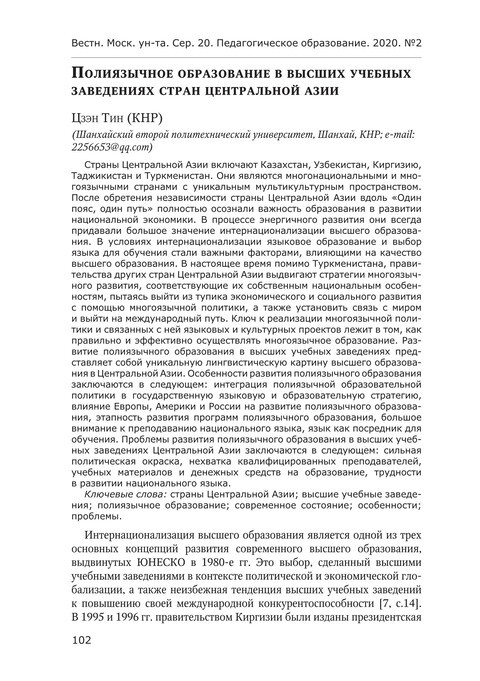 Multilingual Education in Central Asian Institutions of Higher Education (Journal of Moscow University. Series 20. Pedagogical Education; No.2, 2020) 발행 연도: 2020 저자: Цзэн Тин In the context of internationalization, language education and the choice of language for teaching have become important factors affecting the quality of higher education. Currently, in addition to Turkmenistan, the Governments of other Central Asian countries are putting forward strategies for multilingual development that correspond to their own national characteristics. The problems of the development of multilingual education in higher educational institutions of Central Asia are as follows: strong political coloring, lack of qualified teachers, educational materials and funds for education, difficulties in the development of the national language. Полиязычное образование в высших учебных заведениях стран Центральной Азии (Вестник Московского университета. Серия 20. Педагогическое образование; No.2, 2020) 발행 연도: 2020 저자: Цзэн Тин В условиях интернационализации языковое образование и выбор языка для обучения стали важными факторами, влияющими на качество высшего образования. В настоящее время помимо Туркменистана, правительства других стран Центральной Азии выдвигают стратегии многоязычного развития, соответствующие их собственным национальным особенностям. Проблемы развития полиязычного образования в высших учебных заведениях Центральной Азии заключаются в следующем: сильная политическая окраска, нехватка квалифицированных преподавателей, учебных материалов и денежных средств на образование, трудности в развитии национального языка.
 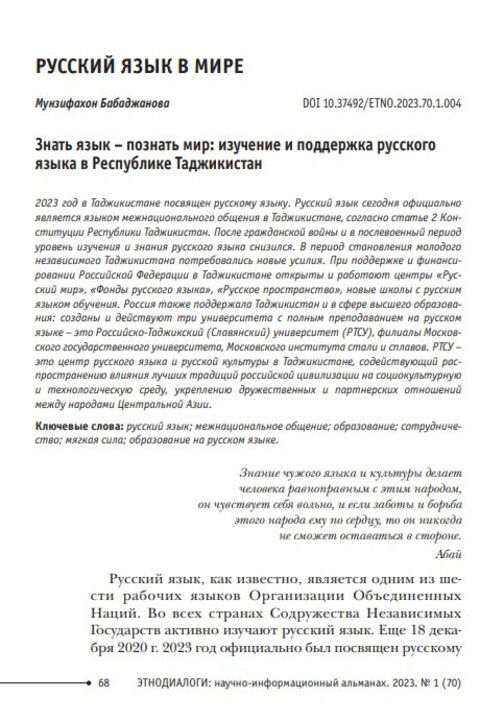 Knowing a Language Is Knowing the World: Learning and Supporting the Russian Language in the Republic of Tajikistan (Ethnodialogues; No.1, 2023) 발행 연도: 2023 저자: Мунзифахон Бабаджанова The year 2023 in Tajikistan is dedicated to the Russian language. The Russian language today is officially the language of interethnic communication in Tajikistan. With the support and funding of the Russian Federation, “Russian World”, “Russian Language Foundations”, “Russian Space” centers and new Russian language schools were opened and now operate in Tajikistan. Russia has also supported Tajikistan in higher education: three universities with full Russian-language instruction have been established and are operating. Знать язык - познать мир: изучение и поддержка русского языка в республике Таджикистан (Этнодиалоги; No.1, 2023) 발행 연도: 2023 저자: Мунзифахон Бабаджанова 2023 год в Таджикистане посвящен русскому языку. Русский язык сегодня официально является языком межнационального общения в Таджикистане. При поддержке и финансировании Российской Федерации в Таджикистане открыты и работают центры «Русский мир», «Фонды русского языка», «Русское пространство», новые школы с русским языком обучения. Россия также поддержала Таджикистан и в сфере высшего образования: созданы и действуют три университета с полным преподаванием на русском языке.
 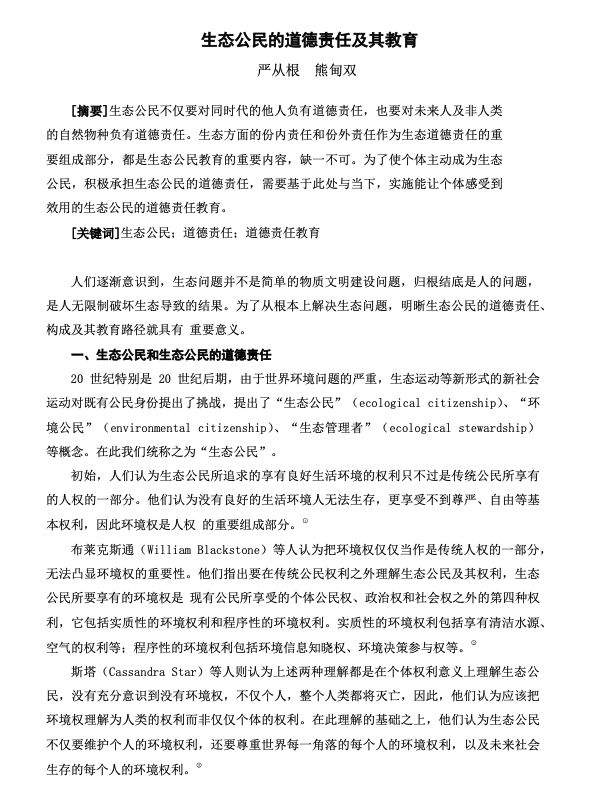 生态公民的道德责任及其教育 발행 연도: 2019 저자: 严从根 | 熊甸双 生态公民不仅要对同时代的他人负有道德责任,也要对未来人及非人类 的自然物种负有道德责任。生态方面的份内责任和份外责任作为生态道德责任的重 要组成部分,都是生态公民教育的重要内容,缺一不可。为了使个体主动成为生态 公民,积极承担生态公民的道德责任,需要基于此处与当下,实施能让个体感受到 效用的生态公民的道德责任教育。
 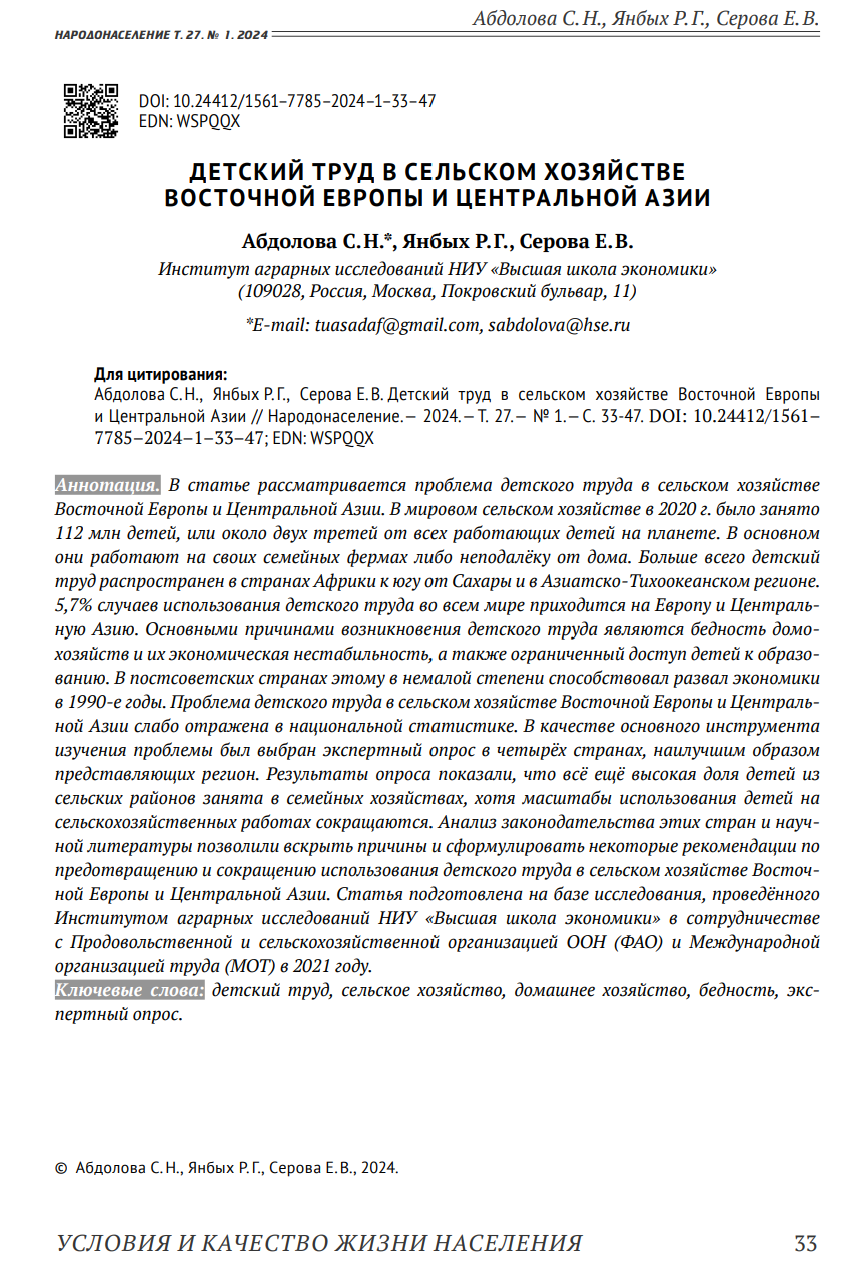 Research on Child Labour in Agriculture in Eastern Europe and Central Asia 발행 연도: 2024 저자: Абдолова Садаф | Янбых Рената | Серова Евгения 단체 저자: Народонаселение The article deals with the problem of child labor in agriculture in Eastern Europe and Central Asia. An analysis of the legislation of these countries and scientific literature allowed us to uncover the causes and formulate some recommendations for preventing and reducing the use of child labor in agriculture in Eastern Europe and Central Asia. The article was prepared on the basis of a study conducted by The Institute of Agricultural Research of the Higher School of Economics in cooperation with the Food and Agriculture Organization of the United Nations (FAO) and the International by the International Labour Organization (ILO) in 2021. Детский труд в сельском хозяйстве Восточной Европы и Центральной Азии 발행 연도: 2024 저자: Абдолова Садаф | Янбых Рената | Серова Евгения 단체 저자: Народонаселение В статье рассматривается проблема детского труда в сельском хозяйстве Восточной Европы и Центральной Азии. Анализ законодательства этих стран и научной литературы позволили вскрыть причины и сформулировать некоторые рекомендации по предотвращению и сокращению использования детского труда в сельском хозяйстве Восточной Европы и Центральной Азии. Статья подготовлена на базе исследования, проведённого Институтом аграрных исследований НИУ «Высшая школа экономики» в сотрудничестве с Продовольственной и сельскохозяйственной организацией ООН (ФАО) и Международной организацией труда (МОТ) в 2021 году.
 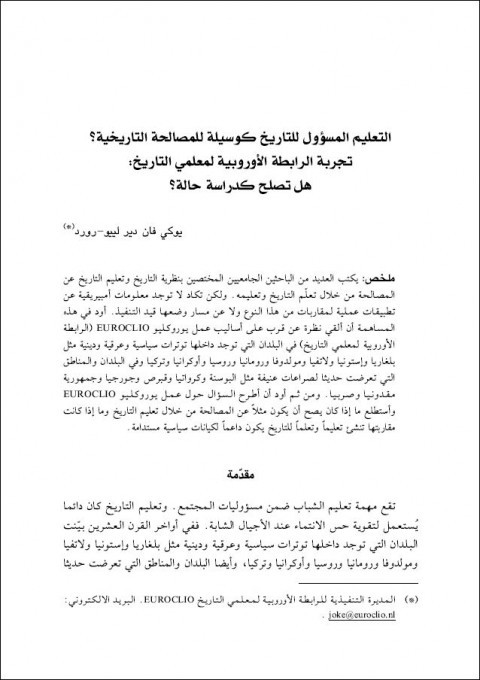 التعليم المسؤول للتاريخ كوسيلة للمصالحة التاريخية؟ : تجربة الرابطة الأوروبية لمعلمي التاريخ: هل تصلح كدراسة حالة؟ 발행 연도: 2012 저자: فان دير لييو-رورد، يوكي 단체 저자: Lebanese Association for Educational Studies (LAES) يكتب العديد من الباحثين الجامعيين المختصين بنظرية التاريخ وتعليم التاريخ عن المصالحة من خلال تعلّم التاريخ وتعليمه. ولكن تكاد لا توجد معلومات أمبيريقية عن تطبيقات عملية لمقاربات من هذا النوع ولا عن مسار وضعها قيد التنفيذ. أود في هذه المساهمة ان القي نظرة عن قرب على أساليب عمل يوروكليو EUROCLIO (الرابطة الأوروبية لمعلمي التاريخ) في البلدان التي توجد داخلها توترات سياسية وعرقية ودينية مثل بلغاريا واستونيا ولاتفيا ومولدوفا ورومانيا وروسيا وأوكرانيا وتركيا وفي البلدان والمناطق التي تعرضت حديثا لصراعات عنيفة مثل البوسنة وكرواتيا وقبرص وجورجيا وجمهورية مقدونيا وصربيا. ومن ثم أود أن أطرح السؤال حول عمل يوروكليو EUROCLIO وأستطلع ما يصح ان يكون مثلا عن المصالحة من خلال تعليم التاريخ وما اذا مقاربتها تنشئ تعليما وتعلما للتاريخ يكون داعما لكيانات سياسية مستدامة. Responsible History as a Tool for Historical Reconciliation? EUROCLIO, the European Association of History Educators as a Case Study? 발행 연도: 2012 저자: فان دير لييو-رورد، يوكي 단체 저자: Lebanese Association for Educational Studies (LAES) Many university researchers specialized in the theory of history and in teaching history write about reconciliation using history learning and teaching. However, there are almost no empirical data on practical applications of such approaches nor on the process of implementation. In this contribution. I’d like to have a close look at the working methods of the European Association of History Educators EUROCLIO, in countries with internal political, racial and religious tensions, such as Bulgaria, Estonia, Latvia, Moldovia, Romania, Russia, Ukraine, Turkey and in the countries and regions that were recently exposed to severe conflicts such as Bosnia, Croatia, Cyprus, Georgia, Republic of Macedonia and Serbia. Then I’d want to ask the question about how EUROCLIO functions and explore what applies to be an example of reconciliation through teaching history, and whether the reconciliation approach creates a history teaching and learning that would be supportive of sustainable political entities.