
자료
세계시민교육에 대한 이해를 넓히고 연구, 옹호 활동, 교수, 학습 등을 향상시킬 수 있는 다양하고 유용한 자료를 찾아보세요.
3,401 건의 결과가 검색되었습니다
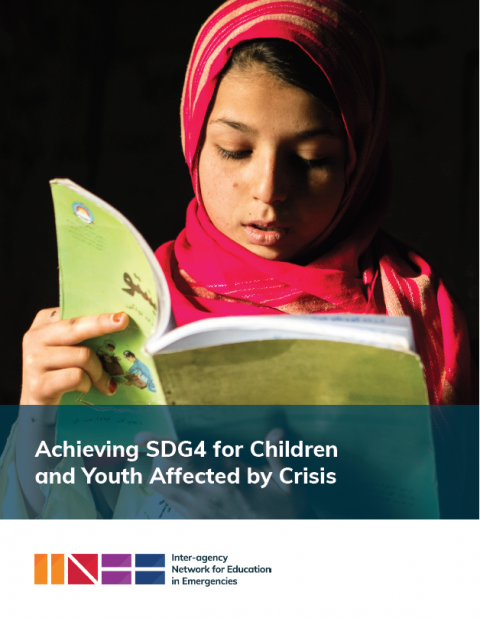 Achieving SDG4 for Children and Youth Affected by Crisis 발행 연도: 2019 단체 저자: Inter-agency Network for Education in Emergencies (INEE) With the Sustainable Development Goal 4 (SDG4), the global community committed to ensuring a quality education for all children and youth. Despite this promise, children and youth in crisis contexts continue to be neglected. We will never achieve SDG4 unless all children and youth affected by conflict and crisis are able to access and attend school and learn in a quality, safe, relevant and inclusive education environment. There is an urgent need for governments and the international community to make and adhere to political, financial and legal commitments if we truly are to leave no child behind. This brief offers recommendations for addressing the disparities in safe, quality, inclusive education for children affected by crisis. It begins by highlighting key areas for policy and practice, and looks at ways to use the various tools developed by the Inter-agency Network of Education in Emergencies (INEE). It takes a look at overall themes and trends, as well as the specific issues of gender disparities, the importance of supporting teachers, children’s psycho-social wellbeing and the protection and safety of education in conflict.
  Policy brief: rethinking schooling for the 21st century 발행 연도: 2018 단체 저자: Mahatma Gandhi Institute of Education for Peace and Sustainable Development (MGIEP) Analysing how far the ideals of SDG 4.7 are embodied in policies and curricula across 22 Asian countries, this study establishes benchmarks against which future progress can be assessed. It also argues forcefully that we must redefine the purposes of schooling, addressing the fundamental challenges to efforts to promote peace, sustainability and global citizenship through education.
 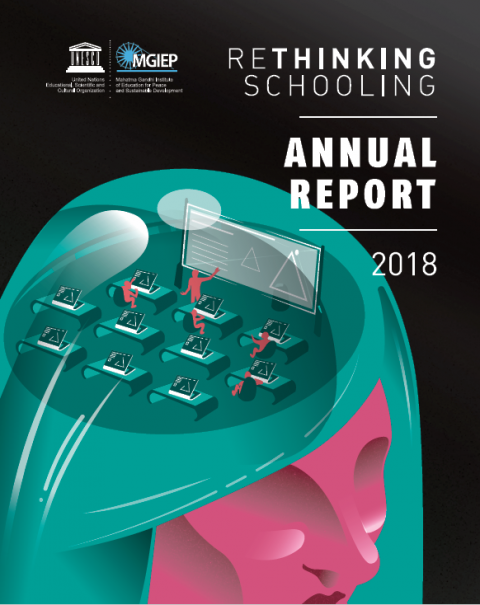 Rethinking schooling: annual report 2018 발행 연도: 2019 단체 저자: Mahatma Gandhi Institute of Education for Peace and Sustainable Development (MGIEP) Calls to gear up schools for the 21st century are ubiquitous today. Some Asian education systems are held up as models for an innovation-led utopian future. Across much of Asia, however, neither the reality of schooling nor the patterns of development with which it is associated give cause for blithe optimism. This study is informed by UNESCO’s commitment to realizing the Sustainable Development Goals (SDGs) through educational reform worldwide. Since its inception, UNESCO has championed a humanistic vision of education (UNESCO, 2015)—a vision today encapsulated in SDG 4.7. These ideals need to be strongly restated and defended in an era when educational debate has come to be framed by a narrowly economistic and instrumentalist agenda. Deriving urgent significance from this broader context, the Rethinking Schooling report analyses how far the ideals of SDG 4.7 are embodied in policies and curricula across 22 Asian countries (UNESCO MGIEP, 2017a). The report seeks to develop benchmarks against which future progress can be assessed. It also argues forcefully that the fundamental purposes of schooling need to be reconfigured, if the ideals to which the global community has subscribed are actually to be realized.
  Implementation of sustainable development goals in the SPECA region 발행 연도: 2017 단체 저자: United Nations Economic Commission for Europe (UNECE) This study is aimed at analyzing the links between the work on achieving the Sustainable Development Goals (SDGs) in the national framework of countries participating in the UN Special Program for the Economies of Central Asia (SPECA) and identifying areas in which the cooperation of these countries in the framework of SPECA will be useful. The analysis will lead to policy recommendations on how regional cooperation within SPECA can contribute to progress in the implementation of the SDGs. Осуществление целей устойчивого развития в регионе СПЕКА 발행 연도: 2017 단체 저자: United Nations Economic Commission for Europe (UNECE) Данное исследование направлено на анализ связей между работой по достижению Целей устойчивого развития (ЦУР) в национальных рамках стран, участвующих в Специальной программе ООН для экономик Центральной Азии (СПЕКА) и определение областей, в которых будет полезно сотрудничество этих стран в рамках СПЕКА. Анализ приведет к выработке политических рекомендаций относительно того, как региональное сотрудничество в рамках СПЕКА может способствовать прогрессу в реализации ЦУР.
  مؤتمر ومعرض التنمية المستدامة 발행 연도: 2018 단체 저자: Arab Internatiional يأتي تنظيم المؤتمر دعماً لتوجيهات السيد الرئيس عبد الفتاح السيسي لتحقيق رؤية مصر 2030في إستراتيجية التنمية المستدامة بما يحقق إقتصاد تنافس متوازن ومتنوع للإرتقاء بجودة حياه المصريين عن طريق إستثمار عبقرية المكان والإنسان مع الأعتماد علي الإبتكار والمعرفه والعدالة الإجتماعية .
 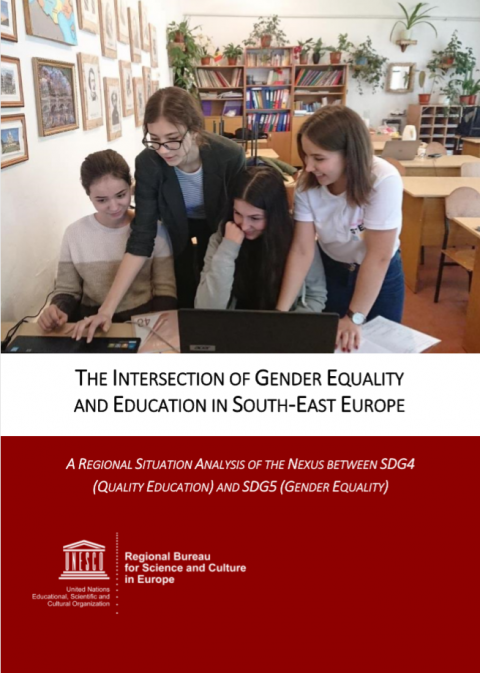 The Intersection of gender equality and education in South-East Europe: a regional situation analysis of the Nexus between SDG4 (Quality Education) and SDG5 (Gender Equality) 발행 연도: 2019 단체 저자: UNESCO Venice This report focuses on highlighting both progress and persistent challenges.It does so by analyzing the current situation of gender equality in education, including gender parity in participation, education quality, and outcomes, aswell as issues related to gender equality in which education plays an important role, suchas policies that disproportionately affect women, early and unintended pregnancy, child marriage, and human trafficking. It relies on the most recent available data from the UNESCO Institute of Statistics (UIS), as well as supplemental data including from UNICEF, UN Women, and theOrganization for Economic Cooperation and Development(OECD), to descriptively analyze the rates for females and males, considering also progress over the last decade, and to identify where progress in gender equality has been made and whereactions are needed to ensure gender equality in and through education.
 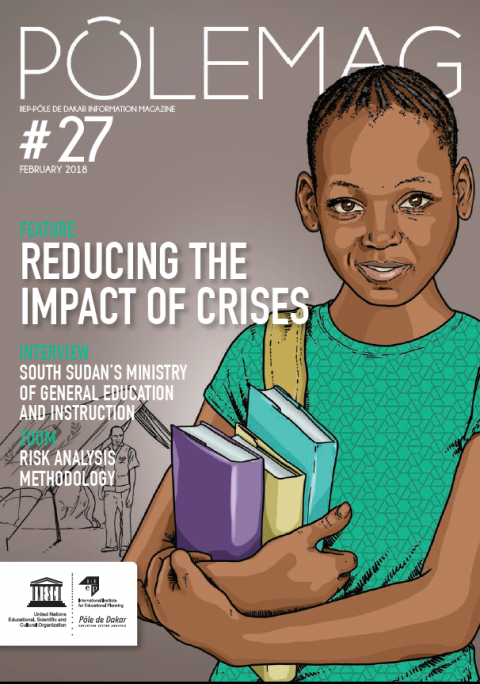 PôleMag n° 27: IIEP Pôle de Dakar information magazine, February 2018 발행 연도: 2018 단체 저자: UNESCO IIEP Regional Office for Africa Strengthening the resilience of education systems through planning that is adapted for crisis situations is a priority for IIEP. Together with our main partners, the institute has developed strategic orientations and tools dedicated to educational planning that is adapted to crisis situations. Based on our experience on this theme in Africa, we are also working with UNICEF to develop a new methodology to analyse risks and vulnerabilities. Mitigating the impact of crises calls for strengthening relationships with partners. Planning adapted to vulnerabilities should facilitate dialogue between development and humanitarian actors so that intervention plans are coordinated and aligned with government priorities. A dollar invested in risk reduction could save up to seven dollars in rebuilding costs. Taking the risks into account in the analysis and planning of education systems is therefore a wise investment. PôleMag: la lettre d'information du Pôle de Dakar 발행 연도: 2018 단체 저자: UNESCO IIEP Regional Office for Africa Crise politique, crise sanitaire, crise climatique, les systèmes éducatifs sont rarement suffisamment préparés à faire face aux situations d’urgence.Et si la fréquence des menaces est inconnue, les effets sont généralement dévastateurs pour l’école, conduisant à une rupture des apprentissages, voire à l’abandon scolaire pur et simple. Dans le monde, 75 millions d’enfants vivant dans un pays affecté par une crise ont besoin d’un soutien éducatif1.Comment faire face aux crises ? Comment améliorer les capacités des systèmes à réduire leurs impacts ? Renforcer la résilience des systèmes éducatifs par une planification adaptée aux situations de crise est une priorité de l’IIPE. Notre institut a développé, avec ses principaux partenaires, des orientations stratégiques et des outils dédiés à la planification de l’éducation adaptés aux situations de crises. Forts de notre expérience sur cette thématique en Afrique, nous travaillons également en collaboration avec l’UNICEF au développement d’une nouvelle méthodologie dédiée à l’analyse des risques et vulnérabilités.Atténuer l’impact des crises appelle à renforcer les relations avec les partenaires. Une planification adaptée aux vulnérabilités doit faciliter le dialogue entre les acteurs du développement et ceux de l’humanitaire afin que les plans d’interventions soient coordonnés et alignés sur les priorités gouvernementales des plans sectoriels. Un dollar investi dans la réduction des risques pourrait épargner jusqu’à 7 dollars en coût de reconstruction. Prendre en compte les risques dans l’analyse et la planification des systèmes éducatifs est donc un investissement judicieux.
  The Mandate of UNESCO for Peace in the era of 「The Rise of Exclusionism」 발행 연도: 2019 저자: 한경구 | 유성상 | 성지은 | 조동준 | 강인욱 | 김성해 | 루츠 묄러 | 최동주 단체 저자: 대한민국 외교부 | Korean National Commission for UNESCO Multilateralism has gradually been losing ground in the international community recently, owing to rapid changes in ideology, exemplified by the America First policy, Brexit, and the rise of many right wing parties. The growth of such ideologies in the hearts and minds of people, implies that diplomacy, a form of high politics between government bureaucrats, is no longer sufficient to guard the current order.To respond to this challenge, the United Nations, the greatest symbol of postwar multilateralism, has set the reaffirmation of the UN‟s values worldwide as one of its priorities for 2019. UNESCO has a leading role to play in leading this effort, as the UN specialist organization mandated to build the defenses of peace in the minds of men and women through intellectual cooperation in the field of education, science, and culture. The aim of this session is to discuss various ways in which UNESCO can help to heal the divisions in people‟s thinking and contribute to peace-building in the current global context.