
자료
세계시민교육에 대한 이해를 넓히고 연구, 옹호 활동, 교수, 학습 등을 향상시킬 수 있는 다양하고 유용한 자료를 찾아보세요.
1,727 건의 결과가 검색되었습니다
 2014 课程标准 品格与公民教育 小学 발행 연도: 2014 단체 저자: Singapore. Ministry of Education. Student Development Curriculum Division Character and Citizenship Education (CCE) has always been at the heart of Singapore's education system. In CCE, students learn to be responsible to family and community; and understand their roles in shaping the future of nation. The emerging trends and global developments that impact the society, such as social changes, globalisation and technological advancements are taken into consideration in the development of the CCE curriculum.The goal of CCE is to inculcate values and build competencies in students to develop them to be good individuals and useful citizens. Since 1959, various key programmes have been introduced to inculcate values, habits, competencies and skills in students. Some of these programmes include Civics and Moral Education (CME, 1992), National Education (NE, 1997), Social and Emotional Learning (SEL, 2005), and learning experiences such as Co-Curricular Activities (CCA). The new CCE curriculum shifts focus from programmes to a common purpose. The desired outcomes of CCE are aligned to the Key Stage Outcomes (KSOs) and Desired Outcomes of Education (DOE). CCE is central to the Framework for 21st Century Competencies and Student Outcomes. It emphasizes the interconnectedness of the core values, social and emotional competencies and civic literacy, global awareness and cross-cultural skills that are critical for character and citizenship development of students. SUKATAN PELAJARAN 2014 PENDIDIKAN PERWATAKAN DAN KEWARGANEGARAAN SEKOLAH RENDAH 발행 연도: 2014 단체 저자: Singapore. Ministry of Education. Student Development Curriculum Division Character and Citizenship Education (CCE) has always been at the heart of Singapore's education system. In CCE, students learn to be responsible to family and community; and understand their roles in shaping the future of nation. The emerging trends and global developments that impact the society, such as social changes, globalisation and technological advancements are taken into consideration in the development of the CCE curriculum.The goal of CCE is to inculcate values and build competencies in students to develop them to be good individuals and useful citizens. Since 1959, various key programmes have been introduced to inculcate values, habits, competencies and skills in students. Some of these programmes include Civics and Moral Education (CME, 1992), National Education (NE, 1997), Social and Emotional Learning (SEL, 2005), and learning experiences such as Co-Curricular Activities (CCA). The new CCE curriculum shifts focus from programmes to a common purpose. The desired outcomes of CCE are aligned to the Key Stage Outcomes (KSOs) and Desired Outcomes of Education (DOE). CCE is central to the Framework for 21st Century Competencies and Student Outcomes. It emphasizes the interconnectedness of the core values, social and emotional competencies and civic literacy, global awareness and cross-cultural skills that are critical for character and citizenship development of students. 2014 syllabus: character and citizenship education: primary 발행 연도: 2014 단체 저자: Singapore. Ministry of Education. Student Development Curriculum Division Character and Citizenship Education (CCE) has always been at the heart of Singapore's education system. In CCE, students learn to be responsible to family and community; and understand their roles in shaping the future of nation. The emerging trends and global developments that impact the society, such as social changes, globalisation and technological advancements are taken into consideration in the development of the CCE curriculum.The goal of CCE is to inculcate values and build competencies in students to develop them to be good individuals and useful citizens. Since 1959, various key programmes have been introduced to inculcate values, habits, competencies and skills in students. Some of these programmes include Civics and Moral Education (CME, 1992), National Education (NE, 1997), Social and Emotional Learning (SEL, 2005), and learning experiences such as Co-Curricular Activities (CCA). The new CCE curriculum shifts focus from programmes to a common purpose. The desired outcomes of CCE are aligned to the Key Stage Outcomes (KSOs) and Desired Outcomes of Education (DOE). CCE is central to the Framework for 21st Century Competencies and Student Outcomes. It emphasizes the interconnectedness of the core values, social and emotional competencies and civic literacy, global awareness and cross-cultural skills that are critical for character and citizenship development of students. Repositioning and reconceptualizing the curriculum for the effective realization of Sustainable Development Goal Four, for holistic development and sustainable ways of living 발행 연도: 2015 단체 저자: UNESCO International Bureau of Education (IBE) The purpose of this discussion paper is two-fold, it is to reposition curriculum at the center of the national and the global development dialogue and to highlight its power to give effect to national and to global aspirational statements on the role of education in holistic development. When well designed and effectively enacted, curriculum determines the quality, inclusiveness and development-relevance of education.Second, is to reconceptualize curriculum as a fundamental force of integration of education systems and as an operational tool for giving effect to policies on lifelong learning. Curriculum leads all core aspects of education that are known to determine quality, inclusion, and relevance such as content, learning, teaching, assessment and the teaching and learning environments among others. Its horizontal and vertical articulation, as well as its articulation across learning settings is what gives effect to lifelong learning policies.This paper therefore seeks to reposition curriculum as an indispensable tool for giving effect to SDG Goal 4. Repositionnement et reconceptualiser le programme d'études pour l'utilisation Efficace du Développement Durable Objectif Quatre, pour le développement holistique et modes de vie durables 발행 연도: 2015 단체 저자: UNESCO International Bureau of Education (IBE) Le but de ce document de travail est double, il est de repositionner curriculum au centre national et le dialogue mondial du développement et de mettre en évidence son pouvoir pour donner effet aux nationaux et aux états ambitieux mondiaux sur le rôle de l'éducation dans le développement holistique . Quand bien conçu et efficacement adopté, le curriculum détermine la qualité, l'inclusion et le développement-pertinence de l'éducation. Deuxièmement, il faut reconceptualiser programme comme une force fondamentale de l'intégration des systèmes d'éducation et comme un outil opérationnel pour donner effet aux politiques sur l'apprentissage continu. Curriculum conduit tous les aspects essentiels de l'éducation qui sont connus pour déterminer la qualité, l'inclusion et la pertinence tels que le contenu, l'apprentissage, l'enseignement, l'évaluation et l'enseignement et des environnements d'apprentissage entre autres. Son articulation horizontale et verticale, ainsi que son articulation dans tous les milieux d'apprentissage est ce qui donne effet aux politiques d'apprentissage continu. Ce document vise donc à repositionner programme comme un outil indispensable pour donner effet à ODD Objectif 4.
 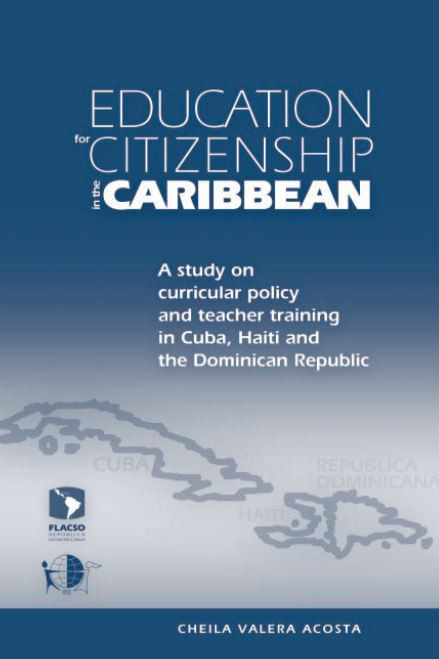 Education for Citizenship in the Caribbean: A Study on Curricular Policy and Teacher Training in Cuba, Haiti and the Dominican Republic 발행 연도: 2005 저자: Cheila Valera Acosta 단체 저자: UNESCO International Bureau of Education (IBE) | Facultad Latinoamericana de Ciencias Sociales (FLACSO) This study aims to describe teacher training and curricular policy for the primary and secondary levels in relation to education for citizenship in Cuba, Haiti and the Dominican Republic and make practical recommendations for improvements in the quality of design and implementation of these initiatives in the three countries.The following are some of the conclusions: At the start of the twenty-first century, Cuba, the Dominican Republic and Haiti share a context in which the processes of democratization have encountered obstacles connected with their colonial heritage, the hegemony of the European nations and the influence and direct interference from United States geopolitical, economic and cultural power.These democracies have developed from long and violent political dictatorships, which established authoritarian and restrictive institutional mechanisms for the day-to-day administration of public affairs. Public policies on education for citizenship should therefore take account of the contradictions faced by the democratizing processes and of the complex cultural impact on the development of social identities brought about by the phenomenon of mass migration.These issues and the tensions arising from social and economic inequalities are inadequately addressed in the three countries’ curricula and teacher training policies.There are legal bases integrating education for citizenship as part of the State’s educational responsibilities in all three countries. Education for citizenship is intended as a specific subject for the primary and secondary school levels.Educational proposals are required that can provide the population with greater understanding of community life, skills for confronting traditional ideological indoctrination, and for learning to live together while recognizing differences, and for helping to educate the imagination for a broader view of human affairs and our responsibilities with regard to them.The actors involved in teacher training in the three countries consider it a key tool for the democratic development of societies. Their main criticisms indicate that there is a need to improve the contents and the approaches to teacher training so that they can respond to the current challenges of these societies from an interdisciplinary standpoint consistent with the stated educational goals. Education à la citoyenneté dans les Caraïbes: une étude sur la politique des programmes et la formation des enseignants à Cuba, en Haïti et en République Dominicaine 발행 연도: 2005 저자: Cheila Valera Acosta 단체 저자: UNESCO International Bureau of Education (IBE) | Facultad Latinoamericana de Ciencias Sociales (FLACSO) Cette étude vise à décrire la formation des enseignants et de la politique des programmes d'études pour les niveaux primaire et secondaire par rapport à l'éducation à la citoyenneté à Cuba, en Haïti et en République dominicaine et faire des recommandations pratiques pour l'amélioration de la qualité de la conception et la mise en œuvre de ces initiatives dans les trois pays .Voici quelques-unes des conclusions:Au début du XXIe siècle, Cuba, la République Dominicaine et Haïti partagent un contexte dans lequel les processus de démocratisation ont rencontré des obstacles liés à leur héritage colonial, l'hégémonie des nations européennes et l'influence et l'ingérence directe de Etats-Unis puissance géopolitique, économique et culturelle.Ces démocraties ont développé des dictatures politiques longues et violentes, qui ont établi des mécanismes institutionnels autoritaires et contraignantes pour l'administration des affaires publiques au jour le jour. Les politiques publiques en matière d'éducation à la citoyenneté doivent donc tenir compte des contradictions rencontrées par les processus de démocratisation et de l'impact culturel complexe sur le développement des identités sociales provoquées par le phénomène de la migration de masse.Ces questions et les tensions résultant des inégalités sociales et économiques ne sont pas suffisamment abordés dans les programmes scolaires et la formation des enseignants des politiques des trois pays.Il y a des bases juridiques intégrant l'éducation à la citoyenneté dans le cadre des responsabilités éducatives de l'Etat dans les trois pays. Education à la citoyenneté est conçue comme un sujet spécifique pour les niveaux primaire et secondaire.propositions pédagogiques sont nécessaires qui peuvent fournir à la population avec une plus grande compréhension de la vie communautaire, les compétences pour faire face à l'endoctrinement idéologique traditionnelle, et pour apprendre à vivre ensemble, tout en reconnaissant les différences, et pour aider à éduquer l'imagination pour une vision plus large des affaires humaines et nos responsabilités en ce qui concerne eux.Les acteurs impliqués dans la formation des enseignants dans les trois pays considèrent comme un outil clé pour le développement démocratique des sociétés. Leurs principales critiques indiquent qu'il ya un besoin d'améliorer le contenu et les approches de la formation des enseignants afin qu'ils puissent répondre aux défis actuels de ces sociétés à partir d'un point de vue interdisciplinaire cohérent avec les objectifs éducatifs énoncés Educación para la ciudadanía en el Caribe: estudio sobre política curricular y de formación docente en Cuba, Haití y República Dominicana 발행 연도: 2005 저자: Cheila Valera Acosta 단체 저자: UNESCO International Bureau of Education (IBE) | Facultad Latinoamericana de Ciencias Sociales (FLACSO) Este documento describe la política curricular de los niveles primarios y secundarios así como la formación docente relacionada con educación para la ciudadanía en Cuba, Haití y República Dominicana con el propósito de realizar recomendaciones prácticas que puedan mejorar la calidad en el diseño e implementación de estas iniciativas en los tres países seleccionados.
  Ten Clues for Rethinking Curriculum (In-Progress Reflection; No. 42, 2021) 발행 연도: 2021 저자: Renato Opertti 단체 저자: UNESCO International Bureau of Education (IBE) This discussion document highlights the urgency of rethinking curriculum in light of reinforcing the commitments of the Education 2030 Agenda on learning, disruptive systemic worldwide societal changes, and crucially, the profound transformation of education and education systems post Covid-19. Curriculum is always at the core of giving effect to social aspirations and ideals on the why, what, how, when, and where of teaching, learning, and assessing. We propose a series of 10 interconnected clues to deepen on the systemic and holistic understanding of curriculum as contributing to lay foundations for a better, sustainable and fair future. These clues are: understanding the new generations; combatting factors related to vulnerability; reinforcing understanding between school and families; deepening glo-local education; enhancing the focus on the person; promoting synergies among values; valuing diversity; focusing on education that enhances freedom; moving toward hybrid modes of education; and inspiring affection for educators.
  General Framework of Curriculum Standards: National Education and Social Studies 발행 연도: 2014 저자: Khalid Abdaslam 단체 저자: United Arab Emirates. Ministry of Education The file is a reference document for the general framework of curriculum standards in national education and social studies in the United Arab Emirates. The file outlines study plans for social studies subjects, learning outcomes, performance standards, and general guidelines for planning. The file ends with a set of lesson design templates.