
자료
세계시민교육에 대한 이해를 넓히고 연구, 옹호 활동, 교수, 학습 등을 향상시킬 수 있는 다양하고 유용한 자료를 찾아보세요.
3,433 건의 결과가 검색되었습니다
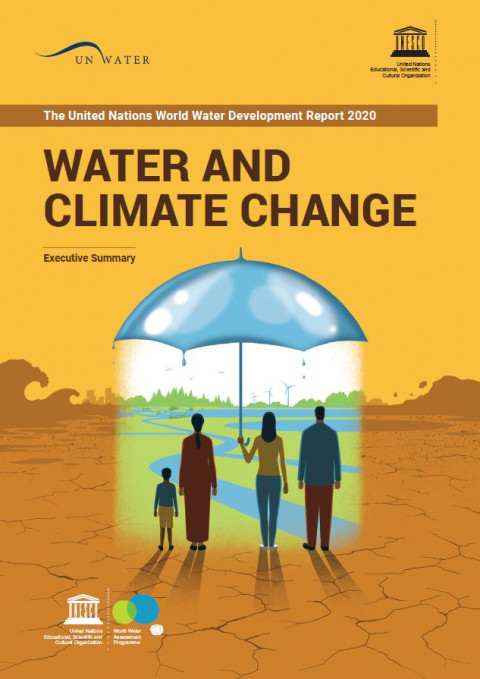 [Résumé] Rapport mondial des Nations Unies sur la mise en valeur des ressources en eau 2020: l'eau et les changements climatiques; résumé 발행 연도: 2020 단체 저자: UNESCO World Water Assessment Programme (WWAP) L’édition 2020 du Rapport mondial sur la mise en valeur des ressources en eau (WWDR) montre les liens essentiels entre l’eau et les changements climatiques dans le cadre plus large du programme de développement durable. Le rapport n’est pas un examen purement technique des effets des changements climatiques sur le cycle de l’eau. Il s’agit plutôt d’énoncer les difficultés, les possibilités et les réponses potentielles aux changements climatiques – adaptation, atténuation et résilience renforcée – pouvant être abordées en améliorant la gestion et l’utilisation des ressources en eau et en offrant des services d’approvisionnement en eau et d’assainissement pour tous et de manière durable. Ce faisant, le rapport s’adresse à deux des plus graves crises que le monde continuera de subir au cours des prochaines décennies : la sécurité (ou insécurité) de l’eau et les changements climatiques. [Резюме] Всемирный доклад Организации Объединенных Наций о состоянии водных ресурсов, 2020 г.: водные ресурсы и изменение климата, Рабочее резюме 발행 연도: 2020 단체 저자: UNESCO World Water Assessment Programme (WWAP) В Докладе Организации Объединенных Наций о состоянии водных ресурсов мира (WWDR) за 2020 год рассматриваются критически важные связи между водными ресурсами и изменением климата в контексте более широкой повестки дня в области устойчивого развития. Отчет не предназначен для чисто технического изучения воздействия изменения климата на гидрологический цикл. Скорее, в докладе основное внимание уделяется проблемам, возможностям и потенциальным ответным мерам на изменение климата — с точки зрения адаптации, смягчения последствий и повышения устойчивости, — которые можно решить путем улучшения управления и использования водных ресурсов при обеспечении услуг водоснабжения и санитарии для всех. устойчивым образом. При этом в отчете рассматриваются два наиболее серьезных кризиса, с которыми мир будет сталкиваться в течение следующих нескольких десятилетий: водная (не)безопасность и изменение климата.
 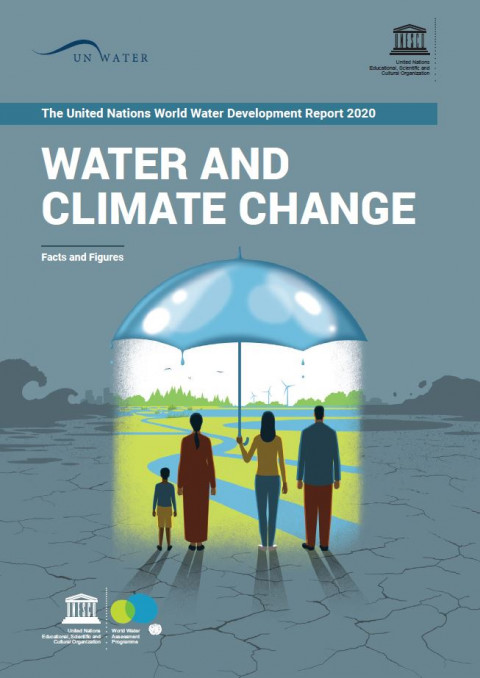 [Facts and Figures] The United Nations World Water Development Report 2020: Water and Climate Change; Facts and Figures 발행 연도: 2020 저자: Engin Koncagül | Michael Tran | Richard Connor 단체 저자: UNESCO World Water Assessment Programme (WWAP) Since the mid-20th century, changes in the intensity and frequency of extreme weather and climate events have been observed, including a decrease in cold temperature extremes, an increase in warm temperature extremes, an increase in extremely high sea levels and an increase in the number of heavy precipitation events in a number of regions (Min et al., 2011).Climate projections indicate with high confidence that extreme precipitation events will become more intense and frequent in many regions, but also that heatwaves will occur more often and last longer. The former will increase global flood risk (Hirabayashi et al., 2013), while the latter is expected to make droughts more intense (Trenberth et al., 2014). These risks are unevenly distributed geographically, and are generally larger for vulnerable people and communities in countries at all levels of development (IPCC, 2014a). Figure 1. Global water withdrawals throughout the previous centuryFigure 2. Climate change scenario trends in water availabilityFigure 3. Annual baseline water stressFigure 4. Seasonal variabilityFigure 5. World weather-related natural catastrophes by peril, 1980–2018Figure 6. Spatial distribution of water-related disasters (droughts, floods, landslides and storms), 2001–2018Figure 7. Spatial distribution of floods, 2001–2018Figure 8. Spatial distribution of droughts, 2001–2018Figure 9. Electricity consumption in the water sector by process, 2014–2040Figure 10. Number of people living under water stress under the Baseline Scenario [Faits et chiffres] Rapport mondial des Nations Unies sur la mise en valeur des ressources en eau 2020: l'eau et les changements climatiques, faits et chiffres 발행 연도: 2020 저자: Engin Koncagül | Michael Tran | Richard Connor 단체 저자: UNESCO World Water Assessment Programme (WWAP) Depuis le milieu du 20e siècle, on a observé des changements dans l’intensité et la fréquence des phénomènes météorologiques et climatiques extrêmes, notamment une diminution des extrêmes de température froide et une augmentation des extrêmes de température chaude, des niveaux de mer extrêmement élevés et du nombre de fortes précipitations dans un certain nombre de régions (Min et al., 2011).Les projections climatiques indiquent avec une grande confiance que les précipitations extrêmes deviendront plus intenses et plus fréquentes dans de nombreuses régions, mais aussi que les vagues de chaleur seront plus fréquentes et dureront plus longtemps. Les premières augmenteront le risque d’inondation au niveau mondiale (Hirabayashi et al., 2013), tandis que les dernières devraient rendre les sécheresses plus intenses (Trenberth et al., 2014). Ces risques sont répartis géographiquement de façon inégale et ils sont généralement plus importants pour les personnes et les communautés vulnérables dans les pays à tous les niveaux de développement (GIEC, 2014a). Figure 1. Préèements d’eau dans le monde au cours du 20e sièleFigure 2. Tendances des scéarios de changement climatique en matièe de disponibilitéde l’eauFigure 3. Stress hydrique annuel de référenceFigure 4. VariabilitésaisonnièeFigure 5. Catastrophes naturelles mondiales liées au climat, par risque et par nombre d’événements pertinents,1980–2018Figure 6. Réartition spatiale des catastrophes liés àl’eau (séheresses, inondations, glissements de terrain et tempêes) 2001–2018Figure 7. Répartition spatiale des inondations, 2001–2018Figure 8. Répartition spatiale de sécheresses, 2001–2018Figure 9. Consommation d’électricité dans le secteur de l’eau, par procédé, 2014–2040Figure 10. Nombre de personnes en situation de stress hydrique selon le scénario de référence
  The Climate Dictionary: Speak Climate Fluently 발행 연도: 2023 단체 저자: United Nations Development Programme (UNDP) The Climate Dictionary is a guide to understanding climate change. It aims to bridge the gap between complex scientific jargon and the general public, making climate concepts accessible and understandable to people of different backgrounds and levels of expertise. It is based on the belief that empowering people with knowledge is crucial to fostering collective action and responsibility in the face of climate change. Using a creative combination of engaging images, concise explanations and engaging storytelling, The Climate Dictionary effectively communicates complex climate concepts in a visual and easy-to-consume way. El diccionario climático: Una guía práctica para el cambio climático 발행 연도: 2023 단체 저자: United Nations Development Programme (UNDP) El Diccionario Climático es una guía para entender el cambio climático. El objetivo de la misma es tender un puente entre la compleja jerga científica y el público en general, haciendo que los conceptos sobre el clima sean accesibles y comprensibles para personas de distintos orígenes y niveles de especialización. Se basa en la creencia de que dotar a la gente de conocimientos es crucial para fomentar la acción y la responsabilidad colectiva frente al cambio climático. Utilizando una combinación creativa de imágenes atractivas, explicaciones concisas y una narración interesante, El Diccionario Climático comunica con eficacia conceptos complejos sobre el clima de una manera visual y fácil de consumir.
 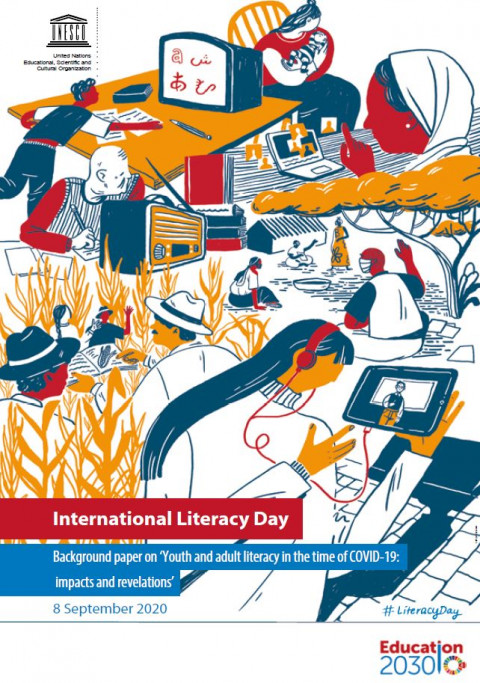 International Literacy Day: Background Paper on 'Youth and Adult Literacy in the Time of COVID-19; Impacts and Revelations' 발행 연도: 2020 단체 저자: UNESCO Specially prepared on the occasion of International Literacy Day 2020, this background paper illustrates the impact of the COVID-19 crisis on youth and adult literacy, based on the limited information that is currently available. It provides five regional snapshots and identifies preliminary lessons learned thus far, while aiming to inspire continued reflection and subsequent action. It also makes the case for the ongoing importance of advancing youth and adult literacy, a priority that was already neglected even before the pandemic but which deserves all our attention. ILD 2020 thus seeks to trigger reimaginations of literacy teaching and learning in the COVID-19 crisis and beyond, with a particular focus on the role of educators.
  In the Age of Lifelong Education, a Study on the Meaning of Teachers: Focused on the Plato’s Thought (The Journal of Korean Teacher Education; Vol. 36, No. 3) 발행 연도: 2019 저자: 허지숙 단체 저자: 한국교원교육학회 The purpose of this study is to explore the essential meaning and role of teachers through Plato's educational thought. For this purpose, based on the four principles of UNESCO Lifelong Education, we examine how changes in and out of school and the role of teachers are required. Then, after reviewing Sophist, Socrates, Plato's Philosopher, and the metaphors of Cave from Plato's point of view, it reveals what meaning and value of the teacher image presented by Plato in today's lifelong education.Research shows that the role of teachers in the age of lifelong education is becoming more and more important, but this does not mean simply changing roles as guides and advisors. the changed face of the teacher is an ethical trainer to enrich their lives from a knowledge transferer, a collaborative learner through conversations and discussions outside the teacher-student relationship, a practitioner of inclusive teaching among learning alienation, learning inequality, a teacher as a lifelong learner who loves wisdom. This suggests implications for teachers 'new possibilities and meanings beyond the existing teacher' s role in the fall of the ruling right and the right of learning. 평생교육시대, 교사의 의미 탐색: 플라톤의 교육사상을 중심으로 (한국교원교육연구 제36권 제3호) 발행 연도: 2019 저자: JiSuk Huh 단체 저자: Korean Society for the Study of Teacher Education 본 연구는 평생교육시대의 변화에 부합하는 교사의 모습에 대한 재탐색이 필요하다는 문제의식 하에, 플라톤의 교육사상을 중심으로 교사의 본질적 의미와 역할에 대해 탐구하는데 목적이 있다. 이를 위해 먼저 UNESCO 평생교육의 네 가지 원리를 근거로 학교의 안팎의 변화와 교사의 역할이 어떻게 요구되고 있는지를 고찰하였다. 다음으로 플라톤의 관점에서 바라본 소피스트, 소크라테스, 플라톤의 철인, 동굴의 비유에 대해 살펴본 후, 플라톤이 제시한 교사상이 오늘날 평생교육시대에서 어떤 의미와 가치가 있는지 밝히고, 그 속에 내포된 교사로서의 역할과 의미를 구체적으로 탐색하였다.연구결과, 평생교육시대의 교사의 역할은 점점 더 중요해지고 있으나 이는 단순히 안내자, 조언자로서의 단순한 역할 변화를 의미하는 것이 아니다. 평생교육시대 교사의 변화된 모습은 지식전달자로부터 삶을 풍성하게 살아가기 위한 윤리적 훈련가로, 교사-학생의 관계에서 벗어나 대화와 토론을 통한 공동의 학습자로, 학습소외, 학습 불평등 가운데 포용적 교수의 실천가로, 열망을 가지고 끊임없이 배우는 생성적 존재로 모색된다. 이를 통해 오늘날 추락하는 교권과 학습권의 자리다툼 가운데 기존 교사의 역할을 넘어 교사가 지닌 새로운 가능성과 의미에 대해 시사점을 제안하였다.
  Teaching Students How to Learn: Setting the Stage for Lifelong Learning (Educational Practices Series No. 33) 발행 연도: 2021 저자: Stella Vosniadou | Michael J. Lawson | Helen Stephenson | Erin Bodner 단체 저자: UNESCO International Bureau of Education (IBE) | International Academy of Education In this Teaching How to Learn booklet, teachers can find information about some of the cognitive, metacognitive, emotional, and motivational capabilities that characterise self-regulated learners, and some of the actions that teachers can take to promote self-regulated learning in their students. These include giving students time to engage in constructive tasks independently or in collaboration with their peers and providing them with the knowledge and strategies that they can use to manage their learning and control their motivation and emotions while they complete these tasks successfully.