
자료
세계시민교육에 대한 이해를 넓히고 연구, 옹호 활동, 교수, 학습 등을 향상시킬 수 있는 다양하고 유용한 자료를 찾아보세요.
3,401 건의 결과가 검색되었습니다
 Measuring SDG 4: how PIRLS can help; how the Progress in International Reading Literacy Study (PIRLS) helps monitor Sustainable Development Goal 4 targets 발행 연도: 2017 단체 저자: International Association for the Evaluation of Educational Achievement (IEA) This booklet has been prepared for the international release of the 2016 Progress in International Reading Literacy Study (PIRLS) and ePIRLS at UNESCO. PIRLS is one of the International Association for the Evaluation of Educational Achievement’s (IEA) core largescale international assessment projects, successfully administered every five years since 2001. It provides internationally comparative data on how well children read by assessing grade 4 students’ reading achievement and offers policyrelevant information for improving teaching and learning. Initiated in 2016, ePIRLS is an extension of PIRLS that monitors how well grade 4 students read, interpret, and critique online information in an environment that looks and feels like the Internet.
  Partnering for prosperity: education for green and inclusive growth; Global education monitoring report, 2016; summary 발행 연도: 2017 저자: Sachs, Jeffrey D 단체 저자: UNESCO. Director-General, 2009-2017 (Bokova, I.G.) This Report makes three messages starkly clear. Firstly, the urgent need for new approaches. On current trends only 70% of children in low income countries will complete primary school in 2030, a goal that should have been achieved in 2015. We need the political will, the policies, the innovation and the resources to buck this trend. Secondly, if we are serious about SDG 4, we must act with a sense of heightened urgency, and with long-term commitment. Failure to do so will not only adversely affect education but will hamper progress towards each and every development goal: poverty reduction, hunger eradication, improved health, gender equality and women’s empowerment, sustainable production and consumption, resilient cities, and more equal and inclusive societies. Lastly, we must fundamentally change the way we think about education and its role in human well-being and global development. Now, more than ever, education has a responsibility to foster the right type of skills, attitudes and behavior that will lead to sustainable and inclusive growth. Mesurer l'ODD 4: la contribution du PIRLS, comment le Programme international de recherche en lecture scolaire (PIRLS) peut aider au suivi des cibles de l'Objectif de développement durable 4 발행 연도: 2017 단체 저자: International Association for the Evaluation of Educational Achievement (IEA) Cette brochure a été préparée en vue de la présentation internationale du Programme international de recherche en lecture scolaire (PIRLS) et d’ePIRLS 2016 à l’UNESCO. Le PIRLS est l’un des principaux projets d’étude internationale à grande échelle de l’Association internationale pour l’évaluation des acquis scolaires (International Association for the Evaluation of Educational Achievement, IEA), mené avec succès tous les cinq ans depuis 2001. Cette étude fournit des données comparatives internationales sur le niveau d’alphabétisation des enfants en évaluant les performances en lecture des élèves en 4ème année de scolarité, et livre des informations d’intérêt politique destinées à améliorer l’enseignement et l’apprentissage. De plus, inaugurée en 2016, ePIRLS est une extension du PIRLS visant à déterminer la façon dont les élèves en 4ème année de scolarité lisent, interprètent, et critiquent les informations en ligne dans un environnement semblable à celui d’Internet.
  Devlop’ Le journal de Louvain Coopération 8 - MARS 2019 발행 연도: 2019 단체 저자: Louvain Coopération Dans ce numéro, nous partirons de Louvain-la-Neuve avec le plaidoyer agro-écologique de Philippe Baret, doyen de la faculté d’agronomie de l’UCLouvain ; nous nous envolerons ensuite vers le Cambodge où académiques et acteurs de terrains soutiennent des paysans cambodgiens dans la réappropriation de leurs activités ; nous transiterons chez nos partenaires boliviens, dans les quartiers marginalisés d’El Alto, qui eux aussi lancent des initiatives d’agriculture urbaine pour mieux atterrir en République démocratique du Congo où place est faite à l’agro-écologie. Finalement, nous reviendrons à Louvain-la-Neuve où les Ingénieux-Sud réfléchissent avec leurs contreparties locales à mettre en place des solutions intelligentes et adaptées aux problèmes agricoles rencontrés. Nous espérons qu’à la lecture de notre journal vous serez convaincus, comme nous, que tous ensemble, producteurs, consommateurs, gouvernements, entreprises privées, associations, face aux défis agricoles, nous sommes capables de transformer des risques en opportunités.
  Devlop’ Le journal de Louvain Coopération 9 - SEPTEMBRE 2019 발행 연도: 2019 단체 저자: Louvain Coopération Le renforcement des capacites de nos partenaires locaux est pour nous un objectif crucial et un theme transversal a tous les projets de Louvain Cooperation, ceci dans le but d’augmenter l’autonomie et la resilience des populations. Alors, oui, il n’est pas evident de travailler dans le contexte socio-politico-economique de la RDC et, oui, nous devons parfois faire face a des echecs lorsque des evenements que nous ne pouvons controler surviennent. Mais nous pouvons aussi constater chaque jour l’utilite de nos actions et la difference concrete qu’elles peuvent faire pour les personnes qui en beneficient. Voila pourquoi nous croyons en notre travail et nous voulons continuer d’agir en RDC, malgre les difficultes rencontrees. Ce Devlop’ vous invite aujourd’hui a decouvrir ces beaux projets et a rencontrer celles et ceux qui les vivent et qui les font vivre au quotidien.
  Intégrer le genre dans la coopération non gouvernementale 발행 연도: 2019 단체 저자: Solidarité mondiale Solidarité Mondiale place l’attention et la prise en compte du genre au cœur de ses pratiques et ses programmes. Ainsi, notre organisation s’emploie à créer une culture institutionnelle sensible au genre, tant au sein de notre équipe que dans la coopération avec nos partenaires d’ici et d’ailleurs. En effet, l’égalité des genres est essentielle pour garantir le caractère durable et inclusif de la coopération. Tant au niveau des droits du travail que de la protection sociale, les femmes se trouvent souvent dans les positions les plus précaires. C’est pourquoi Solidarité Mondiale s’est engagée pour l’égalité des genres au sein de la coopération non gouvernementale et a signé la "Charte Genre" le 29 novembre 2018. La "Charte Genre" a été signée par 56 organisations qui se sont engagées à soutenir un élan positif en leur sein autour de l’égalité et à mettre en place les actions nécessaires pour que les intentions se matérialisent. Elle inclut l’égalité des sexes (entre hommes et femmes) ainsi que la reconnaissance des droits des personnes LGBQTI (lesbiennes, gays, bisexuelles, queer, transgenres, intersexuées). Toutefois, comme nous vous l’expliquions en 2018, cette charte est issue d’un processus plus large, auquel Solidarité Mondiale a pris activement part, visant notamment à créer un guide d’inspiration. Bonne nouvelle, depuis peu, ce guide d’inspiration « Intégrer le genre dans la coopération non gouvernementale » est finalisé et accessible à tou.te.s ! Celui-ci regroupe des bonnes pratiques et des pistes d’intégration du genre dans les différentes activités propres à l’Éducation à la citoyenneté mondiale et solidaire (ECMS) en Belgique (communication, plaidoyer, mobilisation, etc.). Il a été conçu à l’aide d’un processus participatif et piloté par les 5 structures fédératives (11.11.11, ACODEV, CNCD-11.11.11, ngo-federatie et FIABEL) accompagnées du Monde selon les femmes.
 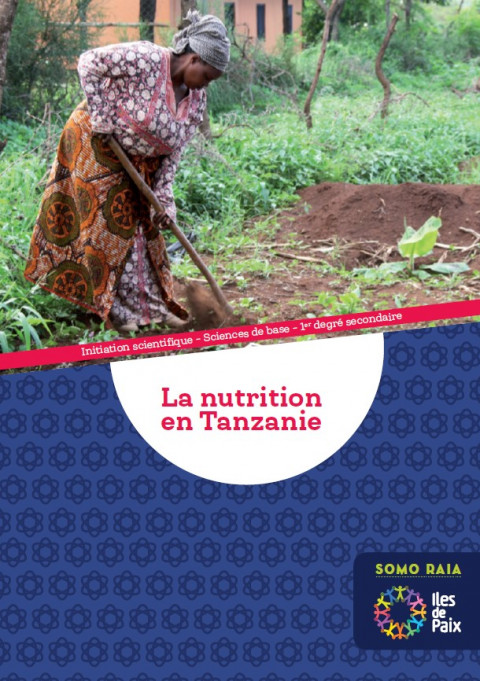 La nutrition en Tanzanie 발행 연도: 2018 단체 저자: Îles de Paix L’objectif de ce dossier est d’amener l’élève à appréhender la problématique de la malnutrition et ses conséquences dans un pays en voie de développement ainsi que les moyens mis en place par une ONG pour y remédier. En parallèle, l’élève pourra découvrir ou revoir les principes de base d’une alimentation saine et réfléchir à ses habitudes alimentaires. Au travers des activités, l’élève devra mettre en œuvre des savoir-faire, tels que la lecture et l’analyse de graphiques et de tableaux, la réalisation de graphiques, l’analyse de textes et de divers types de documents. Une partie documentaire, destinée à l’enseignant, permet d’approfondir la thématique.
 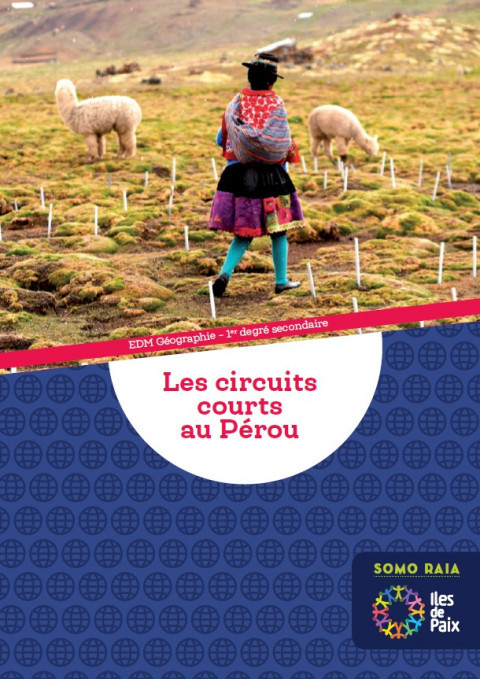 Les circuits courts au Pérou 발행 연도: 2018 단체 저자: Îles de Paix Conçu en vue de s’intégrer dans la formation géographique et historique des étudiants, son objectif est que chaque élève puisse découvrir les enjeux liés au commerce dans un pays lointain. Cette découverte des circuits courts au Pérou se fait par le biais de 3 activités. L’enseignant peut y trouver des exercices variés, permettant de travailler plusieurs compétences. Au travers des activités, l’élève devra mettre en œuvre des savoir-faire, tels que la lecture de cartes, l’identification de documents et l’organisation d’informations, en vue d’acquérir de nouveaux savoirs et de développer de nouvelles compétences. Une partie documentaire, destinée à l’enseignant, permet d’approfondir la thématique.
  Devlop’ Le journal de Louvain Coopération 1 - Oct 2015 발행 연도: 2015 단체 저자: Louvain Coopération "On ne fait pas un monde different avec des gens indifferents." Nous sommes heureux de pouvoir partager avec vous ce condense d’actions et de projets. L’ histoire de Louvain Cooperation se compte en dizaines d’annees et se deroule sur 4 continents. a travers les evolutions politiques, sociales, economiques et technologiques nous avons transforme nos pratiques, nos projets, nos methodologies pour maintenir notre action a la hauteur de nos ambitions en restant proche des populations au Sud. Aujourd’hui, le secteur des ONG se positionne de plus en plus precisement : declaration de Paris : accroissement de l’efficacite de l’aide, controle et evaluation des progres, adaptation aux situations nationales, les principes d’Istanbul, avec en vue la creation conjointe de savoirs et le renforcement des societes civiles de par le monde. C’est dans ce sens et avec vous que nous voulons regarder le present et jouer un role visa-vis des acteurs politiques, conomiques et des futurs citoyens qui se forment ici a l’UCL. Si nous pouvons participer a un monde meilleur, c’est notamment en encourageant les etudiants a imaginer leur arcour citoyen et professionnel dans un cadre de solidarite et de responsabilite. Cette annee encore, vous avez ete tres nombreux a soutenir activement tout ces projets. Vous, nos donateurs, nos partenaires, les bailleurs publics et prives et toutes les personnes qui nous font confiance. Nous tenons a vous remercier sincerement, au nom de toute l’equipe de Louvain Cooperation !
  Sexual harassment in the workplace: challenges and responses 발행 연도: 2017 저자: Dase Kavasa This report contains information on legal and policy challenges related to sexual harassment and recommendations for improving legislation and practice in the Republic of Kazakhstan.