
자료
세계시민교육에 대한 이해를 넓히고 연구, 옹호 활동, 교수, 학습 등을 향상시킬 수 있는 다양하고 유용한 자료를 찾아보세요.
3,401 건의 결과가 검색되었습니다
 Сексуальные домогательства на рабочем месте: вызовы и пути реагирования 발행 연도: 2017 저자: Dase Kavasa Данный отчет содержит информацию о вызовах в области права и политики, связанных с сексуальными домогательствами, и рекомендации по совершенствованию законодательства и практики в Республике Казахстан.
  Gender in Education Network in Asia-Pacific (GENIA) Toolkit: Promoting Gender Equality in Education 발행 연도: 2019 단체 저자: UNESCO Bangkok The GENIA Toolkit was originally designed in 2003 when the Gender in Education Network in Asia Pacific was established. The fifth edition of the GENIA Toolkit (25 tools) is designed for use by gender focal points and education planners and implementers. It introduces key concepts and theoretical debates, and outlines practical approaches for mainstreaming gender equality throughout the education system, and within education policy.The toolkit is designed to be used selectively, depending on the user’s needs. It can be used as a self-study tool. Readers can select topics that they have identified as priority learning areas to help them improve their own understanding and practical capacity. The toolkit can also be used by trainers to facilitate training sessions. Trainers can choose tools from the kit that best match the needs of their trainees.
 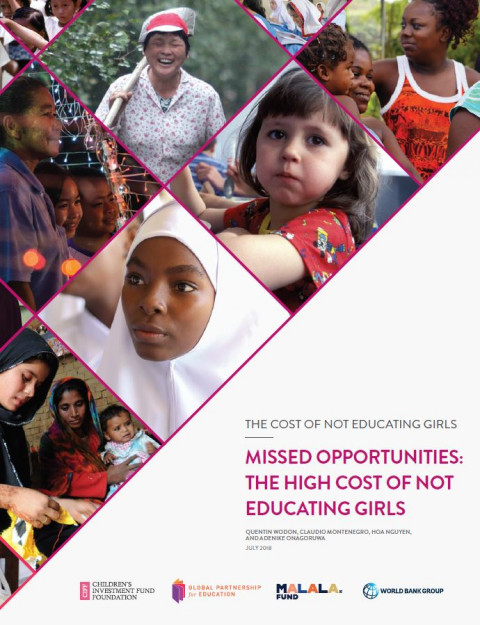 Missed opportunities: the high cost of not educating girls 발행 연도: 2018 저자: Quentin Wodon | Claudio Montenegro | Hoa Nguyen | Adenike Onagoruwa 단체 저자: Children's Investment Fund Foundation (CIFF) This report estimates the global impact of depriving girls of education as well as showing how educational attainment can affect their life chances and choices, and the outcomes of this at an individual, family and community level. Its findings show the transformative power of education for girls in six areas: (1) earnings and standards of living, (2) child marriage and early childbearing, (3) fertility and population growth, (4) health, nutrition and well-being, (5) agency and decision-making, and (6) social capital and institutions. Findings indicate that limited educational opportunities for girls and barriers to completing 12 years of education cost countries between $15 trillion and $30 trillion dollars in lost lifetime productivity and earnings. The report also finds that primary education is not enough. Across many indicators, benefits from primary education only are limited.
 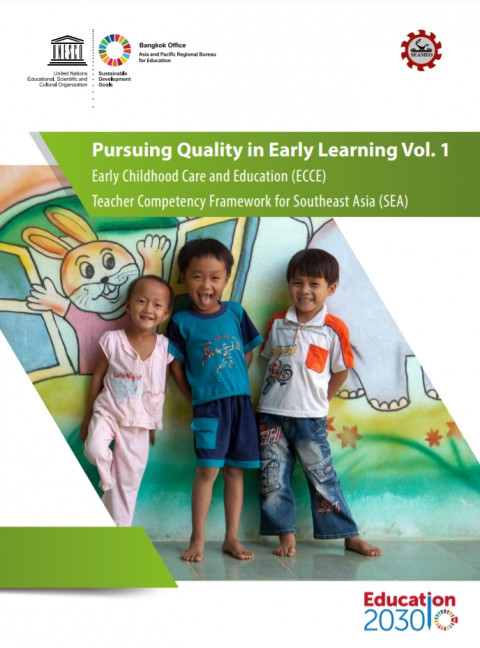 Pursuing quality in early learning, vol. 1: Early childhood care and education (ECCE) teacher competency framework for Southeast Asia (SEA) 발행 연도: 2018 단체 저자: Southeast Asian Ministers of Education Organization (SEAMEO) | UNESCO Bangkok With the United Nation’s (UN) Sustainable Development Goals (SDGs) as a platform for achieving quality early childhood care and education outcomes by 2030, ECCE policy-makers, practitioners, and academicians from Asia-Pacific countries gathered at the second Asia-Pacific Regional Policy Forum on Early Childhood Care and Education in Putrajaya, Malaysia in 2016 to share experiences, innovations, and lessons learned in developing and implementing ECCE policies and initiatives. This document first provides a brief background, and discusses the purposes and intended audience for which the framework was developed (Section I). A succeeding section reflects on the regional ECCE landscape (Section II), before proceeding to a discussion of the ECCE teacher competency framework for Southeast Asia (Section III). Section IV suggests possible uses of the ECCE teacher competency framework; a final section concludes with areas for future action.
  Refugee Education 2030: A Strategy for Refugee Inclusion 발행 연도: 2019 단체 저자: UN. Office of the United Nations High Commissioner for Refugees (UNHCR) The UNHCR's 2019 Education strategy, which builds on the Global Compact on Refugees.
  More Than One-half of Children and Adolescents Are Not Learning Worldwide; UIS Fact Sheet No. 46 발행 연도: 2017 단체 저자: UNESCO Institute for Statistics (UIS) This paper presents the first estimates for a key target of Sustainable Development Goal 4, which requires primary and secondary education that lead to relevant and effective learning outcomes. By developing a new methodology and database, the UIS has produced a global snapshot of the learning situation facing children and adolescents who are in school and out. The data show the critical need to improve the quality of education while expanding access to ensure that no one is left behind. The paper also discusses the importance of benchmarking and the concept of minimum proficiency levels. Más de la mitad de los niños y adolescentes en el mundo no está aprendiendo; Ficha informativa del UIS No. 46 발행 연도: 2017 단체 저자: UNESCO Institute for Statistics (UIS) Este documento presenta las primeras estimaciones para una meta fundamental de Objetivo de Desarrollo Sostenible 4, la cual requiere una educación primaria y secundaria que lleve a resultados de aprendizaje relevantes y efectivos. A través del desarrollo de una nueva metodología y base de datos, el UIS ha producido una panorámica global de la situación de aprendizaje que enfrentan los niños y adolescentes que están dentro y fuera de escuela. Los datos muestran una necesidad crítica de mejorar la calidad de la educación, ampliando al mismo tiempo el acceso para asegurar que nadie se quede atrás. En el documento también se discute la importancia del análisis comparativo y el concepto de niveles mínimos de competencia.
  Desafíos de la educación secundaria en América Latina: ponencias del Foro regional de políticas educativas 2018 발행 연도: 2019 저자: Nestor López 단체 저자: UNESCO IIEP Oficina para América Latina y el Caribe En el marco de los esfuerzos realizados por la UNESCO para apoyar a los países de la región en el cumplimiento del Objetivo de Desarrollo Sostenible (ODS) 4, el 20 y 21 de septiembre de 2018 se celebró en Buenos Aires, Argentina, la segunda edición del Foro Regional de Políticas Educativas, un evento de la Oficina para América Latina del Instituto Internacional de Planeamiento de la Educación de la UNESCO. Este evento contó con la participación de representantes de los gobiernos de los 19 países de la región, expertos en políticas de educación secundaria, y representantes de organismos internacionales. El tema de esta edición del Foro Regional --Desafíos de la educación secundaria en América Latina ante la Agenda Educación 2030-- resultó particularmente de actualidad para los países de la región, dado que, en las últimas dos décadas, la mayor parte de ellos incorporó la secundaria como parte del ciclo de educación obligatoria. Sin embargo, hasta ahora no se ha logrado garantizar una educación secundaria “inclusiva, equitativa y de calidad” para todas las personas, como declara el ODS 4.
 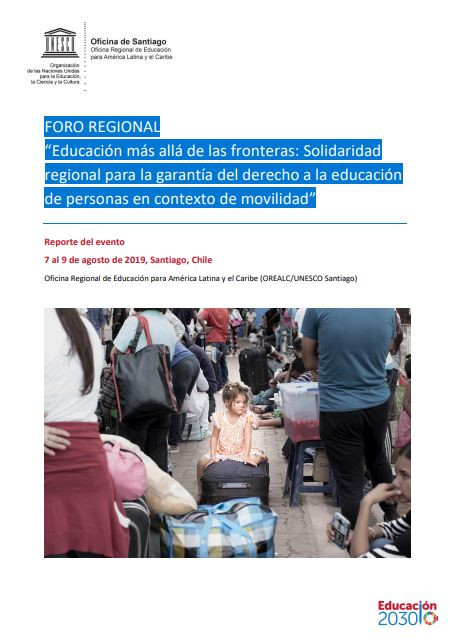 Foro regional: Educación más allá de las Fronteras: Solidaridad Regional para la Garantía del Derecho a la Educación de Personas en Contexto de Movilidad; reporte del evento 발행 연도: 2019 단체 저자: UNESCO Santiago El aumento sustantivo de la movilidad intrarregional, la progresiva transformación de la procedencia de la población en contexto de movilidad y la presencia de flujos masivos de desplazamiento en los últimos años han supuesto importantes desafíos para los Estados. Particularmente, en establecer las maneras en que las personas migrantes, refugiadas, solicitantes de asilo y retornadas puedan ejercer sus derechos fundamentales. Entre estos derechos, el derecho a la educación emerge como una herramienta para proteger la dignidad humana, especialmente considerando su capacidad de promover la garantía de otros derechos y de constituirse, por tanto, en un derecho multiplicador. Un compromiso central de la Agenda 2030 adoptada por los Estados Miembros es “no dejar a nadie atrás”, por lo que considerar las necesidades de protección de las personas en situación de movilidad resulta urgente. El logro de los Objetivos de Desarrollo Sostenible depende de nuestra respuesta a este desafío mundial y regional.
  Education and Migration Policy Paper: Language, Education and Migration in the Context of Forced Displacement (Policy Brief Series, no 1) 발행 연도: 2018 저자: Francine Sara Menashy | Zeena Zhakaria A surge in global migration, spurred in part by conflict, emergency, and fragility, has elicited increased attention to the specific needs of migrant and refugee learners. The international community faces an urgent global challenge: more people are now displaced than since the end of the Second World War. Half of those displaced are under the age of 18. Further, while two-thirds of international migrants are in high-income countries, 85% of those displaced by conflict and natural disaster now live in low-income countries. Forced displacement creates particular vulnerabilities, including access to education free from discrimination. Meeting Sustainable Development Goal 4 by 2030 demands that all children, youth, and adults receive an inclusive and equitable quality education. Education is a right that plays a critical role in advancing both sustainable development and peace. Yet refugees, migrants, and asylum seekers encounter numerous barriers to an inclusive andequitable quality education in host countries worldwide.