
자료
세계시민교육에 대한 이해를 넓히고 연구, 옹호 활동, 교수, 학습 등을 향상시킬 수 있는 다양하고 유용한 자료를 찾아보세요.
124 건의 결과가 검색되었습니다
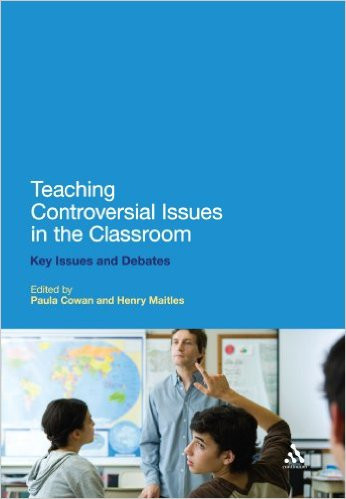 Teaching Controversial Issues in the Classroom: Key Issues and Debates 발행 연도: 2012 저자: Paula Cowan, Henry Maitles 단체 저자: Continuum Cet ouvrage propose un tour d'horizon des débats actuels que soulève la question de savoir s'il faut enseigner des sujets controversés à l’école primaire et au collège. L’auteur analyse également les changements engendrés par ce type d’expérience d’apprentissage et leur contribution aux programmes scolaires, particulièrement d’histoire et d’éducation civique.Les principaux thèmes abordés sont les suivants : A quel âge peut-on commencer à discuter de sujets controversés ? - L’agenda citoyen - Parler de l'Iraq avec les collégiens et lycéens - Enseigner l'Holocauste à une classe marquée par la diversité culturelle – L'islamophobie.
  Education as a Security Issue 저자: Ian Jamison 단체 저자: Tony Blair Faith Foundation The use of education as both tool and target of religious extremists globally is perhaps one of the most important generational challenges we face today. To ensure that the next generation is open to a more pluralistic world, we must ensure that their education equips them to safely encounter the 'Other'. This not only means improving knowledge, understanding and interaction, but also critically requires investment in developing essential soft skills that can ensure these are properly employed. Education as a Security Issue 저자: Ian Jamison 단체 저자: Tony Blair Faith Foundation Le recours des extrémistes religieux à l'éducation comme, à la fois, outil et cible est peut-être l'un des défis les plus importants de cette génération, auquel nous sommes confrontés aujourd'hui dans le monde. Pour que la prochaine génération soit ouverte à un monde plus pluraliste, nous devons veiller à ce que leur éducation les prépare à des échanges pacifiques avec « l’Autre ». Cela signifie non seulement d’améliorer les connaissances, la compréhension et l'interaction, mais aussi d’investir urgemment dans le développement des compétences générales essentielles qui en garantissent une bonne utilisation.
  Educating Against Extremism 발행 연도: 2012 저자: Dianne Gereluk Extremism is a huge concern across the world right now, fueled by its links to terrorism and religious fundamentalism. This book explores the relationship of education to extremism and examines how education could counter its more dangerous forms. Lynn Davies proposes a very different educational strategy to the conventional tolerant multiculturalism that pertains in the west. The task – a challenging one – is to politicize young people without cementing uncritical acceptance of single truths. Educating Against Extremism 발행 연도: 2012 저자: Dianne Gereluk L'extrémisme constitue désormais un enjeu de premier ordre à travers le monde, alimenté par son lien avec le terrorisme et le fondamentalisme religieux. Ce livre analyse la relation entre l'éducation et l'extrémisme et s’interroge sur le rôle de l'éducation pour prévenir ses formes les plus dangereuses. Lynn Davies propose une stratégie éducative très différente du multiculturalisme tolérant conventionnel qui prévaut en Occident. L'objectif, qui s’avère être un véritable défi, est de politiser les jeunes tout en s’assurant qu’ils développent leur esprit critique et forgent leurs propres opinions.
  The Critical global educator: global citizenship education as sustainable development 발행 연도: 2016 저자: Maureen Eills An acknowledged challenge for humanitarian democratic education is its perceived lack of philosophical and theoretical foundation, often resulting in peripheral academic status and reduced prestige. A rich philosophical and theoretical tradition does however exist. This book synthesises crucial concepts from Critical Realism, Critical Social Theory, Critical Discourse Studies, neuro-, psycho-, socio- and cognitive-linguistic research, to provide critical global educators with a Cultural Historical Activity Theory (CHAT) framework for self- and negotiated evaluation. Global citizenship: a typology for distinguishing its multiple conceptions 발행 연도: 2013 저자: Laura Oxley | Paul Morris 단체 저자: Society for Educational Studies | Taylor & Francis The promotion of ‘Global Citizenship’ (GC) has emerged as a goal of schooling in many countries, symbolising a shift away from national towards more global conceptions of citizenship. It currently incorporates a proliferation of approaches and terminologies, mirroring both the diverse conceptions of its nature and the socio-politico contexts within which it is appropriated. This paper seeks to clarify this ambiguity by constructing a typology to identify and distinguish the diverse conceptions of GC. The typology is based on two general forms of GC: cosmopolitan based and advocacy based. The former incorporates four distinct conceptions of GC – namely, the political, moral, economic and cultural; the latter incorporates four other conceptions – namely, the social, critical, environmental and spiritual. Subsequently, we briefly illustrate how the typology can be used to evaluate the critical features of a curriculum plan designed to promote GC in England. The typology provides a novel and powerful means to analyse the key features of the very diverse range of educational policies and programmes that promote GC. La Citoyenneté Mondiale: une typologie pour distinguer ses multiples conceptions 발행 연도: 2013 저자: Laura Oxley | Paul Morris 단체 저자: Society for Educational Studies | Taylor & Francis La promotion de la «Citoyenneté Mondiale» (CM) a émergé comme un objectif de scolarisation dans de nombreux pays, symbolisant l'abandon des nationaux vers des conceptions plus globales de la citoyenneté. Il intègre actuellement une prolifération d'approches et terminologies, reflétant à la fois les diverses conceptions de la nature et les contextes socio-politico au sein duquel il est approprié. Ce document vise à clarifier cette ambiguïté en construisant une typologie pour identifier et distinguer les diverses conceptions de la CM. La typologie est basée sur deux formes générales de CM: cosmopolite base et sur la base de plaidoyer. L'ancien incorpore quatre conceptions distinctes de CM - à savoir la politique, morale, économique et culturelle; celui-ci comporte quatre autres conceptions - à savoir, le spirituel sociale, critique, de l'environnement et. Par la suite, nous illustrons brièvement comment la typologie peut être utilisé pour évaluer les caractéristiques essentielles d'un plan de programme conçu pour promouvoir la CM en Angleterre. La typologie fournit une nouvelle et des moyens puissants pour analyser les principales caractéristiques de la gamme très diversifiée de politiques et de programmes éducatifs qui favorisent la CM. World citizenship education and teacher training in a global context: Canada, India and South Africa 발행 연도: 2011 저자: George Cappelle | Gary Crippin | Ulla Lundgren 단체 저자: Children's identity and Citizenship in Europe (CICE) In this study we change our focus from a European setting to a global one. We were interested to see how our observations from the first study would be reflected in a more global context with focus on the cases of Canada, India and South Africa looking at both the models for world citizenship education and the influence of contextual factors.In choosing these countries we were interested in:Countries on different continentsCountries in different stages of national, social and economic developmentCountries in which there was considerable diversity in the populationCountries in which citizenship and world citizenship education was seen as an important priorityCountries, because of the limitations of researchers, which used English as a primary language.In addition to background research we asked for assistance from professors in the field of teacher education in the three countries to provide us with information on key questions related to citizenship education and teacher training. Mondiale l'éducation civique et la formation des enseignants dans un contexte mondial: le Canada, l'Inde et l'Afrique du Sud 발행 연도: 2011 저자: George Cappelle | Gary Crippin | Ulla Lundgren 단체 저자: Children's identity and Citizenship in Europe (CICE) Dans cette étude, nous changeons notre objectif d'un cadre européen pour une approche globale. Nous nous sommes intéressés de voir comment nos observations de la première étude serait reflétée dans un contexte plus global en mettant l'aCECnt sur les cas du Canada, l'Inde et l'Afrique du Sud qui cherchent à la fois les modèles pour l'éducation à la citoyenneté mondiale et l'influence des facteurs contextuels. Dans le choix de ces pays, nous étions intéressés à: ● Les pays sur différents continents ● pays à différents stades de développement national, social et économique ● Les pays dans lesquels il y avait une grande diversité dans les populations ● Les pays dans lesquels la citoyenneté et la citoyenneté mondiale l'éducation a été considérée comme une priorité ● importants pays, en raison des limitations des chercheurs, qui ont utilisé l'anglais comme langue principale. Outre la recherche de fond, nous avons demandé l'aide de professeurs dans le domaine de la formation des enseignants dans les trois pays pour nous fournir des informations sur des questions clés liées à l'éducation à la citoyenneté et à la formation des enseignants.