
자료
세계시민교육에 대한 이해를 넓히고 연구, 옹호 활동, 교수, 학습 등을 향상시킬 수 있는 다양하고 유용한 자료를 찾아보세요.
2,668 건의 결과가 검색되었습니다
 Holocaust Education and English Language Learner Students - Reflections on Teaching the Shoah Teaching the Holocaust involves confronting many challenges regardless of the setting involved. The complex nature of Holocaust history demands that students and teachers function at high intellectual levels as they study that history, and the need to determine how sensitive topics should be approached challenges educators in ways that are not present when teaching most other topics. Thus, any teaching of the Shoah places significant demands on teachers‘ content knowledge and pedagogical expertise. These demands increase when educators teach students whose backgrounds differ from those of the general population. Specifically, students whose language skills limit their understanding of texts and classroom dialogue face multiple challenges as they seek to learn within new school environments. Moreover, the distinctive cultural milieu and life experiences that form the frames of references from which these students approach the study of all social studies topics make it imperative that teachers build curricula that include culturally relevant perspectives in order to ensure that students are provided an opportunity to learn material at sophisticated levels. This paper considers how these factors influence the teaching of the Shoah in a Roman Catholic high school located in a major city in the western United States. More than 80% of the school’s students are either immigrants to the United States or members of the first generation of their families to be born in this country; thus, most students have been identified as English Language Learners (ELLs), a category used to determine if special language services should be provided to them. This paper overviews English language learning in the United States and teaching social studies to ELL students before discussing teaching the Holocaust in a parochial school whose primary focus is on teaching ELL students. (By the author - Introduction)
 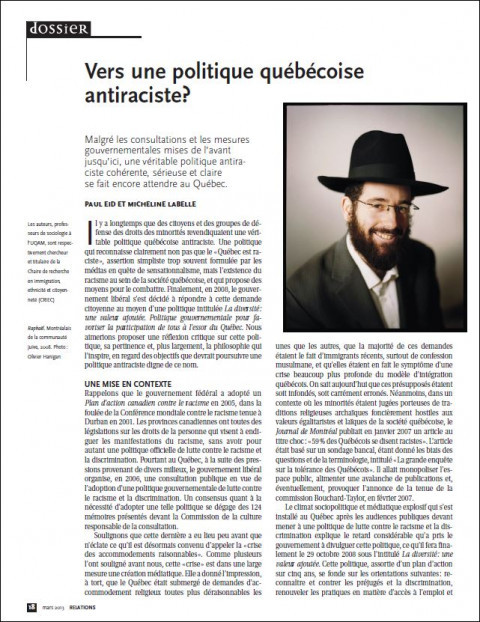 Vers une politique québécoise antiraciste? 발행 연도: 2013 저자: Paul Eid | Micheline Labelle 단체 저자: Relations Malgré les consultations et les mesures gouvernementales mises de l’avant jusqu’ici, une véritable politique antiraciste cohérente, sérieuse et claire se fait encore attendre au Québec.
 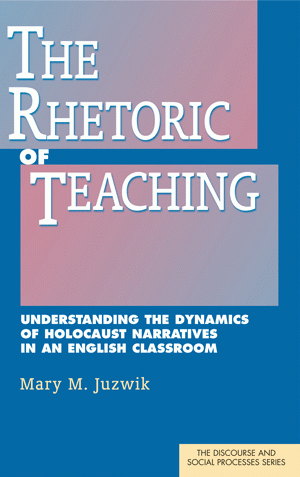 The Rhetoric of Teaching: Understanding the Dynamics of Holocaust Narratives in an English Classroom This volume examines the nature and influence of oral teacher narratives in a single instructional unit. The analyses focus on narrative data that the author generated during a 6-week thematic unit that was taught by a third year teacher in a public middle school. The topic of the Holocaust was chosen because it was well suited for the exploration of oral narrative; the author examines how one teacher rhetorically shaped “knowing about the Holocaust” in her language arts classroom. Because teaching is analyzed through a rhetorical lens, the book is situated at the intersection of classroom discourse studies, rhetoric and composition, and sociolinguistic approaches to narrative. (By the publisher) Moral dilemmas: History, teaching and the Holocaust Salmons discusses the new Holocaust Exhibition at the Imperial War Museum in London, which was originally controversial but has since been favorably received by the general public. The author argues that it is both possible and legitimate for an exhibition devoted to the history of the Holocaust to raise important moral questions. (By the publisher) Learn, Teach, Prevent - Holocaust Education In The 21st Century: The Ethel LeFrak Holocaust Conference Proceedings The National Catholic Center for Holocaust Education publishes conference proceedings following each of its conferences. In 2008, Mrs. Ethel LeFrak, a noted New York philanthropist, created The Ethel LeFrak Holocaust Education Conference Endowment Fund, which underwrites publication of The Ethel LeFrak Holocaust Education Conference Proceedings. Copies of the proceedings are available for purchase by contacting ncche@setonhill.edu
 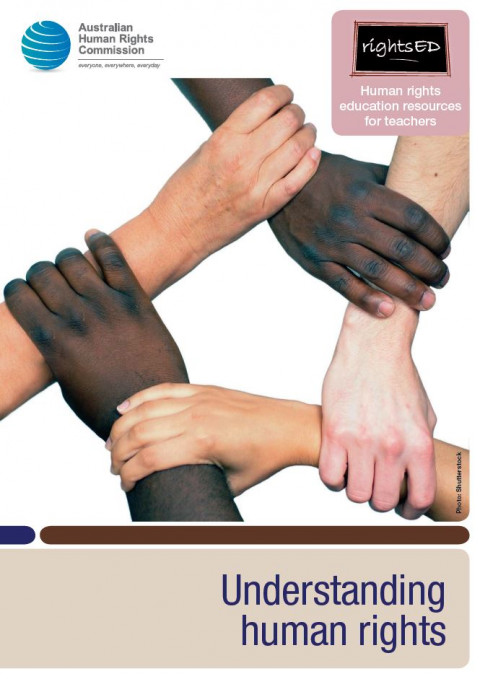 Understanding Human Rights 발행 연도: 2010 단체 저자: Australian Human Rights Commission Human rights are basic to humanity. They apply to all people everywhere. An understanding of human rights is an important part of our individual status as human beings and of our collective status as members of the global community of humankind.To understand how human rights affect us in our daily lives and to acknowledge our responsibilities in recognising the need to balance those rights with the rights of others, we require an understanding of what human rights are.So what are human rights? Where did they come from? How do they impact on humanity? How do they affect me?
 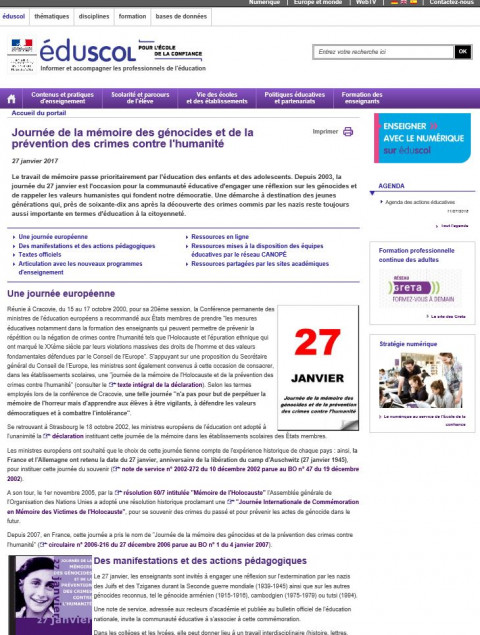 Journée de la mémoire des génocides et de la prévention des crimes contre l'humanité 발행 연도: 2017 단체 저자: éduscol Le travail de mémoire passe prioritairement par l'éducation des enfants et des adolescents. Depuis 2003, la journée du 27 janvier est l'occasion pour la communauté éducative d'engager une réflexion sur les génocides et de rappeler les valeurs humanistes qui fondent notre démocratie. Une démarche à destination des jeunes générations qui, près de soixante-dix ans après la découverte des crimes commis par les nazis reste toujours aussi importante en termes d'éducation à la citoyenneté.
 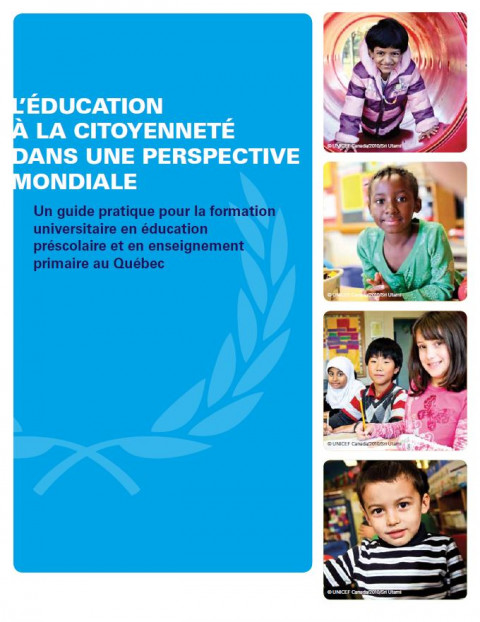 L’éducation à la citoyenneté dans une perspective mondiale : Un guide pratique pour la formation universitaire en éducation préscolaire et en enseignement primaire au Québec 발행 연도: 2011 단체 저자: UNICEF Canada Ce guide permet au corps enseignant universitaire, aux étudiantes et étudiants en éducation, ainsi qu’aux enseignantes et enseignants en formation continue, d’acquérir une bonne compréhension des concepts de l’éducation à la citoyenneté dans une perspective mondiale, d’en connaître la pertinence dans tous les aspects de leur enseignement, peu importe le domaine, et ce, afin qu’ils puissent agir en enseignantes et enseignants responsables et informés, et puissent développer des compétences similaires chez leurs élèves.Le guide est divisé en trois parties. La première, intitulée Soutien à la formation initiale, permet de faire un examen des besoins pour la formation initiale et continue au sujet de l’éducation à la citoyenneté dans une perspective mondiale. C’est dans cet esprit que les compétences professionnelles ont été ciblées et que des outils pédagogiques ont été élaborés : l’outil diagnostique et de pratique réflexive. C’est dans cette partie que vous trouverez un tableau indiquant les rubriques du guide et la ou les compétences professionnelles qu’elles permettent de développer.La deuxième partie du guide présente la notion d’éducation à la citoyenneté dans une perspective mondiale. En plus de définir cette notion, elle fait des liens avec le Programme de formation de l’école québécoise. C’est aussi dans cette section que le lecteur se familiarisera avec les six concepts centraux de l’éducation à la citoyenneté dans une perspective mondiale.La troisième partie du guide est divisée en six sections; chacune d’elle présente un des six concepts centraux de l’éducation à la citoyenneté dans une perspective mondiale, soit : droits de l’enfant, interdépendance, images et perceptions, conflits et leur résolution, justice sociale et action viable.
  ÉDUCATION A LA PHILOSOPHIE ET A LA CITOYENNETÉ : AVEC LES PARENTS ? (Analyse UFAPEC 2016) 발행 연도: 2016 저자: Bernard Hubien 단체 저자: Union francophone des associations de parents de l'enseignement catholique (UFAPEC) L'éducation à la philosophie et à la citoyenneté est une mission fondamentale de l'école. En septembre dernier, la Fédération Wallonie-Bruxelles a publié un référentiel qui décrit les objectifs et les contenus attendus de cette éducation. Si l'école a donc son rôle dans cet apprentissage fondamental, on peut se demander où sont les parents. Un partenariat positif et une école qui met en cohérence cette éducation avec ses pratiques devrait permettre à chaque enfant de grandir en devenant un citoyen, responsable, actif, critique et solidaire, enjeu sociétal plus que jamais d'actualité.
  MODÈLES DE RECHERCHE: Démocratie, citoyenneté mondiale et éducation transformatoire 발행 연도: 2018 저자: Paul R. Carr | Gina Thésée 단체 저자: Chaire UNESCO Démocratie, citoyenneté mondiale et éducation transformatoire (DCMÉT) Les modèles conceptuels et théoriques présentés dans ce document ont été élaborés sur une période d’environ douze ans, commençant en 2005, par le titulaire (Paul R. Carr, Université du Québec en Outaouais) et la co-titulaire (Gina Thésée, Université du Québec à Montréal) de la Chaire UNESCO. Ces modèles ont été publiés dans diverses revues académiques, en anglais ou en français et ont été traduits et adaptés ici pour produire une représentation mise à jour et bilingue de la recherche sur l’éducation pour la démocratie que Carr et Thésée ont réalisée. Certains de ces modèles ont été affinés (et améliorés) avec le temps et sont des moyens qui aident à élucider, interroger et mettre en évidence le sens des trois thèmes qui sous-tendent la Chaire UNESCO DCMÉT.