
자료
세계시민교육에 대한 이해를 넓히고 연구, 옹호 활동, 교수, 학습 등을 향상시킬 수 있는 다양하고 유용한 자료를 찾아보세요.
2,781 건의 결과가 검색되었습니다
 Récits du quotidien après la sortie de carrière: Quelles expériences du vieillir « actif » et quels enjeux de citoyenneté ? 발행 연도: 2016 저자: Isabelle Marchand | Oscar Firbank 단체 저자: Politique et Sociétés (Canada) | Société québécoise de science politique Dans le contexte mondial du vieillissement de la population, le vieillissement actif s’impose dorénavant comme cadre référentiel guidant l’action publique afin de susciter « l’activation » du citoyen-retraité face à sa trajectoire du vieillir. Celui-ci est de plus en plus enjoint, d’une part, à rester le plus longtemps possible sur le marché du travail et, d’autre part, à participer à la vie de la cité, surtout après la sortie de carrière. Pourtant, dans nos sociétés salariales, l’individu actif est généralement celui qui contribue au marché du travail. Au regard de la prédominance du travail rémunéré sur tout autre champ du social, comment pouvons-nous comprendre et interpréter le caractère actif de l’activité post-carrière des retraités, en l’occurrence celle des femmes, longtemps considérées comme « inactives » en raison du travail fantôme accompli dans le domaine du privé ? Au regard de résultats d’une recherche menée dans une perspective qualitative et privilégiant la méthode des récits de vie, nous nous sommes intéressés aux pratiques « actives » du vieillir dans la vie quotidienne de femmes ayant quitté le marché de l’emploi. Nous avons regroupé ces pratiques sous divers « pôles d’activation » et nous discuterons d’abord celles logées sous le pôle du care et, par la suite, les pratiques liées à la participation sociale, et ce, en tentant de cerner leur déplacement dans la transition biographique qu’amènent la sortie de carrière et l’entrée dans la retraite. Ces résultats nous amèneront, en conclusion, à réfléchir aux enjeux sociopolitiques, dont ceux liés aux rapports de genre que soulèvent les perspectives d’une citoyenneté « active » du vieillissement.
  The Legitimacy of Diversity in Education: A Reflection on Inclusion 발행 연도: 2011 저자: Luc Prud’homme | Raymond Vienneau | Serge Ramel | Nadia Rousseau 단체 저자: Éducation et francophonie | Association canadienne d’éducation de langue française The objective of this article is to explore the theme of diversity in the classroom from the perspective of scholastic inclusion, or its alternative, scholastic and social exclusion. The article examines concepts that foster the positive and constructive recognition of diversity in the school setting, along with the social and cultural dimension of inclusion and the pedagogy of inclusion. La légitimité de la diversité en éducation : réflexion sur l’inclusion 발행 연도: 2011 저자: Luc Prud’homme | Raymond Vienneau | Serge Ramel | Nadia Rousseau 단체 저자: Éducation et francophonie | Association canadienne d’éducation de langue française Le présent texte a pour objectif de proposer une réflexion sur le thème de la diversité à l’école, et ce, sous l’angle de l’inclusion scolaire ou de son alternative, l’exclusion scolaire et sociale. Le texte examine ainsi certaines conceptions favorisant une reconnaissance positive et constructive de la diversité en contexte scolaire. Ensuite, il explore la dimension sociale et culturelle de ce phénomène pour enfin traiter la question de l’inclusion et de la pédagogie de l’inclusion.
 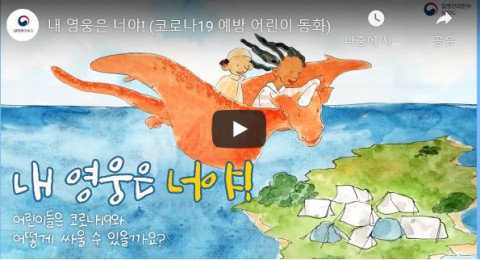 내 영웅은 너야! : 어린이들은 코로나19와 어떻게 싸울 수 있을까요? 발행 연도: 2020 저자: 헬렌 패턱 단체 저자: 한국심리학회 | 질병관리본부 코로나19로부터 사랑하는 사람들을 어떻게 보호할 수 있을까요? 사라와 친구들이 모험을 통해서 그 방법을 하나씩 배운다고 해요!가족과 친구를 코로나 바이러스로부터 안전하게 지키고, 이 시기를 씩씩하게 이겨내어 영웅이 되는 법까지 우리 함께 알아보러 가볼까요? ※ 본 영상은 한국심리학회와 질병관리본부가 코로나19 예방을 위해 IASC에서 만든 어린이 동화 「My hero is you」를 국내 상황에 맞게 번역 각색하였습니다.
  The Role of Teachers in Education and Democracy: The Impact of a Research Project on Preservice Teacher Perceptions 발행 연도: 2015 저자: Gina Thésée | Paul R. Carr | Franck Potwora 단체 저자: McGill University. Faculty of Education This article presents reflections on a survey questionnaire related to the connection between education and democracy. A sample of 157 teacher-education students in Montreal completed a follow-up questionnaire after having participated in a research questionnaire (first study) concerning their perception and experience of the linkage between education and democracy. The first study underscored a weak democratic experience as well as an educational journey without a strong linkage to democracy, which concurs with our previous findings. However, the results of the follow-up survey indicate that participation in this inquiry generated socio-educational, epistemological, pedagogical, and methodological reflections, which could have significant implications for the perception of the role of educators. Le rôle des enseignants dans l’éducation et la démocratie: Impacts d’un projet de recherche sur la perception de futurs enseignants 발행 연도: 2015 저자: Gina Thésée | Paul R. Carr | Franck Potwora 단체 저자: McGill University. Faculty of Education Cet article étudie les réflexions suscitées par un questionnaire d’enquête portant sur les liens entre l’éducation et la démocratie. Un échantillon de 157 étudiants d’un programme de formation initiale des enseignants à Montréal a répondu à un questionnaire de suivi (seconde étude) après avoir rempli un questionnaire d’enquête (première étude) portant sur leurs perceptions et leurs expériences des liens entre l’éducation et la démocratie. La première étude révèle une expérience démocratique faible et un parcours éducatif pratiquement sans lien avec la démocratie, ce qui concorde avec les résultats d’études antérieures. Cependant, les résultats du questionnaire de suivi indiquent que la participation à l’enquête a suscité des réflexions d’ordre socioéducatif, épistémologique, pédagogique et méthodologique, qui pourraient avoir des retombées significatives sur leur perception du rôle de l’enseignant.
 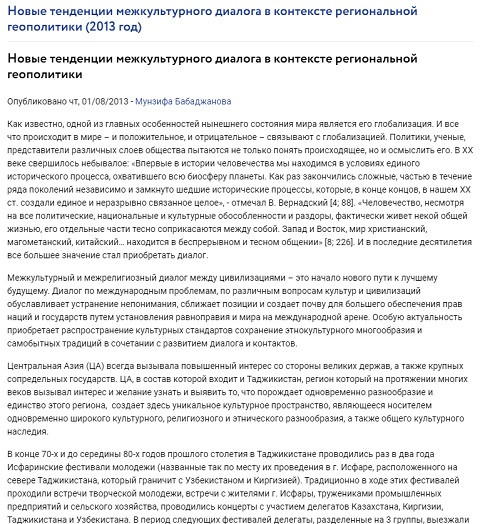 Новые тенденции межкультурного диалога в контексте региональной геополитики 발행 연도: 2013 저자: Munzifa Babadjanova Межкультурный и межрелигиозный диалог между цивилизациями – это начало нового пути к лучшему будущему. Диалог по международным проблемам, по различным вопросам культур и цивилизаций обуславливает устранение непонимания, сближает позиции и создает почву для большего обеспечения прав наций и государств путем установления равноправия и мира на международной арене. Особую актуальность приобретает распространение культурных стандартов сохранение этнокультурного многообразия и самобытных традиций в сочетании с развитием диалога и контактов.
 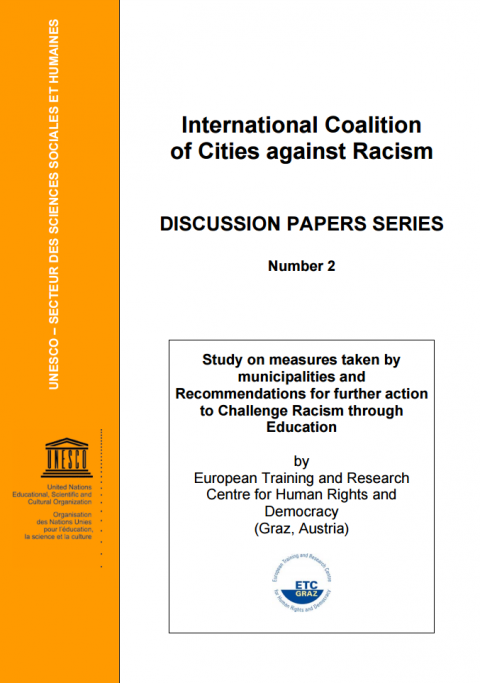 Study on measures taken by municipalities and recommendations for further action to challenge racism through education 발행 연도: 2006 저자: Klaus Starl 단체 저자: European Training and Research Centre for Human Rights and Democracy (Austria) Commitment 8 of the Ten-Point Plan of Action of the European Coalition of Cities against Racism requires the measures “Challenging Racism and Discrimination through Education”. This point aims to improve the access to and enjoyment of all forms of education, as well as the promotion of education in mutual tolerance and understanding. To reach this goal, the members of the coalition have been called to undertake activities, elaborate strategies and establish relevant institutions to influence society and train attitudes, behaviour and skills within the population. They are called to find out causes for racist tendencies among their population and to involve all stakeholders, particularly parents and school officials. As an external expert, the European Training and Research Centre for Human Rights and Democracy in Graz, Austria, (ETC Graz) was commissioned by UNESCO to carry out a study on the measures against racism already in place at a local level and serve as good illustration of “Commitment 8”. A major source of information was the written material provided by the selected cities. Additional or missing information could be obtained through direct exchanges and/or interviews with officers responsible for the municipalities and some NGOs. The material should not to be considered as complete. On the basis of the contributions sent in by the participating cities, the ETC assessed whether these actions/activities meet the objectives of Commitment 8. The authors used the following criteria to make this assessment: Does the action undertaken contribute to a) the improvement of access to education and promote equal opportunities; b) the impact of educational measures on individuals (potential victims and offenders) and on the atmosphere at school and in society. The following recommendations are derived from the eight selected measures documented in Chapter II, and the analysis on their “replicability” in Chapter III. The 12 recommendations explicitly or implicitly refer to the replicable documented measures. Where “replicability” requires specific conditions, or it is recommended to fulfil these conditions firstly, i.e. structural and institutional conditions, these are stated. The 12 recommendations are addressed to municipalities in Europe irrespective of their current membership in the European Coalition of Cities against Racism. As already mentioned the recommendations focus on meeting the requirements of Commitment 8, challenging racism through education.
  교실에서 만나는 세계시민교육 발행 연도: 2016 저자: 정애경 | 윤지아 | 정혜선 | 이근화 | 공석범 | 주예진 | 이원용 | 정용민 단체 저자: 서울특별시교육청 본 자료는 학습자로 하여금 인류가 공동으로 직면하고 있는 문제들에 대해 이해하고 지구촌 공동체에 대한 소속감과 연대감을 키워 지구촌의 문제들을 해결할 수 있는 다양한 실천적이고 협력적인 능력을 키우는데 그 목적을 두고 있으며, 직접 교실 현장에서 활용할 수 있도록 교수학습과정안의 형식으로 구성되어 있다. 학습주제로 제시된 것은 국제이해교육과 세계시민교육에서 공통으로 다루는 인권과 평화, 다문화를 비롯하여 2030년까지의 인류 공동의 목표인 지속가능발전의 환경과 사회와 경제 부분, 그리고 세계시민교육의 배경인 세계화와 미래사회의 지향점인 국제협력 다섯 영역이다.
 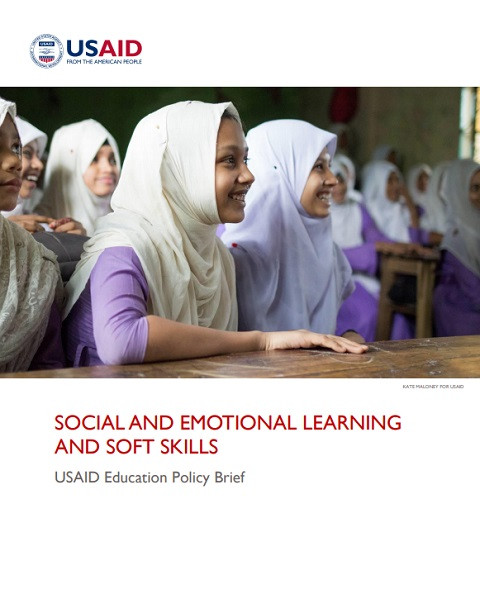 Social and Emotional Learning and Soft Skills: USAID Education Policy Brief 발행 연도: 2019 저자: Kalene Resler | Anjuli Shivshanker | Samantha Alvis | Chris Capacci-Carneal | Melissa Chiappetta | Lauren Greubel | Julie Hanson Swanson | Ashley Henderson | Josh Josa | Laura Lartigue | Rebeca Martinez | Leah Maxson | Olga Merchan | Yolande Miller-Grandvaux | Sandy Oleksy-Ojikutu | Rebecca Pagel | Nancy Taggart | Nina Weisenhorn | Wendy Wheaton 단체 저자: United States Agency for International Development (USAID) Both the 2018 USG Strategy on International Basic Education and the 2018 USAID Education Policy emphasize the importance of social and emotional skills or soft skills in assuring the long-term success of children and youth. Through the Strategy and Policy, USAID is providing new opportunities to systematically design, measure, implement, and understand the impact of programs that build social and emotional skills or soft skills for children and youth.To support USAID staff and implementing partners in this work, this brief: Provides an introductory understanding of what USAID means by the terms “social and emotional skills” and “soft skills” and how to communicate about them. Specifies the desired outcomes and quality standards for programming that teach social and emotional skills or soft skills. Identifies areas in which evidence and best practices still have gaps, and areas in which we should consider investing in further learning.