
자료
세계시민교육에 대한 이해를 넓히고 연구, 옹호 활동, 교수, 학습 등을 향상시킬 수 있는 다양하고 유용한 자료를 찾아보세요.
3,376 건의 결과가 검색되었습니다
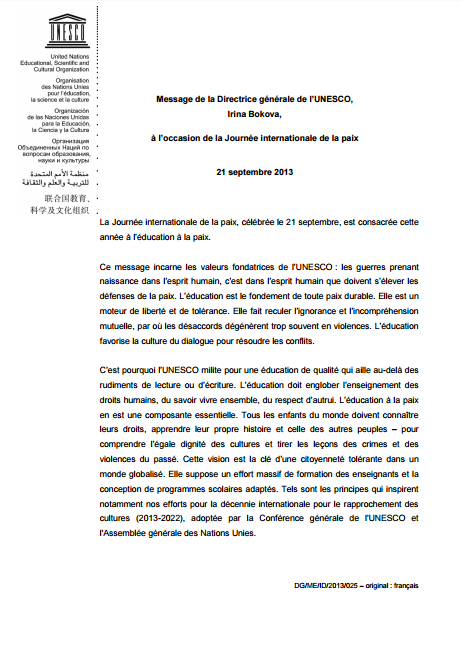 联合国教科文组织总干事伊琳娜•博科娃在国际和平日的致辞,2013年9月21日 발행 연도: 2013 단체 저자: UNESCO. Director-General, 2009-2017 (Bokova, I.G.) This is the message from Irina Bokova, Director-General of UNESCO on the occasion of the International Day of Peace, 21 September 2013.
 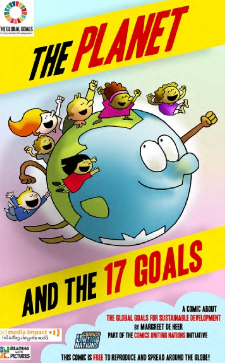 The Planet and the 17 Goals 저자: Margreet De Heer 단체 저자: United Nations Children's Fund (UNICEF) UNICEF has teamed up with the Comics UnitingNations initiative to use the creative and exciting medium of comics to bring the messages of sustainable development to comics fans globally! Comics have been developed by world renown illustrators, writers and comics developers from around the world.Dutch illustrator Margreet de Heer has lent her talents to the Comics United Nations project to help inform children and youth about the new global goals.
 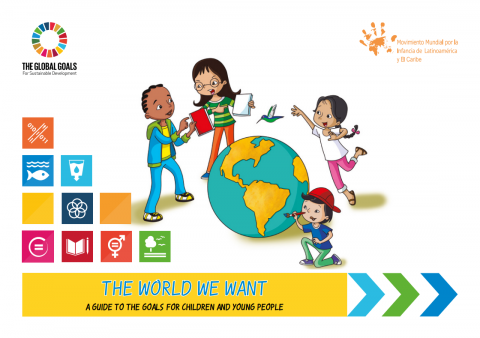 The World We Want: A Guide to the Goals for Children and Young People 발행 연도: 2015 저자: Dora Bardales | Paola Arenas 단체 저자: Global Movement for Children of Latin America and Caribbean | United Nations Children's Fund (UNICEF) The purpose of this guide is to help children and young people understand the Sustainable Development Goals, how they impact their life and what they can do every day to help their government achieve the Goals.
  The Road to the SDGs: A discussion with students 발행 연도: 2015 단체 저자: United Nations Children's Fund (UNICEF) Animated video to help children learn about important concepts for people and planet as covered in the Sustainable Development Goals (SDGs) Le chemin vers les objectifs de developpement durable 발행 연도: 2015 단체 저자: United Nations Children's Fund (UNICEF) Animated video to help children learn about important concepts for people and planet as covered in the Sustainable Development Goals (SDGs) El camino hacia los Objetivos de Desarrollo Sostenible 발행 연도: 2015 단체 저자: United Nations Children's Fund (UNICEF) Animated video to help children learn about important concepts for people and planet as covered in the Sustainable Development Goals (SDGs)
 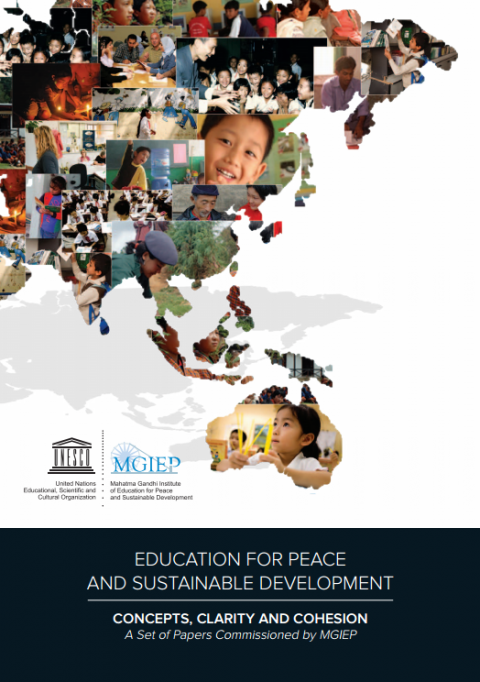 Education for peace and sustainable development: concepts, clarity and cohesion 발행 연도: 2013 단체 저자: Mahatma Gandhi Institute of Education for Peace and Sustainable Development (MGIEP) UNESCO MGIEP's focus lies in exploring and engaging with the strong interlinkages between peace and sustainable development and making interventions in the education systems to impart these principles. The first publication from the Institute Education for Peace and Sustainable Development: Concepts, Clarity and Cohesion explores the interlinkages and interdependencies of Education for Peace and Education for Sustainable Development. The monograph contains four concept papers which elaborate on the interlinkages between education, peace and sustainable development, define the gaps in the current approach to education for peace and sustainable development and argue for a comprehensive approach to issues of peace and sustainability to be incorporated in education systems. UNESCO MGIEP aims to develop a theoretical framework to look at the interlinkages between peace and sustainability in a holistic manner and this monograph is the first exercise towards building this discourse. L'éducation pour la paix et le développement durable: concepts, la clarté et la cohésion 발행 연도: 2013 단체 저자: Mahatma Gandhi Institute of Education for Peace and Sustainable Development (MGIEP) La mise au point de l'UNESCO MGIEP réside dans l'exploration et la collaboration avec les liens étroits entre la paix et le développement durable et faire des interventions dans les systèmes éducatifs pour communiquer ces principes. La première publication de «L'éducation pour la paix et le développement durable: concepts, la clarté et la cohésion de l'Institut explore les liens et les interdépendances de l'éducation pour la paix et l'éducation pour le développement durable. La monographie contient quatre documents de réflexion qui élaborent sur les liens entre l'éducation, la paix et le développement durable, définissent les lacunes dans l'approche actuelle de l'éducation pour la paix et le développement durable et plaident en faveur d'une approche globale des questions de paix et de développement durable à incorporer dans l'éducation systèmes. UNESCO MGIEP vise à développer un cadre théorique pour examiner les liens entre la paix et le développement durable d'une manière holistique et cette monographie est le premier exercice à la construction de ce discours.
  Integrating education for sustainable development & education for international understanding: conceptual issues and pedagogical principles for teacher education to address sustainability 발행 연도: 2006 저자: Swee-Hin Toh 단체 저자: UNESCO Bangkok It is in this spirit that this essay seeks to “integrate” two active and expanding fields of 2 educational innovation and transformation worldwide, namely ESD (education for sustainable development or sustainability) and EIU (education for international understanding). The key conceptual issues and themes of both of these movements will be clarified and shared values and understandings highlighted. It will also be argued that both ESD and EIU , in order to effectively fulfill their goals of building a peaceful, just and sustainable world order, rests on some key common pedagogical principles and processes. Another introductory caveat is also essential here, namely the question of paradigm. Among policy-makers, theorists and practitioners, there may well be and often are distinct differences in conceptualization according to their paradigmatic interpretations, with consequently alternative implications for policies and practices. Integrating education for sustainable development & education for international understanding: conceptual issues and pedagogical principles for teacher education to address sustainability 발행 연도: 2006 저자: Swee-Hin Toh 단체 저자: UNESCO Bangkok Il est dans cet esprit que cet essai vise à «intégrer» deux champs actifs et en expansion de 2 innovations pédagogiques et de transformation dans le monde entier, à savoir l'EDD (éducation pour le développement durable ou la durabilité) et ECI (éducation pour la compréhension internationale). Les principaux problèmes conceptuels et les thèmes de ces deux mouvements seront clarifiés et des valeurs et une compréhension partagées mis en évidence. Il sera fait également valoir que les deux EDD et ECI, en vue de remplir efficacement leurs objectifs de construction, un ordre pacifique juste et durable monde, repose sur quelques principes pédagogiques communs clés et des processus. Une autre mise en garde d'introduction est également essentiel ici, à savoir la question de paradigme. Parmi les décideurs, les théoriciens et les praticiens, il pourrait bien être souvent des différences distinctes dans la conceptualisation en fonction de leurs interprétations paradigmatiques, ayant des implications en conséquence alternatives pour les politiques et les pratiques.