
자료
세계시민교육에 대한 이해를 넓히고 연구, 옹호 활동, 교수, 학습 등을 향상시킬 수 있는 다양하고 유용한 자료를 찾아보세요.
684 건의 결과가 검색되었습니다
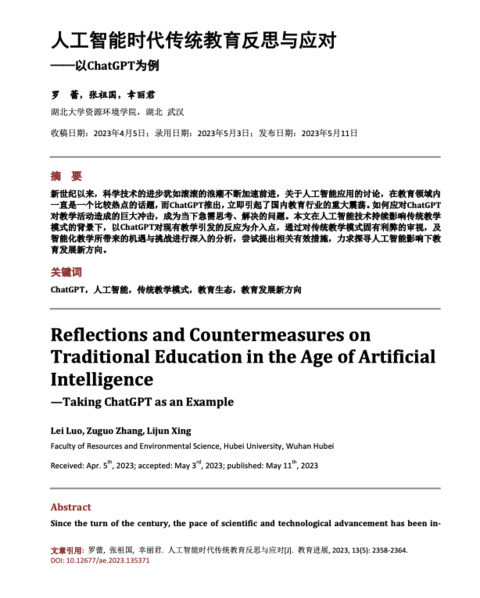 人工智能时代传统教育反思与应对: 以ChatGPT为例 (教育进展; Vol.13, No.5) 발행 연도: 2023 저자: 罗蕾 | 张祖国 | 幸丽君 新世纪以来,科学技术的进步犹如滚滚的浪潮不断加速前进,关于人工智能应用的讨论,在教育领域内一直是一个比较热点的话题,而ChatGPT推出,立即引起了国内教育行业的重大震荡。如何应对ChatGPT对教学活动造成的巨大冲击,成为当下急需思考、解决的问题。本文在人工智能技术持续影响传统教学模式的背景下,以ChatGPT对现有教学引发的反应为介入点,通过对传统教学模式固有利弊的审视,及智能化教学所带来的机遇与挑战进行深入的分析,尝试提出相关有效措施,力求探寻人工智能影响下教育发展新方向。
 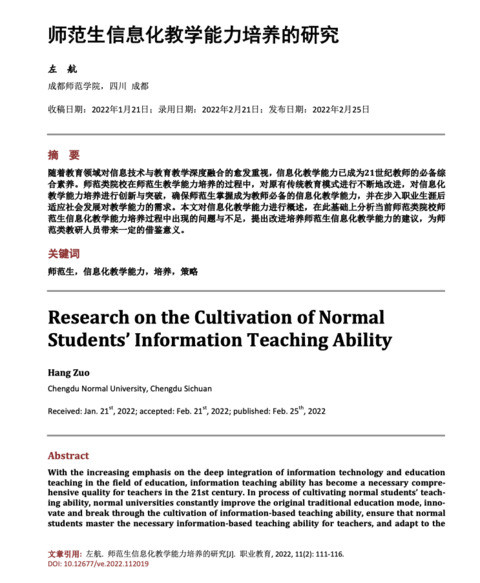 Research on the Cultivation of Normal Students’ Information Teaching Ability (Vocational Education; Vol.11, No.2) 발행 연도: 2022 저자: 左航 With the increasing emphasis on the deep integration of information technology and education teaching in the field of education, information teaching ability has become a necessary comprehensive quality for teachers in the 21st century. In process of cultivating normal students’ teaching ability, normal universities constantly improve the original traditional education mode, innovate and break through the cultivation of information-based teaching ability, ensure that normal students master the necessary information-based teaching ability for teachers, and adapt to the needs of social development for teaching ability after entering their career. This paper summarizes the information teaching ability, and analyzes the problems and deficiencies in the cultivation of information teaching ability of normal students in normal universities, and puts forward some suggestions to improve the training of information teaching ability of normal students, which will bring some reference significance to normal teaching and research personnel. 师范生信息化教学能力培养的研究 (职业教育; Vol.11, No.2) 발행 연도: 2022 저자: 左航 随着教育领域对信息技术与教育教学深度融合的愈发重视,信息化教学能力已成为21世纪教师的必备综合素养。师范类院校在师范生教学能力培养的过程中,对原有传统教育模式进行不断地改进,对信息化教学能力培养进行创新与突破,确保师范生掌握成为教师必备的信息化教学能力,并在步入职业生涯后适应社会发展对教学能力的需求。本文对信息化教学能力进行概述,在此基础上分析当前师范类院校师范生信息化教学能力培养过程中出现的问题与不足,提出改进培养师范生信息化教学能力的建议,为师范类教研人员带来一定的借鉴意义。
 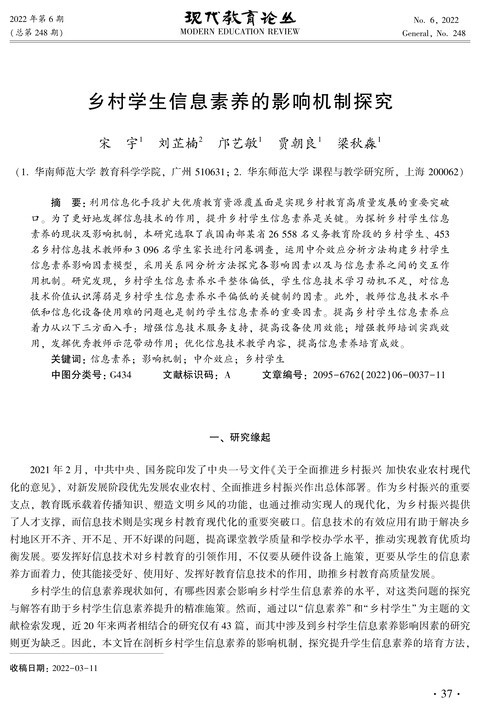 The Influence Mechanism of Students' Information Literacy in Rural Areas (Modern Education Review; No.6, 2022) 발행 연도: 2022 저자: 宋宇 | 刘芷楠 | 邝艺敏 | 贾朝良 | 梁秋淼 Using information technology to expand the coverage of good education resources is an important breakthrough to realize the high-quality development of rural education. Improving the information literacy of rural students is the key to better play the role of information technology. In order to explore the current situation and influence mechanism of rural students' information literacy, this study selected 26558 rural students of compulsory education, 453 rural information technology teachers and 3096 parents from a province in south China for questionnaire survey, Using the mediating effect analysis method to construct the influencing factor model of rural students' information literacy and the network analysis method was used to explore the interaction mechanism between the influencing factors and information literacy. The results show a low level of rural students' information literacy and insufficient motivation for learning information technology. The weak understanding of the value of information technology mainly limits the improvement of rural students' information literacy. Besides, teachers' low level of information technology and difficulties in using information equipment are constraints to students' information literacy. To improve the information literacy of rural students, efforts should be made in the following three aspects:enhance information technology service support and improve the using efficiency of equipment, enhance the practical efficiency of teacher training and give full play to the exemplary and leading role of excellent teachers, optimize the teaching content of information technology, and improve the cultivation effect of information literacy. 乡村学生信息素养的影响机制探究 (现代教育论丛; No.6, 2022) 발행 연도: 2022 저자: 宋宇 | 刘芷楠 | 邝艺敏 | 贾朝良 | 梁秋淼 利用信息化手段扩大优质教育资源覆盖面是实现乡村教育高质量发展的重要突破口。为了更好地发挥信息技术的作用,提升乡村学生信息素养是关键。为探析乡村学生信息素养的现状及影响机制,本研究选取了我国南部某省26558名义务教育阶段的乡村学生、453名乡村信息技术教师和3096名学生家长进行问卷调查,运用中介效应分析方法构建乡村学生信息素养影响因素模型,采用关系网分析方法探究各影响因素以及与信息素养之间的交互作用机制。研究发现,乡村学生信息素养水平整体偏低,学生信息技术学习动机不足,对信息技术价值认识薄弱是乡村学生信息素养水平偏低的关键制约因素。此外,教师信息技术水平低和信息化设备使用难的问题也是制约学生信息素养的重要因素。提高乡村学生信息素养应着力从以下三方面入手:增强信息技术服务支持,提高设备使用效能;增强教师培训实践效用,发挥优秀教师示范带动作用;优化信息技术教学内容,提高信息素养培育成效。
 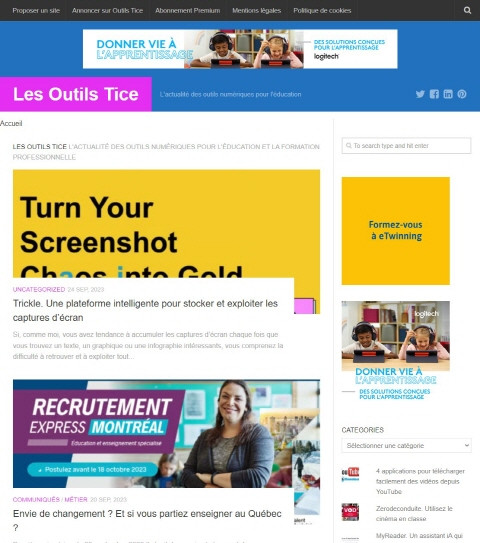 Les Outils TICE - L'actualité des outils numériques pour l'éducation 저자: Fidel Navamuel Les outils Tice est un site de références dans son domaine.Créé par un journaliste, il recense, chaque semaine l’actualité des sites et des outils utilisant les Technologies de l’Information et de la Communication dans l’Education (TICE). Chaque ressource est présentée et analysée. Les ressources sont classées par catégorie et une newsletter permet de recevoir chaque semaine les dernières nouveautés. Les outils Tice is a reference site in its field.Created by a journalist, it provides weekly news on sites and tools using Information and Communication Technologies in Education.(ICTE). Each resource is presented and analyzed. Resources are classified by category, and a weekly newsletter keeps you up to date with the latest news.
  다문화 이주여성 미디어교육 프로그램 개발 연구 발행 연도: 2022 저자: 김지혜 | 박소영 | 최인숙 단체 저자: 시청자미디어재단 이 연구의 목적은 다문화 이주여성 대상 미디어 교육 프로그램을 개발하는 것이다. 이민과 이주의 시대, 대한민국의 문화적 다양성은 더욱 커지고 있다. 사회 구성원의 문화적 기반이 다채로워진 지금의 시대에 무엇보다도 강조되어야 할 것은 상호 이해와 존중을 기반으로 사회 통합을 추진하고 전체 구성원의 상생과 공존을 가능하게 하는 ‘지속 가능한 발전 전략’을 모색하는 것이다.
 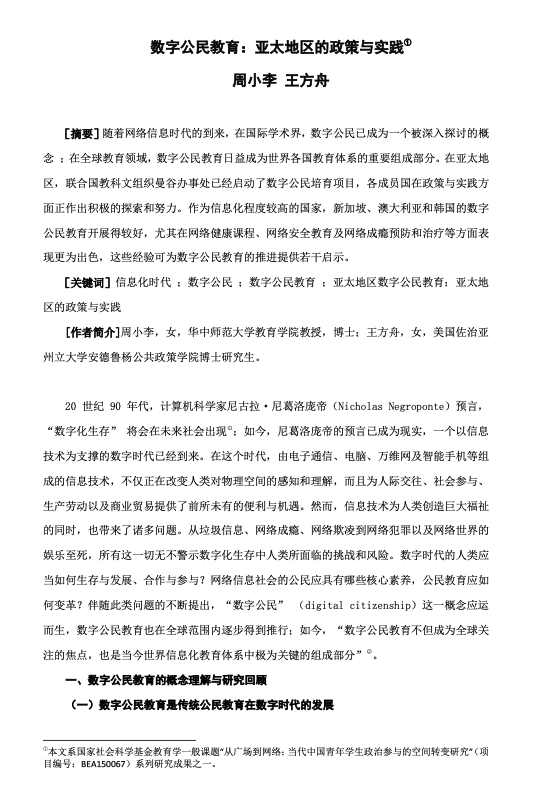 数字公民教育: 亚太地区的政策与实践 발행 연도: 2019 저자: 周小李 | 王方舟 随着网络信息时代的到来,在国际学术界,数字公民已成为一个被深入探讨的概 念 ;在全球教育领域,数字公民教育日益成为世界各国教育体系的重要组成部分。在亚太地 区,联合国教科文组织曼谷办事处已经启动了数字公民培育项目,各成员国在政策与实践方 面正作出积极的探索和努力。作为信息化程度较高的国家,新加坡、澳大利亚和韩国的数字 公民教育开展得较好,尤其在网络健康课程、网络安全教育及网络成瘾预防和治疗等方面表 现更为出色,这些经验可为数字公民教育的推进提供若干启示。
  Responsible AI in Africa: Challenges and Opportunities 발행 연도: 2023 단체 저자: Palgrave Macmillan This open access book contributes to the discourse of Responsible Artificial Intelligence (AI) from an African perspective. It is a unique collection that brings together prominent AI scholars to discuss AI ethics from theoretical and practical African perspectives and makes a case for African values, interests, expectations and principles to underpin the design, development and deployment (DDD) of AI in Africa. The book is a first in that it pays attention to the socio-cultural contexts of Responsible AI that is sensitive to African cultures and societies. It makes an important contribution to the global AI ethics discourse that often neglects AI narratives from Africa despite growing evidence of DDD in many domains. Nine original contributions provide useful insights to advance the understanding and implementation of Responsible AI in Africa, including discussions on epistemic injustice of global AI ethics, opportunities and challenges, an examination of AI co-bots and chatbots in anAfrican work space, gender and AI, a consideration of African philosophies such as Ubuntu in the application of AI, African AI policy, and a look towards a future of Responsible AI in Africa.
  The UNESCO Recommendation on the Ethics of AI: Shaping the Future of Our Societies 발행 연도: 2023 단체 저자: German Commission for UNESCO | Netherlands National Commission for UNESCO | Slovenian National Commission for UNESCO The UNESCO commissions of Germany, the Netherlands and Slovenia with the support of IRCAI have jointly published a brochure on the UNESCO recommendation on the ethics of artificial intelligence. It summarizes the most important content in a compact manner and presents the central demands from the areas of health, culture, the environment, gender equality as well as education and research. The recommendation with its diverse topics is not only relevant for political experts, but it offers one for various areas of application of the ethical framework and thus serves as an orientation for dealing with AI in general. The brochure is available for the wider public in a number of formats including the original Adobe InDesign file that allows translations to be inserted and format pages, resulting in new versions of the brochure. Therefore, we strongly encourage all UNESCO Commissions from across all UNESCO regions Africa, Arab States, Asia and the Pacific, Europe and North America, Latin America and the Caribbean to use the text in the basic files and translate the content into their own languages, including using the graphic file to setup their own designs of the brochure.