
자료
세계시민교육에 대한 이해를 넓히고 연구, 옹호 활동, 교수, 학습 등을 향상시킬 수 있는 다양하고 유용한 자료를 찾아보세요.
3,396 건의 결과가 검색되었습니다
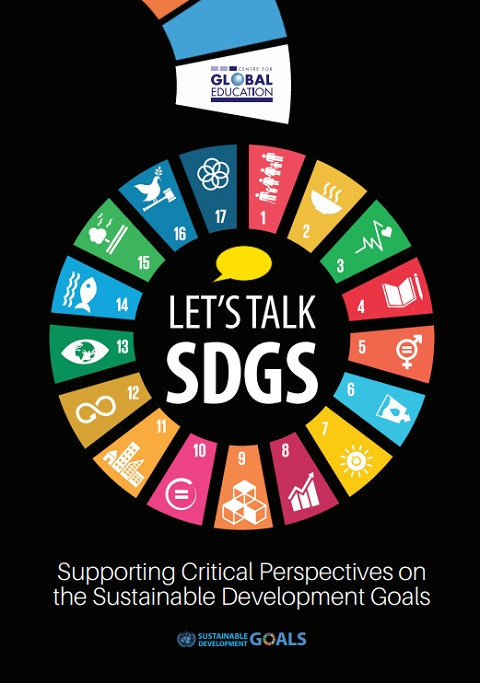 Let’s Talk SDGs: Supporting Critical Perspectives on the Sustainable Development Goals 발행 연도: 2020 저자: Caroline Murphy 단체 저자: Centre for Global Education (CGE) This resource is an invitation to development educators to critically interrogate the Sustainable Development Goals and discuss their capacity to deliver upon their intended outcomes. It invites users to ask if the SDGs can support effective global learning and represent a sound critique of the international system. The resource is a useful starting point for a critical discussion on the Goals' capacity for effective advocacy and education toward the eradication of poverty and inequality.
  Putting the Voice of Young People at the Heart of Global Citizenship Education 발행 연도: 2014 저자: Douglas Bourn 단체 저자: UCL Institute of Education | Erasmus+ This briefing is aimed at policy-makers across Europe who are engaged with, or interested in ensuring that education and international development programmes give consideration to the voices of young people. It also aims to contribute to policy-makers responses to how they are implementing the Sustainable Development Goals.
  Towards an urban culture of non-discrimination and non-violence: The ICCAR experience 발행 연도: 2017 단체 저자: International Coalition of Inclusive and Sustainable Cities This is a conference report for the World Forum on Urban Violence and Education for Coexistence and Peace.
  Indicators for evaluating municipal policies aimed at fighting racism and discrimination 발행 연도: 2005 저자: Jean Claude Icart | Micheline Labelle | Rachad Antonius 단체 저자: Centre de recherche sur l'immigration, l'ethnicité et la citoyenneté (Canada). Observatoire international sur le racisme et les discriminations Ethnocultural diversity increasingly constitutes an important characteristic of major cities around the world. As the primary centres for national, ethnic and cultural intermixing, cities are becoming laboratories for new ways of “living together” (UNESCO, 2004). However, when this diversity is accompanied by inequalities, racism and discrimination, it can increase the social divide. Therefore, in order to benefit from the true advantages of the ethnocultural diversity that makes up the fabric of contemporary societies, it has become increasingly necessary to employ methods to correct social injustices, and to ensure the equality and the full exercise of citizens’ rights. Accordingly, the last few years have seen true efforts to conceptualize interventions by cities to manage ethnocultural diversity. These efforts rely on ideologies controlled by the state and on the values of equality, social justice, and respect for pluralism that are endorsed by different international organizations such as the UN and UNESCO, or by national organizations such as human rights commissions.To promote and reinforce municipal anti-discriminatory policies, UNESCO supported the launching of the International Coalition of Cities Against Racism1. The initial framework for this Coalition was the proposal of the Ten-Point Action Plan, which was adopted in December 2004 in Nuremburg.The present research report relating to the development of a series of indicators for evaluating municipal policies to fight racism and discrimination should be situated in this context. It was carried out with the goal of assisting cities that want to adopt public policies of diversity management and to fight racism and discrimination, and to evaluate the impact of such policies. The goal is to equip cities with tools that make it possible to evaluate, in quantitative and/or qualitative terms, whether their actions produce results that correspond to the major goals of adopted policies. Indicateurs pour l'évaluation des politiques municipales visant à contrer le racisme et la discrimination 발행 연도: 2005 저자: Jean Claude Icart | Micheline Labelle | Rachad Antonius 단체 저자: Centre de recherche sur l'immigration, l'ethnicité et la citoyenneté (Canada). Observatoire international sur le racisme et les discriminations Ethnocultural diversity increasingly constitutes an important characteristic of major cities around the world. As the primary centres for national, ethnic and cultural intermixing, cities are becoming laboratories for new ways of “living together” (UNESCO, 2004). However, when this diversity is accompanied by inequalities, racism and discrimination, it can increase the social divide. Therefore, in order to benefit from the true advantages of the ethnocultural diversity that makes up the fabric of contemporary societies, it has become increasingly necessary to employ methods to correct social injustices, and to ensure the equality and the full exercise of citizens’ rights. Accordingly, the last few years have seen true efforts to conceptualize interventions by cities to manage ethnocultural diversity. These efforts rely on ideologies controlled by the state and on the values of equality, social justice, and respect for pluralism that are endorsed by different international organizations such as the UN and UNESCO, or by national organizations such as human rights commissions.To promote and reinforce municipal anti-discriminatory policies, UNESCO supported the launching of the International Coalition of Cities Against Racism1. The initial framework for this Coalition was the proposal of the Ten-Point Action Plan, which was adopted in December 2004 in Nuremburg.The present research report relating to the development of a series of indicators for evaluating municipal policies to fight racism and discrimination should be situated in this context. It was carried out with the goal of assisting cities that want to adopt public policies of diversity management and to fight racism and discrimination, and to evaluate the impact of such policies. The goal is to equip cities with tools that make it possible to evaluate, in quantitative and/or qualitative terms, whether their actions produce results that correspond to the major goals of adopted policies.
 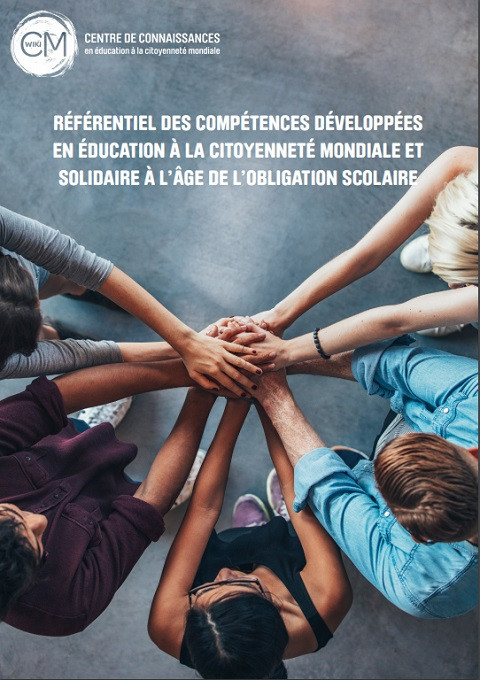 Référentiel des compétences développées en éducation à la citoyenneté mondiale et solidaire à l’âge de l’obligation scolaire 발행 연도: 2017 단체 저자: Annoncer la Couleur (ALC) | La coopération belge au développement | Centre de Connaissances en Éducation à la Citoyenneté Mondiale (WikiCM) Ce référentiel de compétences ECM(Éducation à la citoyenneté mondiale) a été élaboré par WikiCM, le centre de connaissances en éducation à la citoyenneté mondiale coordonné par Annoncer la Couleur a réuni des professionnels de l’enseignement (administration, réseaux, inspection) et de l’éducation à la citoyenneté mondiale (ONG, ALC). Il présente dans un premier temps les repères sur les stades de développement de l’enfant et, dans un deuxième temps, les 7 compétences de l’ECM en milieu scolaire.
  Pedagogical Guides: Let's Educate With Equality 발행 연도: 2016 단체 저자: Chile. Ministry of Education This publication includes four pedagogical guides, the first seeks to generate reflection of teachers and managers about their role in gender constructions, the second one seeks critical reflection of elementary school students on how gender constructions affect decisions, the third guide looks the sdame for high school students, and the fourth guide goes around the reflection of parents / guardians on how gender roles affect the vocational decisions of boys and girls. Guías pedagógicas: Eduquemos con igualdad 발행 연도: 2016 단체 저자: Chile. Ministry of Education Esta publicación reune cuatro guías, en la primera se busca generar reflexión de docentes y directivos en torno a su rol en las construcciones de género, en la segunda se pretende la reflexión critica de los estudiantes de enseñanza básica sobre como inciden las construcciones de género en las decisiones vocacionales al igual que en la tercera guía en estudiantes de enseñanza mediay la cuarta guía gira entorno a la reflexión de padres/madres/ apoderados sobre como afectan los roles de género en las decisiones vocacionales de niños y niñas.
  Ouverture sur le monde 발행 연도: 2019 단체 저자: Annoncer la Couleur (ALC) L’ECM est une éducation holistique qui ouvre les yeux des individus aux réalités du monde et les incite à œuvrer pour davantage de justice d’équité et de droits pour toutes et tous.Les activités proposées dans ce dossier s’adressent aux élèves du type 1 ayant un retard mental léger et éprouvant des difficultés scolaires mais étant aptes à s’intégrer de façon autonome dans la société à l’âge adulte. Les activités proposées prennent en compte les difficultés potentielles inhérentes à ce type d’élèves à besoins spécifiques comme les difficultés de concentration, un manque d’autonomie, etc.
  Respuestas de política pública y desafíos para garantizar el bien-estar de la primera infancia en tiempos de COVID-19: Un análisis comparado para américa latina 발행 연도: 2021 저자: Ana María Osorio | Ernesto Cárdenas 단체 저자: UNESCO IIEP Oficina para América Latina y el Caribe Este documento tiene un doble objetivo. En primer lugar, ofrecer un panorama de la situación de la primera infancia antes de la pandemia en América Latina, que permita identificar vulnerabilidades y riesgos del entorno físico-social que rodea a niños y niñas, y que pueden ser exacerbados por la pandemia y/o por las medidas adoptadas para contenerla. Para esto se presentan indicadores comparables, intentando priorizar al niño y a la niña como unidad principal de análisis. Asimismo, se usa la información más reciente de UNICEF y UNESCO para hacer seguimiento a la niñez en el periodo de afectación por la pandemia de la COVID-19. En segundo lugar, esta publicación busca identificar las principales respuestas de políticas públicas orientadas a garantizar el bien-estar de la primera infancia en la región, enfatizando en las estrategias implementadas por los gobiernos para continuar brindando servicios de cuidado y educación inicial en el contexto de la actual emergencia sanitaria