
자료
세계시민교육에 대한 이해를 넓히고 연구, 옹호 활동, 교수, 학습 등을 향상시킬 수 있는 다양하고 유용한 자료를 찾아보세요.
2,194 건의 결과가 검색되었습니다
 고등학교 세계시민교육 문턱 낮추기 프로젝트 – 사회과군 편 발행 연도: 2021 저자: 김다영 | 김병연 | 윤신원 | 황태성 단체 저자: 유네스코 아시아태평양 국제이해교육원 유네스코 아태교육원은 ⟪고등학교 세계시민교육 문턱 낮추기 프로젝트 – 사회과군 편⟫을 발간했다. ⟪고등학교 세계시민교육 문턱 낮추기 프로젝트⟫의 첫 시리즈인 이 책은 보다 많은 고등학교 선생님들이 학교 현장에서 세계시민교육을 실천할 수 있도록 진입장벽을 낮추고자 기획되었다. 특히 세계시민교육 관련 내용이 많이 포함되어 있는 사회과군 선생님들이 실제 수업에서 진행한 세계시민교육 교수학습 사례를 담았다. <목차>서문1장. 질문과 토론으로 이어가는 세계시민교육 1.1. 자문자답(自問自答), 저를 소개합니다 1.2. 2021년, 수업을 이렇게 설계했어요 1.3. 학생들과 함께 수업을 만들어갔어요사례 1] 불평등 현상과 사회정의사례 2] 사회정의 관점에서 세계화 바라보기사례 3] 평화의 관점에서 통일 문제 탐구 1.4. 수업을 되돌아보며 2장. 지구적으로 생각하고 지역적으로 행동하는 우리는 ‘세계시민’ 2.1. 선생님은 왜 ‘세계시민교육’을 하나요? 2.2. ‘세계시민교육’, 어렵지 않아요!사례 1] 세계화와 먹거리 문제사례 3] 지속가능발전을 위한 국제개발협력의 주체사례 2] 기후 위기와 지속가능한 세계 2.3. 미래 세대를 위한 교육, 우리 함께해요 3장. 지역이해와 활동 중심으로 구성하는 세계시민교육 3.1. 세계시민교육, 이렇게 만났어요 3.2. 세계시민교육, 무엇부터 시작해야 할까요? 3.3. 세계시민교육과 연결성사례 1] 영상을 통한 자연과 인간과의 관계 이해하기사례 2] 모둠 활동을 통한 나와 지역사회 연결하기 3.4. 세계시민교육과 인권사례 1] 세계인권선언 그림 카드 만들기사례 2] 인권 시 작성하고 낭송하기 3.5. 다문화교육과 세계시민교육사례 1] 영상을 통한 다문화교육사례 2] 포토스탠딩을 통한 다문화교육 3.6. 실천을 통한 세계시민교육사례 1] 100원 경매를 통한 기부 활동사례 2] SDGs 이해하고 실천하기 3.7. 글을 마치며
  Peace Education in Northeast Asia: A Situational Analysis 발행 연도: 2021 저자: Soonwon Kang | Cheng Liu | Ketei Matsui | Batbaatar Monkhooroi | Boyoung Park | Muyu Huang | Oyuntsetseg Dugarsuren 단체 저자: APCEIU Being central to education for international understanding and global citizenship, peace education has always been an important theme in UNESCO. For effective delivery of peace education, it is critical to examine and understand the relevance of peace education and its key issues and approaches at a given juncture. With this in mind, in 2020, APCEIU conducted a study on peace education in South Korea to review its current state and suggest some policy recommendations. Following up on this study, APCEIU initiated in 2021 a research project on peace education in Northeast Asia in order to identify how peace education is interpreted and practised in the countries of the region and explore possibilities of cooperation among peace educators, researchers, and practitioners in the region. Building on this research, APCEIU hopes to develop and carry out joint projects for peace education in the region.
  Developing Online Educational Materials for Global Education in Korea: Project Report 발행 연도: 2020 단체 저자: APCEIU | Korea R. Ministry of Education This project aims to enhance the intercultural understanding of Korean teachers and students by utilizing global education and Global Citizenship Education(GCED) materials produced by partner countries’ teachers. Simultaneously, for the teachers from partner countries, the project is expected to enhance their educational competency, global competency, and online teaching competency required in this pandemic era. The project also aims to establish an online teaching and learning model by using online educational materials in Korean classrooms and accumulate and expand educational achievements in response to the spread of online exchange. 초청교사 온라인 교수자료 제작: 최종 보고서 발행 연도: 2020 단체 저자: 유네스코 아시아태평양 국제이해교육원 | 대한민국 교육부 본 프로젝트는 대상국 교사가 제작한 글로벌·세계시민교육 자료 활용을 통해, 국내 학교 교원 및 학생의 다문화 감수성을 제고하는 것을 목표로 한다. 동시에 강의자로 참여하는 대상국 교사의 교육 역량과 글로벌 역량, 그리고 언택트 시대에 요구되는 온라인 강의 역량을 향상시키고자 한다. 또한 외국 교사가 제작한 온라인 교수자료를 국내 교육 현장에 활용하여 이를 토대로 온라인 교수-학습 체제를 구축하고, 온라인 교류 확산 추세에 대응하며 교육성과를 축적·확산하고자 한다.
  2022 개정 교육과정을 위한 제안: 평화문화를 만들어 가는 세계시민교육 발행 연도: 2021 단체 저자: 유네스코 아시아태평양 국제이해교육원 유네스코 아시아태평양 국제이해교육원은 미래 세대를 위한 2022 개정 교육과정에 꼭 포함되어야 할 교육의 가치, 목표, 인간상, 핵심 역량을 제안하였다. 본 자료에서는 교육과정에 대한 제안에 그치지 않고 학생의 삶과 학교 문화의 변화로 이어질 수 있도록 실행 원칙도 아래와 같이 제시하고 있다.평화문화를 만드는 세계시민교육이 전 교육과정의 실행 원칙이자 모든 교과 구성의 핵심 원리가 되어야 한다.세계시민교육은 추상적인 거대 담론을 제시하기보다 학습자가 주도적으로 자기 삶의 문제를 인식하고 해결을 위한 대안을 찾아 실천하는 데서 시작해야 한다.시민교육의 다양한 주제는 통합적으로 제시되어야 한다.
 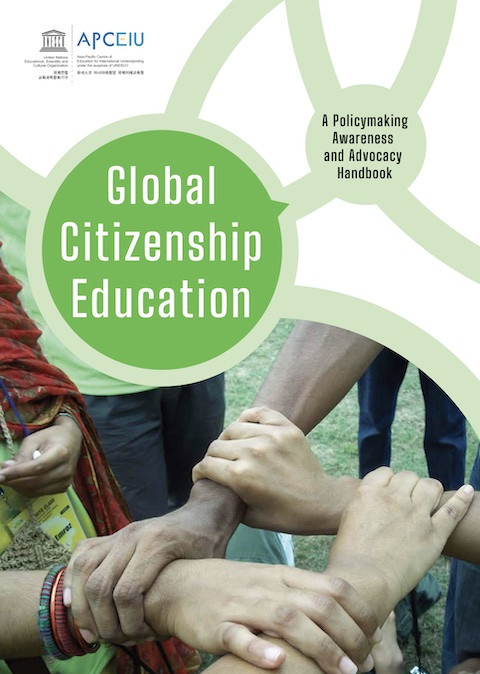 Global Citizenship Education: A Policymaking Awareness and Advocacy Handbook 발행 연도: 2021 단체 저자: APCEIU | UNESCO Bangkok GCED is critical for learners and countries to reach the SDG-Education 2030 targets. Many countries have GCED elements, either explicitly or implicitly, within their education policies. However, to fully realize SDG target 4.7 and to enable our learners to achieve the knowledge, skills, values and attitudes needed to succeed in an ever-changing and adaptable world, countries may need to explicitly build these components directly into various education policies. This policymakers’ handbook provides some guidance on how policymakers can develop and adapt local level policies in order to strengthen GCED learning.
 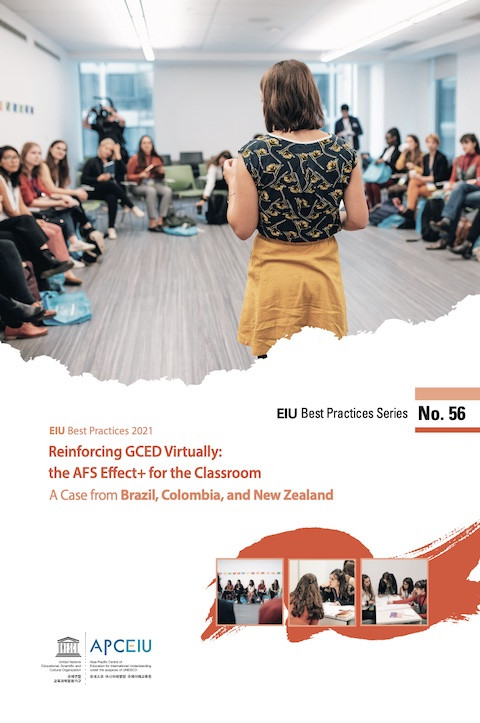 EIU Best Practices 2021: Reinforcing GCED Virtually; the AFS Effect+ for the Classroom, a Case from Brazil, Colombia, and New Zealand (EIU Best Practices Series; no.56) 발행 연도: 2021 저자: Ana Carolina Cassiano 단체 저자: APCEIU This monograph is one of APCEIU's EIU Best Practices Series, which aims to encourage educators, scholars, and activists to implement and share local initiatives on EIU. The Series No.56 introduces ‘the AFS Effect+ for the Classroom Programme’ which is launched in September 2020. The programme has engaged 150+ high-school teachers from Brazil, Colombia, and New Zealand who completed 20 hours of virtual teacher training, collaborated virtually with each other and piloted activities developed by AFS with their classrooms, reaching over 2,500 students. As a result of the programme, the AFS Effect+ for the Classroom: Toolkit for Educators is now available to teachers worldwide to use as a resource for teaching Active Global Citizenship & the SDGs for high school students. The toolkit is currently available in English, Spanish and Portuguese, and being disseminated through AFS Network Organizations which are present in 50+ countries.
 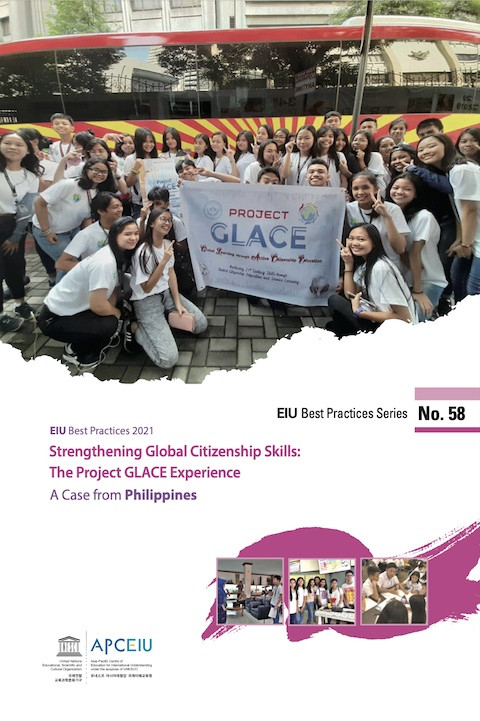 EIU Best Practices 2021: Strengthening Global Citizenship Skills; The Project GLACE Experience, A Case from Philippines (EIU Best Practices Series; no.58) 발행 연도: 2021 저자: Marco Meduranda 단체 저자: APCEIU This monograph is one of APCEIU's EIU Best Practices Series, which aims to encourage educators, scholars, and activists to implement and share local initiatives on EIU. The Series No.58 introduces ‘Project GLACE’ or ‘Global Learning through Active Citizenship Education’. It is an after-school enhancement program that sought to enhance students' global citizenship skills through afterschool learning sessions, off-campus intercultural education experiences, and service-learning or community outreach activities. Using the 4-I's (Inquire, Investigate, Innovate and Impact), selected teachers taught global citizenship education concepts for a span of 12 - 15 weeks with the first six to ten weeks exploring the themes of social justice and equity, identity and diversity, self-awareness and reflection, concern for the environment, commitment to sustainable development, and commitment to participation and inclusion.
 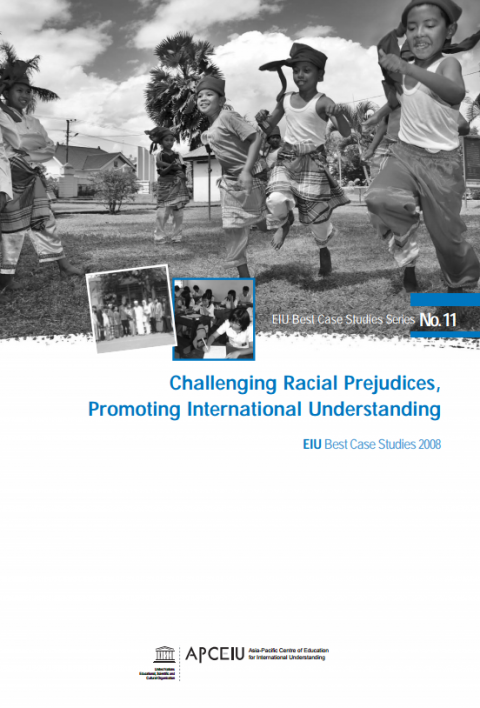 EIU Best Practices Series No. 11: Challenging Racial Prejudices, Promoting International Understanding 발행 연도: 2008 단체 저자: APCEIU This monograph is one of APCEIU's EIU Best Practices Series, which aims to encourage educators, scholars, and activists to implement and share local initiatives on EIU. The Series No.11 introduces a case study of the SMA Taman Harapan High School in Indonesia, conducted to explore prevalent issues of racial prejudices and devise methods to reduce racism. Research revealed that students held a degree of racist perception against people of certain heritage. Activities were conducted thenceforth, allowing participants to have direct and extended interactions with people of different cultures. Despite the short timeframe of the activity, perception on stereotypes did not change altogether, yet progress was evident in students’ understanding of the severity of the issue. As educators also learned ways to help alleviate the problem of racism, the case is an exemplary example of increasing cultural awareness and international understanding.
  EIU Best Practices Series No. 13: Integrating Organic Waste Management In Fijian Schools 발행 연도: 2009 저자: Bulou Daiana Taoba 단체 저자: APCEIU This monograph is one of APCEIU's EIU Best Practices Series, which aims to encourage educators, scholars, and activists to implement and share local initiatives on EIU. The Series No.13 introduces a case study of University of the South Pacific PACE’s projects, which showcase students learning about waste management that contribute to environmental protection. As issues of water disposition, rapid urbanization, limited land areas, consumer behavior change, and vulnerable ecosystems are increasingly concerning in the Pacific Island nations, the case highlights the need to educate students on the importance of solid waste management, social responsibility, and global citizenship.