
자료
세계시민교육에 대한 이해를 넓히고 연구, 옹호 활동, 교수, 학습 등을 향상시킬 수 있는 다양하고 유용한 자료를 찾아보세요.
1,180 건의 결과가 검색되었습니다
 Global citizenship: from public support to active participation 발행 연도: 2012 저자: Christine Carabain | Shelena Keulemans | Marije van Gent | Gabi Spitz 단체 저자: National Committee for International Cooperation and Sustainable Development (NCDO) This publication explores the concept of global citizenship by drawing on the most relevant, mainly scientific, literature. This exploration will in the coming years be the basis for NCDO’s programmes in the area of research, staff training, and knowledge sharing. NCDO has the important task of engaging people in these two major changes in perspective: what does it mean, how important is it to us, how can we contribute to it? NCDO considers it its responsibility to raise awareness amongst Dutch citizens of the growing connection and mutual dependency between people across the globe, as well as to make them aware of the opportunities they have to help tackle global issues. In other words: NCDO aims to advance the global dimension of citizenship in the Netherlands. But what exactly is that global dimension of citizenship? Despite growing awareness of the importance of global citizenship, a clear and broadly accepted definition of the concept is still lacking (Hart, 2011). To date the concept is often explained by using examples and focus areas. This publication will present the definition of global citizenship that NCDO will employ in the coming period. Global citizenship: from public support to active participation 발행 연도: 2012 저자: Christine Carabain | Shelena Keulemans | Marije van Gent | Gabi Spitz 단체 저자: National Committee for International Cooperation and Sustainable Development (NCDO) Cette publication explore le concept de citoyenneté mondiale en abordant essentiellement le côté scientifique, la littérature la plus pertinente,. Cette exploration dans les années à venir sera la base pour les programmes de NCDO dans le domaine de la recherche, la formation du personnel, et le partage des connaissances. NCDO a la tâche importante d'engager les gens dans ces deux grands changements en perspective: qu'est-ce que cela veut dire, combien il est important pour nous, comment pouvons-nous y contribuer? NCDO estime qu'il lui incombe de sensibiliser les citoyens néerlandais de la connexion croissante et la dépendance mutuelle entre les peuples à travers le monde, ainsi que pour leur faire connaître les possibilités qu'ils ont pour aider à résoudre les problèmes mondiaux. En d'autres termes: NCDO vise à faire progresser la dimension globale de la citoyenneté aux Pays-Bas. Mais qu'est-ce que la dimension mondiale de la citoyenneté? Malgré la prise de conscience de l'importance de la citoyenneté mondiale, une définition claire et largement acceptée du concept fait toujours défaut (Hart, 2011). À ce jour, le concept est souvent expliqué à l'aide des exemples et des domaines d'intervention. Cette publication présentera la définition de la citoyenneté mondiale qui NCDO emploiera dans la période à venir.
  Inequidad de género en los logros de aprendizaje en educación primaria ¿Qué nos puede decir TERCE?; resumen ejecutivo 발행 연도: 2016 저자: Denisse Gelber, Ernesto Treviño, Pamela Inostroza 단체 저자: UNESCO Santiago This premise of work clearly establishes that promoting learning opportunities for all will be one of the priorities in the Education 2030. Within this framework, UNESCO Santiago has its own instrument that allows delivering diagnosis and analysis in depth about the learning inequality within the region; the Thrid Regional Comparative and Explanatory Study, TERCE - carried out by the Latin American Laboratory for Assessment of the Quality of Education, LLECE, body bringing together 15 countries and coordinated by our Office.
  Global Monitoring of Target 4.7: Themes in National Curriculum Frameworks; Background Paper Prepared for the 2016 Global Education Monitoring Report 발행 연도: 2016 단체 저자: UNESCO International Bureau of Education (IBE) This study is an initial attempt to monitor ESD and GCED content in curricula globally. The goal here is to analyse national curriculum documents to reveal if, how, and to what extent ESD and GCED content is present across the globe. For this purpose, the research team developed a coding scheme based on key ESD and GCED knowledge, skills, behaviours and pedagogies that was used in evaluating the various national curriculum documents for evidence of ESD and GCED content. In this paper, we present the study in the following order. Further explanation of ESD and GCED, and a discussion of issues relating to their implementation and monitoring will come first. Then we will review similar studies that have also attempted to monitor GCED and ESD through content analysis. The study’s methods and findings will then be presented, followed by a discussion of the challenges addressed in developing a coding system to monitor curricula effectively. Finally, we share a series of recommendations that will focus on ways for moving forward in monitoring GCED and ESD effectively, both at a curricular level and beyond.
  Singapore’s educational reforms toward holistic outcomes: (Un)intended consequences of policy layering 발행 연도: 2023 저자: Dennis Kwek | Jeanne Ho | Hwei Ming Wong 단체 저자: Center for Universal Education at Brookings In the transition from economic imperatives to holistic drivers, there has been a gradual move over five policy phases (from 1965 to 2022 and beyond) toward curriculum and school diversification to cater to different students, with more autonomy given to schools to innovate their pedagogy and improve instructional quality to meet their students’ unique needs. Importantly, there has been a shift in policy rhetoric from focusing on educational structures to focusing on pedagogy and instructional quality. To shift pedagogy from being mainly didactic in nature—with emphasis on preparing students for national examination—the Singapore government recognized the need to focus on school leaders’ and teachers’ capacity building to enable new curricula and teaching practices. The school cluster structure was initiated in 1997 to enable collaboration and learning among school leaders, key personnel, and teachers. Opportunities for collaborative teacher learning are provided at different ecological levels: professional learning communities (PLCs) within schools and networked learning communities (NLCs) across schools. Beyond the education system, the Singapore government works with other ministries and community organizations, such as ethnic self-help organizations, to tackle educational equity issues. Ultimately, even though the official policy narrative post-1997 has been a de-emphasis on examination results and educational infrastructure to help improve the instructional quality in schools toward holistic outcomes and improved student well-being have been developed, education systems building co-exists with an alternative underlying shadow education system valued by parents who continue to chase narrow academic outcomes. Tuition and enrichment centers in Singapore constitute the shadow education system.
  The Comprehensive Learning Diagnosis: Chile’s approach to assess socio-emotional learning in schools 발행 연도: 2023 저자: José Weinstein | Juan Bravo 단체 저자: Center for Universal Education at Brookings Education in Chile has important challenges of quality, equity, and social integration. For decades, policies tried to respond to these concerns with a high-stakes accountability institutional framework, which has not had success. The underlying vision of educational quality was limited. The assessment system in place privileged cognitive and academic dimensions of educational results. Socio-emotional learning had been neglected or considered secondary, without an infrastructure of assessment tools that allowed teachers and principals to diagnosis students’ situations and monitor their progress. The COVID-19 crisis was an opportunity for change: Students’ socioemotional needs were a main concern for schools and society, and the regular accountability system based on standardized tests was interrupted. Subsequently, the Comprehensive Learning Diagnosis (DIA) was launched by the Education Quality Agency. The DIA is a voluntary assessment tool made available to all Chilean schools. The DIA promotes the comprehensive development of students, providing timely information and guidance to internally monitor students’ learning in the academic and socio-emotional domains at several points during the school year. Specifically, with respect to socio-emotional learning, three areas were considered: personal, community, and citizenship. In each of these areas, a set of socioemotional skills were defined, operationalized, and became possible to monitor by school communities. The DIA also collects students’ opinions of school management practices regarding socio-emotional skills. The DIA has received a wide acceptance in school communities. Despite being voluntary, an ample majority of schools decided to participate. The information collected from the DIA allows for practical use by principals and teachers. Moreover, the DIA provides the opportunity for students to inform school management. The new Chilean government has decided to strengthen DIA as an important component in a four-year national plan for reactivating academic and socio-emotional learning in schools. The previous high-stakes accountability system, which involved external assessments, has been suspended and is under discussion. The DIA experience has shown that critical social and educational situations can provide fertile ground to motivate deep and rapid transformation, if an educational actor (in this case the Education Quality Agency) is capable of enacting a pertinent, timely, and practical response to school needs. The DIA is not only an example of productive uses of students´ assessment by schools, but also a demonstration that it is possible to build an institutional arrangement among local, intermediate, and national levels of school systems, where a vertical hierarchy is changed by a collaborative relationship based on local agency, mutual trust, and differentiated technical contributions.
 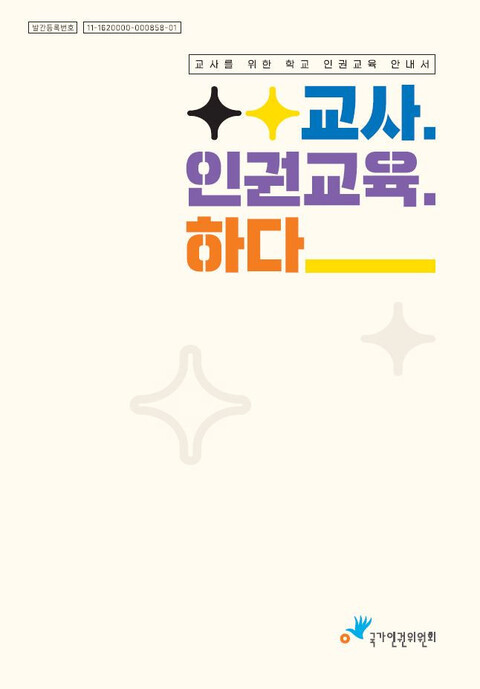 교사. 인권교육. 하다: 교사를 위한 학교 인권교육 안내서 발행 연도: 2021 단체 저자: 국가인권위원회 이 자료는 「초·중등 학교 인권교육 내용 체계화 및 개정 교육과정 적용 방안 연구」 보고서 내용을 바탕으로, 교육 현장에서 인권교육을 실천하고 있거나 해보려는 많은 교사를 위해 학교 인권교육에 관한 이해를 높이고 실천 방법에 대한 유용한 정보를 제공하기 위해 만든 발간물로서 인권 과목의 지향점 및 교육과정 내용 체계 등을 간명하게 보여 줌으로써, 인권 과목을 통한 인권교육을 구체화할 수 있도록 했다. 또한 인권교육을 처음 시도하는 교사들이 부담 없이 접근할 수 있도록 읽을거리, 볼거리, 생각할 거리 등 다양한 자료를 제공한다.
  L’université de paix, ressources pédagogiques 단체 저자: L'université de paix L'Université de Paix diffuse des outils pédagogiques et des articles de fond pour apprendre à mieux communiquer et développer des relations plus sereines et constructives.The University of peace distributes teaching tools and in-depth articles to help people learn to communicate better and develop calmer, more constructive relationships.
  Evaluating the Link between Conflict and Education 발행 연도: 2005 저자: Lynn Davies 단체 저자: SAGE Publishing This paper examines two areas of important evaluation: the impact of education on peace and the impact of education on conflict, and argues that they are not necessarily the same type of evaluation. Evaluating the Link between Conflict and Education 발행 연도: 2005 저자: Lynn Davies 단체 저자: SAGE Publishing Cet article examine deux domaines importants d’évaluation : l'impact de l'éducation sur la paix et l'impact de l'éducation sur les conflits ; il démontre ensuite que le même type d'évaluation ne s’applique pas nécessairement au deux.