
자료
세계시민교육에 대한 이해를 넓히고 연구, 옹호 활동, 교수, 학습 등을 향상시킬 수 있는 다양하고 유용한 자료를 찾아보세요.
42 건의 결과가 검색되었습니다
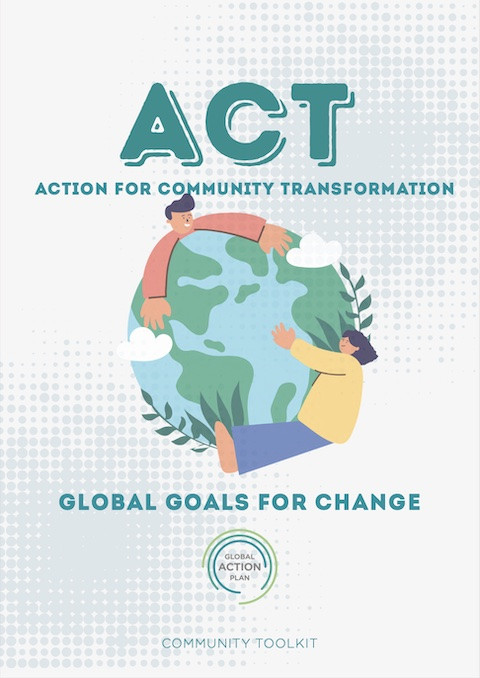 Act: Action for Community Transformation; Global Goals for Change 발행 연도: 2021 저자: Julia Haimlinger | Aine Ferris | Alex Whyatt 단체 저자: Global Action Plan (GAP) This toolkit introduces a programme based on the United Nations Sustainable Development Goals, whereby together, through active, transformational learning, we explore the interconnected nature of poverty, inequality and climate change, and imagine new solutions. The core focus of this toolkit is to help communities to understand how the goals are interlinked and how the fight against climate change helps to address poverty eradication locally and globally.
 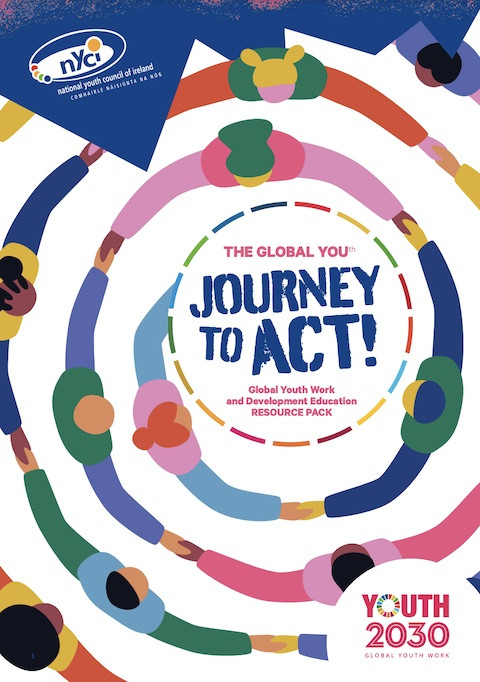 The Global Youth: Journey to Act! 발행 연도: 2021 저자: Valerie Duffy | Leo Gilmartin | Dermot O’Brien | Valery Molay 단체 저자: National Youth Council of Ireland (NYCI) This resource is designed to make it as easy as possible for you to look at the big issues with your group. No matter if you are short on time, or don’t feel you have enough knowledge – there is something in here for you! Broken into 4 stages, the resource include all the knowledge, skills and guided activities for you to use with and for young people, using non-formal development education methodologies: Connect with the ‘self’ Meeting young people where they are at Seeing and claiming our global identity Collective action
 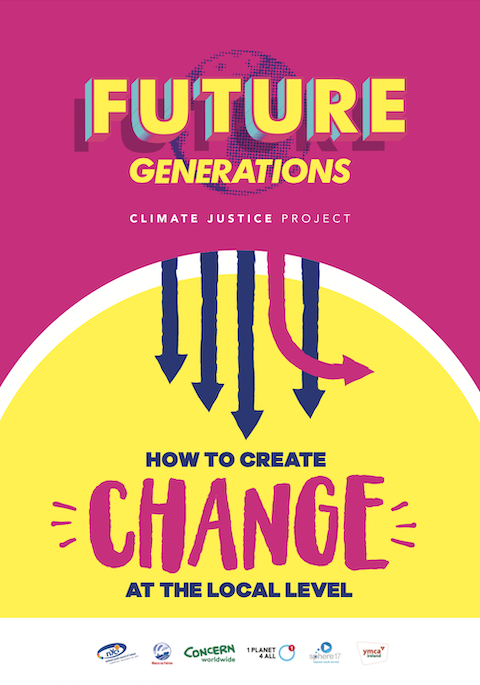 How to Create Change at the Local Level: Future Generations; Climate Justice Project 발행 연도: 2022 저자: Eimear Manning | Valerie Duffy | Valery Molay 단체 저자: National Youth Council of Ireland (NYCI) This resource aims to support young people’s understanding of how they can create meaningful change at the local level, particularly with regards to climate change and climate justice.
  GE2050: The European Declaration on Global Education to 2050; The Dublin Declaration 발행 연도: 2022 단체 저자: Global Education Network Europe (GENE) A new European Declaration on Global Citizenship Education to 2050 has been adopted in Dublin, Ireland on the 20th anniversary of the Maastricht Declaration. The new strategy set out how education will encourage the public to act, individually and collectively, to help build a fairer, more tolerant and more sustainable world for all.
  Activism, the SDGs and Youth: Development Education & Global Citizenship Education; Resource Pack 발행 연도: 2018 저자: Valerie Duffy | Dermot O’Brien 단체 저자: National Youth Council of Ireland (NYCI) | Irish Aid This resource explores the issue of Activism and the Sustainable Development Goals and represents an important contribution at this moment in time where activism and action within the Global Citizenship movement is gaining momentum. It is aimed at Global Educators, Youth Workers, Development Education practitioners, trainers, activists, changemakers of all shapes and sizes but in particular those working with the current generation of young people.
  Peace and Justice: It’s up to Youth; Resource Pack 발행 연도: 2017 저자: Valerie Duffy | Ismael Hayden | Dermot O’Brien 단체 저자: National Youth Council of Ireland (NYCI) | Irish Aid This resource for youth workers on Peace, Justice and the SDGs focuses on Goal 16. It provides activities and opportunities for young people (and those who work with young people) to engage more on key issues of our time, to reflect on root causes and consequences, and to clear a path for this generation to lay strong foundations for present and future pathways to peace, justice, equality, and human rights.
  Equality in Second-level Schools: A Training Manual for Educators and Trainers 발행 연도: 2014 저자: Mary Gannon | Karen O'Shea 단체 저자: Equality Authority | European Union (EU) This resource is based on two and a half days of training delivered to second-level teachers on how to guide discussion and take action on equality in the curriculum and the school. The activities and resources provide ideas and methodologies to engage students in discussing and taking action on equality, human rights and social justice issues in the classroom, the school and the community. These include issues relating to the 9 equality grounds in Irish equality legislation: gender, civil status, family status, sexual orientation, religion, age, disability, race and the Traveller community. Exploring and taking action in these areas supports the development of key skills across curricula including critical and creative thinking, communication, active citizenship and working together.
  Working for a Better Life: A Junior Cycle Civic, Social and Political Education (CSPE) Unit Exploring Human Rights and Development 발행 연도: 2016 저자: Kathryn Moore | Mella Cusack 단체 저자: A Partnership with Africa (APA) | City of Dublin Education and Training Board (CDETB) The aim of this Teaching and Learning Unit is to encourage teachers and junior cycle students to question the sources of generalisations about ‘developing countries,’ and to use a human rights framework when engaging with case studies about people who are working to lift themselves out of situations of poverty and inequality. The unit can also be used to support teaching and learning in Civic, Social and Political Education (CSPE), and to contribute to the delivery of Wellbeing at junior cycle level. The unit could also be used in citizenship, social justice or development education module for Transition Year students.
  Children's Global Thinking: Research Investigating the Engagement of Seven-to-Nine-Year Old Children with Critical Literacy and Global Citizenship Education 발행 연도: 2014 저자: Rowan Oberman | Fiona O’Shea | Beth Hickey | Claire Joyce 단체 저자: Education for a Just World Partnership | St. Patrick's College | Trócaire | Centre for Human Rights and Citizenship Education (CHRCE) The focus of this research is two-fold. Firstly, it investigates how children aged seven to nine years conceptualise global and justice issues. Secondly, it explores children’s engagement with critical literacy strategies as part of a global citizenship education programme. This research project is undertaken with the intention of providing an empirical basis to support the development of pedagogy integrating global citizenship education into different curriculum areas.
  Climate Action: Teacher Resource 발행 연도: 2018 저자: Gráinne Ryan 단체 저자: An Taisce The Climate Action Teacher Resource has been devised to equip Geography, C.S.P.E., Science, English teachers with the tools and guidance to explore the topic of climate change through their curriculum. This comprehensive guide provides teachers with the resources to educate, encourage and inspire students to take action on climate change, a challenge that faces Irish society and the wider international community.