
자료
세계시민교육에 대한 이해를 넓히고 연구, 옹호 활동, 교수, 학습 등을 향상시킬 수 있는 다양하고 유용한 자료를 찾아보세요.
2,668 건의 결과가 검색되었습니다
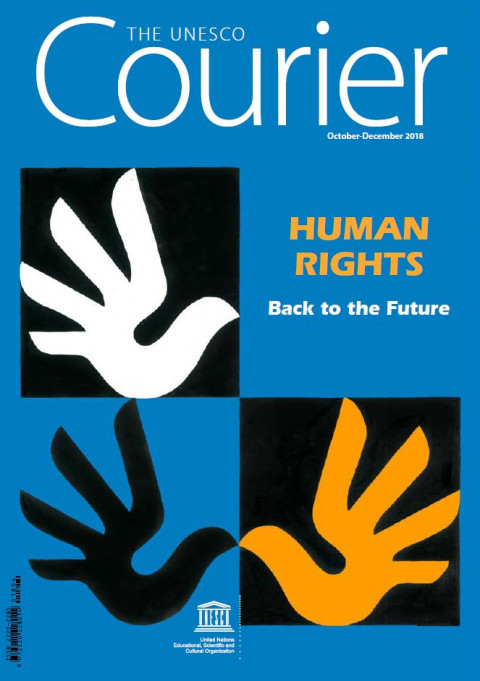 Права человека: назад в будущее (Курьер ЮНЕСКО no. 4, октябрь-декабрь 2018 года) 발행 연도: 2018 단체 저자: Организация Объединенных Наций по вопросам образования, науки и культуры (UNESCO) Среди авторов этого номера «Курьера ЮНЕСКО» – Морис Добб, Гарольд Дж. Ласки, Бенедетто Кроче, Олдос Хаксли, Ло Чун-Шу, Арнольд Шёнберг и другие выдающиеся деятели прошлого столетия. По случаю 70-летия Всеобщей декларации прав человека, принятой 10 декабря 1948 года, мы решили вернуться в прошлое, чтобы с большей ясностью смотреть в будущее. Поэтому текущий номер так и называется: «Назад в будущее». Представим же, что сейчас вновь 1946 год. Над миром витает жуткий призрак тотальной войны, и международное сообщество испытывает «потребность выступить с совместным заявлением морального характера, в котором оно могло бы в должной мере выразить всеобщее негодование и надежду на лучшее будущее, какой бы утопичной она ни казалась», – поясняет специалист по социальной антропологии Марк Гудэйл во вступительной статье к подготовленной с его помощью рубрике «Широкий обзор». Материалы этой рубрики знакомят читателей с малоизвестным фактом из истории Всеобщей декларации прав человека – всемирным опросом, проведенным ЮНЕСКО по инициативе первого Генерального директора Джулиана Хаксли с целью определения философских принципов, лежащих в основе прав человека. Решение о его проведении было принято на 1-й сессии Генеральной конференции ЮНЕСКО, состоявшейся в ноябре-декабре 1946 года, а сам опрос был проведен годом позже. Руководство этим масштабным проектом осуществлял молодой французский философ Жак Аве. В опросе, призванном заложить основы для размышлений о правах человека, приняли участие яркие представители интеллектуальной элиты послевоенного общества. Несмотря на прошедшие с тех пор 70 лет, поднятые в ходе этого проекта вопросы по-прежнему чрезвычайно актуальны. Столь же актуальны и рисунки нашего гостя, перуанского художника Фернандо Брисе, черпающего вдохновение в «том особом периоде, когда идея прогресса действительно открывала многочисленные перспективы». Этому периоду он посвятил серию под названием The Book of Needs («Книга потребностей»), рисунки из которой виртуозно воспроизводят страницы «Курьера ЮНЕСКО» за 1948-1954 год. Большую часть из них можно увидеть в приложении к текущему номеру журнала.
  Strengthening the Rule of Law Through Education: A Guide for Policymakers 발행 연도: 2019 단체 저자: UN. Office on Drugs and Crime (UNODC) | UNESCO The new joint publication by UNESCO and UNODC Strengthening the Rule of Law through Education: A Guide for Policymakers explores the role that education institutions can play in promoting the rule of law and building new forms of engagement based on global citizenship, human rights and inclusion -- all of which are vital to take forward the Sustainable Development Goal 4 on education, at the heart of the 2030 Agenda for Sustainable Development. Strengthening the Rule of Law through Education: A Guide for Policymakers is intended for education policymakers and other professionals working in the formal education sector, within and outside Ministries of Education, and who are seeking to promote the rule of law and a culture of lawfulness.The guide may also be of interest to professionals working in non-formal education settings or other sectors – namely the justice, social and health sectors - in the area of crime and violence prevention, who are seeking to work more closely with the education sector. In particular, the guide offers:An explanation of key concepts, such as the rule of law and a culture of lawfulness, as well as outlining the role of education in upholding and promoting the rule of law; Guidance on how the education sector is able to strengthen and promote the rule of law, for instance, by speaking to the real learning needs of children and youth, and by ensuring that places of learning “practice what they preach”; A map of the necessary support systems needed to strengthen the rule of law at the school and classroom levels and outside formal education settings, including curricular support, classroom pedagogies, teacher training and development and school-family-community partnerships. Fortalecimiento del estado de derecho mediante la educación: guía para los encargados de la formulación de políticas 발행 연도: 2019 단체 저자: UN. Office on Drugs and Crime (UNODC) | Organización de las Naciones Unidas para la Educación, la Ciencia y la Cultura (UNESCO) La nueva publicación conjunta de la UNESCO y la Oficina de las Naciones Unidas contra la Droga y el Delito (UNODC): Fortalecimiento del estado de derecho mediante la educación: guía para los encargados de la formulación de políticas, explora el rol que pueden jugar las instituciones educativas en la promoción del estado de derecho y en la creación de nuevas formas de participación basadas en ciudadanía global, derechos humanos e inclusión – cuestiones que son vitales para promocionar el 4to Objetivo sobre educación para el Desarrollo Sostenible, en el corazón de la Agenda 2030 para el Desarrollo Sostenible. Fortalecimiento del estado de derecho mediante la educación: guía para los encargados de la formulación de políticas, está dirigido a los creadores de políticas educativas y a otros profesionales que trabajan en el sector formal de educación, dentro o fuera de los Ministerios de Educación, y que estén procurando promocionar el estado de derecho y la cultura de la legalidad.La guía también puede ser de interés para profesionales trabajando en contextos educativos no formales y otros sectores – como ser en los sectores sociales, de justicia o de salud – en las áreas de prevención de violencia y crimen, que estén buscando trabajar más cerca al área educativa. En particular, la guía ofrece: Una explicación de conceptos claves, como ser la cultura de derecho o la cultura de la legalidad, a la vez que detalla el rol de la educación en sostener y promover el estado de derecho;Orientaciones sobre cómo el sector educativo es capaz de fortalecer y promocionar el estado de derecho, por ejemplo, abordando las necesidades reales de niños y jóvenes, y asegurándose que los lugares de enseñanza “practican lo que predicen”;Un mapa de los sistemas de soporte necesarios para fortalecer el estado de derecho en la escuela, a nivel del aula y fuera de los contextos de educación formal, incluyendo soporte curricular, pedagogía de aula, desarrollo y capacitación docente y asociaciones entre la escuela, la familia y la comunidad. تعزيز سيادة القانون عن طريق التعليم: دليل لواضعي السياسات 발행 연도: 2019 단체 저자: UN. Office on Drugs and Crime (UNODC) | منظمة الأمم المتحدة للتربية والعلم والثقافة (UNESCO) لمنشور المشترك الجديد لليونسكو ومكتب الأمم المتحدة المعني بالمخدرات والجريمة بعنوان "تعزيز سيادة القانون من خلال التعليم: دليل لواضعي السياسات" يستكشف الدور الذي يمكن أن تلعبه المؤسسات التعليمية في تعزيز سيادة القانون وبناء أشكال جديدة من المشاركة على أساس المواطنة العالمية وحقوق الإنسان والإدماج - - جميعها حيوية للمضي قدمًا في تحقيق الهدف 4 من أهداف التنمية المستدامة بشأن التعليم ، في صميم خطة التنمية المستدامة لعام 2030.تعزيز سيادة القانون من خلال التعليم: دليل صانعي السياسات موجه لواضعي السياسات التعليمية وغيرهم من المهنيين العاملين في قطاع التعليم الرسمي ، داخل وزارات التعليم وخارجها ، والذين يسعون إلى تعزيز سيادة القانون وثقافة احترام القانون.قد يكون الدليل مفيدًا أيضًا للمهنيين العاملين في أماكن التعليم غير النظامي أو القطاعات الأخرى - وبالتحديد قطاعات العدالة والاجتماعية والصحية - في مجال منع الجريمة والعنف ، الذين يسعون إلى العمل بشكل أوثق مع قطاع التعليم.
  International Day against Homophobia & Transphobia: Lesson Plan 발행 연도: 2014 단체 저자: UNESCO Each year, the world celebrates the International Day Against Homophobia and Transphobia (IDAHO) on May 17th. During the days surrounding IDAHO, private and public actors, ranging from the United Nations agencies, to city councils, police stations, human rights organiza-tions, individual citizens, schools and others, implement activities to mark the day. The theme of this year’s IDAHO is “Fighting homophobia and transphobia IN and THROUGH education”. This theme was selected in response to a growing awareness that homophobic and transphobic bullying in schools which are manifestations of homophobia and transphobia, are serious issues that students and educational staff face every day across the world.Over the years, teachers around the world have been developing activities in their classrooms, with the help of various organizations working on efforts to address and homophobia and transphobia in educational institutions. Building on the success of these experiences, UNESCO and the IDAHO Committee propose teachers take advantage of the International Day Against Homophobia and Transphobia to conduct an ‘IDAHO Lesson’. The four activities proposed below are aimed at both primary and secondary level classes. A list of resources from other organizations for teachers, for all subjects and all grades is included below to enable greater choice of possible activities. By conducting an “IDAHO Lesson”, you can create safer learning environments, address discrimination and encourage respect and tolerance between and amongst learners.(Title: International Day against Homophobia and Transphobia: Lesson Plan) Combattre l’homophobie et la transphobie : Propositions pédagogiques 발행 연도: 2014 단체 저자: Organisation des Nations Unies pour l'éducation, la science et la culture (UNESCO) Le présent programme pédagogique a été élaboré à l’occasion de l’IDAHO 2012, autour du thème « Combattre l’homophobie et la transphobie DANS et PAR l’éducation », en réponse à la prise de conscience que le harcèlement homophobe ou transphobe dans les écoles sont des manifestations de l’homophobie et de la transphobie auxquelles étudiants et membres du corps enseignant du monde entier doivent faire face au quotidien. Un problème sérieux qui ne peut être ignoré.Diverses études démontrent que le harcèlement homophobe ou transphobe peut avoir de graves répercussions sur la santé physique et mentale des jeunes gens et jeunes filles qui le subissent à un moment crucial de leur vie. Le harcèlement homophobe peut entraîner une baisse des performances d’apprentissage, voire, parfois, le décrochage scolaire. Les jeunes personnes lesbiennes, gays, bisexuelles, transgenres ou intersexes (LGBTI) victimes de harcèlement homophobe sont plus enclines à l’automutilation, et on dénombre parmi cette population beaucoup plus de cas de suicide que chez les autres jeunes. Les recherches révèlent aussi que les jeunes LGBTI ont tendance à adopter des comportements à haut risque tels que les rapports sexuels non protégés et la consommation de stupéfiants.
 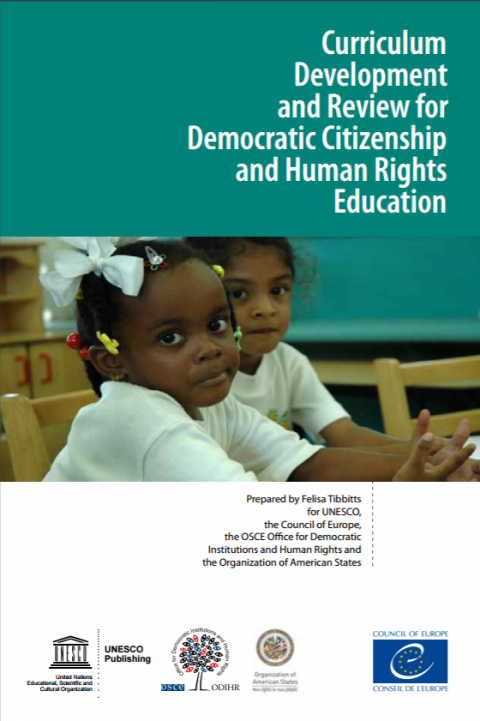 Curriculum Development and Review for Democratic Citizenship and Human Rights Education 발행 연도: 2016 단체 저자: UNESCO | Council of Europe | Organization of American States (OAS) | OSCE. Office for Democratic Institutions and Human Rights (ODIHR) Education for democratic citizenship and human rights education are vital for peaceful, sustainable and inclusive societies based on respect for the human rights of every person. Effective teaching and learning processes require well-trained teachers, positive learning environments and high-quality learning materials. This is underpinned by education policy, including curriculum development and review, which is the main focus of this book. The strengthening of education policies in the fields of education for democratic citizenship and human rights lies at the very heart of the efforts of the Council of Europe, the United Nations Educational, Scientific and Cultural Organization, the Office for Democratic Institutions and Human Rights of the Organization for Security and Co-operation in Europe, and the Organization of American States. These organisations have jointly produced this publication in order to support states’ commitment to fostering citizenship and human rights education and improving access to quality education for all. Élaboration et révision des programmes d'enseignement pour l'éducation à la citoyenneté démocratique et aux droits de l'homme 발행 연도: 2016 단체 저자: Organisation des Nations Unies pour l'éducation, la science et la culture (UNESCO) | Conseil de l'Europe | Organization of American States (OAS) | OSCE. Office for Democratic Institutions and Human Rights (ODIHR) Education for democratic citizenship and human rights education are vital for peaceful, sustainable and inclusive societies based on respect for the human rights of every person. Effective teaching and learning processes require well-trained teachers, positive learning environments and high-quality learning materials. This is underpinned by education policy, including curriculum development and review, which is the main focus of this book. The strengthening of education policies in the fields of education for democratic citizenship and human rights lies at the very heart of the efforts of the Council of Europe, the United Nations Educational, Scientific and Cultural Organization, the Office for Democratic Institutions and Human Rights of the Organization for Security and Co-operation in Europe, and the Organization of American States. These organisations have jointly produced this publication in order to support states’ commitment to fostering citizenship and human rights education and improving access to quality education for all. Разработка и пересмотр учебных программ по воспитанию демократической гражданственности и образованию в области прав человека 발행 연도: 2016 단체 저자: Организация Объединенных Наций по вопросам образования, науки и культуры (UNESCO) | Council of Europe | Organization of American States (OAS) | OSCE. Office for Democratic Institutions and Human Rights (ODIHR) Education for democratic citizenship and human rights education are vital for peaceful, sustainable and inclusive societies based on respect for the human rights of every person. Effective teaching and learning processes require well-trained teachers, positive learning environments and high-quality learning materials. This is underpinned by education policy, including curriculum development and review, which is the main focus of this book. The strengthening of education policies in the fields of education for democratic citizenship and human rights lies at the very heart of the efforts of the Council of Europe, the United Nations Educational, Scientific and Cultural Organization, the Office for Democratic Institutions and Human Rights of the Organization for Security and Co-operation in Europe, and the Organization of American States. These organisations have jointly produced this publication in order to support states’ commitment to fostering citizenship and human rights education and improving access to quality education for all.
 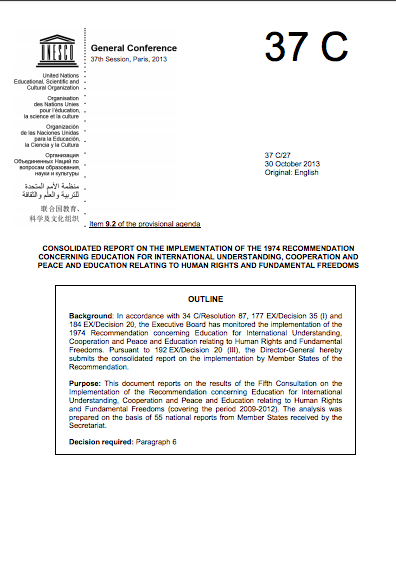 Rapport de synthèse sur l'application par les États membres de la Recommandation de 1974 sur l'éducation pour la compréhension, la coopération et la paix internationales et l'éducation relative aux droits de l'homme et aux libertés fondamentales 발행 연도: 2013 단체 저자: Organisation des Nations Unies pour l'éducation, la science et la culture (UNESCO) Background: In accordance with 34 C/Resolution 87, 177 EX/Decision 35 (I) and 184 EX/Decision 20, the Executive Board has monitored the implementation of the 1974 Recommendation concerning Education for International Understanding, Cooperation and Peace and Education relating to Human Rights and Fundamental Freedoms. Pursuant to 192 EX/Decision 20 (III), the Director-General hereby submits the consolidated report on the implementation by Member States of the Recommendation.Purpose: This document reports on the results of the Fifth Consultation on the Implementation of the Recommendation concerning Education for International Understanding, Cooperation and Peace and Education relating to Human Rights and Fundamental Freedoms (covering the period 2009-2012). The analysis was prepared on the basis of 55 national reports from Member States received by the Secretariat.