
자료
세계시민교육에 대한 이해를 넓히고 연구, 옹호 활동, 교수, 학습 등을 향상시킬 수 있는 다양하고 유용한 자료를 찾아보세요.
2,161 건의 결과가 검색되었습니다
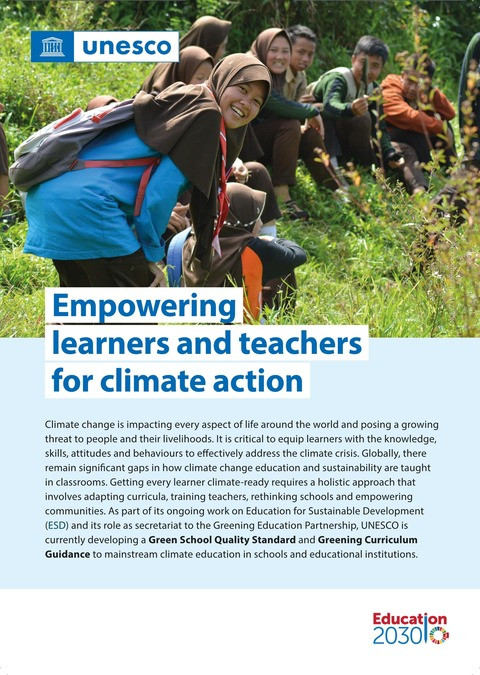 Empowering Learners and Teachers for Climate Action 발행 연도: 2023 단체 저자: UNESCO Climate change is impacting every aspect of life around the world and posing a growing threat to people and their livelihoods. It is critical to equip learners with the knowledge, skills, attitudes and behaviours to effectively address the climate crisis. Globally, there remain significant gaps in how climate change education and sustainability are taught in classrooms. Getting every learner climate-ready requires a holistic approach that involves adapting curricula, training teachers, rethinking schools and empowering communities. As part of its ongoing work on Education for Sustainable Development (ESD) and its role as secretariat to the Greening Education Partnership, UNESCO is currently developing a Green School Quality Standard and Greening Curriculum Guidance to mainstream climate education in schools and educational institutions.
  Kit de herramientas global sobre IA y el estado de derecho para el poder judicial 발행 연도: 2023 저자: Miriam Stankovich | Ivana Feldfeber | Yasmín Quiroga | Marianela Ciolfi Felice | Vukosi Marivate 단체 저자: UNESCO ¿Qué es la Inteligencia artificial (IA)? ¿Cómo funciona? Y lo que es más importante, ¿cómo se abre camino en el contexto judicial? Tecnologías como la IA han existido durante décadas, pero solo recientemente han comenzado a usarse en una variedad de entornos de justicia y aplicación de la ley. Si bien la IA tiene un inmenso potencial para el sistema de justicia, ya que ayuda a los jueces a tomar mejores decisiones, mejora la eficiencia, aumenta el acceso y ayuda a detectar y prevenir el delito, también existen algunas cuestiones importantes que las partes interesadas en la justicia deben tener en cuenta mientras se preparan para un futuro en el que la IA se utiliza cada vez más en los sistemas de justicia. En 2022, la UNESCO lanzó dos evaluaciones de necesidades. En primer lugar, a través de la Encuesta de evaluación de necesidades de inteligencia artificial de la UNESCO en África, el 90 % de los 32 países encuestados solicitaron apoyo para el desarrollo de capacidades para el poder judicial en materia de IA. Al mismo tiempo, una segunda encuesta mundialde actores judiciales en 100 países subrayó la necesidad de comprender mejor el uso de la IA en la administración de justicia y sus repercusiones jurídicas más amplias en las sociedades. El “Kit de herramientas mundial sobre la IA y el Estado de derecho” para el Poder Judicial responde a estas necesidades y proporciona a los actores judiciales (jueces, fiscales, fiscales estatales, abogados públicos, universidades de derecho e instituciones de formación judicial) el conocimiento y las herramientas necesarias para comprender los beneficios y riesgos de la IA en su trabajo. El kit de herramientas ayudará a los actores judiciales a mitigar los posibles riesgos de la IA para los derechos humanos al brindar orientación sobre las leyes, principios, normas y jurisprudencia internacional de derechos humanos relevantes que sustentan el uso ético de la IA.
 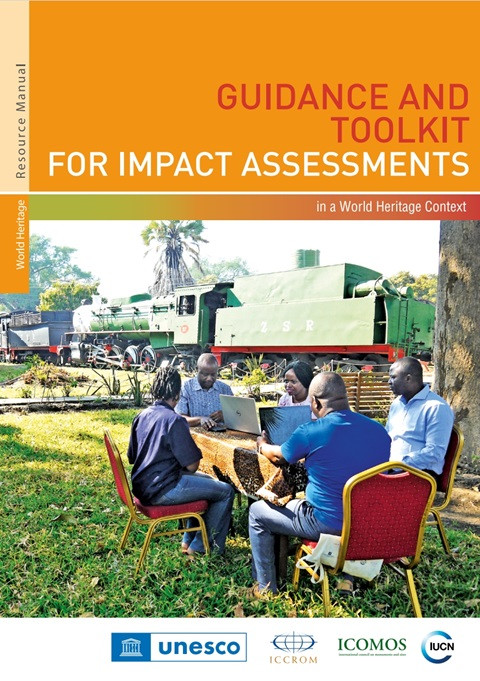 Guidance and Toolkit for Impact Assessments in a World Heritage Context 발행 연도: 2022 저자: Sarah Court | Eugene Jo | Richard Mackay | Mizuki Murai | Riki Therivel 단체 저자: UNESCO | International Centre for the Study of the Preservation and Restoration of Cultural Property (ICCROM) | International Council on Monuments and Sites (ICOMOS) | International Union for Conservation of Nature (IUCN) | Korea R. Cultural Heritage Administration As the World Heritage Convention celebrates its 50th anniversary in 2022, over 1100 sites around the world are recognized as World Heritage - places that are so valuable to humanity that there conservation has been deemed our collective responsibility. Yet many of these exceptional places face increasing pressure from diverse types of development projects within and around the sites. Assessing the impacts of such projects – before deciding to proceed with their implementation – is essential to both prevent damage to World Heritage and identify sustainable options.The Guidance and Toolkit for Impact Assessments in a World Heritage Context is the go-to reference that explains the process for achieving these goals. Offering practical tips and tools including checklists and a glossary, it provides a framework for conducting impact assessments for cultural and natural heritage sites.Developed by UNESCO and the Advisory Bodies to the World Heritage Committee, ICCROM, ICOMOS and IUCN, this Guidance and Toolkit fosters cross-sectoral, multidisciplinary collaboration to identify solutions for both protecting World Heritage sites and supporting good quality and appropriate development . States Parties to the World Heritage Convention, heritage managers, decision-makers, planners and developers are invited to use it to help realise our collective commitment to passing on our precious heritage to future generations. 세계유산 영향평가 지침서 발행 연도: 2023 저자: Sarah Court | Eugene Jo | Richard Mackay | Mizuki Murai | Riki Therivel 단체 저자: 유네스코 | International Centre for the Study of the Preservation and Restoration of Cultural Property (ICCROM) | International Council on Monuments and Sites (ICOMOS) | International Union for Conservation of Nature (IUCN) | Korea R. Cultural Heritage Administration 2022년 '세계유산협약'이 탄생 50주년을 맞았다. 그동안 전 세계적으로 1,100건이 넘는 곳이 세계유산으로 공인되어 그 가치를 보존하는 것이 인류 전체의 의무로 인식되고 있다. 그러나 많은 세계유산이 유산 안팎의 다양한 개발행위로 인해 위협받고 있다. 그러한 개발행위로 인한 유산의 훼손을 예방하고 지속가능한 대안을 찾기 위해서는 개발행위를 실행하기로 결정하기에 앞서 유산에 미칠 영향을 평가해야한다. 이러한 목적을 위해 편리하게 활용할 수 있도록 나온 안내서가 바로 본 '세계유산 영향평가 지침서(이하 '지침서')이다. 지침서는 실무에 바로 쓸 수 있도록 용어정의, 점검목록 등을 제안하며 문화유산과 자연유산의 영향평가에 모두 사용할 수 있다. UNESCO와 세계유산위원회의 자문기구인 ICCROM, ICOMOS와 ICUN이 개발한 이 지침서는 다양한 분야를 넘나드는 학제적 협력을 통해 세계유산보호와 고품질의 적절한 개발이라는 일석이조의 목적을 달성하는 대안을 찾기 위한 안내서이다. 세계유산협약의 당사국, 유산관리자, 계획정책 당국과 개발 사업자까지 본 지침서를 활용하여, 인류의 공동 사명인 소중한 유산을 후세에 전승하는데 기여해 주길 바란다.
 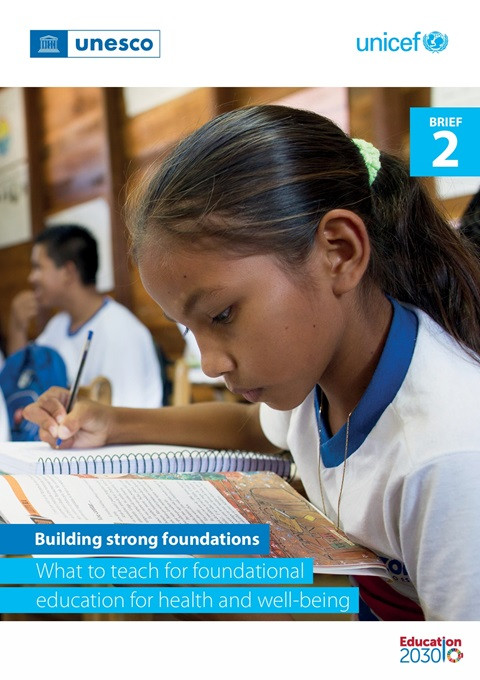 Building Strong Foundations: What to Teach for Foundational Education for Health and Well-being (Building Strong Foundations Brief; 2) 발행 연도: 2024 단체 저자: UNESCO | United Nations Children's Fund (UNICEF) In a rapidly changing world, establishing strong foundations for children is vital for their well-being and resilience. Quality education is central to this endeavour and is the key to lifelong health and success. Recognizing that children thrive in the classroom when they are in good health, it is crucial to learn about health and well-being early on in primary schools. The Building strong foundations briefs, developed jointly by UNESCO and UNICEF, provide evidence-based guidance to support primary school-aged children to thrive through foundational education for health and well-being. Drawing from extensive research and consultations with leading experts from various fields and across the world, these briefs serve as a roadmap for education stakeholders to equip learners with the requisite knowledge and skills to navigate their current and future health and well-being needs. The present document is the second of four briefs. It is a go-to resource to better understand what makes a primary school curriculum effective in supporting health, well-being and learning. The brief provides practical tips and insights on integrating core thematic concepts for health and well-being into the curriculum, including concrete examples of learning objectives for lower primary and upper primary curricula. Whether a seasoned curriculum designer, a passionate educator or an individual involved in primary school curriculum processes, this brief equips readers with the tools to design impactful curricula for transformative learning, health and well-being.
  Solidarity as the Future of Education: Perspectives From the Ibero-American Experience of Service-Learning 발행 연도: 2024 저자: Elena Massat 단체 저자: UNESCO | Latin American Center for Service-Learning (CLAYSS) With this work we have proposed to put into dialogue the recent UNESCO document “Reimagining our futures together. A new social contract for education. Report of the international commission on the futures of education” with the theory and practice of service-learning in Ibero-America. We would like to show how UNESCO's proposal for education for the future can already be verified as a practice in many educational institutions in the region, which develop solidarity service-learning projects even in the most vulnerable contexts. In these experiences, solidarity ceases to be just learning content, to become an educational process, a pedagogy to learn to solve complex problems of reality, and to use the SDGs as a “curriculum” for the education of the future (UNESCO, 2022:54). These practices are deeply innovative, as the experts who comment on them point out, and we hope that they can be inspiring for many other educational institutions. La solidaridad como futuro de la educación: Perspectivas desde la experiencia iberoamericana del aprendizaje-servicio 발행 연도: 2024 저자: Elena Massat 단체 저자: Organización de las Naciones Unidas para la Educación, la Ciencia y la Cultura (UNESCO) | Latin American Center for Service-Learning (CLAYSS) Con esta obra nos hemos propuesto poner en diálogo el reciente documento de la UNESCO “Reimaginar juntos nuestros futuros. Un nuevo contrato social para la educación. Informe de la comisión internacional sobre los futuros de la educación.” con la teoría y práctica del aprendizaje-servicio en Iberoamérica. Quisiéramos evidenciar de qué manera la propuesta de educación para el futuro de UNESCO se puede ya verificar como práctica en muchas instituciones educativas de la región, que desarrollan proyectos de aprendizaje-servicio solidario aún en los contextos de mayor vulnerabilidad. En estas experiencias, la solidaridad deja de ser sólo contenido de aprendizaje, para transformarse en proceso educativo, en pedagogía para aprender a solucionar problemas complejos de la realidad, y usar a los ODS como “currículo” de la educación del futuro (UNESCO, 2022:54). Estas prácticas son profundamente innovadoras, como lo señalan los expertos que las comentan, y esperamos que puedan ser inspiradoras para muchas otras instituciones educativas.
 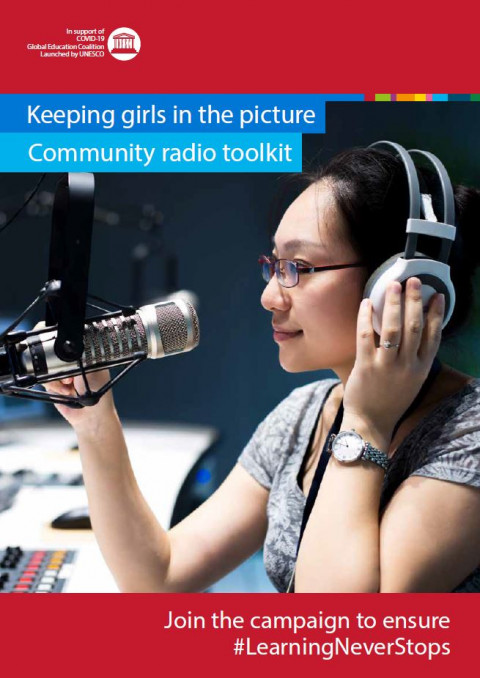 Keeping Girls in the Picture: Community Radio Toolkit 발행 연도: 2020 단체 저자: UNESCO | Global Education Coalition This toolkit is to help you to get stories and messages about this vital issue out to your audience. We want it to make an impact on people’s lives. We hope this toolkit will support you in creating exciting and memorable content for community radio programmes wherever you are.This toolkit contains the messages and facts from the global campaign. It has not been tailored for any specific region, country or area. We count on you to consider how to make this campaign most relevant to your audiences - drawing on local data and voices from your communities.The toolkit suggests several types of shows that community radio stations can create. If you want to include specific facts and statistics about your country, area or community, please work with organizations in your local network that can help.
 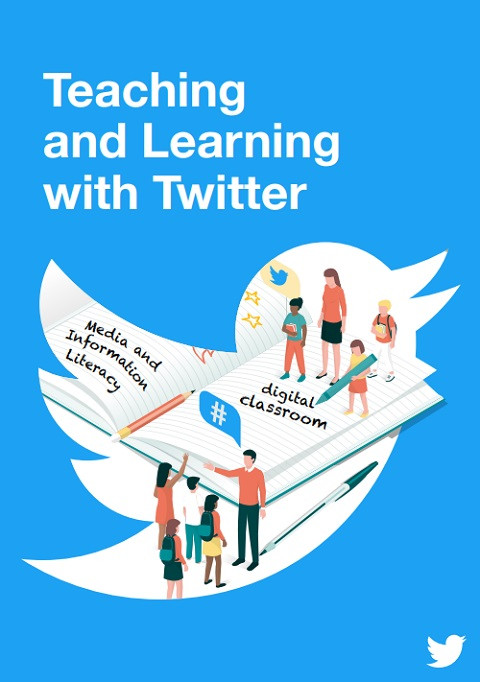 Enseigner et apprendre avec Twitter 발행 연도: 2019 단체 저자: Twitter | Organisation des Nations Unies pour l'éducation, la science et la culture (UNESCO) Ce document est destiné aux enseignants qui souhaitent créer des cours axés sur l'éducation aux médias et à l'information, et leur lien avec le fait d'être un « citoyen du monde » et un « citoyen numérique ». Que vos cours soient orientés sur l'éducation aux médias et à l'information (MIL), sur les bonnes habitudes à adopter sur Internet ou toute autre compétence liée à l'utilisation du Web, ce document contient des informations qui pourront vous être utiles.
  Balancing Act: Countering Digital Disinformation While Respecting Freedom of Expression 발행 연도: 2020 저자: Kalina Bontcheva | Julie Posetti 단체 저자: UNESCO | Broadband Commission for Sustainable Development. Working Group on AI Capacity Building | International Telecommunication Union (ITU) This report provides stakeholders with a rich suite of sector-specific recommendations, as well as a helpful 23-point framework that can be used for assessing any particular response to disinformation in the context of freedom of expression challenges. This research will help the widest range of key actors to better understand this phenomenon, and especially the way the world is responding to it, and where the gaps are.At the heart of this knowledge product is the need to balance responses to disinformation with respect for freedom of expression. The research shows us that this can be done.