
자료
세계시민교육에 대한 이해를 넓히고 연구, 옹호 활동, 교수, 학습 등을 향상시킬 수 있는 다양하고 유용한 자료를 찾아보세요.
2,193 건의 결과가 검색되었습니다
 미디어 리터러시 교육 지원체계 구축방안 연구 발행 연도: 2021 저자: 배상률 | 심우민 | 최현정 단체 저자: 한국청소년정책연구원 | 대한민국 교육부 본 연구는 미디어 리터러시 교육 정책추진의 효과성 및 효율성 제고와 개인(유아, 초중고학생, 성인 등) 생애주기별 맞춤형 서비스 제공을 위한 범부처 통합지원 체계 방안을 마련하는데 주요 목적을 두고 있다. 본 저작물은 한국청소년정책연구원에서 2021년 작성하여 공공누리 제 4유형으로 개방한 ‘미디어 리터러시 교육 지원체계 구축방안 연구(배상률, 심우민, 최현정)’ 를 이용하였으며 해당 저작물은 미리네 (www.miline.or.kr)에서 무료로 다운받으실 수 있습니다.
  2022 개정 교육과정의 미디어 리터러시 교육 강화 방안 발행 연도: 2021 저자: 장은주 단체 저자: 한국청소년정책연구원 | 대한민국 교육부 본 연구는 2022 개정 교육과정의 미디어 리터러시 교육을 강화하기 위한 교과 교육과정의 교수학습・평가 방법 및 유의점에 통합 교육과정 운영에 관한 사항을 명시하였다. 학교급별로 맞춤형 전략을 적용할 것을 제안하고, 각 전략 관련 국내외 사례를 제시하였다.본 저작물은 한국청소년정책연구원에서 2021년 작성하여 공공누리 제 4유형으로 개방한 ‘2022 개정 교육과정의 미디어 리터러시 교육 강화 방안(정현선, 장은주)’ 를 이용하였으며 해당 저작물은 미리네 (www.miline.or.kr)에서 무료로 다운받으실 수 있습니다.
  청소년 미디어 이용 실태 및 대상별 정책대응방안 연구Ⅱ: 10대 청소년 발행 연도: 2021 저자: 배상률 | 이창호 | 김남두 단체 저자: 한국청소년정책연구원 본 연구의 목적은 10대 청소년들의 미디어 이용에 대한 심층 분석과 함께 청소년들의 디지털 시민성을 함양할 수 있는 증거기반의 정책방안을 도출하는 것이다. 총 3년간 진행되는 본 연구(2020년∼2022년)는 2020년도 1차 연도 연구에서는 미디어노출과 이용이 본격화되는 초등학생들의 미디어 이용 실태를 파악하였고 2021년도 2차 연도 연구에서는 SNS 사용이 활발하고 미디어를 통한 사회참여가 두드러지는 시기인 중고등학생과 학교 밖 청소년을 대상으로 미디어 이용 실태를 분석하였다. 2차 연구에서는 소셜리빙랩 연구 방법론을 적용하여, 부모들이 참여자로서의 실천적 경험을 공유하면서 청소년의 미디어 이용에 대한 이해를 주도적으로 재구성하고 확장할 수 있는 부모 교육의 기회를 만들어갈 수 있는 부모 참여형 미디어교육 프로그램 운영 방안 제시를 목표로 한다.본 저작물은 한국청소년정책연구원에서 2021년 작성하여 공공누리 제 4유형으로 개방한 ‘청소년 미디어 이용 실태 및 대상별 정책대응방안 연구Ⅱ: 10대 청소년(배상률, 이창호, 김남두)’ 을 이용하였으며 해당 저작물은 미리네 (www.miline.or.kr)에서 무료로 다운받으실 수 있습니다.
  학교미디어교육센터 설치 유형별 지역 안착방안 발행 연도: 2021 저자: 배상률 단체 저자: 한국청소년정책연구원 본 연구에서는 교육부를 포함한 학교미디어교육을 담당하는 부처 및 산하 기관 그리고 지역 미디어센터에 대해 살펴보고, 미디어교육 법제 현황과 한국청소년정책연구원이 최근 수행한 초중고 재학생들의 미디어 리터러시 교육 현황 및 인식 조사 결과를 고찰하였다. 또한 전문가 의견조사 및 설문조사를 통해 학생들의 미디어 리터러시 함양에 궁극적인 기여를 하는 학교미디어교육센터로 자리매김하기 위한 정책 방안을 제시하였다.본 저작물은 한국청소년정책연구원에서 2021년 작성하여 공공누리 제 4유형으로 개방한 ‘학교미디어교육센터 설치 유형별 지역 안착방안(배상률)’ 을 이용하였으며 해당 저작물은 한국청소년정책연구원 (www.nypi.re.kr)에서 무료로 다운받으실 수 있습니다.
 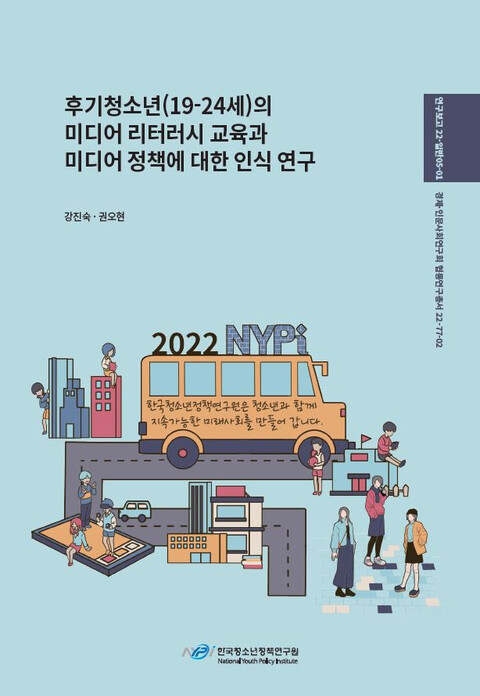 후기청소년(19-24세)의 미디어 리터러시 교육과 미디어 정책에 대한 인식 연구 발행 연도: 2022 저자: 강진숙 | 권오현 단체 저자: 한국청소년정책연구원 이 연구는 후기청소년의 미디어 리터러시 교육과 미디어 정책에 대한 인식 연구로서 후기청소년의 미디어 리터러시 교육적 쟁점과 국내외 사례를 살펴보고, 후기청소년 및 미디어 관련 전문가들의 인식을 통해 후기청소년이 미디어 리터러시 교육과 미디어 정책을 제안하는 데 목적이 있다.연구 진행을 위해 문헌연구, 전문가 자문, FGI(Focus group Interview) 및 심층인터뷰를 진행하였으며, 국내외 후기청소년의 미디어 이용 현황과 관련 정책을 문헌연구를 통해 알아보고, 함의를 도출하였다. 본 저작물은 한국청소년정책연구원에서 2022년 작성하여 공공누리 제4유형으로 개방한 ‘후기청소년(19-24세)의 미디어 리터러시 교육과 미디어 정책에 대한 인식 연구(강진숙, 권오현)’를 이용하였으며 해당 저작물은 한국청소년정책연구원 홈페이지 (https://www.nypi.re.kr)에서 무료로 다운받으실 수 있습니다.
 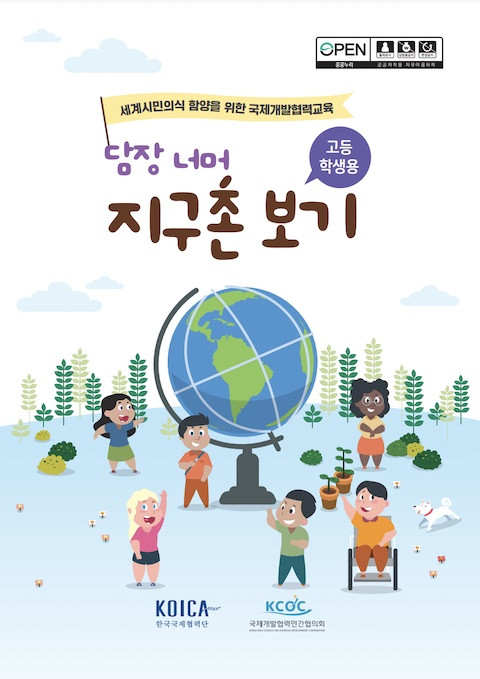 담장 너머 지구촌 보기: 세계시민의식 함양을 위한 국제개발협력교육; 고등학생용 발행 연도: 2021 저자: 이태주 | 김다원 | 김현주 단체 저자: 한국국제협력단 | 국제개발협력민간협의회 세계화, 문화다양성, 지속가능발전, 평화 등을 주제로 한 고등학생용 세계시민교육 교수학습자료로 다양한 모둠별 학습활동지를 담고 있다.본 자료는 한국국제협력단과 국제개발협력민간협의회에서 2021년 작성하여 공공누리 제4유형으로 개방한 ‘담장 너머 지구촌 보기: 세계시민의식 함양을 위한 국제개발협력교육; 고등학생용’ 을 이용하였으며 국제개발협력민간협의회 홈페이지(http://www.ngokcoc.or.kr)에서 다운로드 하실 수 있습니다.
  세계시민교육 시리즈 2편: 72, 세상을 살리는 시간 발행 연도: 2021 단체 저자: 한국국제협력단 KOICA는 SDGs, 긴급구호, 환경, 평화, 성평등, 난민에 대한 국민들의 이해를 높이고자, 6개의 세계시민교육 동영상을 만들어 유튜브로 공유하고자 합니다.2. 72, 세상을 살리는 시간
  세계시민교육 시리즈 3편: UP CYCLING 발행 연도: 2021 단체 저자: 한국국제협력단 KOICA는 SDGs, 긴급구호, 환경, 평화, 성평등, 난민에 대한 국민들의 이해를 높이고자, 6개의 세계시민교육 동영상을 만들어 유튜브로 공유하고자 합니다.3. UP CYCLING
  세계시민교육 시리즈 4편: DR 콩고 소녀의 행복 찾기 발행 연도: 2021 단체 저자: 한국국제협력단 KOICA는 SDGs, 긴급구호, 환경, 평화, 성평등, 난민에 대한 국민들의 이해를 높이고자, 6개의 세계시민교육 동영상을 만들어 유튜브로 공유하고자 합니다.4. DR 콩고 소녀의 행복 찾기
  세계시민교육 시리즈 5편: 젠더렌즈로 보는 세상 발행 연도: 2021 단체 저자: 한국국제협력단 KOICA는 SDGs, 긴급구호, 환경, 평화, 성평등, 난민에 대한 국민들의 이해를 높이고자, 6개의 세계시민교육 동영상을 만들어 유튜브로 공유하고자 합니다.5. 젠더렌즈로 보는 세상