
자료
세계시민교육에 대한 이해를 넓히고 연구, 옹호 활동, 교수, 학습 등을 향상시킬 수 있는 다양하고 유용한 자료를 찾아보세요.
1,402 건의 결과가 검색되었습니다
 تقرير الأمم المتحدة العالمي عن تنمية الموارد المائية 2018، الحلول المستمدة من الطبيعة لمعالجة قضايا المياه 발행 연도: 2018 단체 저자: UNESCO World Water Assessment Programme (WWAP) راسمي السياسات وأصحاب القرار، داخل الأوساط المعنية بالمياه وخارجها، بالإمكانات التي تنطوي عليها الحلول المستمدة من الطبيعة للتصدي للتحديات المعاصرة المتعلقة بإدارة المياه في جميع القطاعات، وخاصة فيما يتعلق باستخدام المياه لأغراض الزراعة، والمدن المستدامة، والحد من مخاطر الكوارث، وجودة المياه. الحلول المستمدة من الطبيعة لمعالجة قضايا المياه تستخدم أو تحاكي العمليات الطبيعية من أجل تحسين توافر المياه (احتباس الرطوبة في التربة على سبيل المثال) وتُحسّن نوعية المياه (حواجز نباتية عازلة على ضفاف الأنهار على سبيل المثال) وتحدّ من المخاطر الناجمة عن الكوارث المتعلقة بالمياه وتغير المناخ (استصلاح السهل الفيضي، الأسطح الخضراء على سبيل المثال).ويتيح تقرير الأمم المتحدة العالمي عن تنمية الموارد المائية لعام 2018، المعنون حلول مستمدة من الطبيعة لمعالجة قضايا المياه، وسيلة حيوية لتجاوز أسلوب الاستمرار في العمل كالمعتاد للتصدي للعديد من التحديات العالمية المتعلقة بالمياه وفي الوقت نفسه تقدم فوائد إضافية حيوية لجميع جوانب التنمية المستدامة.فلا تزال البنية التحتية التقليدية التي يبنيها البشر (أي "الرمادية") تهيمن على إدارة المياه إلى حد بعيد ولا تزال الإمكانات الهائلة للاستعانة بالحلول المستمدة من الطبيعة غير مستغلة استغلالاً كافياً. وتشمل هذه الحلول البنية التحتية المراعية للبيئة (الخضراء) التي يمكن أن تحل محل البنية التحتية الرمادية أو تثريها أو تعمل بالتوازي معها على نحو فعال من حيث التكلفة. ويتمثل الهدف في إيجاد أنسب مزيج من الاستثمارات في الحلول المراعية للبيئة والرمادية لزيادة المنافع المتأتية وكفاءة النظام إلى أقصى درجة مع تقليل التكاليف والتنازلات إلى أدنى حد. وتُعد الحلول المستمدة من الطبيعة لمعالجة قضايا المياه ذات أهمية محورية لتنفيذ خطة التنمية المستدامة لعام 2030 لأنها تولد أيضاً منافع مشتركة اجتماعية واقتصادية وبيئية، في مجالات منها صحة البشر وسبل العيش، وأمن الغذاء والطاقة، والنمو الاقتصادي المستدام، والوظائف اللائقة، وإصلاح النظم الإيكولوجية وصونها، والتنوع البيولوجي. ومع أن الحلول المستمدة من الطبيعة ليست دواءً لكل داء، فإنها ستؤدي دوراً ضرورياً لتحقيق الاقتصاد الدائري وبناء مستقبل أكثر إنصافاً للجميع. إن العمل بانسجام مع الطبيعة يحسن إدارة الموارد المائية ويساعد في تحقيق الأمن المائي للجميع ويدعم الجوانب الأساسية للتنمية المستدامةURL: http://www.unesco.org/new/en/natural-sciences/environment/water/wwap/wwdr/2018-nature-based-solutions/ The United Nations world water development report 2018: nature-based solutions for water 발행 연도: 2018 단체 저자: UNESCO World Water Assessment Programme (WWAP) The 2018 edition of the World Water Development Report (WWDR 2018) seeks to inform policy and decision-makers, inside and outside the water community, about the potential of nature-based solutions (NBS) to address contemporary water management challenges across all sectors, and particularly regarding water for agriculture, sustainable cities, disaster risk reduction and water quality. NBS use or mimic natural processes to enhance water availability (e.g., soil moisture retention, groundwater recharge), improve water quality (e.g., natural and constructed wetlands, riparian buffer strips), and reduce risks associated with water-related disasters and climate change (e.g., floodplain restoration, green roofs). The WWDR2018, titled Nature-based solutions for water, demonstrates how nature-based solutions (NBS) offer a vital means of moving beyond business-as-usual to address many of the world’s water challenges while simultaneously delivering additional benefits vital to all aspects of sustainable development. Currently, water management remains heavily dominated by traditional, human-built (i.e. ‘grey’) infrastructure and the enormous potential for NBS remains under-utilized. NBS include green infrastructure that can substitute, augment or work in parallel with grey infrastructure in a cost-effective manner. The goal is to find the most appropriate blend of green and grey investments to maximize benefits and system efficiency while minimizing costs and trade-offs. NBS for water are central to achieving the 2030 Agenda for Sustainable Development because they also generate social, economic and environmental co-benefits, including human health and livelihoods, food and energy security, sustainable economic growth, decent jobs, ecosystem rehabilitation and maintenance, and biodiversity. Although NBS are not a panacea, they will play an essential role towards the circular economy and in building a more equitable future for all. Working with nature improves the management of water resources, helps achieve water security for all, and supports the core aspects of sustainable development. The World Water Development Report was presented at the 8th World Water Forum, in Brasilia (Brazil) on the 19th of March. URL: http://www.unesco.org/new/en/natural-sciences/environment/water/wwap/wwdr/2018-nature-based-solutions/ Informe Mundial sobre el Desarrollo de los Recursos Hídricos de las Naciones Unidas 2018: Soluciones Basadas En La Naturaleza Para La Gestion Del Agua 발행 연도: 2018 단체 저자: UNESCO World Water Assessment Programme (WWAP) La edición 2018 del El Informe Mundial sobre el Desarrollo de los Recursos Hídricos (WWDR) busca informar a los responsables políticos y tomadores de decisiones, dentro y fuera de la comunidad del agua, sobre el potencial de las soluciones basadas en la naturaleza para afrontar los desafíos actuales de la gestión del agua en todos los sectores, particularmente los relacionados con el agua para la agricultura, para las ciudades sostenibles, para la reducción del riesgo de desastres naturales y los de la calidad del agua. Las soluciones basadas en la naturaleza (NBS) están inspiradas y respaldadas por la naturaleza, usan o imitan los procesos naturales para contribuir al manejo mejorado del agua. La gestión del agua sigue estando fuertemente dominada por la infraestructura tradicional construida por el hombre (es decir, "gris") y el enorme potencial de NBS sigue desaprovechado. Las soluciones basadas en la naturaleza (NBS) incluyen infraestructura verde que puede sustituir, aumentar o trabajar en conjunto con la infraestructura gris de una manera rentable. El objetivo es encontrar la combinación más adecuada de inversiones verdes y grises para maximizar los beneficios y la eficiencia del sistema a la vez que se minimizan los costos y las compensaciones. Las NBS para el agua son fundamentales para alcanzar la Agenda 2030 para el Desarrollo Sostenible porque también generan beneficios colaterales sociales, económicos y ambientales, incluidos la salud humana y los medios de subsistencia, la seguridad alimentaria y energética, el crecimiento económico sostenible, empleos decentes, rehabilitación y mantenimiento de ecosistemas y biodiversidad. Si bien las NBS no son una panacea, jugarán un papel esencial en la economía circular y en la construcción de un futuro más equitativo para todos. Trabajar con la naturaleza mejora la gestión de los recursos hídricos, ayuda a lograr la seguridad del agua para todos y respalda los aspectos centrales del desarrollo sostenible. El Informe Mundial sobre el Desarrollo del Agua se presentó en el 8º Foro Mundial del Agua, en Brasilia (Brasil), el 19 de marzo. URL: http://www.unesco.org/new/en/natural-sciences/environment/water/wwap/wwdr/2018-nature-based-solutions/ Rapport mondial des Nations Unies sur la mise en valeur des ressources en eau: Les solutions fondées sur la nature pour la gestion de l’eau 발행 연도: 2018 단체 저자: UNESCO World Water Assessment Programme (WWAP) L'édition 2018 du Rapport mondial sur le développement de l'eau (WWDR 2018) vise à informer la politique et les décideurs, qu’ils soient parties prenante de la communauté de l’eau ou non, sur le potentiel des solutions fondées sur la nature (SfN) pour répondre aux défis contemporains de gestion de l'eau dans tous les secteurs, notamment en ce qui concerne l'eau pour l'agriculture, les villes durables, la réduction des risques de catastrophe liées à l'eau et la qualité de l'eau. Les SfN utilisent ou imitent les processus naturels pour améliorer la disponibilité de l'eau (par exemple, rétention de l'humidité du sol, recharge des eaux souterraines), améliorer la qualité de l'eau (par exemple, zones humides naturelles et construites, bandes riveraines tampons) et réduire les risques associés aux catastrophes liées à l’eau et au changement climatique (par exemple, restauration d'une plaine d'inondation, toits verts).Le WWDR2018, intitulé « Les solutions fondées sur la nature pour la gestion de l’eau », démontre comment les solutions basées sur la nature (SfN) offrent un moyen essentiel de répondre à de nombreux défis mondiaux liés à l'eau, tout en offrant simultanément des avantages supplémentaires essentiels à tous les aspects du développement durable.Actuellement, la gestion de l'eau reste fortement dominée par une infrastructure devenue habituelle, construite par l'homme (c'est-à-dire « grise ») et l'énorme potentiel des SfN reste sous-utilisé. Les SfN comprennent une infrastructure « verte » qui peut remplacer, compléter ou agir en parallèle avec une infrastructure grise de manière rentable. L'objectif est de trouver la combinaison la plus appropriée d'investissements verts et gris pour maximiser les avantages et l'efficacité du système tout en minimisant les coûts et les compromis.Les SfN pour l'eau sont essentielles à la réalisation du Programme de développement durable à l'horizon 2030, car elles génèrent des avantages sociaux, économiques et environnementaux, qui soutiennent notamment la santé humaine et les moyens de subsistance, la sécurité alimentaire et énergétique, la croissance économique durable, les emplois décents, la réhabilitation et l’entretien des écosystèmes, ainsi que la biodiversité. Bien que les SfN ne soient pas une panacée, elles joueront un rôle essentiel dans l'économie circulaire et dans la construction d'un futur plus équitable pour tous.Travailler avec la nature améliore la gestion des ressources en eau, contribue à la sécurité de l'eau pour tous et soutient les aspects fondamentaux du développement durable.Le Rapport mondial sur la mise en valeur des ressources en eau a été présenté lors du 8e Forum mondial de l'eau, à Brasilia (Brésil), le 19 mars. URL: http://www.unesco.org/new/en/natural-sciences/environment/water/wwap/wwdr/2018-nature-based-solutions/
 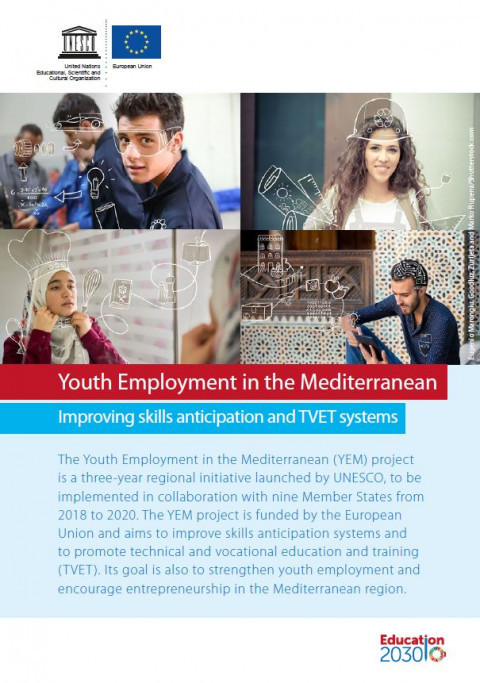 Emploi des jeunes dans la région méditerranéenne: améliorer la prévision des compétences et les systèmes d'EFTP 발행 연도: 2018 단체 저자: European Union (EU) Emploi des jeunes dans la région méditerranéenne (YEM) est un projet à l’échelle régionale de trois ans initié par l’UNESCO et mis en oeuvre en collaboration avec les États membres sur une période de trois ans (2018-2020). Le projet YEM est financé par l’Union européenne (UE) et vise à améliorer les systèmes de prévision des compétences et à promouvoir l’enseignement et la formation techniques et professionnels (EFTP) pour renforcer l’emploi et l’entrepreneuriat dans la région méditerranéenne.
  Discours de Mme Irina Bokova, Directrice générale de l'UNESCO, à l'occasion de la Présentation du Rapport Mondial de l'UNESCO: Investir dans la Diversité Culturelle et le Dialogue Interculturel 발행 연도: 2010 단체 저자: UNESCO. Director-General, 2009-2017 (Bokova, I.G.) This address was delivered by Irina Bokova, Director-Geneeral of UNESCO on the occasion of the presentation of the UNESCO world report in investing in cultural diversity and intercultural dialogue during UNESCO week at the Shanghai World Expo 2010. In this address she highlited the importance of cultural diversity and intercultural communication, and requested the protection of Chinese cultural heritage by Chinese governments.
  التعليم كوسيلة للتعافي: معالجة صدمة النزوح من خلال التعلم الاجتماعي والعاطفي 발행 연도: 2019 وتتناول هذه الوثيقة أنشطة التعليم النظامي وغير النظامي، ولا سيما الأنشطة التي تركز على التعلم الاجتماعي والعاطفي، كنهج واعد لتوفير الدعم النفسي والاجتماعي للمهاجرين واللاجئين في مواجهة الآثار السلبية للصدمات التي تعرضوا لها. وتغطي الوثيقة سياقات الطوارئ والأوضاع المجتمعية التي تقود فينهاية المطاف إلى استقرار أطفال المهاجرين واللاجئين. كما تغطي الدراسة مسألة توفير التعليم وبيئة التعلم؛ ومحتوى التعليم والتعلم لكل من الأطفال وأولياء أمورهم؛ والدور الذي يمكن أن يقوم به المعلمون وغيرهم من المهنيين . Education as healing: addressing the trauma of displacement through social and emotional learning 발행 연도: 2019 The conditions under which migrants and refugees have to leave their homes and homelands can be traumatic in the extreme. Whether they have crossed the Mediterranean in an overcrowded and unsafe boat, been barricaded in a Syrian basement for protection from shelling, or been chased away from a burning village in Myanmar, the events of their departures and their journeys can leave scars on those affected – and none more than on children who have witnessed and experienced death, loss, violence, separation from family and prolonged insecurity. Even those fortunate enough to find a sanctuary often face further hardship or discrimination in their host communities that can exacerbate their vulnerability.
 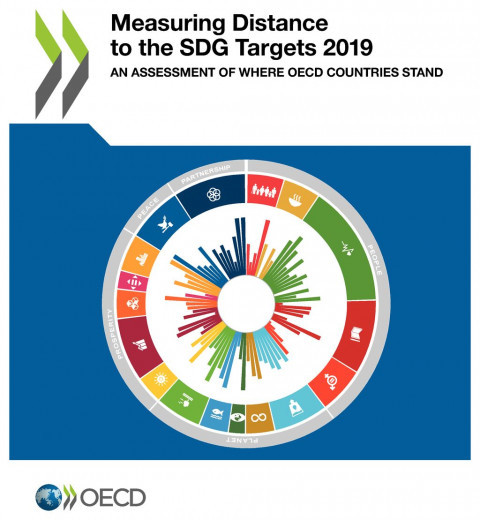 Measuring Distance to the SDG Targets 2019 - An Assessment of Where OECD Countries Stand 발행 연도: 2019 단체 저자: Organisation for Economic Co-operation and Development (OECD) The Sustainable Development Goals (SDGs) set a broad and ambitious programme for the world to achieve by 2030. With 17 Goals, underpinned by 169 Targets, the complex and integrated nature of the 2030 Agenda presents national governments with huge challenges for implementation. To assist countries, the OECD has developed a unique methodology allowing comparison of progress across SDG goals and targets. Based on the UN Global List of 244 indicators, this study evaluates the distance that OECD countries need to travel to meet SDG targets for which data is currently available. This 2019 edition of the study presents the latest results for OECD countries, both on average and individually, as well as new exploratory approaches to assessing progress over time and transboundary aspects of the SDGs. By providing a high-level overview of countries’ strengths and weaknesses in performance across the SDGs, this study aims to support member countries in navigating the SDGs and in setting their own priorities for action within the broad 2030 Agenda.
  Trends Shaping Education 2019 발행 연도: 2019 단체 저자: Organisation for Economic Co-operation and Development (OECD) This book, published every two to three years, is designed to give policy makers, researchers, educational leaders, administrators and teachers a robust, non-specialist source to inform strategic thinking and stimulate reflection on the challenges facing education, whether in schools, universities or programmes for older adults. Trends Shaping Education 2019 is designed to support long-term strategic thinking in education. It provides an overview of key economic, social, demographic and technological trends and raises pertinent questions about their impact on education. This book fills an important need: decision makers and practitioners in education often have only anecdotal or local information on the megatrends that play out in their context; too often they do not have solid facts in front of them, especially about trends.`