
자료
세계시민교육에 대한 이해를 넓히고 연구, 옹호 활동, 교수, 학습 등을 향상시킬 수 있는 다양하고 유용한 자료를 찾아보세요.
2,781 건의 결과가 검색되었습니다
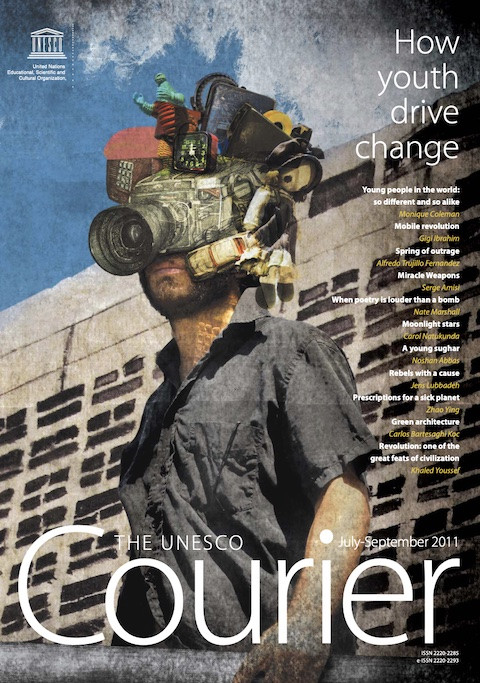 How Youth Drive Change (The UNESCO Courier no. 3; July-September 2011) 발행 연도: 2011 단체 저자: UNESCO Considering school history as a place of confrontation of discourse and knowledge from competing socialization spaces (school, family, media), we are interested in citizenship education work and challenges posed by these plural socializations. In an important context media coverage of debates on the recognition of minority memories in France and their entry into the school programs of the college in 2008, how do students appropriate the ""socially vivid issues"" of immigration, colonization, and decolonization? Fromcontent analysis of a corpus made up of around a hundred interviews semi-structured conducted between 2007 and 2010 with 3rd year college students (end of lower secondary and compulsory education), we analyze and highlight contrasting interpretations of these heritages by majority students and minority students, respectively supplied by categories of public debate and family narratives. We show, following work relating to the sociology of school curricula, which learning citizenship in the light of these historical legacies results from the confrontation of the pupils with the discourses and knowledge different spaces in which they take part. But it is above all the product oftheir position in the face of these historical legacies, according to their experiences social and the role they give to these stories in building a common identity and belonging.
 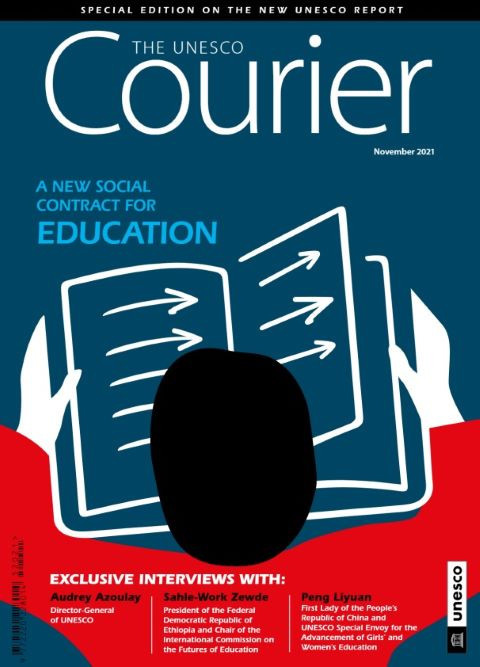 عقد اجتماعي جديد للتربية والتعليم (The UNESCO Courier Special Edition; November 2021) 발행 연도: 2021 단체 저자: منظمة الأمم المتحدة للتربية والعلم والثقافة (UNESCO) Reimagining Our Futures Together upholds the tradition of the major UNESCO reports that have already structured education policies throughout the world in the past. The Faure report, Learning to be, in 1972, and the Delors report, Learning: The Treasure Within, in 1996, have become benchmarks in the debate on learning. This third document presents a lucid assessment of the challenges confronting education today.Faced with the rapid changes in our environment, a change of direction is needed. We need to devote more importance to ecology; to provide students with the critical tools to detect misinformation, prejudices, and preconceived ideas; to strengthen teamwork, and to improve the professionalization of teachers. Beyond these imperatives, we must also rethink the multiple interdependencies, the links between generations and between cultures, and our relationship with living beings, to establish a new social contract for education. A New Social Contract for Education (The UNESCO Courier Special Edition; November 2021) 발행 연도: 2021 단체 저자: UNESCO Reimagining Our Futures Together upholds the tradition of the major UNESCO reports that have already structured education policies throughout the world in the past. The Faure report, Learning to be, in 1972, and the Delors report, Learning: The Treasure Within, in 1996, have become benchmarks in the debate on learning. This third document presents a lucid assessment of the challenges confronting education today.Faced with the rapid changes in our environment, a change of direction is needed. We need to devote more importance to ecology; to provide students with the critical tools to detect misinformation, prejudices, and preconceived ideas; to strengthen teamwork, and to improve the professionalization of teachers. Beyond these imperatives, we must also rethink the multiple interdependencies, the links between generations and between cultures, and our relationship with living beings, to establish a new social contract for education.
 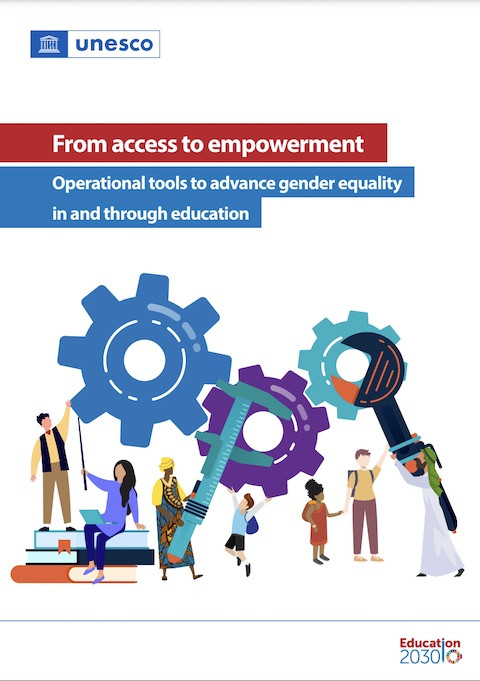 De l’accès à l’autonomisation: Outils opérationnels pour promouvoir l’égalité des genres dans et par l’éducation 발행 연도: 2021 단체 저자: Organisation des Nations Unies pour l'éducation, la science et la culture (UNESCO) Ce guide a été conçu pour renforcer la capacité individuelle et institutionnelle à intégrer de manière efficace l’égalité des genres aux programmes éducatifs. Ce guide a été préparé pour l’ensemble du personnel du Secteur de l’éducation de l’UNESCO, notamment pour celles et ceux travaillant au Siège, dans les bureaux hors Siège/régionaux/multipays et dans les instituts, ainsi que pour les partenaires d’exécution. Ce guide fournit des outils d’orientation et opérationnels pour intégrer efficacement le genre à tous les programmes relatifs à l’éducation. La première partie est une présentation succincte des concepts clés de l’égalité des genres dans et par l’éducation, et un aperçu de la manière dont l’égalité des genres dans l’éducation s’inscrit dans la vision de l’UNESCO et dans les objectifs fixés au niveau international. La deuxième partie fournit des conseils pratiques sur la manière d’intégrer l’égalité des genres aux programmes éducatifs, d’élaborer des programmes transformateurs et, enfin, de suivre et d’évaluer les résultats en matière de genre dans les programmes éducatifs.
 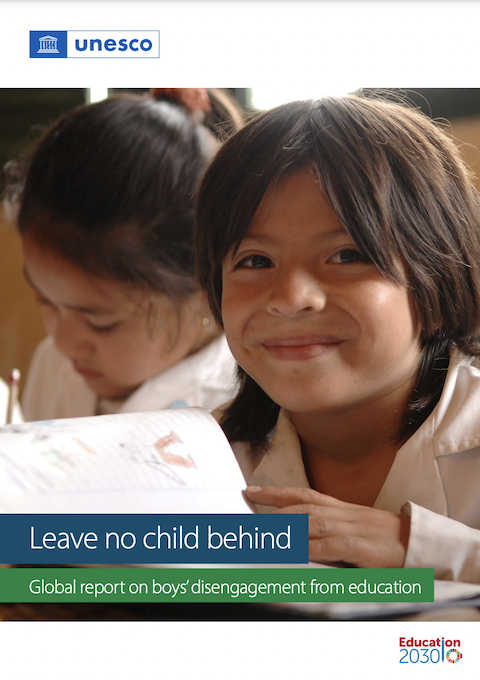 Leave No Child Behind: Global Report on Boys’ Disengagement From Education 발행 연도: 2022 단체 저자: UNESCO The 2030 Agenda for Sustainable Development makes the promise to leave no one behind. While improving educational opportunities for girls globally continues to be of paramount importance to achieve gender equality in and through education, this focus on achieving gender parity and equality must not ignore boys. No less than 132 million boys of primary and secondary school age are out of school. To leave no child behind, UNESCO developed the first global report of this scope on boys’ disengagement from education, bringing together qualitative and quantitative evidence from over 140 countries. As this report shows, addressing boys’ disengagement from and disadvantage in education is not a zero-sum game. Supporting boys does not mean that girls lose out and vice versa. Addressing boys’ disengagement from and disadvantage in education not only benefits boys’ learning, employment opportunities, income and well-being, but it also benefits girls and the broader society.
  Saving our world heritage 발행 연도: 2023 저자: Hopkinson, Leo 단체 저자: UNESCO
 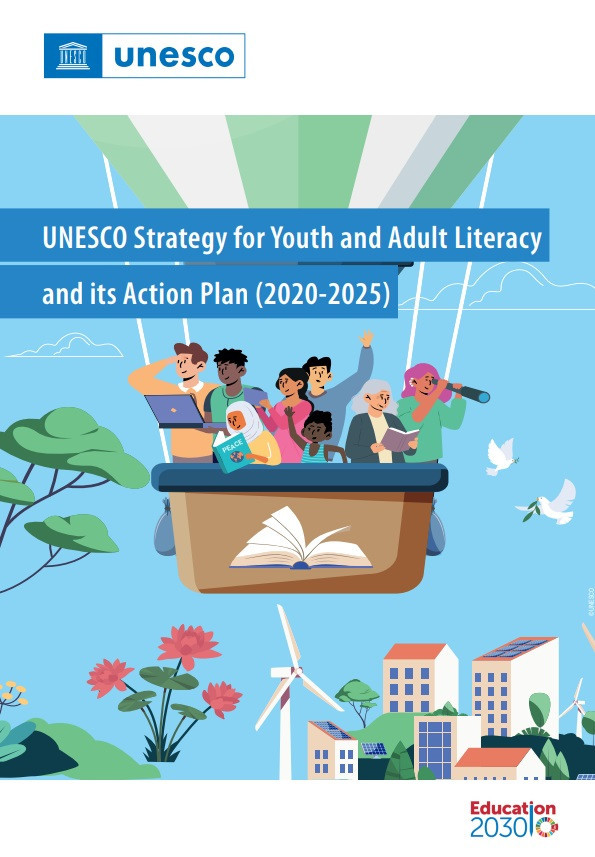 UNESCO Strategy for Youth and Adult Literacy and its Action Plan (2020-2025) 발행 연도: 2023 단체 저자: UNESCO I. Introduction1. The international community has set an ambitious 2030 Agenda for Sustainable Development1, with education and learning central to its achievement. The vision of the Incheon Declaration2, Education 2030, is fully captured by Sustainable Development Goal 4 (SDG4) “ensure inclusive and equitable quality education and promote lifelong learning opportunities for all”. Education 2030 devotes considerable attention to literacy and adult learning including through Target 4.6 and related indicative strategies.2. By 205 EX/Decision 6.III, the Executive Board requested the Director-General to review, update and improve the vision and strategy for literacy to contribute to SDG 4 – Education 2030, and to present it at its 207th session, with a view to transmitting it to the General Conference at its 40th session. The present document therefore contains the draft UNESCO Strategy for Youth and Adult Literacy (2020- 2025). The Strategy was developed through an inclusive and participatory process, including research and analysis of key trends, online consultation of Member States and expert meetings.
 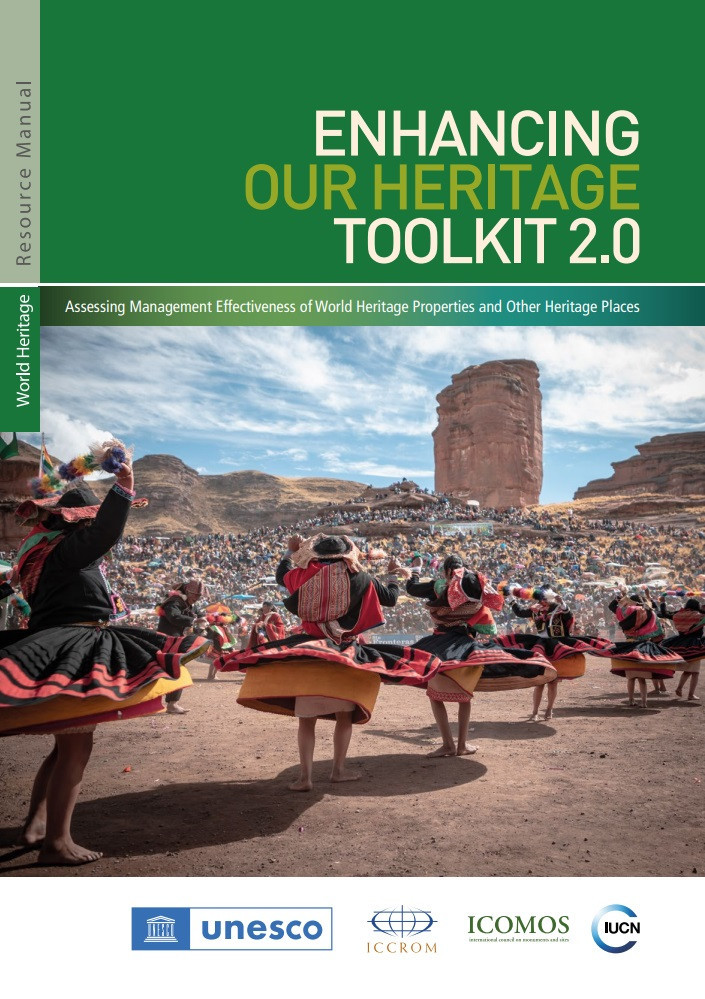 Enhancing our heritage toolkit 2.0: assessing management effectiveness of World Heritage properties and other heritage places 발행 연도: 2023 단체 저자: UNESCO | International Centre for the Study of the Preservation and Restoration of Cultural Property (ICCROM) | International Council on Monuments and Sites (ICOMOS) | International Union for Conservation of Nature (IUCN) <Short summary>EoH 2.0 toolkit helps assess management effectiveness in World Heritage places World Heritage properties are internationally recognized as places of Outstanding Universal Value that should benefit from the highest level of management effectiveness. Despite the best efforts to conserve these places for present and future generations, many are under threat from a range of factors. These include inappropriate development, mass tourism, pollution, resource extraction or climate change, to name but a few.What can be done to better respond to factors negatively affecting World Heritage places? Do management processes influence conservation results? If so, how can critical management weaknesses be identified and improved?The Enhancing Our Heritage Toolkit 2.0 offers a self-assessment methodology to evaluate management effectiveness in a World Heritage property or other heritage place. It contains 12 tools that can be used separately or collectively to understand in detail what is working well and what can be done better. To facilitate their use, the tools are accompanied by worksheets, in the form of either a template to help compile information in a systematic way or a questionnaire, both of which can be adapted to the specific needs of each heritage place.The Toolkit supports managers in identifying ways to improve conservation practices, management processes and resource allocation – particularly if used before reviewing or updating management plans. While there is a focus on World Heritage, it can be applied to all heritage places, whether natural, cultural or combinations of both.
  Urban heritage for resilience: consolidated results of the implementation of the 2011 Recommendation on the Historic Urban Landscape; 3rd Member States Consultation 발행 연도: 2023 단체 저자: UNESCO <Short summary>Integrating heritage conservation with urban development plans: fosters inclusive and sustainable local development Urban heritage, including its tangible and intangible attributes, constitutes a key resource in enhancing the liveability of urban areas and fosters economic development and social cohesion in a changing global environment. The UNESCO 2011 Recommendation on the Historic Urban Landscape has contributed towards promoting a holistic approach to managing historic urban areas. The third Member States consultation on the implementation of the 2011 Recommendation conducted between June to November 2022 emphasizes both the importance and the urgency of integrating heritage conservation with urban development plans, disaster risk reduction and climate action at the local level.The report covered six thematic areas of implementation that captured the key principles of the 2011 Recommendation in the framework of the 2030 Agenda for Sustainable Development, including the mapping and inventorying of heritage values and attributes, governance mechanisms, laws, regulations, and planning tools to protect these different attributes, inclusive and participatory decision-making, equitable economic development, the impacts of climate change, and the use of digital technologies for managing urban heritage including capacity building.The publication includes key recommendations emerging from consultations with international experts, exchanging innovative practices, developing guidance, tools, and initiatives, notably on planning, civic engagement, regulatory frameworks and financial mechanisms and management to support the implementation of the 2011 Recommendation.
 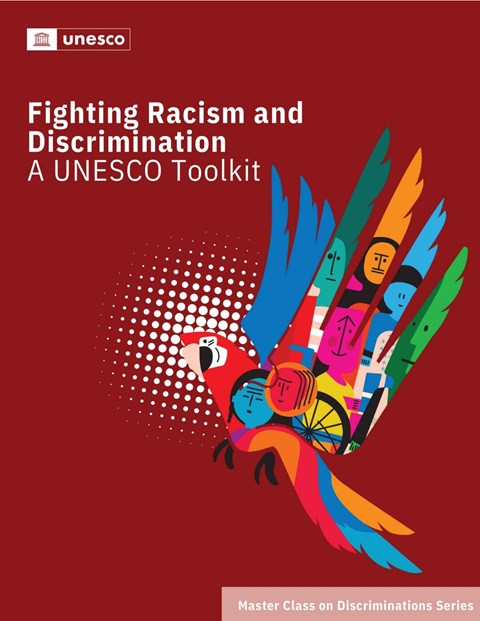 Fighting Racism and Discrimination: A UNESCO Toolkit 발행 연도: 2023 단체 저자: UNESCO Globally, 1 in 5 people have experienced discrimination on at least one of the grounds prohibited under international human rights law. Despite action around the world to end hate and combat discrimination, our societies continue to struggle. Institutionalised and structural racism remains a significant challenge with societies only beginning to come to terms with the harsh realities of historical legacies of inequality. Regardless of the rise of the Black Lives Matter movement following the death of George Floyd and increased discussion, policies tackling the legacies of historical racism as well as contemporary racism remain limited. Arguments on the ethics of collecting racial and ethnicity data persist, making measurement of racism and discrimination all the more challenging and leading to difficulties in fully comprehending this issue. However, with impact ranging from education to housing to income to criminal justice, these issues cannot wait. Recognising the magnitude of this challenge and responding to the urgent call for action – the Global Call against Racism – by our Member States, UNESCO has developed the UNESCO Anti-Racism Toolkit. Within the pages of this guide, you will find core concepts, good practices from around the world, practical exercises, and more. A tool designed to support policy-makers in developing anti-racist legislation, it is a first step to tackling the historical and structural racism within our societies.