
자료
세계시민교육에 대한 이해를 넓히고 연구, 옹호 활동, 교수, 학습 등을 향상시킬 수 있는 다양하고 유용한 자료를 찾아보세요.
306 건의 결과가 검색되었습니다
 2019 Arab Region SDG Index and Dashboards Report 발행 연도: 2019 저자: Lara Dahan 단체 저자: Emirates Diplomatic Academy (EDA) | Sustainable Development Solutions Network (SDSN) The Arab Region SDG Index and Dashboards are intended as a tool for governments and other stakeholders to measure progress on the Sustainable Development Goals (SDGs), and to highlight gaps in both implementation and data. The 2019 Arab Region SDG Index is the first in its kind and is therefore also intended as a conversation-opener about priority areas, policies and actions.The 2019 Arab Region SDG Index comprises 105 indicators, each of which have an assigned score (0–100) and a traffic light colour (green, yellow, orange, or red) to indicate performance. In addition, arrows indicate trends in progress towards achieving the goals for those indicators where data for multiple years are available.Compared to the Sustainable Development Report 2019, which contains the SDG Index and Dashboards for all UN Member States, the Arab Region Index introduces 30 new indicators that reflect regional priorities and challenges. The selection of these indicators, along with related thresholds, was greatly informed by two rounds of regional expert consultations, which were conducted in May and August 2019 and collected more than 200 comments from more than 40 individuals. The regional Index also removes indicators that are not useful or relevant for the region or where data coverage is currently insufficient.In addition, the 2019 Arab Region Index includes Palestine, which has so far not been included in the global SDG Index reports. It also provides a total SDG achievement score for two countries – Libya and Somalia – that did not receive one in the global Index due to low data availability.
 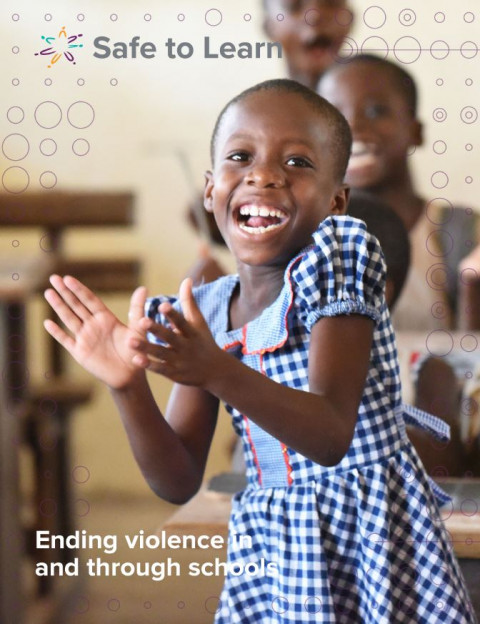 Safe to Learn: Ending Violence in and Through Schools 발행 연도: 2019 단체 저자: End Violence Against Children Safe to Learn – is an initiative dedicated to ending violence in and through schools so children are free to learn, thrive and pursue their dreams. Safe to Learn presents an opportunity to unlock the multiple win of ending violence in schools, improving learning outcomes, better leveraging investments in education, and raising awareness and change attitudes towards violence against children. To date, 11 countries have endorsed Safe to Learn’s Call to Action, which sets out in high-level terms what needs to happen to end violence in schools. These countries include Cambodia, Georgia, Ghana, Honduras, Mexico, Moldova, Nepal, Sierra Leone, South Africa, South Sudan, Uganda and El Salvador.
 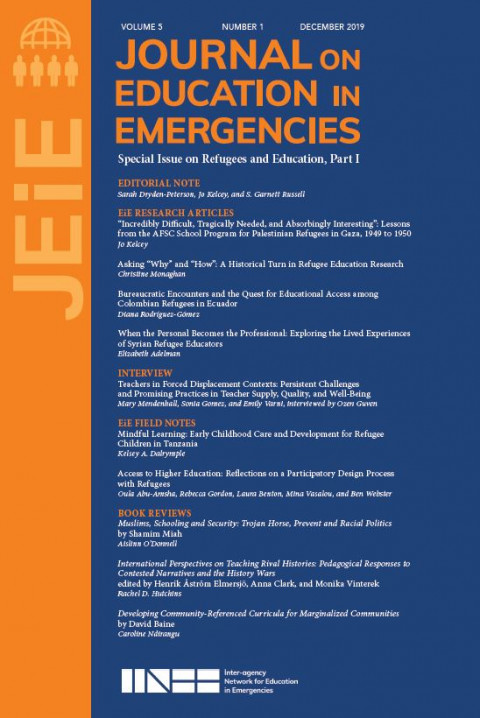 Journal on Education in Emergencies: Special Issue on Refugees and Education, Part I (Vol. 5, No.1 December 2019) 발행 연도: 2019 저자: Sarah Dryden-Peterson | Jo Kelcey | S. Garnett Russell 단체 저자: Inter-agency Network for Education in Emergencies (INEE) This special issue of JEiE—the first of two parts—showcases research on important developments in the field of refugee education across several regions, including the Middle East, Latin America, and Africa. The issue includes four research articles, one interview, two field notes, and three book reviews.The contributing authors describe and analyze how international agencies, state bureaucracies, local organizations and their partners, and refugees shape the structures that influence the education of refugees, both historically and in the present, and how these actors imagine their roles. In so doing, the authors help to untangle key questions about how responsibility for meeting refugees’ educational needs and aspiration is taken up and shared. The articles in this issue include immediate and long-term lessons for how refugee education is designed and experienced.
  "Education First" - UN Secretary-General's video message 발행 연도: 2012 저자: United Nations. Secretary-General, 2007-2016 (Ban, Ki-moon) UN Secretary-General, Mr. Ban Ki-moon launched a Global Initiative on Education (Education First), which aims to achieve quality, relevant and inclusive education for every child on 26 September, 2012. "Education First" - UN Secretary-General's video message 발행 연도: 2012 저자: United Nations. Secretary-General, 2007-2016 (Ban, Ki-moon) Secrétaire général de l'ONU, M. Ban Ki-moon, a lancé une initiative Mondiale sur lÉducation (Education First), qui vise à atteindre une qualité, une éducation pertinente et inclusive pour tous les enfants le 26 Septembre, de 2012.
 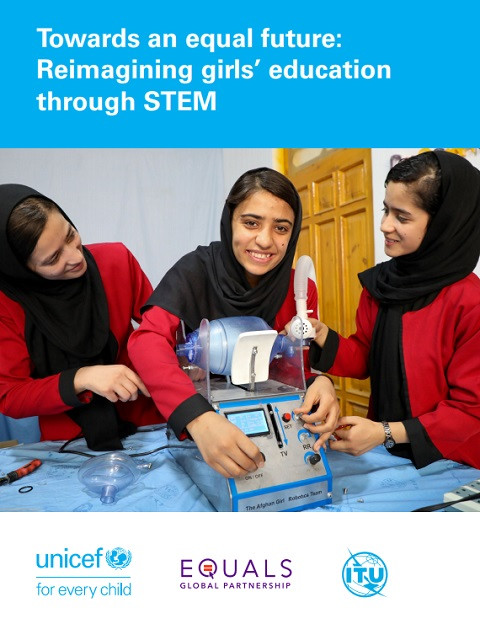 Towards an Equal Future: Reimagining Girls’ Education Through STEM 발행 연도: 2020 단체 저자: United Nations Children's Fund (UNICEF) | International Telecommunication Union (ITU) This document seeks to call attention to the potential of STEM education to transform gender norms in the education system, to improve quality learning opportunities for girls, and to highlight key actions that can accelerate girls’ transition between education and technical expert jobs in STEM industries. Critically, STEM education also has the potential to contribute to personal empowerment, transformation of communities and nations, and building economies for the future.The evidence presented here provides a foundation for a call to action for global, national and regional actors. All stakeholders are called to work together to dismantle the barriers that girls face to develop the skills they need to become users, shapers and creators of scientific knowledge and new technologies. This will allow girls to choose the skills they want to learn and how to apply them, empowering them to contribute to a gender-equal world.
 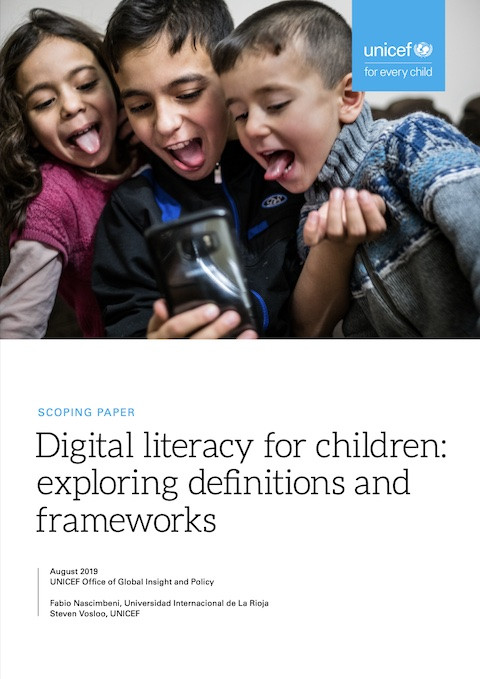 Digital Literacy for Children: Exploring Definitions and Frameworks 발행 연도: 2019 저자: Fabio Nascimbeni 단체 저자: United Nations Children's Fund (UNICEF) This paper presents the results of a scoping exercise on children’s digital literacy that has been undertaken with the following objectives:To understand the current digital literacy policy and practice landscape;To highlight existing competence frameworks and how they can be adapted to UNICEF’s needs;To analyze the needs and efforts of UNICEF country offices; andTo reflect on policy and programme recommendations, including a definition of digital literacy for UNICEF
 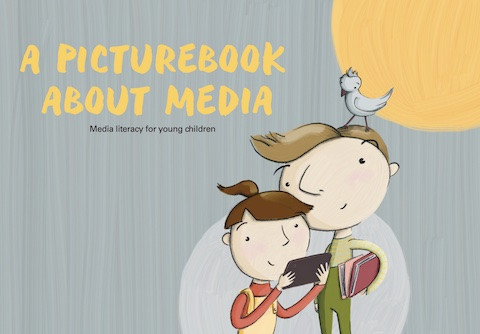 A Picture Book About Media: Media Literacy For Young Children 발행 연도: 2018 저자: Alma Čakmazović 단체 저자: United Nations Children's Fund (UNICEF) Media literacy helps to form the habit of appraising media contents and to develop the skills of expression necessary for critical thinking. Today, it represents education for life, human values, active citizenship and responsible media practices.This picturebook is devoted to children, parents, foster parents and educators. Its purpose is to give the youngest children the chance to understand media through one of the first lessons in media literacy, one about the difference between the media world and the real world.
  COVID-19: How to Include Marginalized and Vulnerable People in Risk Communication and Community Engagement 발행 연도: 2020 단체 저자: United Nations Entity for Gender Equality and the Empowerment of Women (UN Women) | Regional Risk Communication and Community Engagement (RCCE) Women, the elderly, adolescents, youth, and children, persons with disabilities, indigenous populations, refugees, migrants, and minorities experience the highest degree of socio-economic marginalization. Marginalized people become even more vulnerable in emergencies. This is due to factors such as their lack of access to effective surveillance and early-warning systems, and health services. The COVID-19 outbreak is predicted to have significant impacts on various sectors. The development of this guide was led by UN Women and Translators without Borders on behalf of the Risk Communication and Community Engagement Working Group on COVID-19 Preparedness and Response in Asia and the Pacific, co-chaired by WHO, IFRC and OCHA.
 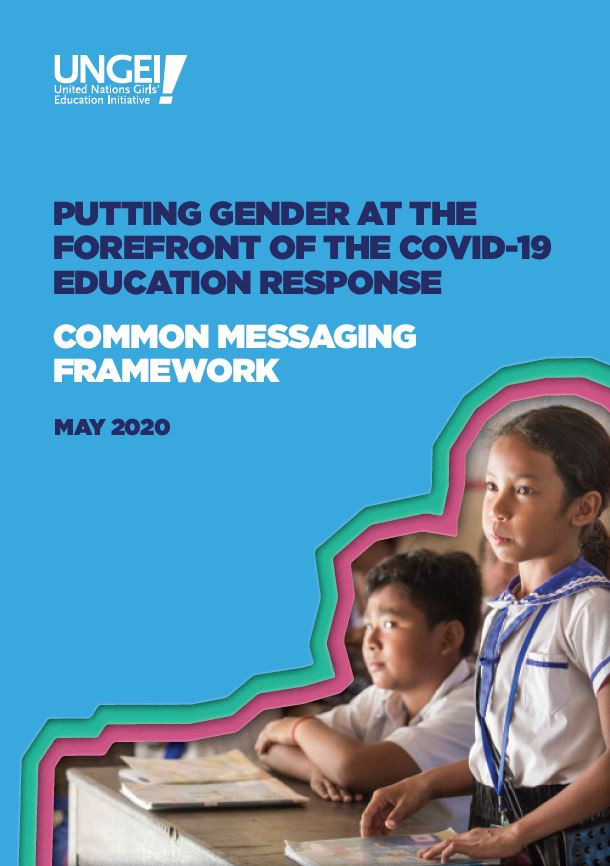 Putting Gender at the Forefront of the COVID-19 Education Response: Common Messaging Framework 발행 연도: 2020 단체 저자: United Nations Girls' Education Initiative (UNGEI) Nationwide school closures as part of measures to prevent the spread of COVID-19 have disrupted the education of an entire generation of children and youth. Previous health emergencies demonstrate that girls are disproportionately affected, with the effects of gender inequality and unequal power structures exacerbated in times of crisis. This Common Messaging Framework, developed with UNGEI partner and ally organisations, can be used as an advocacy tool to leverage the power of collective action to position gender at the forefront of the COVID-19 response and enhance coherence in advocacy and communications efforts.