
자료
세계시민교육에 대한 이해를 넓히고 연구, 옹호 활동, 교수, 학습 등을 향상시킬 수 있는 다양하고 유용한 자료를 찾아보세요.
328 건의 결과가 검색되었습니다
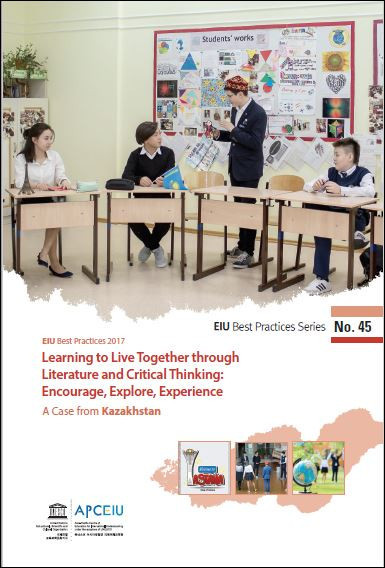 EIU Best Practices Series No.45: Learning to Live Together through Literature and Critical Thinking: Encourage, Explore, Experience 발행 연도: 2017 단체 저자: APCEIU This monograph is one of APCEIU's EIU Best Practices Series, which aims to encourage educators, scholars, and activists to implement and share local initiatives on EIU. The Series No. 45 introduces a programme called “Learning to Live Together through Literature and Critical Thinking: Encourage, Explore, Experience.” With critical thinking at its heart, students learn the concepts of GCED through the perspectives of literary masterpieces, diverse cultural traditions, and teambuilding activities. By guiding students through the 3 Es, this exemplary programme motivates and equips students to demonstrate their global citizenship by launching useful projects for the city community.
 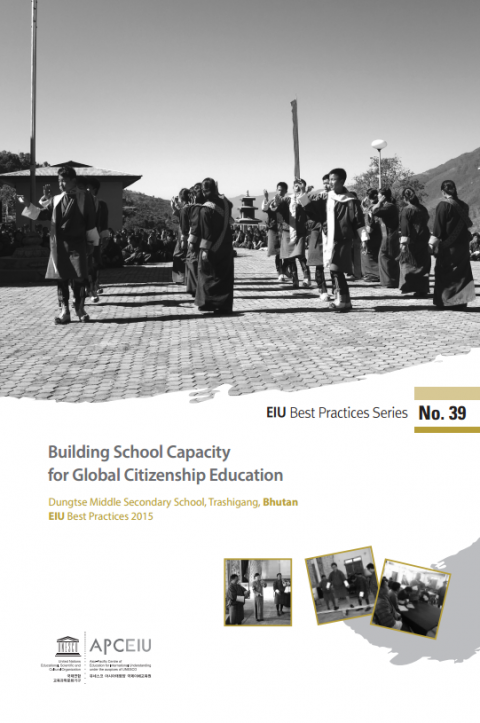 EIU Best Practices Series No. 39: Building School Capacity for Global Citizenship Education 발행 연도: 2015 단체 저자: APCEIU This monograph is one of APCEIU's EIU Best Practices Series, which aims to encourage educators, scholars, and activists to implement and share local initiatives on EIU. The Series No.39 introduces the Training of Trainers (TOT) program, a workshop for teachers to better incorporate GCED/EIU concepts into respective curriculum and school environment. Upon participating in the APCEIU training workshop, Mr. Yeshi Dorji from Dungtse Middle Secondary School in Bhutan sought to create a forum in which teachers and school officials can learn to incorporate GCED. Such exemplary initiative not only enhances capacity building of educators in the school, but also has potential to have larger impact in the local and regional communities.
 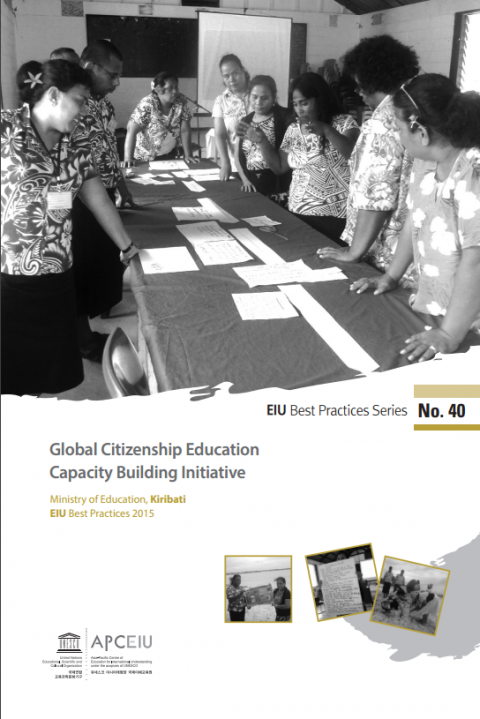 EIU Best Practices Series No. 40: Global Citizenship Education Capacity Building Initiative 발행 연도: 2015 저자: Eretia Monite 단체 저자: APCEIU This monograph is one of APCEIU's EIU Best Practices Series, which aims to encourage educators, scholars, and activists to implement and share local initiatives on EIU. The Series No. 40 introduces a successful hosting of workshop on GCED in Kiribati. Considered the first of its kind in Kiribati, the workshop brought together education officers and teachers to learn about emerging concept of GCED and EIU and means for implementation. The exemplary workshop involving fieldtrips and seminars has created a wave of learning opportunities for key stakeholders at all levels, paving way to put GCED into practice.
 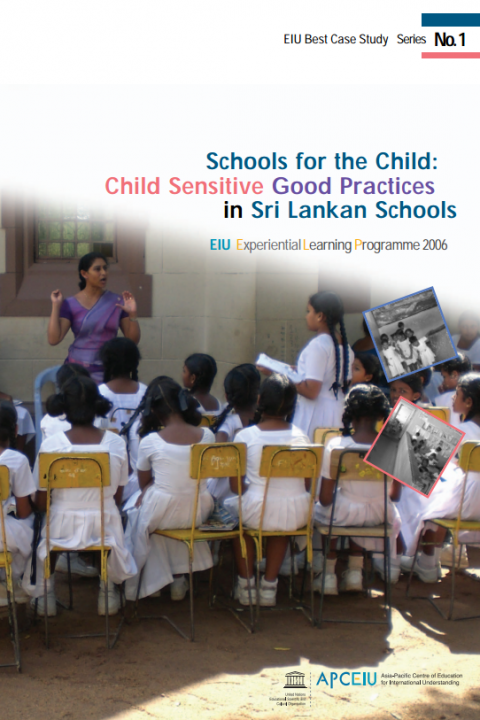 EIU Best Practices Series No. 1: Schools for the Child: Child Sensitive Good Practices in Sri Lankan Schools 발행 연도: 2006 단체 저자: APCEIU This monograph is one of APCEIU's EIU Best Practices Series, which aims to encourage educators, scholars, and activists to implement and share local initiatives on EIU. The Series No.1 is a research study undertaken to identify positive practices that can foster peace education in post-conflict communities of Sri Lanka. Specifically, three schools are observed to understand how the model of peace education and multiculturalism can be promoted through educator’s creativity, dedication, and vision, curriculum revision, eco-friendly school environment, and use of external and community resources. The study showcases that culturally sensitive and mindful pedagogical practices are needed to generate understanding of peace.
 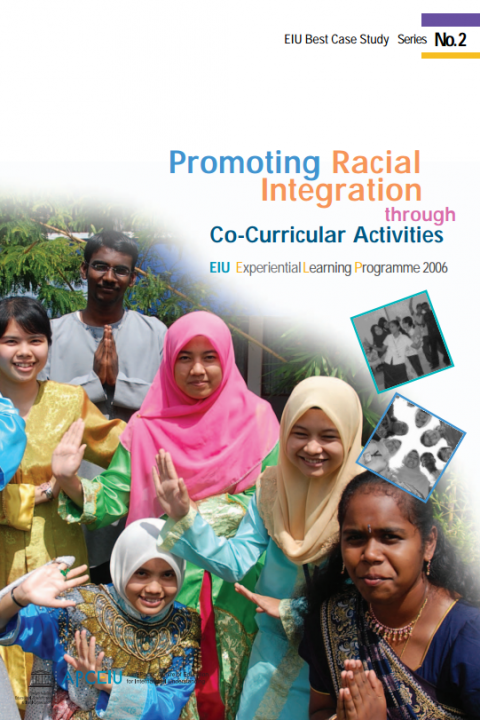 EIU Best Practices Series No. 2: Promoting Racial Integration through Co-Curricular Activities 발행 연도: 2006 단체 저자: APCEIU This monograph is one of APCEIU's EIU Best Practices Series, which aims to encourage educators, scholars, and activists to implement and share local initiatives on EIU. The Series No.2 introduces a program in which Malaysian students of varied racial and ethnic backgrounds engaged in a dancing co-curricular activity to understand and embrace other cultures. Students were tasked to prepare cultural dances, while learning local history and customs. The successful program shows that racial integration can be promoted as a co-curricular activity, encouraging students to respect and overcome differences to create a harmonious community.
 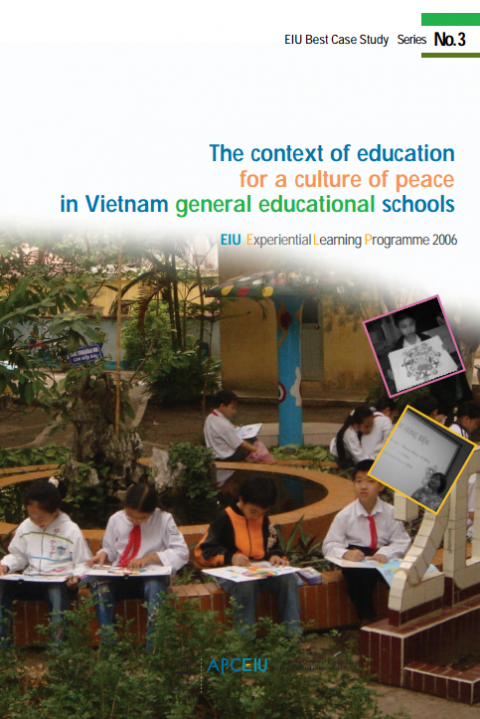 EIU Best Practices Series No. 3: The Context of Education for a Culture of Peace in Vietnam General Education Schools 발행 연도: 2006 단체 저자: APCEIU This monograph is one of APCEIU's EIU Best Practices Series, which aims to encourage educators, scholars, and activists to implement and share local initiatives on EIU. The Series No.3 introduces a research study conducted to examine Vietnam’ general educational schools for culture of peace education. Upon assessment of interviews and surveys undertaken by educators and students from five schools, the result indicated that education for culture of peace was practiced through both academics and extracurricular activities.
 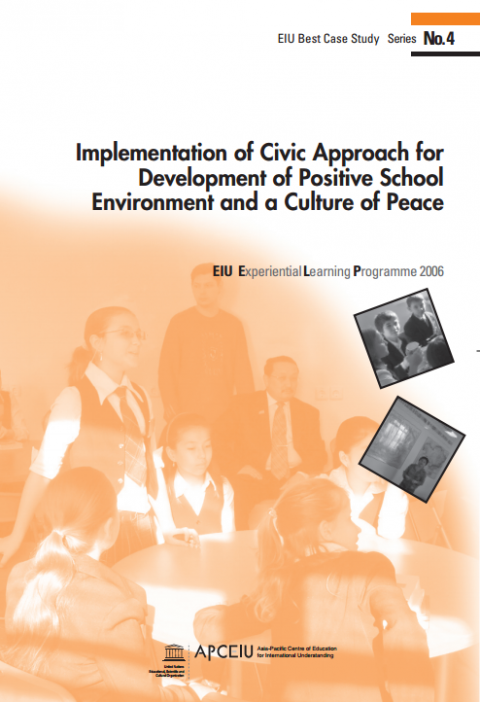 EIU Best Practices Series No. 4: Implementation of Civic Approach for Development of Positive School Environment and a Culture of Peace 발행 연도: 2006 단체 저자: APCEIU This monograph is one of APCEIU's EIU Best Practices Series, which aims to encourage educators, scholars, and activists to implement and share local initiatives on EIU. The Series No.4 is an experimental research conducted by the Information and Research Center to promote culture of peace and teaching and learning outcomes that support positive development of school environment. Three pilot schools in Kazakhstan were analyzed upon implementation of teacher training workshops, instructional materials, and programs in civic and human rights education.
  EIU Best Practices Series No. 6: Practical Research on Current Issues: Studies on Global Perspectives in Schools in Japan 발행 연도: 2007 단체 저자: APCEIU This monograph is one of APCEIU's EIU Best Practices Series, which aims to encourage educators, scholars, and activists to implement and share local initiatives on EIU. The Series No.6 is a research undertaken on two schools of Japan and Korea, in which students were tasked to conduct research on bilateral conflict issues and devise suggestions for peaceful resolution. Besides classroom discussions and presentations, student exchange visit further allowed active learning and engaging of issues, historical awareness and perception, and mutual understanding as global citizens.
 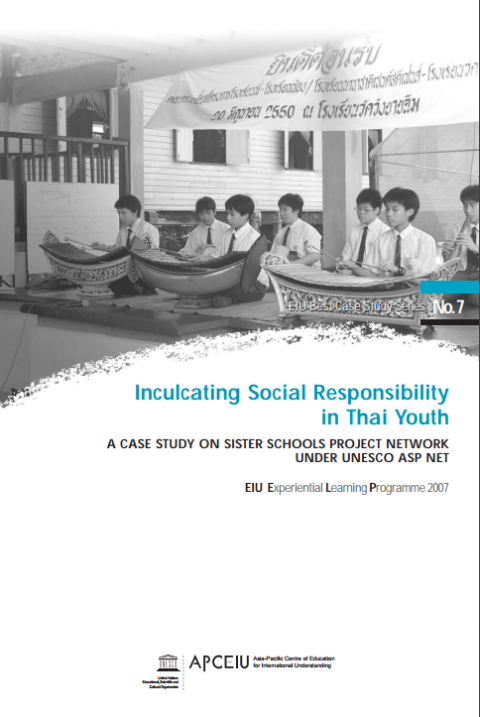 EIU Best Practices Series No. 7: Inculcating School Responsibility in Thai Youth: A Case Study on Sister Schools Project Network under UNESCO ASPNet 발행 연도: 2007 단체 저자: APCEIU This monograph is one of APCEIU's EIU Best Practices Series, which aims to encourage educators, scholars, and activists to implement and share local initiatives on EIU. The Series No.7 is a case study of two Thai schools within the Sister Schools Project Network, which is under the UNESCO ASP NET and UNESCO Club. As schools visited other schools in the network, students became involved in fundraising to support one another, thereby naturally acquiring invaluable team building skills, intercultural understanding, and social responsibility. This case shows that sister school network system can foster values of sharing, caring, and loving, despite socio-economic disparity among students.
  EIU Best Practices Series No. 9: Integrating Sacred Natural Sites Concept into Environmental Education 발행 연도: 2008 단체 저자: APCEIU This monograph is one of APCEIU's EIU Best Practices Series, which aims to encourage educators, scholars, and activists to implement and share local initiatives on EIU. The Series No.9 introduces research on how educational content on sacred natural sites in Mongolia can lead to understanding of environment and sustainable development. Interviews and surveys conducted by local community teachers and students living in the Orkhon Valley Cultural Landscape, a World Heritage Site, indicate the importance of education in raising awareness of environmental and heritage protection.