
자료
세계시민교육에 대한 이해를 넓히고 연구, 옹호 활동, 교수, 학습 등을 향상시킬 수 있는 다양하고 유용한 자료를 찾아보세요.
2,776 건의 결과가 검색되었습니다
 Ser y Saber: Perfil docente para el Desarrollo Sostenible y la Ciudadanía Global 발행 연도: 2023 단체 저자: InteRed Documento de carácter pedagógico que describe qué características tiene el perfil docente necesario para educar en el Desarrollo Sostenible y la Ciudadanía Global. Identifica qué competencias necesarias para llevar a cabo una educación transformadora que dé respuesta a los retos globales conforme proponen movimientos sociales, ONG y sociedad civil. Esta publicación es el resultado de un trabajo colaborativo realizado durante los años 2022 y 2023 por un equipo del Movimiento 4.7 conformado con ese fin.
 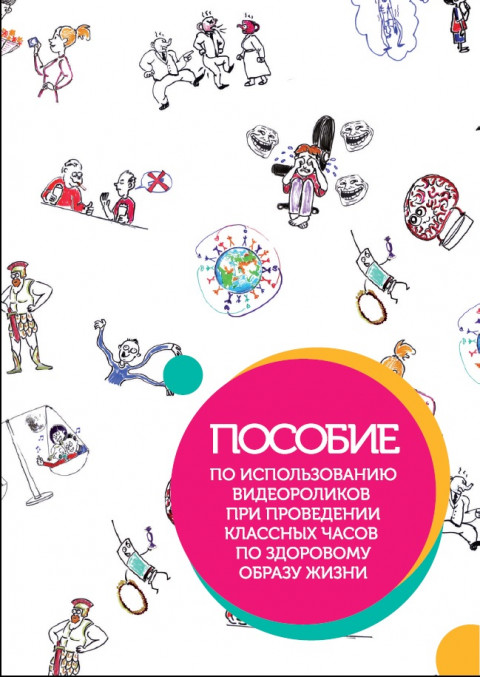 Development of classroom hour for a healthy lifestyle for students of 6-11 grades: Methodical guide for teachers 발행 연도: 2014 단체 저자: UNESCO Institute for Information Technologies in Education (IITE) | Joint United Nations Programme on HIV/AIDS (UNAIDS) This manual has been developed to help pedagogical workers of educational institutions (class teachers, subject teachers) to conduct class hours in a healthy lifestyle using educational videos on the following basic topics: (1) the characteristics of adolescence, (2) the concept of "gender ", “Gender” and “gender equality”, (3) prevention of the consumption of psychoactive substances, (4) decision making and resistance to peer pressure, (5) love and sexual relations, (6) reproductive health and contraception, (7) HIV prevention, (8) interpersonal relationships and conflict resolution, (9) trolling and cyberbulling. Пособие по использованию видеороликов при проведении классных часов по здоровому образу жизни для учащихся 6-11 классов. Методическое руководство для учителей 발행 연도: 2014 단체 저자: Институт ЮНЕСКО по информационным технологиям в образовании (ИИТО) | Объединенная программа ООН по ВИЧ/СПИДу (ЮНЭЙДС) Данное пособие разработано в помощь педагогическим работникам общеобразовательных организаций (классным руководителям, учителям-предметникам) для проведения классных часов по здоровому образу жизни с использованием образовательных видеороликов по следующим базовым темам: (1) особенности подросткового возраста, (2) понятия «пол», «гендер» и «гендерное равенство», (3) профилактика потребления психоактивных веществ, (4) принятие решения и противостояние давлению со стороны сверстников, (5) любовь и сексуальные отношения, (6) репродуктивное здоровье и контрацепция, (7) профилактика ВИЧинфекции, (8) межличностные отношения и разрешение конфликтов, (9) троллинг икибербуллинг.
  Educación Integral de la Sexualidad: Conceptos, Enfoques y Competencias 발행 연도: 2014 단체 저자: UNESCO Santiago El objetivo de este documento es comprender que la sexualidad es parte integral de la vida de las personas (en sus diferentes etapas o edades, y en toda su diversidad), y que contribuye al desarrollo de su identidad y por lo tanto, a su desarrollo social. Se trata de capacidades más que de contenidos, las que deben desarrollarse en forma interdisciplinaria y de manera progresiva para que las personas actúen de forma responsable respecto a ellas mismas y con los demás. El documento explica que la educación de la sexualidad está íntimamente relacionada con la comprensión, la reflexión y el discernimiento, y fortalece las bases para el aprendizaje a lo largo de la vida, preparando a los jóvenes para la vida adulta. Es así que el enfoque se centra en alcanzar un desarrollo y bienestar humano sostenible.
 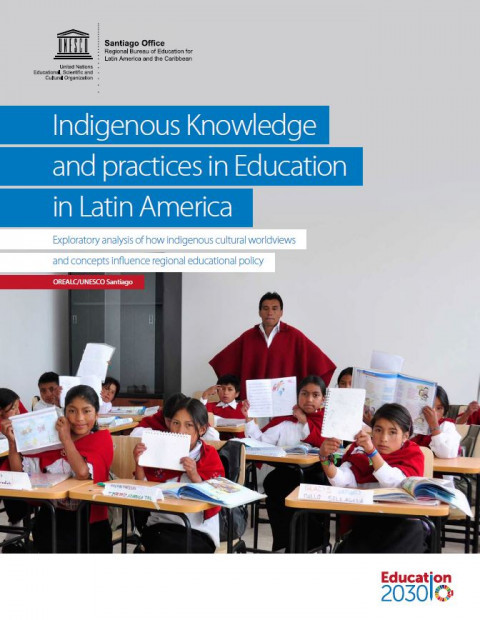 Indigenous Knowledge and practices in Education in Latin America: Exploratory Analysis of How Indigenous Cultural Worldviews and Concepts Influence Regional Educational Policy 발행 연도: 2017 단체 저자: UNESCO Santiago This study presents a preliminary exploration of the approaches, processes and tools through which indigenous worldviews and concepts of knowledge and well-being can and have influenced education policies in Latin America. First, it addresses the principal theoretical approaches used in the area of indigenous knowledge and education policies, taking into account the persistence of an “epistemic otherness” and the need for a dialogue between the predominant approaches. Second, it addresses the normative framework and intercultural educational policies, emphasizing how and to what extent the countries in the region take indigenous knowledge into consideration and include it in their education policies and practices. Third, it presents a number of “relevant practices” in terms of dialogue with indigenous knowledge in education policies, taking into account the factors that favour the relevance of education to indigenous views and cultural practices, facilitating their replicability and sustainability. Furthermore, these practices respond to key criteria like recognizing learners as ‘carriers’ and producers of culture, valuing the use of schools as centres of social and cultural activities and favouring the inclusive learning of indigenous and non-indigenous students. Finally, the study unveils challenges for the advancement of the dialogue between indigenous knowledge and education policies, at the same time proposing key concepts to be approached in depth. Conocimiento Indígena y Políticas Educativas en América Latina: Análisis exploratorio de cómo las cosmovisiones y conceptos culturales indígenas de conocimiento inciden, y pueden incidir, en la política educativa en la región 발행 연도: 2017 단체 저자: UNESCO Santiago El presente estudio explora la idea de una ‘alternativa epistémica’, construyendo desde el conocimiento y los valores que sustentan las prácticas sociales y educacionales indígenas de la región. En particular, explora cómo estos valores y formas de conocimiento han sido adoptados en las políticas educacionales de tres países de la región andina: Bolivia, Ecuador y Perú, que hace poco atravesaron reformas políticas y constitucionales con el fin de reconocer la composición de sus poblaciones multiculturales, multiétnicas y multilingüísticas. Esta publicación es una invitación a considerar el conocimiento indígena como una fuente legítima de inspiración para las políticas educacionales que puedan contribuir al bienestar de todos y a la sostenibilidad del planeta.
  Concept note for the 2020 Global education monitoring report on inclusion 발행 연도: 2018 In line with its mandate, the 2020 GEM Report will assess progress towards Sustainable Development Goal 4 (SDG 4) on education and its ten targets, as well as other related education targets in the SDG agenda.Echoing the overall orientation in the SDGs to “leave no one behind”, this year's Report will also take an in-depth look at inclusion and education. Inclusion is central in the formulation of SDG 4 but is also taken up in other targets in the goal, notably targets 4.5 on gender equality and 4.a on learning environments. Responding to this emphasis, the 2020 GEM Report will analyse policies the world over and present evidence on the different elements of education systems that can support inclusion, such as laws and policies, governance and finance, curricular and learning materials, teachers, school infrastructure, school selection and parental and community views.The Report will focus on the barriers faced by all learners, especially those with overlapping characteristics that make them particularly vulnerable to exclusion. It will also take an in-depth look at people with disabilities, a group whose particular challenges gave rise to the inclusion debate. The Report will look at a range of indicators measuring inclusion in education using both quantitative and qualitative data. The analysis will be based on geographically balanced evidence, and will pay special attention to contexts where disadvantaged children might be particularly at risk of exclusion from education, such as in situations of conflict.
 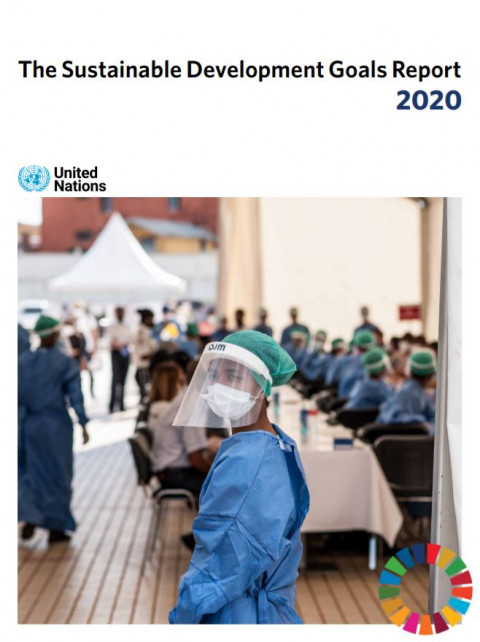 The Sustainable Development Goals Report 2020 발행 연도: 2020 단체 저자: United Nations (UN) The annual Sustainable Development Goals Report provides an overview of the world’s implementation efforts to date, highlighting areas of progress and areas where more action needs to be taken to ensure no one is left behind. Now, in only a short period of time, the COVID-19 pandemic has unleashed an unprecedented crisis, causing further disruption to SDG progress, with the world’s poorest and most vulnerable affected the most.Using the latest data and estimates, this annual stocktaking report on progress across the 17 Goals shows that it is the poorest and most vulnerable – including children, older persons, persons with disabilities, migrants and refugees – who are being hit the hardest by the effects of the COVID-19 pandemic. Women are also bearing the heaviest brunt of the pandemic’s effects.The report also shows that climate change is still occurring much faster than anticipated.
  Is every child counted? Status of data for children in the SDGs 발행 연도: 2017 단체 저자: United Nations Children's Fund (UNICEF) “Is every child counted”, a recent status report by UNICEF, shows that sufficient data are available for less than half of child-related SDG indicators. Many indicators, such as those on poverty and violence, are not comparable across countries, and are either too limited or of poor quality, leaving governments without the information they need to accurately address challenges facing millions of children, or to track progress towards achieving the Goals. Data are also very limited on the situation of the most disadvantaged populations within each country. Better disaggregated data on these populations is necessary. The report also identifies priorities for enhancing the collection, analysis and use of data for children.
  Is every child counted? Summary of the status of data for children in the SDGs 발행 연도: 2017 단체 저자: United Nations Children's Fund (UNICEF) “Is every child counted”, a recent status report by UNICEF, shows that sufficient data are available for less than half of child-related SDG indicators. Many indicators, such as those on poverty and violence, are not comparable across countries, and are either too limited or of poor quality, leaving governments without the information they need to accurately address challenges facing millions of children, or to track progress towards achieving the Goals. Data are also very limited on the situation of the most disadvantaged populations within each country. Better disaggregated data on these populations is necessary. The report also identifies priorities for enhancing the collection, analysis and use of data for children.