
자료
세계시민교육에 대한 이해를 넓히고 연구, 옹호 활동, 교수, 학습 등을 향상시킬 수 있는 다양하고 유용한 자료를 찾아보세요.
884 건의 결과가 검색되었습니다
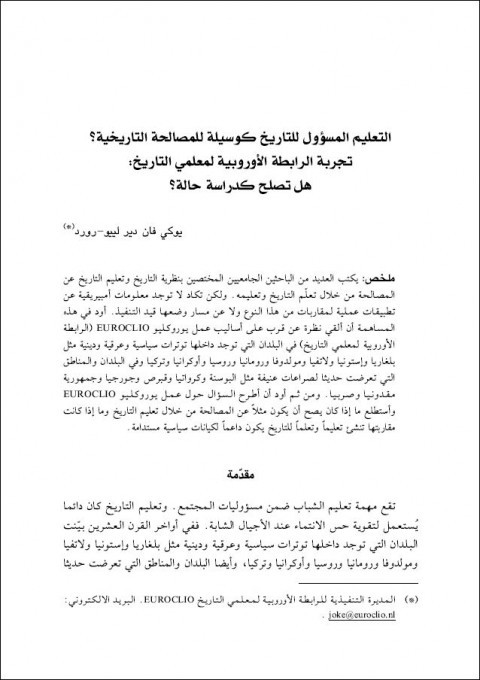 التعليم المسؤول للتاريخ كوسيلة للمصالحة التاريخية؟ : تجربة الرابطة الأوروبية لمعلمي التاريخ: هل تصلح كدراسة حالة؟ 발행 연도: 2012 저자: فان دير لييو-رورد، يوكي 단체 저자: Lebanese Association for Educational Studies (LAES) يكتب العديد من الباحثين الجامعيين المختصين بنظرية التاريخ وتعليم التاريخ عن المصالحة من خلال تعلّم التاريخ وتعليمه. ولكن تكاد لا توجد معلومات أمبيريقية عن تطبيقات عملية لمقاربات من هذا النوع ولا عن مسار وضعها قيد التنفيذ. أود في هذه المساهمة ان القي نظرة عن قرب على أساليب عمل يوروكليو EUROCLIO (الرابطة الأوروبية لمعلمي التاريخ) في البلدان التي توجد داخلها توترات سياسية وعرقية ودينية مثل بلغاريا واستونيا ولاتفيا ومولدوفا ورومانيا وروسيا وأوكرانيا وتركيا وفي البلدان والمناطق التي تعرضت حديثا لصراعات عنيفة مثل البوسنة وكرواتيا وقبرص وجورجيا وجمهورية مقدونيا وصربيا. ومن ثم أود أن أطرح السؤال حول عمل يوروكليو EUROCLIO وأستطلع ما يصح ان يكون مثلا عن المصالحة من خلال تعليم التاريخ وما اذا مقاربتها تنشئ تعليما وتعلما للتاريخ يكون داعما لكيانات سياسية مستدامة. Responsible History as a Tool for Historical Reconciliation? EUROCLIO, the European Association of History Educators as a Case Study? 발행 연도: 2012 저자: فان دير لييو-رورد، يوكي 단체 저자: Lebanese Association for Educational Studies (LAES) Many university researchers specialized in the theory of history and in teaching history write about reconciliation using history learning and teaching. However, there are almost no empirical data on practical applications of such approaches nor on the process of implementation. In this contribution. I’d like to have a close look at the working methods of the European Association of History Educators EUROCLIO, in countries with internal political, racial and religious tensions, such as Bulgaria, Estonia, Latvia, Moldovia, Romania, Russia, Ukraine, Turkey and in the countries and regions that were recently exposed to severe conflicts such as Bosnia, Croatia, Cyprus, Georgia, Republic of Macedonia and Serbia. Then I’d want to ask the question about how EUROCLIO functions and explore what applies to be an example of reconciliation through teaching history, and whether the reconciliation approach creates a history teaching and learning that would be supportive of sustainable political entities.
 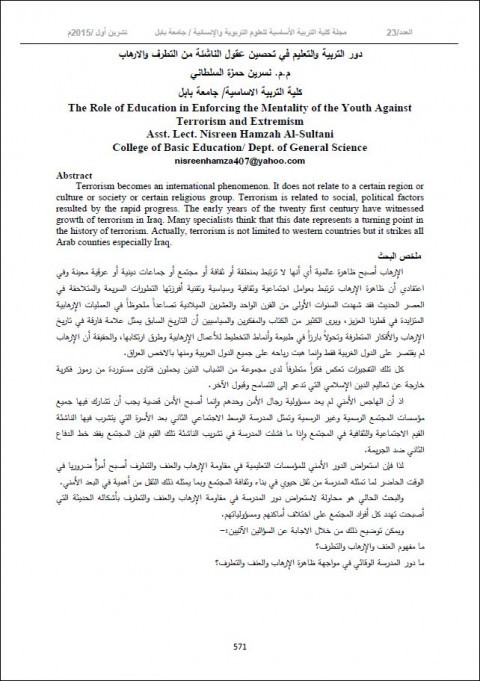 دور التربية والتعليم في تحصين عقول الناشئة من التطرف والارهاب 발행 연도: 2015 저자: السلطاني، نسرين حمزة عباس 단체 저자: University of Babylon الإرهاب أصبح ظاهرة عالمية، أي أنها لا ترتبط بمنطقة أو ثقافة أو مجتمع أو جماعات دينية أو عرقية معينة، بل ترتبط بعوامل اجتماعية وثقافية وسياسية وتقنية أفرزتها التطورات السريعة والمتلاحقة في العصر الحديث. فقد شهدت السنوات الأولى من القرن الواحد والعشرين تصاعدا ملحوظاً في العمليات الإرهابية في قطرنا (العراق). ...كل تلك التفجيرات تعكس فكرا متطرفاً لدى مجموعة من الشباب الذين يحملون فتاوى مستوردة من رموز فكرية خارجة عن تعاليم الدين الإسلامي التي تدعو إلى التسامح وقبول الآخر. إنما أصبح الأمن قضية يجب أن نشارك فيها جميعا، فالهاجس الأمني لم يعد مسؤولية رجال الأمن وحدهم... وتمثل المدرسة الوسط االاجتماعي الثاني بعد الأسرة التي يتشرب فيها الناشئة القيم الاجتماعية والثقافية في المجتمع. إذا ما فشلت المدرسة في تشريب الناشئة تلك القيم فإن المجتمع يفقد خط الدفاع الثاني ضد الجريمة. لذا فإن استعراض الدور الأمني للمؤسسات التعليمية في مقاومة الإرهاب والعنف والتطرف أصبح أمرأً ضروريا في الوقت الحاضر... والبحث الحالي هو محاولة استعراض دور المدرسة في مقاومة الإرهاب والعنف والتطرف بأشكاله الحديثة التي أصبحت تهدد كل أفراد المجتمع على اختلاف أماكنهم ومسؤولياتهم. ويمكن توضيح ذلك من خلال الإجابة عن السؤالين التاليين- ما مفهوم العنف والإرهاب والتطرف؟ - ما دور المدرسة الوقائي في مواجهة ظاهرة الإرهاب والعنف والتطرف؟ The Role of Education in Enforcing the Mentality of the Youth Against Terrorism and Extremism 발행 연도: 2015 저자: السلطاني، نسرين حمزة عباس 단체 저자: University of Babylon Terrorism has become an international phenomenon. It does not relate to a certain region or culture or society or certain religious group. Terrorism is related to social, political factors as a result of the rapid progress. The early years of the twenty first century have witnessed growth of terrorism in Iraq. Many specialists think that those years represent a turning point in the history of terrorism. Actually, terrorism is not limited to western countries but it strikes all Arab counties especially Iraq. All those explosions reflect extremist thought adopted by young people mobilized by Fatwas imported from ideologies foreign to Islamic Teachings that advocate tolerance and accepting the other. Security is not anymore the sole responsibilty of security forces rather all formal and informal institutions of society must be engaged.Next to the family, the school represents the second social environment where young people internalize social and cultural values. Should the school fail to do that society would loose its srcond defence line. Hence, it is necessary to discuss the role of the educational institutions in combatting terrorism and extremism. This study attempts to look at the role of schools in combatting terrorism, violence and extremism in all their contemporary forms, through the following two questions: what is the concept of violence, terrorism and violence? what role for the school in facing this phenomenon?
  دراسة تحليلية لمكونات ثقافة السلام في قصص الاطفال التي تصدرها الهيئة العامة للاستعلامات والمقدمة للطفل المصري 발행 연도: 2010 저자: السعيد، نفيسة صلاح الدين محمود 단체 저자: Ain Shams University نحن نعيش في عصر يتسم بعولمة المشكلات الإنسانية بمعنى أن أية مشكلة تحدث داخل قطر أو إقليم معين هي مشكلة عالمية في الوقت نفسه. ومن المشكلات التي تهدد العالم مشكلة الصراع والعنف بأشكاله المختلفة. ولذلك كان من الطبيعي أن يهتم العالم بنشر ثقافة السلام في العالم ومن الجهود التي قامت بها الأمم المتحدة في اطلاق العقد الدولي لثقافة السلام ونبذ العنف. وقد استجابت مصر للعقد وشاركت بالعديد من الأنشطة... ومنها: إصدار سلسلة "الثقافة لغة السلام" وهي سلسلة من 41 قصة في 11 كتيب أصدرتها الهيئة العامة للاستعلامات عام 2006، وأرادت الباحثة في هذه الدراسة تحليل مضمونها ...والتعرف على مفاهيم ثقافة السلام فيها... وعلى نسبة تلك المفاهيم وأكثرها حضورا في القصص.. وطريقة عرضها... وتحديد اللغة التي استخدمت...والتعرف على الشخصيات المحورية التي قدمت لتلك المفاهيم. تنتمي هذه الدراسة إلى الدراسات الوصفية وتعتمد على منهج المسح الإعلامي. تعتمد هذه الدراسة على أسلوب تحليل المضمون وقد تم تصميم استمارة تحليل لمضمون وتطبيقها على جميع القصص. الدراسة توصلت إلى أن القصص احتوت على تسعة مفاهيم تشكل في مجملها مفهوم ثقافة السلام. Analytic Study of Culture of Peace in Children's Stories Issued by State Information Service (SIS) in Egypt 발행 연도: 2010 저자: السعيد، نفيسة صلاح الدين محمود 단체 저자: Ain Shams University The study investigates the contents of a series of 41 stories in 11 booklets that were published in Cairo by a governmental publishing house as a contribution to the UN's Decade of Culture of Peace and Non-Violence. The study concludes that the stories include the nine concepts (and subconcepts) which together constitute the concept of culture of peace. The nine concepts are: Dialogue, tolerance, coexistence, peace glorification and renouncing of violence, preservation of the environment, peace-building, solidarity, democracy and human rights. Method of the study: descriptive and media survey.
  Genocide Timeline 발행 연도: 2024 단체 저자: United States Holocaust Memorial Museum (USHMM) This timeline proposed by the United States Holocaust Memorial Museum shows the major conceptual and legal advances in the evolution of the term "genocide" . It does not seek to detail every case that could be considered genocide, but to show how the term has entered the political, legal and ethical vocabulary from 1900 to 2016 to express threats of violence against groups. Chronologie du génocide 발행 연도: 2024 단체 저자: United States Holocaust Memorial Museum (USHMM) Cette chronologie proposée par le Musée du mémorial américain sur la Shoah montre les avancées conceptuelles et juridiques majeures dans l’évolution du terme « génocide » . Elle ne cherche pas à détailler tous les cas pouvant être considérés comme des génocides, mais à montrer comment le terme a intégré le vocabulaire politique, juridique et éthique de 1900 à 2016 pour exprimer les menaces de violences contre des groupes.
  دور المؤسسات التعليمية في محاربة التعصب الرياضي 발행 연도: 2018 저자: Jamal Aldeen Alamarji يقدم الباحث في هذه الورقة مناقشة لكيف يمكن للمؤسسات التعليمية محاربة التعصب الرياضي. وينبثق من هذا السؤال الرئيس الأسئلة الفرعية التالية:• ما المقصود بالتعصب الرياضي؟• ما سمات الشخص المتعصب رياضيا؟• ما أسباب التعصب الرياضي؟• ما المعوقات التي تحد من دور المؤسسات التعليمية في القضاء على التعصب الرياضي؟• ما الدور المأمول للمؤسسات التعليمية للقضاء على التعصب الرياضي؟ The Role of Educational Institutions in Combating Sports Intolerance 발행 연도: 2018 저자: Jamal Aldeen Alamarji In this paper, the researcher presents a discussion of how educational institutions can combat sports fanaticism. From this main question, the following sub-questions emerge:• What is meant by sports fanaticism?• What are the characteristics of a sports fanatic?• What are the causes of sports intolerance?• What are the obstacles that limit the role of educational institutions in eliminating sports fanaticism?• What is the hoped-for role for educational institutions to eliminate sports fanaticism?