
자료
세계시민교육에 대한 이해를 넓히고 연구, 옹호 활동, 교수, 학습 등을 향상시킬 수 있는 다양하고 유용한 자료를 찾아보세요.
2,781 건의 결과가 검색되었습니다
 UNESCO Framework for Culture and Arts Education: Implementation Guidance 발행 연도: 2025 단체 저자: UNESCO Culture and the arts are integral to inclusive, equitable and quality education. They nurture creativity, critical thinking, and respect for cultural diversity, empowering learners to engage meaningfully with the world and to build more just, sustainable and peaceful societies. Yet, countries have not systematically incorporated culture and arts education across all levels of education. This Implementation guidance for the UNESCO Framework for Culture and Arts Education is a collective invitation to reimagine education by placing culture and the arts at its heart and advancing a transformative vision of education for all.Through a holistic approach, the Guidance supports the integration of culture and the arts across formal, non-formal and informal education, throughout life. It offers practical orientations to help Member States fulfil the commitment enshrined in the UNESCO Framework for Culture and Arts Education, adopted by Ministers of Culture and Education in 2024. With a global perspective, this Guidance will equip policy-makers, educators and cultural actors in developing inclusive, context-relevant policies, curricula and learning environments.The Guidance is a milestone on a shared journey, inviting countries to harness their cultural strengths, respond to emerging challenges, and work together towards a more inclusive education for all.
 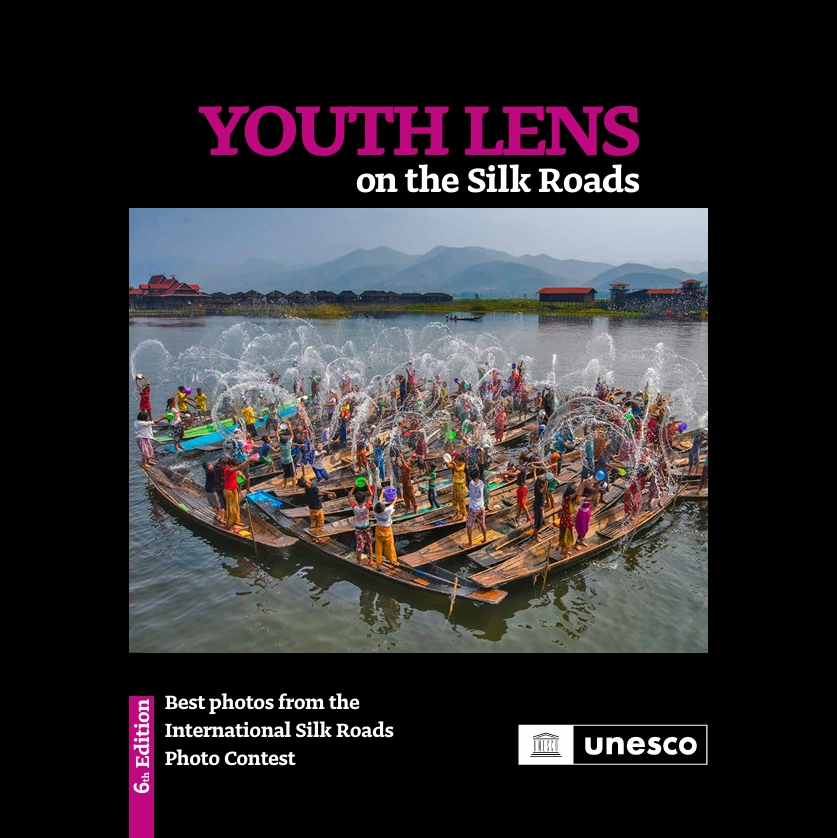 Youth Lens on the Silk Roads: Best Photos from the International Silk Roads Photo Contest; 6th Edition 발행 연도: 2026 단체 저자: UNESCO This album presents the sixth edition of UNESCO’s Youth Eyes on the Silk Roads international photo contest. Organized by the UNESCO Silk Roads Programme, with the support of the Beijing International Peace Culture Foundation, this annual initiative invites talented young photographers from across the globe to explore the vibrant cultural heritage and diversity that thrive along these historic routes.The term “Silk Roads” symbolizes the vast network of historical trade routes linking East, South, and Southeast Asia with Central Asia, the Russian Steppes, the Indian Subcontinent, the Iranian and Anatolian Plateaus, and the Arabian Peninsula. These routes also extended into North and Northeast Africa and Europe, eventually reaching Western Europe and the Iberian Peninsula. Over centuries, these routes served as pathways for trade and vital corridors for cultural exchange, the dissemination of knowledge, and the blending of diverse traditions and practices. This intercultural exchange has significantly shaped contemporary societies, enriched identities, and fostered dialogue and mutual understanding among cultures.In this sixth edition, held under the theme ‘Life Celebrations’, young photographers have vividly documented festivities and cultural moments that highlight joy, unity, and shared heritage along the Silk Roads. Their powerful images capture how these celebrations and rituals continue to reflect and strengthen centuries-old connections between communities.The Youth Lens on the Silk Roads album presents 66 striking photographs from two age categories (14-17 and 18-25), illustrating the vibrant mosaic of cultural celebrations that unite communities across landscapes. Each image reveals the energy, resilience, and profound cultural richness of contemporary Silk Road societies. Together, these photographs celebrate the enduring legacy and dynamic spirit of the Silk Roads today.
  Cartografía de las políticas culturales en los Pequeños Estados Insulares en desarrollo: amplificando las voces de los PEID en el diálogo mundial en materia de políticas sobre cultura y desarrollo sostenible 발행 연도: 2025 단체 저자: Organización de las Naciones Unidas para la Educación, la Ciencia y la Cultura (UNESCO) Cartografía de las políticas culturales en los Pequeños Estados Insulares en Desarrollo Abarcando tres subregiones – el Atlántico, el océano Índico y el mar de China meridional, el Caribe y el Pacífico – los Pequeños Estados Insulares en Desarrollo (PEID) representan 39 Estados miembros de la UNESCO y 9 Miembros Asociados. Los países y las organizaciones regionales han demostrado cada vez más su compromiso en el contexto de un panorama de políticas y unos ecosistemas culturales en rápida evolución, que abarcan las distintas dimensiones de la cultura a través de su diversidad y de un amplio espectro de partes interesadas. Actualmente, está en auge la visión del desarrollo específica para los PEID, basada en la cultura. La cultura tiene un impacto multidimensional en las vías de desarrollo sostenible de los PEID, desde la acción por el clima, la protección de la diversidad biológica y la seguridad alimentaria hasta la diversificación económica, la inclusión social, la igualdad de género o la sostenibilidad urbana. En el diálogo mundial en materia de políticas deben escucharse las voces y aspiraciones de los PEID, en reconocimiento de sus prioridades, oportunidades y puntos de vista. Las iniciativas de cooperación internacional de la UNESCO y otras organizaciones también son esenciales para determinar los ámbitos de inversión y adaptación de las políticas futuras a escala nacional y regional. Tras la Conferencia Mundial de la UNESCO sobre Políticas Culturales y el Desarrollo Sostenible – MONDIACULT 2022, los PEID defienden la cultura para el desarrollo sostenible con vistas a la adopción de un nuevo Programa de Acción, la Agenda de Antigua y Barbuda para los PEID 2024-2034 Cartographie des politiques culturelles dans les Petits États Insulaires en développement : faire émerger la voix des PEID dans le dialogue politique mondial sur la culture et le développement durable 발행 연도: 2025 단체 저자: Organisation des Nations Unies pour l'éducation, la science et la culture (UNESCO) Cartographie des politiques culturelles dans les Petits États insulaires en développement Répartis dans trois sous-régions - l’Atlantique, l’océan Indien et la mer de Chine méridionale (AIS), les Caraïbes et le Pacifique - les petits États insulaires en développement (PEID) représentent 39 États membres de et 9 membres associés de l’UNESCO. Les pays et les organisations régionales ont progressivement démontré leur engagement dans un paysage politique et des écosystèmes culturels en évolution rapide, englobant les différentes dimensions de la culture, à travers sa diversité et son large éventail de parties prenantes. Aujourd’hui, une vision du développement spécifique aux PEID et axée sur la culture est en plein essor. La culture a un impact multiforme sur les voies du développement durable des PEID - qu’il s’agisse de la lutte contre le changement climatique, de la protection de la biodiversité, de la sécurité alimentaire, de la diversification économique, de l’inclusion sociale, de l’égalité entre les genres ou de la durabilité urbaine. Leurs voix et leurs aspirations doivent être entendues dans le dialogue politique mondial, en reconnaissance de leurs priorités, de leurs opportunités et de leurs idées innovantes. Les efforts de coopération internationale portés par l’UNESCO et d’autres organisations sont également essentiels pour identifier les domaines d’investissement et d’adaptation des politiques futures aux niveaux national et régional. Dans la continuité de la Conférence mondiale de l’UNESCO sur les politiques culturelles et le développement durable - MONDIACULT 2022, les PEID œuvrent en faveur de la culture pour le développement durable en vue de l’adoption d’un nouveau programme d’action, l’Agenda d’Antigua-et-Barbuda pour les PEID 2024-2034.
  Inaugural Meeting of the GCED Actors' Platform: Final Report 발행 연도: 2020 단체 저자: APCEIU This final report gives an overview of discussions and outcomes from the “Inaugural Meeting of the GCED Actors’ Platform” on 2 September 2019 in Seoul, Republic of Korea, held back-to-back with the 4th International Conference on GCED (3-4 September 2019, Seoul) In line with the call for closer collaboration on GCED inter-regionally, the GCED Actors’ Platform was launched by UNESCO Headquarters and APCEIU in 2019. Convening regional coordinators and different partners working on GCED, the “Inaugural Meeting of the GCED Actors’ Platform” provided an open space for the participants to discuss ways to coordinate activities and promote synergies.The regional representatives have imparted their own experiences and challenges on the ground and shared best practices of facilitating GCED.
 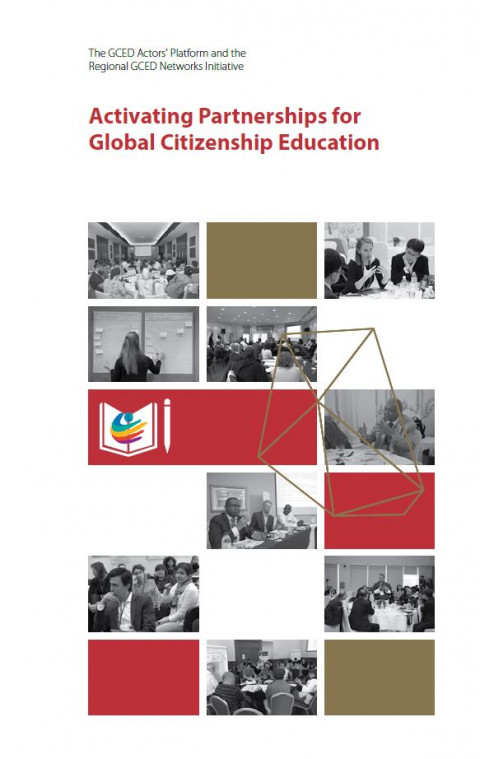 The GCED Actors' Platform and the Regional GCED Networks Initiative: Activating Partnerships for Global Citizenship Education 발행 연도: 2020 단체 저자: APCEIU This brief publication introduces and summarizes the flagship GCED Network initiatives supported by APCEIU implemented globally and regionally.UNESCO Headquarters and APCEIU co-convened the launch of the GCED Actors’ Platform in which gathered key partners across the globe and representing five Regional GCED Networks. These five Regional GCED Networks include Sub-Saharan Africa, Arab States, Asia-Pacific, Europe and North America, and Latin America and the Caribbean are formed to identify regional priorities and implement regional strategies to promote GCED. The publication also showcases successful independent activities by organizations part of the GCED Network initiative.
  The CapED Programme: Annual Report 2019 발행 연도: 2020 단체 저자: UNESCO UNESCO is the United Nation’s specialized agency for education and is mandated to lead and coordinate progress towards Sustainable Development Goal 4 – “Ensure inclusive and equitable quality education and promote lifelong learning opportunities for all”.The CapED Programme is central to delivering on this mandate through capacity development. It mobilizes UNESCO’s worldwide network of specialized Institutes and offices and works with partners to assist countries as they develop and implement national plans to deliver on SDG4 commitments.The Annual Report 2019 provides information on achievements and progress made in the 26 countries where CapED is operational. Programme CapED: rapport annuel 2019 발행 연도: 2020 단체 저자: Organisation des Nations Unies pour l'éducation, la science et la culture (UNESCO) Institution spécialisée des Nations Unies pour l'éducation, l'UNESCO est chargée de conduire et de coordonner les efforts entrepris pour atteindre l'Objectif de développement durable 4 : « Assurer l'accès de tous à une éducation de qualité, sur un pied d'égalité, et promouvoir les possibilités d'apprentissage tout au long de la vie ».Le Programme CapED de développement des capacités pour l'éducation joue un rôle central dans l'exercice de ce mandat. Il mobilise le réseau mondial des instituts spécialisés et des bureaux de l'UNESCO et, en collaboration avec ses partenaires, aide les pays à élaborer et mettre en oeuvre leurs plans nationaux afin d'honorer les engagements qu'ils ont pris au titre de l'ODD 4.Le Rapport annuel 2019 met en lumière les résultats obtenus et les progrès accomplis dans les 26 pays où le Programme CapED intervient.
 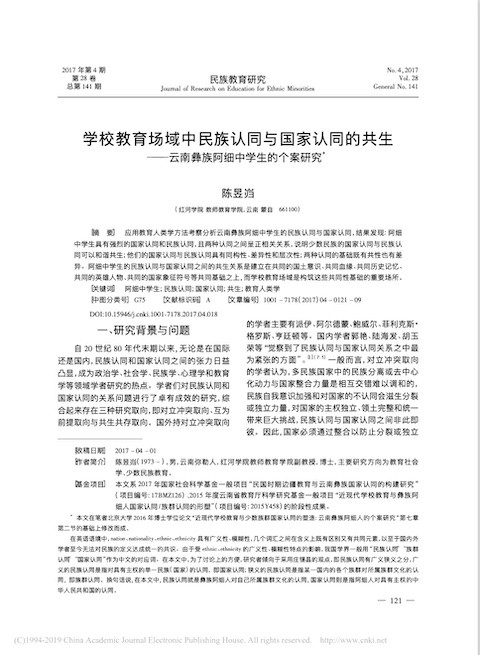 The Symbiosis Relationship Between Ethnic Identity and National Identity in School Education Field: A Case Study Of Axi Yi High School Students in Yunnan (Journal of Research on Education for Ethnic Minorities; Vol. 28, No. 141) 발행 연도: 2017 저자: Chen Yukui 단체 저자: Minzu University of China This paper uses educational anthropolog to examine and analyse ethnic identity and national identity of ethnic Axi Yi high school students. It finds that they have both very strong ethnic and national identities, and there is a moderate positive correlation between the two identities. This shows that the two identities can coexist harmoniously for ethnic minorities. This paper also finds that the symbiosis relationship between students’ ethnic identity and national identity is built on common foundations, such as common territorial awareness, common consanguinity,common historical memory,common heroic characters and common national symbols. This paper argues that schools are the important place where those common foundations are built. 学校教育场域中民族认同与国家认同的共生:云南彝族阿细中学生的个案研究 (民族教育研究; 第28卷, 总第 141 期) 발행 연도: 2017 저자: Chen Yukui 단체 저자: Minzu University of China 应用教育人类学方法考察分析云南彝族阿细中学生的民族认同与国家认同,结果发现: 阿细 中学生具有强烈的国家认同和民族认同,且两种认同之间呈正相关关系,说明少数民族的国家认同与民族认 同可以和谐共生; 他们的国家认同与民族认同具有同构性、差异性和层次性; 两种认同的基础既有共性也有差 异。阿细中学生的民族认同与国家认同之间的共生关系是建立在共同的国土意识、共同血缘、共同历史记忆、 共同的英雄人物、共同的国家象征符号等共同基础之上,而学校教育场域是构筑这些共同性基础的重要场所。